Foreign-Affairs
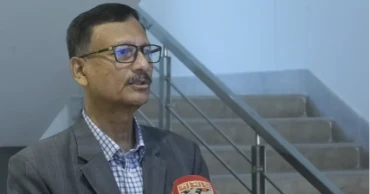
Hasina’s Extradition: No positive response from India yet: Foreign Adviser
Foreign Affairs Adviser Md Touhid Hossain on Friday said the government of India has not yet given any positive response on Bangladesh’s request to extradite ousted Prime Minister Sheikh Hasina.
“We want Sheikh Hasina to be sent back. She is convicted, and the highest judicial institution has sentenced her. But we have not received any positive response as yet,” he told journalists at Rangpur Circuit House in the morning.
He said that such matters take time. “In these cases, changes don’t happen overnight. We will wait and see what response we receive from the Indian authorities. The reaction from India is being monitored. So far, we only know that India is examining the issue."
Responding to a question about BNP Acting Chairman Tarique Rahman’s return to Bangladesh, the adviser said he had no information about this.
“His wife, Dr Zubaida Rahman, has probably reached Dhaka. Begum Zia is not being taken to London today because of a technical problem in the aircraft,” he added.
Commenting on the detention of Bangladeshi fishermen by the Arakan Army, Touhid Hossain said the group is “not a state actor”, making bilateral talks difficult.
“However, since our interests are involved, the matter is being looked into. Not everything can be disclosed, but steps are being taken to prevent such incidents in the future or reduce their frequency,” he said.
The adviser said a proposed 1,000-bed hospital funded by China, originally planned for Dhaka, will now be built in Nilphamari.
Delhi examining request for Hasina’s extradition; Dhaka expects response
“The plan is designed so that people from India, Bhutan, and other neighbouring countries can also receive treatment here in addition to residents of the Rangpur region,” he said.
He said the biggest challenge for Rangpur is the lack of factories and businesses, adding that the government is working to expand employment opportunities.
Touhid Hossain said the government aims to hand over responsibility to elected representatives in a manner that allows them to “take the country forward on the desired path within one to one and a half years.”
He mentioned that people have high expectations—that we should complete all reforms. But this is a long-term process.
“Those who come to power in the future should be able to reflect the will of the people. We hope they will ensure equality and balanced development across the country.”
The adviser arrived in Rangpur on a four-day visit. On Friday, he will visit key establishments in the city.
Dhaka expects answer from Delhi on Hasina's extradition: Foreign Adviser
On Saturday morning, he will exchange views with officials of the Rangpur administration before visiting Rangpur Cadet College in the afternoon.
On Sunday (December 7) afternoon, he will meet teachers and students of Magura High School in Kishoreganj upazila of Nilphamari, before returning to Dhaka from Syedpur Airport.
7 months ago

August Uprising spotlighted students as democracy’s drivers: Ambassador Mushfique
Bangladesh’s Ambassador to Mexico Mushfiqul Fazal Ansarey has said that the student-led uprising in August demonstrated that young people are the true drivers of democracy and accountability in Bangladesh.
Talking to a group of International Relations students from the National Autonomous University of Mexico (UNAM) during an interactive session at the Bangladesh Embassy in Mexico City on Thursday, the Ambassador highlighted the transformative role of youths in political change.
Focusing on the recent political transition, he said, “Bangladesh witnessed one of the most defining moments in its modern political life. A student-led movement—young people not much older than you—stood up for democracy, accountability, and basic human dignity.”
Encouraging the students, he added, “I can see future ambassadors, diplomats—even a future UN Secretary-General—in front of me. You are the generation that will navigate the globe, and it must be with human dignity and human rights at the center.”
Linking these developments to Bangladesh’s diplomatic priorities, Ambassador Mushfiqul said Bangladesh’s foreign policy is rooted in friendship, peace, multilateralism, climate justice, and workers’ rights, noting that Mexico has become an increasingly important partner in trade, culture and academic exchange.
The UNAM students also expressed admiration for the Ambassador’s personal journey and his long-standing advocacy for democratic rights.
Earlier, Counsellor Abdullah Al Forhad delivered a multimedia presentation offering the students a comprehensive overview of Bangladesh.
He outlined the country’s political structure, demographic advantages, and major development successes, including its rise as the world’s second-largest exporter of ready-made garments and its rapid progress in digital governance, infrastructure and climate resilience.
7 months ago

China–Bangladesh joint symposium points to huge potential in health and educatiun
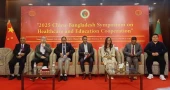
In a significant demonstration of the deepening ties between Bangladesh and China, policymakers, scholars and medical professionals from both nations convened in Dhaka on Thursday for the 2025 China–Bangladesh Symposium on Health and Education Cooperation.
The day-long gathering brought renewed focus to joint efforts in strengthening healthcare services, promoting medical education and enhancing academic exchange. With new projects underway — from advanced medical equipment support to expanding Confucius Institutes and collaborative university programmes — the symposium highlighted how bilateral cooperation is increasingly touching the lives, careers and wellbeing of people across both countries.
The symposium was inaugurated by Li Shaopeng, Cultural Counsellor of the Chinese Embassy, who served as the Chief Guest.
Welcoming experts and scholars from the health and education sectors, colleagues working in these fields, leaders of relevant institutions who had specially come from China, representatives of Chinese organisations in Bangladesh, and friends supporting China–Bangladesh friendship, Cultural Counsellor Li Shaopeng said health and education are two enduring themes in the development of human society. They are the foundation for a country's prosperity and national rejuvenation — one focusing on physical well-being and the other on spiritual enrichment and wisdom.
“These two areas are also indispensable parts of the exchanges and cooperation between China and Bangladesh. They not only bring the benefits of our friendship to every citizen but also reflect the importance of the strong relationship between our two countries for social progress and prosperity,” he said.
Calling China and Bangladesh good neighbours who support each other and good partners who move forward together, Li said the friendly exchanges between the two countries have lasted for thousands of years. This year marks the 50th anniversary of diplomatic relations between China and Bangladesh and the China–Bangladesh People-to-People Exchange Year. Under the strategic guidance of their leaders, the relationship has deepened in all fields, with particularly fruitful results in health and education, he added.
“In the field of health, this year we opened up medical treatment in China for Bangladeshi citizens. China donated the world’s most advanced robotic rehabilitation physiotherapy equipment to Bangladesh and, responding to Bangladesh’s urgent needs, sent a medical team of burn experts,” he said.
Sharing details of support for dengue fever and COVID-19 test kits, Li said the burn unit at Chittagong Medical College Hospital — a China-aided project — has already begun construction, and China plans to build a modern general hospital with 1,000 beds in Rangpur.
“Two days ago, we witnessed the unveiling of the China–Bangladesh Joint Cardiovascular Disease Clinic between Fuwai Yunnan Hospital, Chinese Academy of Medical Sciences, and the Bangladesh National Institute of Cardiovascular Disease and Hospital. The mobile medical surgical vehicle donated by China to Bangladesh is also on its way,” he added.
He said these initiatives demonstrate the deep affection of the Chinese government and people toward Bangladesh, showing that the friendship between the two countries is rooted in the people, for the people, and supported by all.
In the field of education, he said more and more Bangladeshi citizens are eager to learn Chinese. “We already have three Confucius Institutes and one Confucius Classroom in Bangladesh, with two more added this year — the highest number of new Confucius Institutes established this year. Next month, the Chinese government will send three volunteers to teach Chinese in more schools. Nearly 100 Chinese and Bangladeshi universities have signed cooperation agreements,” he said.
Li Shaopeng said thousands of Bangladeshi students study in China every year, and more experts from both countries exchange visits and conduct joint research. Some universities have even begun pilot projects on joint curriculum development and mutual credit recognition.
“We also plan to set up ‘Chinese Language Workshops’ and ‘Luban Workshops’ in Bangladeshi universities to provide ‘Chinese + Vocational Skills’ education. The educational cooperation between China and Bangladesh not only builds bridges for academic exchanges but also expands academic and career opportunities for young students, significantly enhancing their professional skills and technical abilities,” he added.
He expressed hope that these engagements would further enhance healthcare and education in both countries, improve the well-being of the peoples, and contribute to building a China–Bangladesh community with a shared future.
7 months ago
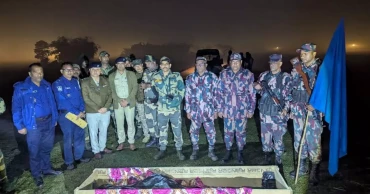
BSF hands over body of Bangladeshi man
Indian Border Security Force (BSF) has handed over the body of a Bangladeshi man who was allegedly shot dead along the Patgram border in Lalmonirhat early Thursday.
Mizanur Rahman, officer-in-charge (OC) of Patgram Police Station, said the body of Sabuj Islam, 29, was returned through a flag meeting between Border Guard Bangladesh (BGB) and BSF in the presence of Indian police around 10pm on Thursday.
Members of the local BGB Border Outpost (BOP), Patgram police, and the victim’s relatives were also present during the handover, he said.
“After completing the legal process, we handed over the body to his elder brother,” the OC added.
Sabuj, son of Sirajul Islam of Pochabandar village under Jagatber union, had gone to the Shamshernagar frontier area with a group of farmers early Thursday to work on their croplands. Gunshots were reportedly heard from the Indian side, and Sabuj was found critically injured moments later.
Shamshernagar Border Outpost Commander Kamal Uddin, quoting locals, said BSF members later took away the body.
7 months ago
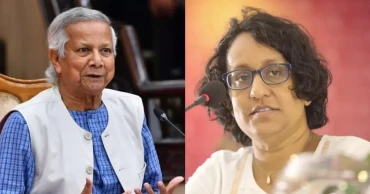
Sri Lankan PM phones Prof Yunus; thanks Bangladesh for support, solidarity
Sri Lankan Prime Minister Dr Harini Amarasuriya on Thursday phoned Chief Adviser Prof Muhammad Yunus and thanked him ‘for the support and expressions of solidarity’ following the devastating cyclone and floods that have killed hundreds and ravaged large parts of Sri Lanka over the past week.
They had the telephone conversation at 6:45 pm (BST), said Chief Adviser’s Deputy Press Secretary Abul Kalam Azad Majumder.
Prof Yunus conveyed his condolences and deep sympathy for the victims.
He reaffirmed Bangladesh’s commitment to dispatch additional emergency aid and disaster-response experts to help Sri Lanka cope with the crisis.
“We will be happy to do whatever is needed,” Prof Yunus said.
Prime Minister Amarasuriya, who met the Chief Adviser on the sidelines of the BIMSTEC meeting in Bangkok earlier this year, said her government was currently assessing the damage caused by the heavy rains and widespread flooding.
During the phone call, the Chief Adviser invited the Sri Lankan Prime Minister to visit Bangladesh in the coming months, saying Dhaka hoped to learn from Colombo’s political experience.
Senior Secretary and SDGs Affairs Principal Coordinator Lamiya Morshed and Foreign Ministry's concerned Director General were present during the conversation.
7 months ago
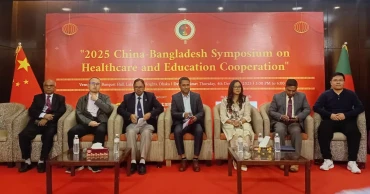
China-Bangladesh healthcare partnership entering a new era: Cosmos Health CEO Nahar Khan
Greater collaboration between Bangladesh and China in the medical sector can significantly strengthen Bangladesh’s healthcare capacity, said Cosmos Health Founder and CEO Nahar Khan.
She made the remarks at a forum titled “Bilateral Collaboration in the Medical Sector,” held as part of the event 2025 China-Bangladesh Symposium on Healthcare and Education Cooperation organised by Embassy of People’s Republic of China in Bangladesh in cooperation with Chinese Medical Alumni Association of Bangladesh and Bangladesh China Postgraduate Doctors Alumni Association.
The session was hosted by Prof. Bulbul Ashraf Siddiqi, Local Director of the Confucius Institute at North South University. Speakers included Brigadier General Md Munirul Islam, Director General of Bangladesh Krira Shikkha Protishthan (BKSP); Dr. Md Ashraful Alam, Deputy Director of Dhaka Medical College Hospital (DMCH); Prof. Dr. Abdullah Shahriar, Physical Medicine & Rehabilitation Specialist at Bangladesh Medical University Hospital; Prof. Dr. M.A. Shakoor; and Chinese experts including Jack Zhang, Co-founder and General Manager of Damiang Medical Technology (Suzhou) Co. Ltd., and Dr. Guo Yulong.
During the panel discussion, Khan highlighted the role of the private sector in strengthening China–Bangladesh medical collaboration, noting that Cosmos Health is actively working to advance new dimensions of cooperation.
“As we celebrate 50 years of bilateral relations, education and health stand at the heart of people-to-people connectivity between our countries,” she said. She expressed her gratitude to the Chinese Embassy and co-organisers for arranging what she described as a “timely and meaningful” symposium.
Khan noted that China has long been “a tried-and-tested partner” for Bangladesh across multiple sectors, including healthcare. She pointed out that China is consistently among the top sources of foreign medical graduates practicing in Bangladesh, and has supported Bangladesh in times of crisis—from the COVID-19 pandemic to emergency medical deployments.
She shared her vision to contribute to a more modern, efficient, and accessible health system in Bangladesh. “Healthcare is one of our fastest-growing verticals, and our goal is to support Bangladesh’s ongoing evolution toward better technology, better training, and better patient outcomes,” she added.
She also shared her own experience as a patient in Beijing, where she received treatment and developed a strong interest in Traditional Chinese Medicine (TCM).
“I am a firm believer in TCM, especially acupuncture. Cosmos Health is now working to establish a TCM training centre and treatment facility in Bangladesh,” she said. She noted that Bangladeshi culture already has a natural affinity for traditional medicine, and that China can play a transformative role in modernising this field.
Khan also emphasised the sophistication and efficacy of Chinese herbal formulations, citing an example of a medicine she uses to treat common colds.
Calling the present moment an “opportune time” for expanding healthcare cooperation, she said the Bangladeshi healthcare market is projected to grow to USD 23 billion by 2030–2032, creating new opportunities for investment, innovation, and partnerships.
Bangladesh will also need to train over 400,000 healthcare professionals to meet WHO recommended doctor–patient and nurse–patient ratios, she noted, adding that Chinese institutions can significantly contribute to capacity building, knowledge transfer, and skills development.
Expressing optimism, she said she hopes to contribute “a small and humble part” to the development of the healthcare and education sectors.
Li Shaopeng, Cultural Counsellor at the Embassy of the People’s Republic of China in Bangladesh, attended the event as chief guest. Medical professionals, educationists, respected professors, leaders of the Bangladesh China Postgraduate Doctors Alumni Association and the Chinese Medical Alumni Association of Bangladesh, partners, media representatives, and other guests were also present.
The symposium, a special initiative of the Chinese Embassy, aims to strengthen medical and educational exchange between the two friendly nations. The 2025 China–Bangladesh Symposium on Healthcare and Education comprised both a seminar and a conference, and featured four forums focusing on education, medical challenges, and opportunities for bilateral collaboration.
7 months ago
UN briefs Bangladesh’s political parties on election commission support
The United Nations in Bangladesh on Thursday briefed registered political parties on its technical assistance to the Election Commission (EC) for the upcoming national election.
The UN team provided an overview to the representatives of political parties on the key elements of its electoral assistance, followed by a question-and-answer session.
Through the BALLOT Project, the UN is supporting the Election Commission to strengthen its operational capacity and train BEC staff, support voter and civic education, supply critical materials and promote greater inclusion in electoral processes and information integrity.
This assistance is guided by United Nations principles, including respect for national sovereignty and ownership, the promotion of human rights, and a commitment to impartiality, neutrality and independence.
7 months ago
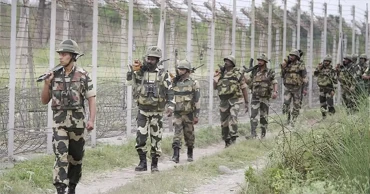
Bangladeshi youth killed in BSF firing along Patgram border
A Bangladeshi man was shot dead allegedly by members of India’s Border Security Force (BSF) along the Patgram border in Lalmonirhat early Thursday (December 04, 2025).
The deceased was identified as Sabuj Mia, 29, son of Sirajul Islam of Pochabandar village under Jagatber union in Lalmonirhat.
Locals said Sabuj and a group of farmers had gone to the Shamshernagar frontier area at dawn to work on their croplands when gunshots were heard from the Indian side. Sabuj was found critically injured moments later.
Shamshernagar Border Outpost Commander Kamal Uddin, quoting locals, said BSF members later took away the body.
Read more: Bangladeshi man shot dead by BSF near border in Chuadanga
He said a protest letter has been sent to the BSF.
Meanwhile, Abul Kasem, company commander of the BGB-51 Battalion, said repeated attempts had been made to arrange a flag meeting, and high-level communication with the BSF was underway.
Patgram Police Station OC Mizanur Rahman said they were aware of the incident and a flag meeting between BGB and BSF commanders may take place soon.
Read more: BNP to prioritise water-sharing, end ‘Indian hegemony’: Fakhrul
7 months ago
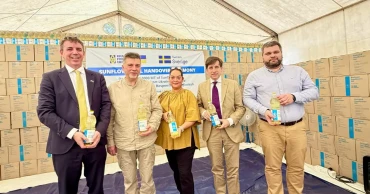
Swedish-funded Ukrainian sunflower oil reaches Rohingyas in Cox’s Bazar
Sweden-funded Ukrainian sunflower oil has reached Rohingya communities in Bangladesh through Grain from Ukraine, a humanitarian food programme launched by the President of Ukraine.
Sweden’s Ambassador to Bangladesh, Nicolas Weeks, together with Oleksandr Polishchuk, Ukraine’s Ambassador to India, and Jean-Marc Séré-Charlet, France’s Ambassador to Bangladesh, attended a handover ceremony in Cox’s Bazar on Wednesday, arranged by the United Nations World Food Programme (WFP), marking the arrival of 3,000 metric tonnes of sunflower oil from Ukraine.
The delivery was made possible through a USD 7 million contribution from Sweden, which ensured the procurement and transport of Ukrainian sunflower oil to Cox’s Bazar as part of the Grain from Ukraine initiative.
The oil will be distributed by WFP to Rohingya refugees, meeting the cooking oil needs of approximately one million people for three months. France is also supporting the initiative, further strengthening the shared commitment to humanitarian assistance.
“This initiative is unique: it helps meet urgent food needs for Rohingya refugees in Cox’s Bazar while supporting Ukrainian farmers and families enduring the immense impact of Russia’s war of aggression. It is solidarity and collaboration in its most practical form,” said Ambassador Weeks during the ceremony.
Beyond its humanitarian impact in Bangladesh, Grain from Ukraine provides direct support to Ukrainian farmers and families, helping sustain livelihoods and the agricultural economy during wartime.
This dual benefit – strengthening resilience in Ukraine while addressing global hunger – underscores the initiative’s role in linking solidarity with practical impact.
The handover ceremony highlights the partnership between Ukraine, Sweden, France, Bangladesh, and WFP, said a media release.
By integrating Ukrainian agricultural products into global humanitarian supply chains, the initiative strengthens food security worldwide while sustaining Ukraine’s economy and farming communities under wartime conditions.
In addition to the handover of Ukrainian sunflower oil, Ambassador Weeks announced the upcoming disbursement of an additional USD 2.85 million to support the provision of cleaner cooking energy to Rohingya refugees, the continued rehabilitation of the environment and enhanced green skills development for refugees and Bangladeshi host communities.
These activities are part of the Safe Access to Fuel and Energy Plus, phase 2 programme (SAFE Plus 2), a joint UN programme which brings together the Food and Agriculture Organization (FAO), the International Organization for Migration (IOM), the UN Refugee Agency (UNHCR), and the World Food Programme (WFP), in coordination with the Government of Bangladesh.
With this new contribution, Swedish support to the SAFE Plus initiative totals USD 23.85 million. In total, Sweden has supported the Rohingya refugees and Bangladeshi host communities in Cox’s Bazar with over USD 146.55 million since 2017.
8 months ago

Canadian envoy Ajit Singh highlights importance of press freedom
Canadian High Commissioner to Bangladesh Ajit Singh on Wednesday highlighted the importance of press freedom both for democracy and prosperity.
Hosting a media and diplomacy ‘Meet and Greet’ event with the Media Freedom Coalition (MFC) at the Canada Club, he referred to what journalist Walter Cronkite – “Freedom of the press is not just important to democracy, it is democracy,” apparently reminding that a free press is not optional to a democracy.
CDA and Deputy Head of Mission of the Embassy of Germany Anja Kersten and Center for Governance Studies (CGS) President Zillur Rahman also spoke at the event.
The High Commissioner talked about the challenges that journalists face and said Canada proudly champions free, safe and independent journalism, a powerful force that strengthens democratic societies and protects public accountability.
Through the MFC, he said they stand with journalists who courageously inform the public and defend the right to truth.
8 months ago