Foreign-Affairs

Huma Khan leaving her role as head of UN human rights office in Dhaka
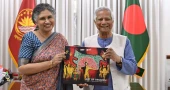
Outgoing head of the UN Human Rights Office (OHCHR) in Bangladesh Huma Khan paid a farewell call on Chief Adviser Professor Muhammad Yunus on Monday, also exchanging views on the upcoming general election and the country’s ongoing democratic transition.
During the meeting at the State Guest House Jamuna, they discussed recent developments following the July Uprising, including issues of justice, accountability and healing of the victims.
Khan served as the first head of mission of the newly established Dhaka outpost of the UN's Human Rights Council, helping to set up the operation out of a small office at UN House in the capital's diplomatic quarter earlier this year. Previously, she also served as senior rights adviser at the UN Resident Coordinator's Office.
The Chief Adviser commended Khan for her service during a critical period for Bangladesh and praised the role of the UN human rights office, particularly its independent investigation into the atrocities committed in July and August of last year, said Chief Adviser’s Deputy Press Secretary Abul Kalam Azad Majumder.
Their discussions also covered the strengthening of the national human rights institution, and the work of the commission on disappearances in probing cases of enforced disappearances and secret detention centres in the country.
SDGs Affairs Principal Coordinator and Senior Secretary to the government Lamiya Morshed was also present at the meeting.
8 months ago
Nepalese envoy stresses UN role for Bangladesh, others
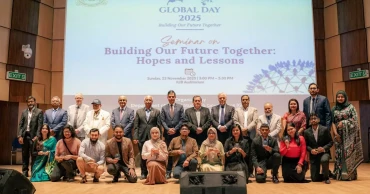
Nepalese Ambassador to Bangladesh Ghanashyam Bhandari on Monday stressed the role of the United Nations in strengthening multilateralism and reflected on its importance for countries like Bangladesh and Nepal.
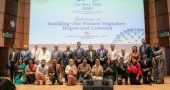
He was speaking as the chief guest at a seminar on 'Building Our Future Together: Hopes and Lessons' held on the occasion of Global Day 2025 celebrations at Independent University, Bangladesh.
The Ambassador highlighted the challenges facing the UN and underscored the longstanding contributions of Bangladesh and Nepal, particularly their leadership roles in promoting peace, sustainable development, and inclusive multilateralism.
8 months ago

UN torture-prevention body welcomes Bangladesh, Colombia for joining it
The UN Subcommittee on Prevention of Torture (SPT) on Monday welcomed the recent ratifications of Bangladesh and Colombia to the Optional Protocol to the Convention against Torture (OPCAT), bringing the total number of States Parties to 96.
The Subcommittee said it looks forward to supporting these two new States Parties in establishing their independent national preventive mechanisms (NPMs), the domestic anti-torture watchdogs that must be designated within one year of ratification.
“A defining feature of OPCAT is the work carried out at national level by NPMs, which continue to visit places of deprivation of liberty, including prisons and other detention facilities, even when the Subcommittee is unable to do so,” said María Luisa Romero, Chair of the Subcommittee.
“Their regular monitoring is vital to the effectiveness of the system as a whole, and we will continue to strengthen our advisory and capacity-building support to help them fulfil this crucial role,” Romero added.
The SPT announced plans to conduct six country visits in 2026, including three that were deferred from this year due to the UN’s ongoing liquidity constraints.
The Subcommittee has confirmed that the postponed missions to Burundi, France, and Mexico will take place next year, alongside newly planned visits to Paraguay, Rwanda, and Sri Lanka.
The Subcommittee stated that its 2026 visit plan will begin with the mission to Mexico in January.
In 2025, the SPT was able to carry out only four visits, namely to Mozambique, New Zealand, Peru, and Serbia, which represent half of its planned programme, due to the UN’s liquidity situation.
The 2026 visit programme was decided during the SPT’s latest session in November in Geneva, where members also reviewed their concluding visits of the year to Mozambique and New Zealand.
“While our resources remain strained, we are committed to fulfilling our visiting mandate, even if at a reduced pace,” said Romero, adding, “Direct engagement with States and independent national monitoring bodies through our field visits and ongoing dialogue is essential to strengthening safeguards and advancing the global prevention of torture.”
8 months ago
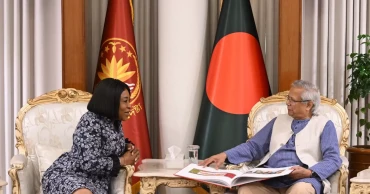
Commonwealth SG renews support for Bangladesh’s aspirations for "inclusive, just, prosperous future"
Commonwealth Secretary-General Shirley Botchwey on Monday (November 24) reaffirmed support for the Bangladeshi people’s aspirations for an "inclusive, just and prosperous" future for all
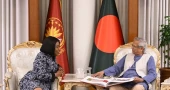
Botchwey met Chief Adviser Prof Muhammad Yunus at the State Guest House Jamuna and discussed the country’s national transition and the Commonwealth’s role in supporting the people’s democratic expectations.
"During our meeting, we discussed Bangladesh’s national journey and our renewed partnership to support the Bangladeshi people’s aspirations for an inclusive, just and prosperous future for all," she said after the meeting.
The Secretary-General said she is grateful to the Chief Adviser of the interim government and the people of Bangladesh for their generous hospitality.
The Chief Adviser sought the Commonwealth’s full support for holding the upcoming general election, scheduled for the first half of February.
“We need your support in our democratic transition as well as in the upcoming general election,” he said during the meeting.
The Chief Adviser thanked the Secretary-General for her strong interest in Bangladesh’s forthcoming election process. He reaffirmed the Interim Government's commitment to holding a free, fair, credible, and festive election.
In response, the Secretary-General assured the Chief Adviser of the Commonwealth’s full support for Bangladesh’s election and the post-election transition, said the Chief Adviser’s press wing.
“There are vast resources within the Commonwealth—56 countries, including members of the G7 and G20"—that Bangladesh could draw on to strengthen one another, she said.
The Secretary-General added that she had held meetings with a wide range of stakeholders, including the Chief Justice, the Law Adviser, Foreign Affairs Adviser and the Chief Election Commissioner, noting, “I’m very hopeful about the future of the country.”
She also confirmed that the Commonwealth is preparing to deploy several observer teams ahead of the elections.
The two leaders also discussed youth empowerment, entrepreneurship, creating more social businesses and advancing the three-zero vision aimed at reducing unemployment, carbon emissions, and inequality.
She also met Foreign Affairs Adviser Md Touhid Hossain at the Ministry of Foreign Affairs.
"We discussed ways to deepen cooperation at the national and international levels in our shared efforts to improve the lives of all Bangladeshi people," said the Secretary-General after her meeting with Foreign Adviser Hossain.
Read more: Jatiya Party meets Commonwealth delegation in Dhaka
Her first official visit to Bangladesh came ahead of the general election in the country expected to be held in February 2026.
On Sunday, Botchwey said their Commonwealth family remains firmly committed to the people of Bangladesh.
“I had fruitful discussions with Dhaka-based High Commissioners on how the Commonwealth can continue supporting Bangladesh to advance the values of the Commonwealth Charter for the benefit of its people,” she said on Sunday commenting on the meeting.
Indian High Commissioner to Bangladesh Pranay Verma, British High Commissioner Sarah Cooke, Canadian High Commissioner Ajit Singh, Malaysian High Commissioner Mohd Shuhada Othman, Pakistan High Commissioner Imran Haider, Sri Lankan High Commissioner Dharmapala Weerakkody, High Commissioner of Maldives Shiuneen Rasheed, among others, joined the meeting.
The Commonwealth Secretary-General also met Chief Election Commissioner AMM Nasir Uddin and thanked him for updating me on preparations for the upcoming general election.
“We discussed the importance of an inclusive and credible process, and how the Commonwealth can support in facilitating the full participation of all Bangladeshis,” she said.
She met all major Bangladeshi political parties. "I valued hearing their views for a peaceful, credible and participatory election, as reflected in our Commonwealth Charter," Botchwey said.
The Secretary-General said they will always stand with and support Bangladesh on its democratic journey.
During her meeting with Chief Justice of Bangladesh Dr Syed Refaat Ahmed, the Commonwealth Secretary-General appreciated his reflections on the rule of law and judicial independence – values central to their Commonwealth Charter – and on the judiciary’s role in contributing to inclusive governance under a democratic dispensation.
“The Commonwealth will support Bangladesh to build the capacity of its judiciary and benefit from best practices from our family of nations,” she said.
Her first meeting in Bangladesh was with youth leaders. “I was moved by their passion as they spoke about this moment of transition and their expectations for a democracy that works for all, for a future they are working hard to shape.”
Read more: Bhutanese PM leaves Dhaka after 2-day state visit
Botchwey said the Commonwealth will always work alongside their young people to build a just and prosperous future for all.
The Commonwealth Secretary-General is listening to a wide range of stakeholders and discussing how the Commonwealth can continue to support the people of Bangladesh at this important moment and beyond.
During the engagements, the Secretary-General is briefing stakeholders on the Commonwealth’s new Strategic Plan – which places democracy among its three core pillars – and listens to how tailored support can best assist the people of Bangladesh.
Speaking ahead of her visit, Shirley Botchwey described Bangladesh as a valued member of the Commonwealth, noting that it was the first intergovernmental organisation the country joined soon after independence.
“The Commonwealth and Bangladesh have a strong partnership, one that matters even more now as the country heads towards the polls next year,” she said.
8 months ago
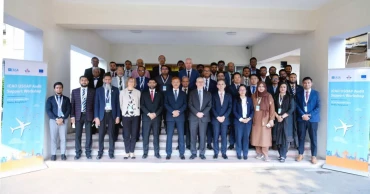
EU envoy calls for stronger Bangladesh–EU cooperation in civil aviation
European Union Ambassador and Head of Delegation to Bangladesh Michael Miller has underscored the potential for deeper Bangladesh-EU collaboration in the civil aviation sector, emphasising the need for a fair and competitive environment to unlock that potential.
Ambassador Miller stressed the "potential for greater EU-Bangladesh cooperation in civil aviation and the importance of a level playing field, underlining the EU’s offer on fleet renewal, green aviation, innovation and safety, and the wish to see Bangladesh’s aviation sector as a motor for economic growth."
Bangladesh and the European Union have strengthened their cooperation in civil aviation through two major technical events held in Dhaka on November 23–24, where experts and officials from Europe and across South Asia gathered to exchange knowledge on safety management and regulatory oversight.
Organised under the EU–South Asia Aviation Partnership Project (EU-SA APP)—an EU-funded initiative implemented by the European Union Aviation Safety Agency (EASA)—the activities combined a three-day Regional Aviation Safety Programme with a dedicated workshop on ICAO’s Universal Safety Oversight Audit Programme (USOAP).
Both events highlighted the growing emphasis on collaboration in civil aviation between Europe and Bangladesh.
A regional look at safety data and culture
The three-day first module of the Regional Aviation Safety Programme focused on Safety Management Systems (SMS) and Flight Data Monitoring (FDM), two key components of modern aviation safety worldwide.
Participants included representatives from the EU, civil aviation authorities, airlines, and industry from several South Asian states, creating a broad platform for regional dialogue.
Experts from European regional aircraft manufacturer ATR shared technical insights and operational case studies, while South Asian operators and regulators exchanged experiences in areas such as data use, risk management and safety culture.
For Bangladesh, hosting the event provided an opportunity to showcase its progress and exchange views with peers working in comparable operating environments, said the EU Embassy in Dhaka.
Regional cooperation on ICAO audit readiness
The second event, the USOAP Audit Support Workshop, brought together participants from Bangladesh and other EU-SA APP partner states to discuss approaches to ICAO’s Universal Safety Oversight Audit Programme, the global mechanism used to assess how effectively countries oversee their civil aviation systems.
The workshop served as a platform for shared learning, allowing states to compare experiences, review documentation and oversight practices, and discuss strategies for maintaining continuous compliance with international standards.
CAAB officials, EASA experts and representatives from neighbouring states exchanged perspectives on audit preparation, evidence management and regulatory challenges.
The collaborative nature of the discussions reflected a shared regional interest in strengthening oversight systems ahead of future ICAO assessments.
A partnership built on dialogue
Together, the two events demonstrate how cooperation between the EU and Bangladesh in aviation is evolving into a technical partnership grounded in dialogue and common priorities.
Bangladesh’s active role in hosting and contributing to these sessions positions it as a committed partner in efforts to enhance regional aviation safety and oversight, said the Embassy.
The Head of Delegation of the European Union and the chairman of Bangladesh’s Civil Aviation Authority joined the programme.
8 months ago
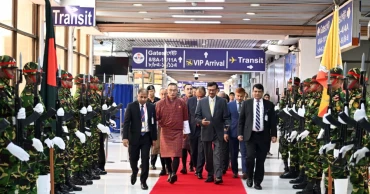
Bhutanese PM leaves Dhaka after 2-day state visit
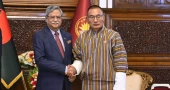
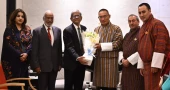
Bhutanese Prime Minister Tshering Tobgay left for home on Monday after concluding his two-day state visit to Bangladesh.
Foreign Affairs Adviser Md Touhid Hossain saw him off at Hazrat Shahjalal International Airport.
Commerce Adviser Sk Bashir Uddin and Foreign Secretary Asad Alam Siam were also present at the airport on the occasion, said Chief Adviser’s Deputy Press Secretary Abul Kalam Azad Majumder.
Before his departure, the Bhutanese Prime Minister was accorded a static guard of honour in line with state protocol.
During his stay in Bangladesh, the two countries signed two Memoranda of Understanding — one on healthcare services and another on internet connectivity.
BNP, Jamaat, NCP leaders meet Bhutanese PM
The Bhutanese Prime Minister also attended a series of events including bilateral talks with Bangladesh Chief Adviser Professor Muhammad Yunus.
His schedule also included meetings with advisers, key government officials and political leaders.
8 months ago
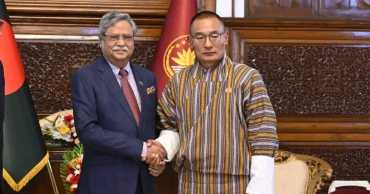
Bhutanese PM calls on President Shahabuddin
Bhutanese Prime Minister Tshering Tobgay on Sunday called on President of Bangladesh Mohammed Shahabuddin at Bangabhaban and discussed issues of mutual interest.
He signed the visitors' book there.
At the invitation of Chief Adviser Prof Muhammad Yunus, the Prime Minister of Bhutan is on a state visit to Bangladesh from November 22 to 24.
He is scheduled to leave Dhaka for Thimphu on Monday morning. Foreign Affairs Adviser Md Touhid Hossain will see him off at the airport.
8 months ago

Jatiya Party meets Commonwealth delegation in Dhaka
A Jatiya Party delegation met visiting Commonwealth team at Hotel InterContinental on Sunday evening to discuss the political climate and preparations for the upcoming national elections.
The Jatiya Party delegation was led by Chairman GM Quader, while the Commonwealth team was headed by Commonwealth Secretary General Shirley Ayorkor Botchwey.
During the meeting, both sides exchanged views on the ground situation, overall political environment, and the need for an electoral process that meets international standards.
GM Quader alleged that the interim government is failing to ensure a level playing field for all political parties.
He said the Jatiya Party was not given the opportunity to join discussions of the Consensus Commission or the Election Commission.
Among others, Jatiya Party Secretary General Shamim Haider Patwary, Presidium Member Mir Abdus Sabur Asud, and Engineer Mainur Rabbi Chowdhury, were also present.
8 months ago
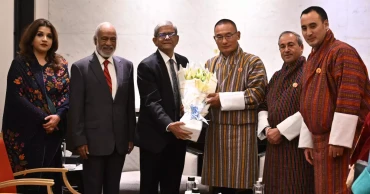
BNP, Jamaat, NCP leaders meet Bhutanese PM
Leaders of Bangladesh Nationalist Party (BNP) on Sunday met Bhutanese Prime Minister Tshering Tobgay and discussed issues of mutual interests.
BNP Secretary General Mirza Fakhrul Islam Alamgir, senior leader Dr Abdul Moyeen Khan and Shama Obaid were present at the meeting held at a city hotel.
Leaders of Bangladesh Jamaat-e-Islami and National Citizen Party also met the Bhutanese Prime Minister separately.
8 months ago

IGP leaves for Morocco to attend Interpol General Assembly
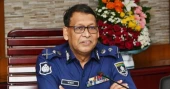
Inspector General of Police (IGP) Baharul Alam left Dhaka on Sunday morning for Morocco to attend the 93rd General Assembly of Interpol.
The four-day conference, scheduled from November 24–27 in Marrakech, will bring together high-level representatives from 196 member countries.
The IGP is leading a three-member Bangladesh delegation. Alongside participating in plenary sessions, he will hold bilateral meetings with heads of police forces from various countries to discuss information sharing, joint activities, capacity building, and enhanced international cooperation.
The Interpol General Assembly is the organisation’s largest global policing forum, where member states deliberate on counterterrorism, cybercrime, human trafficking, organised and transnational crime, police capacity enhancement, and broader coordination.
During the annual assembly, representatives of member states also take decisions on Interpol policies, procedures, budget, and future work plans.
Bangladesh’s participation in this year’s assembly is expected to further enhance the country’s international image, multilateral engagement, and global partnerships.
The IGP is scheduled to return home on November 30.
8 months ago