Foreign-Affairs

Fourth edition of Bay of Bengal Conversation begins in Dhaka Saturday
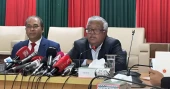
Centre for Governance Studies (CGS) President Zillur Rahman on Friday formally announced the commencement of the fourth edition of its international conference, the Bay of Bengal Conversation (BoBC) 2025, which will be held in Dhaka on November 22-24 in Dhaka.
“BoBC has emerged as one of South Asia’s most important Track-II diplomacy platforms, offering space to examine the fast-changing landscape of global politics," he said while speaking at a press briefing.
This year, the conference will center on global rivalries, regional realities, shifts in alliances and partnerships, information warfare, artificial intelligence, climate change, economic pressures, and migration, issues that define the world they live in today.
The theme for BoBC 2025 is “Rivals, Ruptures, Realignments."
Zillur said they chose this theme because we are living through a moment of profound transition.
The Bay of Bengal Conversation has always believed in the power of informed discourse, and the media is an essential part of that ecosystem.
"Our focus is on global issues, and the discussions will not specifically cover the elections in Bangladesh. It is time for Bangladesh to take its place as an active player, rather than remain a spectator. Tomorrow we begin three days of rich conversation. We hope for a very successful event”
At the same press briefing, CGS Executive Director Parvez Karim Abbasi highlighted the strategic relevance of the region.
“The Bay of Bengal is one of the world’s most dynamic zones of population growth and economic activity. BoBC creates a rare opportunity to bring together the region’s diverse experiences and policy approaches under one platform," he said.
He also said BobBC is the largest track II conference in Asia. "Despite political problems or being a small country we are hosting the conference for the 4th time in a row. We have very stimulated and interesting discussions ahead for the three days of the conference.”
Also present at the briefing were Subir Das, Member of the CGS Board of Directors; Depanjali Roy, Chief of Staff; and other members of the CGS team.
The press conference concluded successfully with an engaging question-and-answer session, where participants addressed key issues and shared valuable insights.
The three-day event will take place from 22 to 24 November at the Pan Pacific Sonargaon Hotel, Dhaka.
Over time, BoBC has grown into South Asia’s largest geopolitical international conference, establishing itself as a significant platform for regional diplomacy and strategic dialogue.
The Inaugural Speaker at this year’s conference will be Chief Justice of Bangladesh, Justice Syed Refaat Ahmed.
BoBC 2025 will bring together 200 speakers, 300 delegates, and more than 1,000 participants representing 85 countries.
The guest list includes former heads of state, ministers, diplomats, military experts, academics, researchers, journalists, business and investment leaders, human rights defenders, technology specialists, and representatives of international development organizations.
8 months ago
Heritage Week SME Fair to feature women-led businesses from Bangladesh, UK
Bangladesh High Commission in London has said preparations are in full swing for the highly anticipated SME Fair, set to take place during Heritage Week in Tower Hamlets on December 13-14.
This exciting event promises to be a fantastic showcase for talent, specifically highlighting the "incredible creativity and enterprise" of women entrepreneurs from Bangladesh, alongside the innovation of British-Bangladeshi women entrepreneurs.
This Fair, the High Commission said, represents a golden opportunity for these SMEs to achieve significant international exposure, forge crucial new connections, and celebrate their vital contribution to the economy and shared culture.
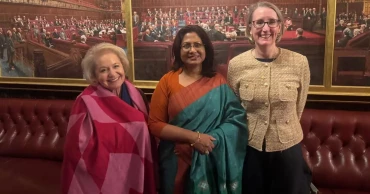
Bangladesh High Commissioner to Bangladesh Abida Islam held a "productive and in-depth discussion" with the UK Trade Envoy to Bangladesh Baroness Rosy Winterton, and British High Commissioner to Bangladesh Sarah Cook on November 20.
The comprehensive dialogue covered a range of important topics of mutual interest, cementing efforts to deepen the vibrant partnership between our two nations.
The High Commission strongly encouraged everyone to mark these dates and come out to wholeheartedly support these dynamic, women-led businesses.
Beyond commerce, the Heritage Week promises to be a truly memorable celebration of our rich cultural traditions and a powerful way to strengthen both community and business ties.
8 months ago
Work together to nurture open, inclusive maritime domain: Indian NSA
Indian National Security Adviser Ajit Doval on Thursday urged the countries of the Indian Ocean region to work together to ensure the "safety, security and stability" of the maritime domain, noting that the global security environment is challenging.
"The ocean is our biggest heritage. It is the engine that propels our economies," he said, adding that countries bound by maritime geography share a responsibility.
As countries joined by shared maritime geographies, Doval said it is their responsibility to ensure the safety, security and stability of the region.
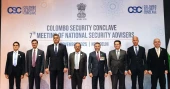
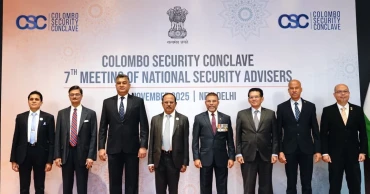
He was addressing the 7th meeting of the National Security Advisers of the Colombo Security Conclave (CSC) in New Delhi.
Doval hosted his counterparts from Member States including Maldives, Mauritius, Sri Lanka and Bangladesh. Seychelles participated as an Observer State, and Malaysia as a Guest.
NSA Doval called for shaping an open and rules-based maritime environment. "We need to shape a favourable environment to nurture an open, inclusive maritime domain and conformity on a rule-based order."
The CSC was formed to promote closer cooperation between Member States on vital matters of security and to strengthen partnerships for enhancing regional security in the Indian Ocean Region.
The signing ceremony for the Founding Documents of the CSC was held in Sri Lanka in August 2024.
At the 7th NSA level meeting, the first Secretary General, appointed by India, presented a comprehensive review to the CSC Member States on the decisions taken at the 6th NSA level meeting in Mauritius on 7-8 December 2023, said the Indian Ministry of External Affairs.
The activities undertaken since then under the five pillars of cooperation, namely Maritime Safety and Security; Countering Terrorism and Radicalisation; Combating Trafficking and Transnational Organised Crime; Cyber Security and Protection of Critical Infrastructure and Technology; and Humanitarian Assistance and Disaster Relief were also discussed.
The CSC Member States also discussed ways of enhancing cooperation under identified pillars, including through training and capacity building.
They reiterated their commitment to the vision and objectives of CSC.
We don’t afford to allow any exogenous or indigenous forces: Dhaka tells CSC
The CSC Members welcomed the decision of the Republic of Seychelles to accede to the CSC as a full member.
Delegations of Member States were respectively led by Dr Khalil-ur-Rehman, National Security Adviser, People’s Republic of Bangladesh, Ibrahim Latheef, DC (Retd.), Lt. Col. (Retd.), National Security Adviser, Republic of Maldives; Rahul Rasgotra, National Security Adviser, Republic of Mauritius; and Air Vice Marshal Sampath Thuyacontha (Retd.), Secretary, Ministry of Defence, Democratic Socialist Republic of Sri Lanka.
The delegation from Seychelles was led by Major General Michael Rosette, Chief of Defence Forces, Republic of Seychelles Defence Forces. Malaysia participated as a Guest for the first time and was represented by Badrul Shah Mohd Idris, Deputy Director General of the Malaysian National Security Council.
8 months ago

Bangladesh becomes first Asian country to ratify all 10 ILO fundamental instruments
Bangladesh has become the first Asian country to ratify all 10 ILO fundamental instruments, apart from being the first in South Asia to ratify ILO Convention No. 190.
The International Labour Organization (ILO) on Thursday commended the Government of Bangladesh for the landmark ratification of three key ILO Conventions, including two fundamental ILO Conventions on occupational safety and health, reflecting the country’s strong commitment to promoting safer workplaces and ensuring dignity and respect for all workers.
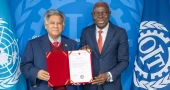
At the ILO headquarters in Geneva, Brigadier General (R) Dr. M. Sakhawat Hussain, Labour and Employment (MoLE) and Ministry of Shipping Adviser, met with Gilbert F. Houngbo, the ILO Director-General, and deposited the instruments of ratification for the Occupational Safety and Health Convention, 1981 (No. 155), the Promotional Framework for Occupational Safety and Health Convention, 2006 (No. 187), and the Violence and Harassment Convention, 2019 (No. 190) .
With these ratifications, Bangladesh becomes the second country in Asia-Pacific region to ratify all ILO fundamental Conventions, and the first country in South Asia to ratify Convention No.190, said the UN agency.
These ratifications follow the recent adoption of the Bangladesh Labour (Amendment) Ordinance, 2025 on 17 November 2025, which brings national legislation into closer alignment with international standards.
The Ordinance reinforces critical protections by prohibiting discrimination, violence, and harassment at work, while affirming workers’ rights to remove themselves from situations of imminent risk without retaliation.
"The ILO commends the Government of Bangladesh for advancing the decent work agenda with the ratification of these critical conventions. The application of these ratifications will lead to safe and healthy workplaces for millions of workers, and tackling violence and harassment will increase women's participation in the labour force. These commitments will strengthen Bangladesh’s global competitiveness as a responsible trading partner and investment destination," said Max Tuñón , the Country Director of the ILO Office in Bangladesh.
The ratifications send a strong signal of Bangladesh’s commitment to building a world of work based on dignity and respect, ILO said.
In addition, International Labour Standards (ILS), as minimum standards, increasingly form part of the requirements for trade agreements, and demonstrating compliance with human rights due diligence laws is essential.
Bangladesh becomes first country in South Asia to sign set of 3 ILO conventions
About the Ratified Conventions
ILO Conventions Nos 155 and 187 establish a comprehensive framework for fostering a preventive occupational safety and health culture, promoting a systems-based approach to OSH management that engages government, employers, and workers.
ILO Convention No. 190, the first international treaty recognizing the right to a world of work free from violence and harassment—including gender-based violence—extends protection to all workers, regardless of their contractual status, and applies both to formal and informal sectors.
8 months ago

Bangladesh Navy warship sails for Sri Lanka to join International Fleet Review
Bangladesh Navy warship BNS Prottoy left for the Indian Ocean island of Sri Lanka from on Thursday to take part in an International Fleet Review (IFR), being held as part of the Sri Lankan Navy's 75th anniversary.
The international maritime gathering will be held in Colombo from November 27 to 30, with warships, senior delegations and naval experts from various countries expected to participate at the event.
According to the Bangladesh Navy, the contingent includes 29 officers and a total of 150 sailors aboard BNS Prottoy, led by Captain Towhidul Haque Bhuiyan.
A departure ceremony was held at the Chattogram Naval Berth, where Commander of the Chattogram Naval area, Rear Admiral Mohammad Moinul Hasan, attended as chief guest and delivered guidance-oriented remarks to the officers and sailors.
Highlighting the Navy’s proud track record, he said Bangladesh Navy has previously taken part in international fleet reviews hosted by different countries, demonstrating professionalism and enhancing the global image of both Bangladesh and its naval force.
The multinational naval assembly is viewed as an important platform for strengthening maritime security cooperation, particularly in combating piracy, drug and arms trafficking, human smuggling and illegal fishing.
It is also expected to advance collaboration in humanitarian assistance, disaster management and multilateral military engagement.
Officials expressed hope that the tour will deepen diplomatic ties with participating nations and help enhance the professional skills of naval personnel.
Following the International Fleet Review, BNS Prottoy is scheduled to return to Chattogram on December 5.
As per naval tradition, the ship was formally seen off to ceremonial music performed by the Navy band.
Family members of the departing crew and senior naval officers were also present at the event.
8 months ago

Australia joins global partners to combat visa fraud
Australia has joined global partners to combat visa fraud during International Fraud Awareness Week, stressing that visa fraud is a growing global issue, with criminals deceiving individuals through false visa guarantees, fake visa documents, and claims of being legitimate migration agents.
These scams can result in significant financial loss, emotional distress, and long-term impacts on a person’s ability to travel, said the Australian High Commission in Dhaka on Thursday, noting that the Australian government never requests payments through social media or unofficial websites.
The Australian High Commission in Bangladesh, in partnership with international counterparts, is raising awareness of visa scams and fraudulent migration practices as part of International Fraud Awareness Week, 16-22 November 2025.
Acting Australian High Commissioner to Bangladesh Clinton Pobke said visa scams exploit those with a genuine interest who want to travel or study in Australia.
Pobke said there is a lot of false visa information online and in social media, including fake news stories.
With a new Home Affairs Office presence in Dhaka, the acting High Commissioner said they are working to help protect visa applicants from losing their savings and safeguard the integrity of Australia’s migration system.
“Australia is proud to stand with our international partners to combat visa fraud. The Fighting Visa Fraud campaign sends a clear message — if you are applying for a visa, always use trusted, official sources and beware of anyone promising shortcuts or guaranteed results.”
At the 2025 Five Country Ministerial (FCM) held in September, Ministers from Australia, Canada, New Zealand, the United Kingdom, and the United States affirmed their shared commitment to protect the integrity of migration and border systems.
As part of this commitment a coordinated 4 country international campaign — ‘Fighting Visa Fraud’ — aimed at protecting migrants and strengthening global border integrity is being launched this week.
While the United States is unable to participate in this year’s launch, it remains supportive of the initiative.
The Fighting Visa Fraud campaign demonstrates the commitment of FCM partners to combat visa scams collaboratively and raise public awareness.
International Fraud Awareness Week is a global event encouraging governments, businesses, and community organisations to work together to reduce the impact of fraud through education and awareness.
Educating visa applicants
Aligned messages delivered by participating countries will educate visa applicants about the risks and tactics used by fraudulent facilitators; reduce the global scale and impact of visa fraud; and encourage safe practices when engaging with visa and migration services.
Tarique hails Australian MPs’ call for democracy, election integrity in Bangladesh
The campaign will continue into 2026, particularly during peak visa application periods, with tailored messages developed to address local challenges and encourage behaviour change.
Stay informed and stay safe
“It’s extremely likely that scam agents are operating in your community, pretending to be legitimate migration professionals and providing illegal migration advice,” said the High Commission.
“While we continue to target these criminals, we need your help to spread awareness within your community about the dangers of engaging with scam agents. We encourage you to share the following advice with your networks.”
Visa applicants have been encouraged to visit homeaffairs.gov.au/visascams to learn how to recognise and report visa scams.
8 months ago

We don’t afford to allow any exogenous or indigenous forces: Dhaka tells CSC
Bangladesh on Thursday pledged its readiness to work hand in hand to ensure a “stable, secure, peaceful and prosperous” Indian Ocean region and to confront the common challenges, stressing that they do not afford to allow any exogenous or indigenous forces.
“We do not afford to allow any exogenous or indigenous forces to challenge the security and well-being of our community and any part thereof,” said National Security Adviser (NSA) Dr Khalilur Rahman while delivering the country statement at the 7th meeting of the National Security Advisers (NSAs) of the Colombo Security Conclave (CSC) in New Delhi.
Dr Rahman said they continue to stand ready to find common grounds to address common issues based on mutual trust and openness.
Bangladesh, India and other Member States sat together in New Delhi to promote closer cooperation on vital matters of security and strengthen partnership for enhancing regional security in the Indian Ocean region.
India hosted the 7th meeting of the National Security Advisers (NSAs) of the Colombo Security Conclave (CSC).
Indian NSA Ajit Doval hosted his counterparts from Member States including Maldives, Mauritius, Sri Lanka and Bangladesh.
Seychelles participated as an Observer State, and Malaysia was invited as a Guest.
Dr Rahman who led the Bangladesh delegation at the CSC said Bangladesh looks at the Conclave to evolve into an open, inclusive regional multilateral organisation, driven by a vision of open regionalism.
He said Bangladesh recognises the importance of the five identified pillars of the Conclave's work and the important role that CSC can play along these pillars in enhancing collective security, regional stability and shared prosperity for all members of the region.
Dr Rahman said Bangladesh has been steadfastly playing its dual role in this regard and they are working alongside regional nations to enhance maritime safety and security, combat piracy and other organised maritime crimes and terrorism, as well as to ensure cybersecurity.
“Bangladesh has consistently condemned global terrorism. We have a zero-tolerance policy towards all forms of terrorism, under any circumstance,” he said.
With growing digitalisation and technological developments, including artificial intelligence, Dr Rahman said, the menace of cybercrime is affecting all their countries. “Cybersecurity is thus a high priority in Bangladesh.”
Of late, he said, they have been facing constant barrage of misinformation and disinformation. “We are committed towards securing our own cyberspace, critical infrastructure and technology, not only for the safety of our citizens.”
However, he said, national actions are not enough and they have already heard this point from other speakers of this forum.
8 months ago

Bangladesh, other CSC members discuss regional security, counterterrorism
Bangladesh, India and other Member States on Thursday sat together in New Delhi to promote closer cooperation on vital matters of security and strengthen partnership for enhancing regional security in the Indian Ocean region.
India hosted the 7th meeting of the National Security Advisers (NSAs) of the Colombo Security Conclave (CSC).
Indian NSA Ajit Doval hosted his counterparts from Member States including Maldives, Mauritius, Sri Lanka and Bangladesh.
National Security Adviser (NSA) and High Representative for the Rohingya Issue Dr Khalilur Rahman led the Bangladesh delegation.
Seychelles participated as an Observer State, and Malaysia was invited as a Guest.
In keeping with this vision and objective, the 7th meeting of the NSAs is seen an opportunity for the participants to review the activities under the different pillars of cooperation, namely- maritime safety and security; countering terrorism and radicalisation; combating transnational organised crime; cyber security and protection of critical infrastructure and humanitarian assistance and disaster relief, and discuss the roadmap and action plan for 2026, said the host country- India.
Earlier, National Security Adviser (NSA) Dr Khalilur Rahman on Wednesday met his Indian counterpart Doval in New Delhi.
“They discussed work of the CSC (Colombo Security Conclave) and key bilateral issues,” said an official at the Bangladesh High Commission in New Delhi.
Dr Rahman invited Doval to visit Bangladesh at his convenience.
Dr Rahman reached New Delhi on Tuesday night at the invitation of National Security Adviser of India Ajit Doval to attend this regional forum.
The 6th meeting of the NSAs of CSC was held in December 2023 in Mauritius, and Member States met again during the Signing Ceremony for the Founding Documents of CSC in Sri Lanka in August 2024.
The Deputy National Security Advisers (DNSAs) of CSC countries have also been meeting at regular intervals.
The CSC’s core objective is to promote regional security by addressing transnational threats and challenges of common concern to the Member States.
NSA Dr Rahman’s participation at the Colombo Security Conclave in New Delhi is in continuation of the interim government's efforts to foster mutually beneficial regional cooperation, Bangladesh said.
The interim government emphasises regional cooperation as a priority and has actively participated in meetings of various regional bodies.
In April this year, Chief Adviser Prof Muhammad Yunus was elected Chair of BIMSTEC. He has been working hard to reactivate SAARC, said the press wing.
NSA Dr Rahman earlier led a Bangladesh delegation to the China-Indian Ocean Region Forum in Kunming, China.
Bangladesh was officially welcomed in 2024 as the fifth Member State of the Colombo Security Conclave (CSC), a grouping that includes India, Sri Lanka, Mauritius and the Maldives. Seychelles participates with observer status.
8 months ago

Bangladesh seeks urgent international actions for Rohingya repatriation
Bangladesh has called for urgent international actions for return of the Rohingyas as it was no longer possible for Bangladesh to bear the burden of hosting 1.3 million Rohingyas.
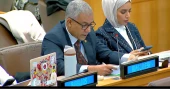
The UN General Assembly’s third committee has adopted by consensus the resolution on Rohingya Muslims calling for renewed global efforts for a durable solution to the Rohingya crisis and for the safe return of Rohingyas to Myanmar.
Jointly tabled by the OIC and the EU, the resolution was cosponsored by 105 countries.
UNHCR welcomes Italy’s contribution of EUR 2.5mn for essential assistance to Rohingyas
This yearly resolution, being adopted since 2017, expressed concern over the continued human rights violations in Rakhine State, targeting of Rohingya Muslims, restrictions on humanitarian access, and the continued influx of Rohingyas into Bangladesh and other neighboring countries.
It also called for continuous international engagements for safe and sustainable return of the Rohingya to Myanmar, said the Ministry of Foreign Affairs on Thursday.
Speaking after the adoption on November 19, Bangladesh delegation thanked the member states for their support but expressed disappointment that no tangible progress could be made in the last eight years to make any headway for return of the Rohingyas to their homeland in Myanmar.
8 months ago

Bangladesh to roll out red carpet to welcome Bhutanese PM Saturday
Bangladesh will roll out the red carpet on Saturday to welcome Bhutanese Prime Minister Tshering Tobgay who will arrive on a two-day state visit aimed at elevating bilateral relations through enhanced connectivity, trade, and investment.
“We are hopeful that this state visit of the Prime Minister of Bhutan, one of Bangladesh's closest neighbours, will make an important contribution to the development of bilateral relations between the two countries and the sub-regional context,” Foreign Secretary Asad Alam Siam told reporters at the Ministry of Foreign Affairs on Thursday.
Director General (Public Diplomacy) S.M. Mahbubul Alam and Director General (South Asia) Ishrat Jahan, among others, were present at the media briefing.
During the visit, the Bhutanese Prime Minister will attend a series of engagements, including talks with Chief Adviser Prof Muhammad Yunus. He is visiting at the invitation of the Chief Adviser.
The Foreign Secretary said the Bhutanese leader will be accompanied by a 13-member high-level delegation, including the Minister of Foreign Affairs, and the Minister for Industry, Commerce and Employment, as well as senior government officials.
On Saturday morning, the Chief Adviser will formally welcome the Bhutanese Prime Minister at Hazrat Shahjalal International Airport.
After receiving a guard of honor at the airport, the Bhutanese Prime Minister will pay homage to the martyrs of Bangladesh’s Great Liberation War at the Savar National Mausoleum. In the afternoon, Foreign Adviser Md Touhid Hossain will pay a courtesy call on him.
Later the same day, the Prime Minister will hold a private meeting with Prof Yunus, followed by a delegation-level bilateral meeting between the two countries.
The meeting will discuss various areas of bilateral cooperation, including trade and investment, communication, education, agriculture, health, energy and power, telecommunications, tourism, culture, youth and sports, and industry.
Following the talks, three MoUs are likely to be signed with Bhutan on international internet bandwidth, recruitment of specialist doctors and health workers in Bhutan, and agricultural cooperation. Foreign Secretary Siam said these matters are still under discussion.
The Bhutanese Prime Minister will also attend a state dinner to be hosted in his honor.
On Sunday, he will pay a courtesy call on President Mohammed Shahabuddin at Bangabhaban.
Besides, several Advisers to the Bangladesh government are expected to meet him, and a Bangladeshi business delegation may also pay a courtesy call.
On Monday morning, the Bhutanese Prime Minister will depart Dhaka for Thimphu, with the Foreign Adviser seeing him off.
The Foreign Secretary said Bangladesh will have the opportunity to present specific proposals for bilateral cooperation during the delegation-level meeting.
Bangladesh may offer Bhutan several cooperation initiatives in the fields of health, education, trade, economic development, agriculture, tourism, and sports.
Dhaka may also seek Bhutan’s cooperation in recruiting Bangladeshi professionals in various sectors, including trade expansion and water management. Regional and multilateral issues are also expected to be discussed.
The Bhutanese Prime Minister will interact with the Bhutanese community residing in Bangladesh.
The Bhutanese Foreign Ministry said the visit is expected to further consolidate the longstanding ties of friendship and cooperation between the two countries and create new avenues for partnership and collaboration for mutual benefit.
Bhutan is keen to share its hydroelectric potential with Bangladesh and is ready to welcome investments from Bangladeshi pharmaceutical companies. The country has also sought Bangladesh’s support in establishing fiber-optic connectivity in Bhutan.
Foreign Secretary Siam noted that Bangladesh and Bhutan have historically enjoyed friendly relations, which have deepened through continuous high-level exchanges. Bangladesh’s first preferential trade agreement was signed with Bhutan in 2020.
Bhutan proposes signing FTA with Bangladesh
He said cooperation between the two countries is gradually expanding on the basis of mutual respect, goodwill, and sincerity, with the aim of ensuring the continued prosperity of both peoples. The upcoming visit will focus on further broadening and deepening this relationship.
On the sidelines of the UN General Assembly in September this year, Chief Adviser Prof Yunus invited Prime Minister Tobgay to visit Bangladesh, an invitation the Bhutanese leader warmly accepted.
Prime Minister Tobgay regards Prof Yunus as his “role model,” affectionately referring to him as “My Professor.”
During their meeting in New York, the Bhutanese Prime Minister expressed strong interest in signing a Free Trade Agreement (FTA) with Bangladesh and in linking the two countries’ economic zones to boost trade and investment.
He said both countries could benefit significantly if Bhutan’s Special Economic Zone, the Gelephu Mindfulness City (GMC), is connected to the Special Economic Zone in Kurigram, which Bangladesh has officially allocated for Bhutanese investors.
Prof Yunus welcomed these proposals, emphasizing the importance of expanding trade and investment opportunities. “Bangladesh and Bhutan can take their bilateral relations to a new level through improved connectivity, trade, and investment,” he said.
8 months ago