Foreign-Affairs

Bangladesh, Saudi Arabia move to boost skills cooperation
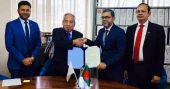
The National Skills Development Authority (NSDA) of Bangladesh and the Saudi National Committee (SNC) for Workers have agreed to strengthen cooperation in skills and workforce development.
NSDA Executive Chairman (Secretary) Dr Nazneen Kawshar Chowdhury met with SNC Chairman Eng. Nasser Abdulaziz Al-Jarid in Riyadh to explore new areas of collaboration.
During the meeting, NSDA proposed several joint initiatives, including aligning skills certification between Bangladesh and Saudi Arabia, sharing labor market insights, building institutional capacity, and promoting ethical recruitment practices.
The discussion also focused on engaging Saudi employers to recognize NSDA-certified skills, which would help Bangladeshi workers gain better job opportunities and fair treatment in the Saudi labor market.
Saudi Arabia to allow 78,500 Bangladeshis for 2026 Hajj
The SNC expressed strong interest in signing a memorandum of understanding (MoU) with NSDA to enhance cooperation and support Bangladeshi workers — both current and future — in Saudi Arabia.
Officials said the partnership marks an important step toward ensuring that Bangladeshi workers are globally recognized, better protected, and equipped for decent employment abroad.
8 months ago
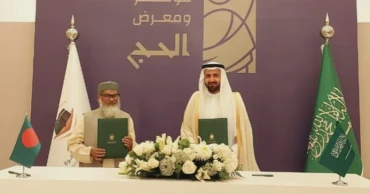
Saudi Arabia to allow 78,500 Bangladeshis for 2026 Hajj
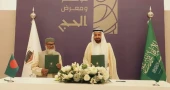
Bangladesh and Saudi Arabia on Tuesday (11th November 2025) signed the Hajj agreement for 2026, under which 78,500 Bangladeshi pilgrims will be able to perform the pilgrimage next year.
Dr AFM Khalid Hossain, religious affairs adviser, and Dr Tawfiq bin Fawzan Al Rabiah, Saudi Minister of Hajj and Umrah, inked the deal on behalf of their respective countries.
Both sides discussed the overall management of the Hajj pilgrimage during the signing ceremony. Adviser Khalid briefed the Saudi minister on Bangladesh’s recent progress in Hajj management and requested enhanced facilities for Bangladeshi pilgrims, including improved tent arrangements, water supply, and sanitation services in Mina, Arafat and Muzdalifah, said a media release issued by the ministry on Tuesday night.
KSA bars pilgrims with incurable diseases from performing Hajj: Ministry
Lauding Bangladesh’s Hajj management system, Tawfiq assured that Saudi authorities would continue to provide the highest level of services to Bangladeshi pilgrims.
During the meeting, the adviser also invited the Saudi Minister to visit Bangladesh while he accepted the invitation.
Religious Affairs Secretary Md Kamal Uddin, Bangladesh Ambassador to Saudi Arabia Delwar Hossain, Saudi Deputy Minister of Hajj and Umrah Dr Hassan Manakhara, Saudi Ambassador to Bangladesh Dr Abdullah bin Jafar H. bin Abyah, and senior officials from both countries, among others were present at the signing ceremony.
Hajj agency’s license cancelled for failing to send pilgrims to Hajj
8 months ago

Over 5,300 Rohingyas embarked on dangerous maritime journeys from Bangladesh, Myanmar this year: UN agencies
More than 5,300 Rohingya refugees, so far this year, have embarked on dangerous maritime journeys from Bangladesh and Myanmar, with over 600 reported to be missing or have lost their lives, said UN agencies on Tuesday.
Limited assistance and opportunities in refugee camps in Bangladesh, along with escalating conflict and a worsening humanitarian situation in Myanmar, exacerbated by funding cuts, contribute to more and more people attempting perilous sea journeys in search of safety and protection.
In recent years, over two thirds of Rohingya embarking on dangerous sea journeys are women and children.
UNHCR, the UN Refugee Agency, and IOM, the International Organization for Migration, are deeply saddened over the recent tragic capsizing of a boat off the coast of Malaysia and Thailand carrying up to 70 people from Myanmar, including Rohingya.
Some 13 people have been safely brought ashore by Malaysian authorities, with at least 21 confirmed deaths, including two teenage Rohingya girls recovered by Thai authorities. The rest of the passengers remain unaccounted for.
UNHCR and IOM commended the authorities and local communities in Malaysia for their life-saving efforts in rescuing those from the capsized boat.
UNHCR and IOM stand ready to support local authorities by providing assistance to the survivors of this tragic incident following disembarkation.
UNHCR and IOM are extremely concerned about the scale of potential loss of life as at least one other boat is reportedly still at sea, carrying a further 230 people.
Saving lives and rescuing those in distress at sea is a humanitarian imperative and a longstanding duty under international maritime law.
UNHCR and IOM continue to call for more resources and stronger regional and international efforts to enhance search-and-rescue capacity and safe access to asylum to avoid such tragedies.
Death toll from capsized Rohingya migrant boat rises to 26 off Malaysia, Thailand
Greater regional and international support is also needed to achieve a political solution to the crisis and end the hostilities in Myanmar.
Until the drivers of onward movement and the root causes of forced displacement in Myanmar are resolved, refugees will continue to undertake dangerous journeys in search of safety.
UNHCR and IOM are working with national authorities to strengthen protection and solutions of refugees, migrants, and stateless people moving along key routes, including South and South-East Asia.
This “route-based approach” aims to save lives, protect people and reduce harm, and support States in effectively managing mixed movements.
8 months ago
Global Harmony: Bangladesh’s rich cultural heritage to shine in Riyadh
The ‘Bangladesh Culture’ segment of the prestigious ‘Global Harmony 2’ initiative is set to begin on Tuesday afternoon (5:30 pm KSA time), showcasing the vibrant and diverse cultural heritage and lifestyle of Bangladesh.
This high-profile event will highlight various aspects of the lives of Bangladeshi expatriates in Saudi Arabia, offering visitors a colorful glimpse into the nation’s traditions, art, and customs.
A diverse lineup of artistes, celebrities and influencers from Bangladesh, including renowned singer Asif Akbar and actress Dighi, will celebrate the country’s rich cultural identity through performances at Al-Suwaidi Park over the four-day event.
Filled with lively performances, traditional music and dance and a taste of authentic Bangladeshi cuisine, the celebration promises to be a spectacular showcase of Bangladesh’s heritage.
The artistes will present a series of cultural and theatrical performances reflecting the nation’s artistic excellence.
Last year, the event featured iconic Bangladeshi rock legend Nagar Baul James, DJ Sonica and popular singers Habib Wahid, Porshi, and Beauty Khan — with James’s first-ever performance in Riyadh being a major highlight.
Read more: Saudi Arabia to roll out digital deportation platform
The Global Harmony Initiative continues to host a series of cultural weeks representing 14 countries over a span of 49 days.
The programme is part of the Kingdom’s broader efforts to promote intercultural dialogue and mutual understanding, strengthening Riyadh’s role as a global hub for cultural and civilisational diversity.
The Saudi Ministry of Media concluded the Indian Cultural Week, another installment of the ‘Global Harmony 2’ initiative.
The event attracted over 200,000 visitors and featured an array of artistic and cultural performances that reflected the deep-rooted ties between Saudi Arabia and India, while celebrating Riyadh’s growing cultural diversity.
The Indian Cultural Week, an initiative under the Quality of Life Program supporting the goals of Saudi Vision 2030, brought together more than 100 Indian artists who presented theatrical, artistic and heritage performances that highlighted India’s rich cultural identity.
Interactive pavilions showcased traditional arts, crafts, cuisine, and customs from different regions of India, drawing significant attention from diplomats, cultural figures, and large crowds of citizens, residents and members of the Indian community.
The week concluded with energetic artistic performances by Indian troupes, met with enthusiastic audience participation and applause, embodying the spirit of cultural exchange that the Kingdom seeks to foster.
Read more: Saudi Arabia set to shorten Umrah visa validity
8 months ago

Bangladesh stands by India at this distressful hour
Bangladesh High Commissioner in New Delhi and all members of the High Commission on Monday (10th November 2025) deeply condoled the tragic death of at least 10 Indians and many injured in the car blast in Red Fort, Delhi.
"Our earnest thoughts | prayers remain with all those impacted, including their families," said the High Commission in a message.
The High Commission said Bangladesh stands by India at this distressful hour.
Car blast near Delhi’s Red Fort kills 8: Police
Thousands of tourists visit the 17th Century Red Fort every day, which lies just a few metres from a busy trading hub
Delhi's police commissioner says it happened 18:52 local time (13:22 GMT), when a slow-moving vehicle stopped at a red light before it exploded
India's Prime Minister Narendra Modi shares his condolences "to those who have lost their loved ones" and says he is reviewing the situation
Police say they have not yet found what caused the blast
Read more: Car explosion near New Delhi’s iconic Red Fort leaves at least 8 dead, according to police
8 months ago
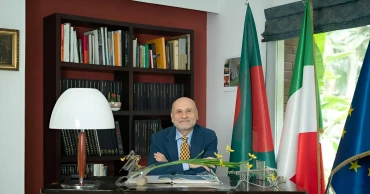
Irregular entry, false asylum claims harm Bangladesh’s global standing: Italian Ambassador
Italian Ambassador to Bangladesh Antonio Alessandro on Monday (10th November 2025) said Illegal migration affects Bangladesh’s passport ranking and complicates bilateral cooperation, stressing that migration must take place through legal channels.
“Irregular entry into Italy and false asylum claims ultimately harm Bangladesh’s global standing and passport ranking,” he said.
The Italian Ambassador said his country attaches high importance to its relations with Bangladesh, particularly in migration, investment, and cooperation, while calling for stronger institutional reforms and lawful migration to deepen bilateral ties.
He was speaking at a seminar titled “Strengthening Ties: The Future Vision of Bangladesh–Italy Relations” at the Bangladesh Institute of International and Strategic Studies (BIISS).
Ambassador Alessandro said Bangladesh and Italy remain “important partners” in migration and development.
He said around 18,000 Bangladeshis entered Italy illegally through Libya this year, while 9,000 Bangladeshi nationals received legal visas, including 530 students.
Read more: Prof Yunus leaves for Rome to attend World Food Forum
The Ambassador said Italy maintains defence cooperation with Bangladesh but “does not sell weapons to any country under the pretext of geopolitical considerations or partnerships.”
He said Bangladesh would decide independently if and when it wishes to purchase defence equipment from Italy.
Ambassador Alessandro expressed optimism that the upcoming general election in February would be free and fair, saying Italy supports Bangladesh’s democratic process.
“We believe reforms will bring stability, ensuring no one feels compelled to seek political asylum abroad,” he said.
Highlighting investment challenges, he pointed to the need for greater credibility of public documents and lower customs duties to attract small and medium-sized Italian companies.
He noted that Bangladesh’s readymade garments are exported to Italy, while industrial machinery is imported from Italy.
UNHCR welcomes Italy’s contribution of EUR 2.5mn for essential assistance to Rohingyas
He stressed the importance of fair and transparent procedures to build investor confidence and promote mutually beneficial growth.
The Ambassador also mentioned that Italian Prime Minister Giorgia Meloni is expected to visit Dhaka soon, after postponing her earlier Asian tour due to discussions on the Ukraine war.
BIISS Director General Major General Iftekhar Anis chaired the seminar.
Professor Dr. Syeda Rozana Rashid of Dhaka University and Md. Mosharraf Hossain, Director General (East Europe, CIS, West Europe and EU) of the Ministry of Foreign Affairs, presented papers, while Professor Dr. Kazi Maruful Islam moderated the session.
The seminar underscored the growing importance of Bangladesh–Italy relations, highlighting mutual interest in strengthening cooperation across labour migration, economic partnership, defence dialogue, and institutional transparency.
Both sides reiterated their shared vision of advancing a stable, prosperous and inclusive future built on mutual respect and strategic cooperation.
Read more: Bangladesh-Italy’s economic ties in focus as Meloni mulls Dhaka visit
8 months ago
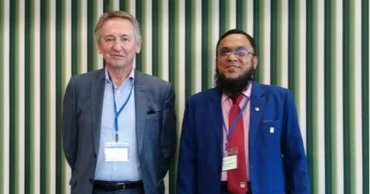
Germany to fund data and research centre in Dhaka
The German Bureau of Statistics and Research Center has announced to build a data and research centre in Dhaka with its own fund to facilitate activities.
Director General of the bureau Dr Peter Harris and Global Economist Forum (GEF) President Dr Enayet Karim signed an agreement on behalf of their respective organisations on Sunday.
The signing ceremony was held at the 16th Meeting of the International Agencies and Expert Group (IAEG) under the United Nations Sustainable Development Goals (SDGs) in the Japanese city of Kitakyushu.
Under the agreement, the German organisation will host 50 Bangladeshi young researchers every year, to be started from 2026.
They will also train Bangladeshi young researchers in Germany with full-funded scholarships.
Meanwhile, the four-day summit concluded on Sunday with a call for building a universal data center to ensure accurate data for a sustained world.
Representatives from the United Nations, World Bank, IMF, member states and various international organisations attended the summit.
8 months ago
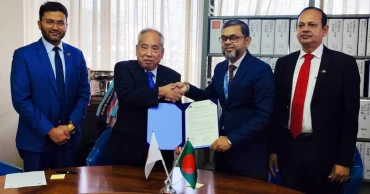
EWU inks student exchange MoU with Japanese Okayama Shoka University
Bangladesh’s East West University (EWU) has inked a Memorandum of Understanding (MoU) with Japan’s Okayama Shoka University to launch a student exchange program between the two institutions.
The signing ceremony was held on Monday at Okayama University in Okayama, Japan, said a press release.
The MoU was signed by Professor Akio Ijiri, President of Okayama Shoka University and Dr. Asik Mossadik, Pro Vice-Chancellor of East West University.
Md. Daud Ali, Ambassador of Bangladesh to Japan, attended the ceremony and underscored the diplomatic and educational significance of this partnership.
The collaboration marks a significant milestone in Okayama University’s ongoing internationalisation initiatives.
The Japanese university currently maintains exchange programs with 60 universities in China and 3 universities in South Korea, while new partnerships with institutions in Vietnam and Thailand are in progress.
The newly signed MoU aims to facilitate reciprocal student mobility, fostering cross-cultural understanding, joint research, academic collaboration and opportunity to study at Okayama Shoka University in Japan during the 3rd and 4th years of the undergraduate course.
It is also expected to expand career opportunities for Bangladeshi students in Japan.
Details regarding the implementation and timeline of the first student exchanges will be announced soon.
8 months ago
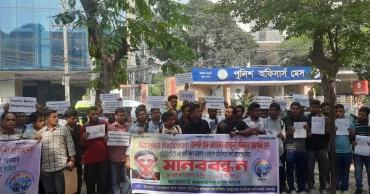
Bangladeshi migrant workers demand compensation for abuse in Malaysia
Bangladeshi migrant rights groups have demanded immediate action to ensure justice, fair compensation and payment of overdue wages for Bangladeshi workers allegedly subjected to abuse by two Malaysian companies -- Mediceram and Kawaguchi.
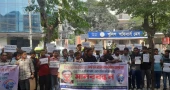
The call came during a human chain organised on Monday in front of the Ministry of Expatriates’ Welfare and Overseas Employment by the Migrant Welfare Network Malaysia and a Bangladesh-based expatriate rights platform.
Speakers at the programme compared the exploitation faced by workers at the two firms to modern-day slavery, blaming both the Bangladesh High Commission in Malaysia and the Expatriates’ Welfare Ministry for failing to protect the victims.
Workers who had been employed at Mediceram alleged that they were subjected to delayed payments, threats, physical abuse, and inhumane living conditions for years. The company allegedly confiscated their passports, and many workers became undocumented as their work permits were not renewed.
New doors open to Malaysia for Bangladeshi recruiting agencies, but new rules deemed too strict
In early November, the company reportedly forcibly deported 15 workers who had demanded renewal of their permits and payment of back wages.
Meanwhile, workers from Kawaguchi said they have been facing irregular salary payments since 2022 and went seven months without pay as of September 2024.
Although some compensation was given, most have yet to receive their full dues. The company’s owner reportedly shut down operations without paying 30 lakh ringgit in arrears owed to 251 workers.
The protesting workers presented seven demands, including immediate compensation for those forcibly deported from Mediceram, a halt to all forced repatriations, and assistance in transferring affected workers to responsible employers through proper legal channels.
They also called for a ban on hiring Bangladeshi workers by Mediceram and its associated companies, and demanded full payment of overdue wages from Kawaguchi.
Besides, the protesters urged reforms in the operations of the Bangladesh High Commission in Kuala Lumpur to make it more migrant-friendly and called for a comprehensive overhaul of the country’s recruitment and migration system, emphasising the protection of workers’ rights over remittance inflow.
8 months ago
Denmark backs rights, mental health, media freedom in Bangladesh
Denmark has launched a new partnership to strengthen human rights, trauma-informed mental health and media freedom in Bangladesh.
The interim government, led by Nobel laureate Prof Muhammad Yunus, has called on civil society and state institutions to strengthen the country’s capacity in human rights and help build a more inclusive future.
In response, the Embassy of Denmark in Bangladesh has announced its support of DKK 25 million to a consortium consisting of DIGNITY, IMS, and the Danish Institute for Human Rights.
The consortium will partner with local actors to advance human rights, free independent media and access to rehabilitation for survivors of violence and torture.
“Right now, there is a unique opportunity to strengthen civil society in Bangladesh and address important challenges of human rights violations and impunity”, said Christian Brix Møller, Danish Ambassador to Bangladesh on Monday.
Expand Bangladesh-South Korea cooperation: Seminar
“We strongly believe that the upcoming program will contribute to revitalizing the pursuit of justice and democratic reform for the people of Bangladesh, as the three consortium partners have the relevant expertise to support civil society in promoting human rights and democracy,” the Ambassador said.
Each of the three organisations in the consortium has extensive experience of working in countries marked by both repressive regimes and democratic transition processes where support for civil society is essential.
“A strong civil society is crucial in advancing human rights and securing accountability and rehabilitation for survivors of torture and violence. In DIGNITY we look very much forward to supporting local partners with capacity building and help them deliver survivor-centered approaches and strengthen referral systems for the benefit of the survivors”, said Rasmus Grue Christensen, CEO of DIGNITY.
Executive Director at IMS, Jesper Højberg agrees with Rasmus Grue Christensen about the importance of a strong civil society: “At IMS, we know that meaningful change is only possible through genuine partnership. By working closely with local organisations, civil society and government, we aim to strengthen the foundations of Bangladesh’s media sector. Our shared goal is to ensure that every person in Bangladesh has access to trustworthy, independent information. Together, we can build a media environment where diverse voices are heard, journalists are protected, and the public’s right to reliable news is upheld—laying the groundwork for a more open and resilient society”.
The Danish Institute for Human Rights will have a particular focus on supporting the reform of the country’s National Human Rights Institution, Bangladesh’s National Human Rights Commission.
Committed to advancing connectivity, economic integration: Thai Ambassador
“We see a unique opportunity to support both institutional reform and civic engagement in Bangladesh. Reforming the National Human Rights Commission is key, and to be effective, our engagement will also build bridges and work with civil society and youth to articulate human rights demands and shape the country’s future. Our role is to help connect these actors and support a coherent, inclusive transition”, says Mette Thygesen, International Director at the
Danish Institute for Human Rights
DIGNITY will work to strengthen the capacity of local civil society to provide trauma-informed mental health and psychosocial support to survivors of torture and violence as well as address the lack of access to justice for survivors.
The organization will support the local capacity by providing training and mentoring to equip local partners to deliver services, applying survivor-centered approaches, while contributing to strengthening the systemic access to services in collaboration with state actors and private and public providers e.g. through the development of a stronger referral system to expand survivors’ access to rehabilitation and legal services.
IMS (International Media Support) aims to foster a pluralistic, inclusive, and resilient media environment during the country’s fragile political transition. Its core objectives in Bangladesh include supporting inclusive media reform, establishing national safety mechanisms for journalists, and strengthening emerging independent media through funding, capacity building, and strategic partnerships.
DU VC for establishing global network to upgrade academic, research activities
IMS’ Bangladesh program will operate through three complementary tracks and engage stakeholders across civil society, government and the media sector.
The Danish Institute for Human Rights will build on its experience in peer support for National Human Rights Institutions and convening and collaborating with a broad range of human rights actors.
The Danish Institute for Human Rights will support the reform of Bangladesh’s National Human Rights Commission, into a strong and independent national human rights institution that can act as a watchdog, an ally of human rights defenders, and as an adviser to the future government of Bangladesh, and collaborate with civil society organizations, human rights defenders, academic and public authorities to embed human rights in the ongoing reforms.
8 months ago