Foreign-Affairs
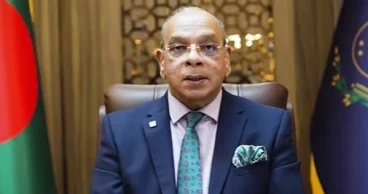
Bangladesh, Nepal chief justices discuss legal, judicial cooperation
Nepal's Chief Justice Prakash Man Singh Raut had a bilateral meeting with Chief Justice of Bangladesh Dr Syed Refaat Ahmed at the Supreme Court of Bangladesh on Sunday ahd discussed the legal and judicial practices of both Nepal and Bangladesh, along with the shared aspects.
Matters pertaining to judicial reforms carried out by both countries, including towards facilitating more expeditious services to people, were highlighted in the meeting.
Justice Sapana Pradhan Malla, Justice Binod Sharma, Chief Registrar Bimal Paudel and Ambassador Ghanshyam Bhandari accompanied Raut.
All Appellate Division Justices of the Supreme Court of Bangladesh were present on the occasion.
Following the meeting, Raut co-presided over, along with Dr Ahmed, the proceedings of a hearing at the Appellate Division of the Supreme Court of Bangladesh.
Chief Justice Dr Ahmed emphasised the strong relationship between the Judiciaries of the two countries.
Chief Justice Raut appreciated the opportunity to observe a hearing and highlighted the connections between the Judiciaries of Nepal and Bangladesh.
The delegation participated in a discussion on 'Roadmap, Roadshow Legislative Changes, Judicial Integrity and Partnership Building,' led by the Chief Justice of Bangladesh.
Chief Justice Dr Ahmed shared the progress achieved on judicial reform initiatives in Bangladesh, outlining the positive changes recently implemented across various courts.
Chief Justice Raut led a discussion on 'Delivering Justice while Managing Crisis.' Justice Malla also provided insights into structural reform efforts undertaken by the Supreme Court of Nepal.
In a separate session, Justice Sapana Pradhan Malla and Justice Farah Mahbub of Bangladesh jointly led a discussion on 'Digitalization, Gender Justice, Specialization of Courts, Judicial Independence and Integrity.'
A delegation of women Justices from the High Court Division of the Supreme Court of Bangladesh also participated in the event.
Justice Malla underscored Nepal's efforts towards ensuring gender equality in the judicial sector.
She emphasised the shared challenges facing both countries and highlighted the critical importance of women’s meaningful representation within the judicial system.
Justice Mahbub provided a detailed overview of the strategic roadmap and judicial reforms implemented in Bangladesh.
Chief Justice of Bangladesh Dr Ahmed hosted dinner in honour of Raut and his delegation.
9 months ago
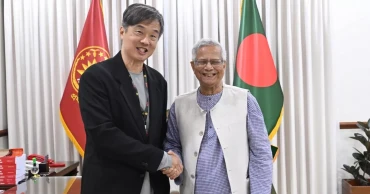
Prof Yunus urges nationwide awareness about fatty liver and breast cancer
Chief Adviser Prof Muhammad Yunus has emphasised the need for raising nationwide awareness about cancer, particularly those linked to fatty liver, as well as breast cancer, which has become a leading cause of death among women in Bangladesh.
The Chief Adviser made the call during a meeting with leading Singaporean cancer specialist Professor Toh Han Chong at the State Guest House Jamuna on Saturday evening.
Prof Toh Han Chong, Senior Consultant at the National Cancer Centre, Singapore, was accompanied by Vijaya Rao, Deputy Director of the SingHealth Duke-NUS Global Health Institute, and Kalwinder Kaur, Health Care Management Specialist at SingHealth and Edinburgh Napier University.
Prof Yunus said non-communicable diseases such as cancer, diabetes and heart ailments have become leading causes of death across South Asia.
He emphasised the importance of developing affordable and accessible preventive measures to combat these diseases, said the Chief Adviser’s press wing on Sunday.
“We need to build awareness on these diseases nationwide. Treatments for cancer or heart disease are often prohibitively expensive. Preventive measures must be made easier and more affordable, especially for middle-class, lower-middle-class, and poor families,” Prof Yunus said.
9 months ago

Margaropoulos, Asif A. Chowdhury reelected president, vice president of FICAC
Nikolaos K. Margaropoulos has been reelected president of ‘The World Federation of Consuls (FICAC)’ for a second consecutive term.
Besides, Asif A. Chowdhury, honorary Consul for Chile in Bangladesh, was reelected vice president of the federation.
These reelections, confirmed during the recent General Assembly of FICAC held in Marrakesh, Morocco, mark a significant vote of confidence in the leadership and vision that have guided the organization over the past term, said a media release.
FICAC, founded in 1982, is a global organization that unites honorary consuls and promotes international cooperation, good governance, and the strengthening of consular institutions worldwide.
"It is a great honor to be reelected as Vice President of FICAC," said Asif Chowdhury. "I am proud to continue serving under the distinguished leadership of President Hon. Nikolaos Margaropoulos, whose vision and dedication have taken the Federation to new heights. Together, we are committed to building on our achievements and further strengthening the global consular network."
During their previous terms, Margaropoulos and Chowdhury spearheaded key initiatives, including "regional cooperation programs," of consular services," "training and capacity-building programs for honorary consuls".
Margaropoulos expressed his gratitude to the General Assembly, stating: "It is a privilege to continue leading this esteemed Federation. With the continued support of our dedicated Vice Presidents, Executive Committee, and members across the globe, FICAC will remain a strong advocate for the vital role honorary consuls play in fostering diplomacy, cultural exchange, and international cooperation."
Chowdhury, who has been an extensive background in diplomacy and international relations, is currently serving as "Honorary Consul of Chile in Bangladesh. He will continue working closely with the President and Executive Committee to further FICAC'S strategic objectives and deepen engagement with consular communities worldwide.
9 months ago
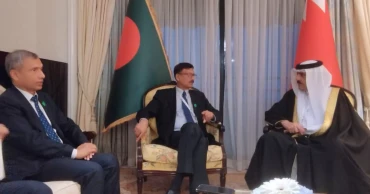
Bangladesh wants Bahrain to reopen visa facilities for its citizens
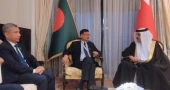
Foreign Adviser Md Touhid Hossain has urged Bahrain to reopen visa facilities for Bangladeshi citizens, including businesspeople, professionals, and skilled and semi-skilled workers, to boost people-to-people contact and economic engagement between the two countries.
He made the request during a meeting with Bahrain’s Deputy Interior Minister Adel bin Khalifa Al Fadhel in Manama on Sunday.
The Foreign Adviser also urged the Bahraini authorities to consider issuing family visas for Bangladeshi nationals residing in the Kingdom.
Bangladesh praises Bahrain’s role in promoting Middle East stability
Acknowledging the contributions of the Bangladeshi community to Bahrain’s economy, the Deputy Interior Minister said his government is actively working to reopen visa facilities for Bangladeshi citizens in phases.
Both sides also discussed the possibility of concluding an agreement on the transfer of sentenced persons between Bangladesh and Bahrain.
Foreign Adviser Hossain is in Bahrain to attend the sessions and side events of the 21st Manama Dialogue, which brings together global leaders and policymakers to discuss key regional and international security issues.
On the sidelines of the event, he held a series of bilateral meetings focused on strengthening regional peace, cooperation and bilateral relations.
Read more: Bangladesh reaffirms solidarity with Qatar over security, sovereignty
9 months ago
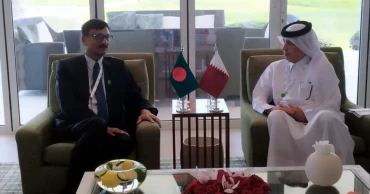
Bangladesh reaffirms solidarity with Qatar over security, sovereignty
Foreign Adviser Md Touhid Hossain has reaffirmed Bangladesh’s solidarity with Qatar against any threat to its security and sovereignty.
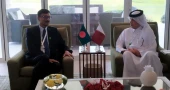
He conveyed the message during a meeting with the Qatari State Minister for Foreign Affairs Sultan bin Saad bin Sultan Al Muraikhi
They discussed various bilateral issues, and Qatar reiterated its commitment to support efforts for resolving the Rohingya crisis, said the Ministry of Foreign Affairs on Sunday.
Bangladesh praises Bahrain’s role in promoting Middle East stability
Foreign Adviser Hossain also held discussions with the Secretary General of the Conference on Interaction and Confidence Building Measures in Asia (CICA), exploring ways for the organization to play a greater role in addressing political challenges and promoting cooperation across Asia.
Hossain is attending the sessions and side events of the 21st Manama Dialogue, which brings together global leaders and policymakers to deliberate on key regional and international security issues.
Hossain held a series of bilateral meetings on the sidelines of the ongoing 21st Manama Dialogue in Bahrain, focusing on strengthening regional peace, cooperation and bilateral relations on Saturday.
9 months ago
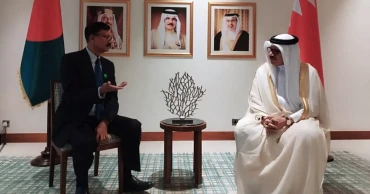
Bangladesh praises Bahrain’s role in promoting Middle East stability
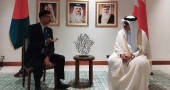
Foreign Adviser Md Touhid Hossain has underscored the importance of peace and stability in the Middle East and appreciated Bahrain’s constructive leadership in promoting regional harmony.
During his meeting with the Bahraini Foreign Minister Dr Abdullatif bin Rashid Alzayani, he also expressed Bangladesh’s interest in hosting the second round of Political Consultations in Dhaka in 2025.
The Foreign Affairs Adviser extended an invitation to the Bahraini Foreign Minister to visit Dhaka and lead his country’s delegation, said the Ministry of Foreign Affairs on Sunday.
Foreign Minister discusses visa issuance and air connectivity with Bahrain’s ambassador-designate
He held a series of bilateral meetings on the sidelines of the ongoing 21st Manama Dialogue in Bahrain, focusing on strengthening regional peace, cooperation, and bilateral relations on Saturday.
Foreign Adviser Hossain is attending the sessions and side events of the 21st Manama Dialogue, which brings together global leaders and policymakers to deliberate on key regional and international security issues.
9 months ago
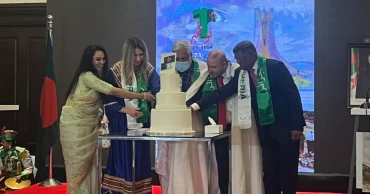
71st Anniversary of Algerian Revolution celebrated in Dhaka
The Embassy of Algeria in Bangladesh on Saturday celebrated the 71st Anniversary of the start of the Glorious Liberation Revolution of November 1, 1954, paying tribute to the spirit of freedom, dignity, and solidarity that shaped the nation’s independence.
The commemorative ceremony, held at Le Méridien Dhaka, brought together senior government and military officials, Islamic scholars, business leaders, academics, journalists, and cultural figures, reflecting the enduring friendship between Algeria and Bangladesh.
The program began with the national anthems of Algeria and Bangladesh performed by the Bangladesh Ansar and VDP team, followed by a moment of silence to honor Algeria’s martyrs. Quranic recitation and prayers were offered for peace and prosperity.
In his keynote address, Algerian Ambassador to Bangladesh Dr. Abdelouahab Saidani described the 1954 Revolution as “a timeless beacon of liberty, dignity, and justice that continues to illuminate the conscience of humankind.”
He paid tribute to the 1.5 million martyrs who sacrificed their lives for Algeria’s independence, saying their courage and ideals continue to inspire future generations.
This year’s theme, “Message to Generations,” he said, calls on youth to embrace unity, courage, and selflessness — the core values of the Revolution.
Dr. Saidani reaffirmed Algeria’s commitment to peace, justice, and solidarity, emphasizing that these ideals guide its foreign policy.
Reflecting on bilateral ties, he recalled Algeria’s early recognition of Bangladesh’s independence, noting that both nations share histories of struggle and sacrifice.
“Our two peoples, born of sacrifice and courage, are united by the same unbreakable spirit of freedom,” he said.
The Chief Guest, Muhammad Fauzul Kabir Khan, Advisor to the Government of Bangladesh for the Ministries of Power, Energy and Mineral Resources; Road Transport and Bridges; and Railways, praised Algeria’s liberation struggle as “one of the most inspiring movements in modern history.”
9 months ago
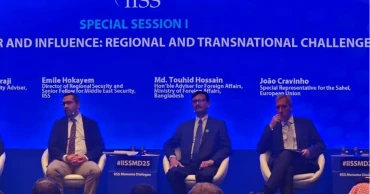
Dhaka calls for collective action against extremism, non-state armed groups
Foreign Affairs Adviser Md. Touhid Hossain on Friday underscored the need for global solidarity to address the growing threats of extremism and non-state armed groups.
Speaking at a special session titled 'Non-State Power and Influence: Regional and Transnational Challenges, during the 21st IISS Manama Dialogue, Adviser Hossain called for enhanced intelligence sharing, stronger border management, and effective financial oversight to counter transnational networks.
He said non-state actors exploit borders, illicit trade, displacement and digital spaces to advance radical agendas.
Stressing inclusive cooperation among governments, civil society and international partners, he said “the fight against extremism will ultimately be won in classrooms, communities, and in the minds of our youths.”
Sharing Bangladesh’s perspective, the Adviser reaffirmed that no non-state armed groups are allowed to operate within Bangladesh.
Referring to the protracted Rohingya crisis, he said Bangladesh continues to host over 1.3 million forcibly displaced people from Myanmar who fled persecution and violence by Myanmar Military and non-state armed groups. He urged the international community to stay engaged in ensuring their safe, voluntary and dignified repatriation, cautioning that prolonged uncertainty could make the displaced population vulnerable to exploitation and threaten regional stability.
Ministers, dignitaries and representatives from various countries and international organisations, including the EU and NATO, attended the session.
Bangladesh Ambassador to Bahrain Md. Rais Hasan Sarower and Director General (West Asia) Md Humayun Kabir accompanied the Adviser.
9 months ago

Nepal eyes stronger tourism, people-to-people ties with Bangladesh
Nepalese Ambassador in Dhaka to Bangladesh, Ghanashyam Bhandari, has highlighted the deep-rooted friendship between Nepal and Bangladesh, founded on shared cultural linkages, and underscored the crucial role of tourism in further strengthening bilateral ties.
He said this while addressing the B2B networking event, organised by the Embassy and the Nepal Tourism Board (NTB), in association with the Nepal Association of Tour and Travel Agents (NATTA), on Thursday evening.
The event was held on the margins of the 13th Bangladesh Travel and Tourism Fair. The BTTF is being held in Dhaka from 30 October to 1 November 2025.
The ambassador urged travel and tour entrepreneurs to forge meaningful partnerships to enhance people-to-people bonds between the two countries.
Sunil Sharma, Head of the Public Relations & Publicity Department at the NTB, delivered a comprehensive presentation showcasing Nepal’s diverse tourism products.
9 months ago

'Sonar Bangla' vision, 'Chinese Dream' resonate deeply, opening broad prospects for cooperation: China
China has said the vision of 'Sonar Bangla' and 'Chinese Dream' today resonate deeply, opening broad prospects for cooperation between the two countries.
"We are confident that this vision will bring even more cooperation opportunities for Guangzhou and Bangladesh," said Liu Liu, Deputy Director General of the Foreign Affairs Office of the Guangzhou Municipal People’s Government.
She made the remarks during a dinner hosted by the Foreign Affairs Office in honour of the visiting delegation of the Diplomatic Correspondents Association, Bangladesh (DCAB) at Hilton Hotel here on Thursday.
DCAB President AKM Moinuddin, General Secretary Md Arifuzzaman Mamun, among others, were present.
Liu said the friendship between Bangladesh and China stretches back centuries, with figures such as Xuanzang and Zheng He leaving behind inspiring stories of exchange.
"Since we established diplomatic relations in 1975, our bilateral ties have grown steadily," she said.
Silk Road
Liu said Guangzhou is striving to become a beautiful, livable, and dynamic international metropolis - a top destination for foreign investment, talent, and business growth. "We look forward to working closely with you, carrying forward the enduring spirit of the Silk Road and deepening practical cooperation for a mutually beneficial and bright future," she said.
On behalf of Guangzhou Foreign Affairs Office, Liu extended their warmest welcome to the visiting journalists and thanked the Chinese Embassy in Bangladesh for their enduring support. "As a dynamic hub of China’s reform and opening up, Guangzhou serves as the country’s southern gateway to the world. Our city is defined by three key international roles," She said. First, Liu said, Guangzhou is a millennia-old trading hub, connected with over 200 countries and regions.
"Both our total retail sales and foreign trade volume exceed 1.1 trillion RMB, and the Canton Fair - having been held for 138 consecutive sessions - leads China in exhibition scale and frequency," she said. Second, Liu said they are a global transport and logistics hub.
Guangzhou is home to China Southern Airlines, the nation’s largest carrier, as well as the country’s biggest single-terminal airport.
9 months ago