Foreign-Affairs
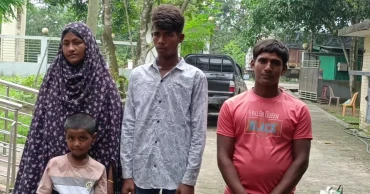
Four Indians return home a year after alleged BSF push-in
Four Indian nationals, who had been living in Bangladesh after allegedly being pushed across the border by India's Border Security Force (BSF), returned to India through Sonamasjid Immigration in Chapainawabganj on Wednesday afternoon after completing immigration formalities with travel passes.
The victims are Danish Sheikh, Sweety Bibi, Qurban Sheikh and Imam Dewan, all residents of Dhrita village under Murarai Police Station in the Birbhum district of West Bengal.
Jamirul Islam, in-charge of Sonamasjid Immigration Police, said all necessary immigration formalities were completed after verifying the travel passes, and the four were allowed to return to India.
26 days ago
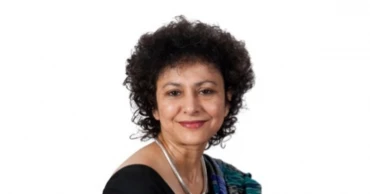
Irene Khan appointed Bangladesh’s envoy to UN with state minister rank
The government has granted the status of a state minister to newly appointed Bangladesh Permanent Representative to the United Nations in New York, Irene Khan, an internationally renowned human rights activist.
The Cabinet Division on Wednesday issued a gazette notification stating that she will enjoy the status of a state minister and related facilities during her tenure.
Meanwhile, the government is likely to appoint Ambassador Salahuddin Noman Chowdhury, the current Permanent Representative of Bangladesh to the United Nations in New York, as the next Foreign Secretary, officials in Dhaka told UNB.
Under the proposed reshuffle, current Foreign Secretary Asad Alam Siam is expected to be posted to New Delhi as Bangladesh's next High Commissioner to India, one of the country's most significant diplomatic assignments. He is likely to replace incumbent High Commissioner Riaz Hamidullah.
Officials said Irene Khan has been serving as the UN Special Rapporteur on the promotion and protection of the right to freedom of opinion and expression since August 1, 2020, and is the first woman to hold the position since the mandate was established in 1993.
The post of Bangladesh's High Commissioner to the United Kingdom has remained vacant since March.
Besides, Mohammad Abdul Muhith, the current Rector of the Foreign Service Academy and former Permanent Representative of Bangladesh to the United Nations, is likely to be as Bangladesh's next High Commissioner to the United Kingdom.
Meanwhile, BNP Information and Technology Secretary AKM Wahiduzzaman is likely to be appointed Deputy Permanent Representative of Bangladesh to the United Nations in New York.
The government is also likely to appoint M. Farhadul Islam, Secretary (Intergovernmental Organizations) at the Ministry of Foreign Affairs, as Bangladesh's next Ambassador to Mauritius.
On the other hand, Md Abul Hasan Mridha (Director General) has been appointed as new Bangladesh Ambassador to Indonesia, an official told UNB.
Irene Khan
Irene Khan served as Secretary General of Amnesty International from 2001 to 2009.
An internationally recognised advocate for human rights, gender equality and social justice, she teaches at the Graduate Institute of International and Development Studies in Geneva. She is also co-author of The Unheard Truth: Poverty and Human Rights, which has been published in seven languages.
Under her leadership, Amnesty International strengthened its work on political and civil rights, particularly in the context of counter-terrorism and armed conflict, while expanding its mandate to include economic, social and cultural rights.
The first woman to lead Amnesty International, Khan launched the organisation's first global campaign to end violence against women and girls.
From 2012 to 2019, she headed the International Development Law Organization (IDLO), the only intergovernmental organisation dedicated exclusively to promoting the rule of law and sustainable development.
In that role, she co-convened the UN Conference in Preparation for the Review of SDG 16 in 2019, the High-Level Group on Justice for Women in 2018, and the Conference on the Rule of Law in Africa in 2016.
She expanded programmes on access to justice and championed Sustainable Development Goal 16 on peace, justice, access to information and effective institutions.
As Consulting Editor of The Daily Star in Bangladesh from 2010 to 2011, Khan wrote on human rights, democracy and gender issues while supporting independent media.
She was a Visiting Professor at the State University of New York Law School in 2011 and served as Chancellor of the University of Salford in the UK from 2009 to 2015.
Khan began her professional career with the Office of the UN High Commissioner for Refugees (UNHCR), where she worked for 21 years at headquarters and in country operations, including as Chief of Mission in India and Deputy Director of the Division of International Protection.
She also collaborates with the Columbia Global Freedom of Expression programme, including as a member of the jury for the Global Freedom of Expression Awards.
Khan has served as a member of the World Bank Gender Advisory Council, the UNAIDS High-Level Panel on HIV Prevention and Human Rights, and the UN Global Compact Advisory Council. She currently sits on the governing boards of the Overseas Development Institute (UK), BRAC (Bangladesh) and Barefoot Law (Uganda).
She has received several international honours, including the Sydney Peace Prize in 2006, in recognition of her contributions to human rights. Born in Bangladesh, Khan studied at the University of Manchester and Harvard Law School.
Ambassador Noman
Ambassador Noman Chowdhury joined the Bangladesh Foreign Service in 1998. Prior to his current posting, he served as Bangladesh's Ambassador to Nepal from November 2020 to December 2024.
During his diplomatic career spanning more than two decades, he has served in various capacities at Bangladesh missions abroad, including the Bangladesh High Commission in New Delhi, the Permanent Mission of Bangladesh to the United Nations in New York, the Consulate General of Bangladesh in New York, and the Bangladesh High Commission in Islamabad.
At the headquarters, he served in the United Nations, Economic Affairs, Administration, Protocol, External Publicity and Southeast Asia Wings, as well as at the Foreign Service Academy.
Ambassador Siam
Current Foreign Secretary Asad Alam Siam has completed one year in office, having assumed the post on June 20, 2025.
A career diplomat, Ambassador Siam joined the Bangladesh Foreign Service in 1995.
Throughout his distinguished diplomatic career, he has served extensively both at home and abroad.
Prior to his current appointment, he served as Bangladesh's Ambassador to the United States, with concurrent accreditation to Guyana, and as Bangladesh's Permanent Representative to the World Bank (WB) and the International Monetary Fund (IMF).
From 2023 to 2024, Ambassador Siam served as Bangladesh's Ambassador to Austria, with concurrent accreditation to Hungary and Slovenia, and as Permanent Representative to the United Nations Office in Vienna and the OPEC Fund.
Before serving in Austria, Ambassador Siam was Bangladesh's Ambassador to the Philippines from 2017 to 2021, with concurrent accreditation to Palau, and as Bangladesh's Permanent Representative to the Asian Development Bank (ADB) and the International Rice Research Institute (IRRI).
Earlier in his career, Ambassador Siam served as the first Consul General at the Bangladesh Consulate General in Milan, Italy; as Assistant High Commissioner at the Bangladesh Assistant High Commission in Manchester, UK; and as a junior diplomat at the Bangladesh Embassies in Jakarta and Bangkok.
In addition to his overseas assignments, he held several important positions at the Ministry of Foreign Affairs in Dhaka.
He served as the Inspector General of Missions (IGM) at the ministry and as Rector of the Foreign Service Academy.
He also served as Chief of Protocol and Director General of the Europe and EU Wing. As Director, he served in the offices of the Foreign Adviser and the Foreign Secretary.
26 days ago
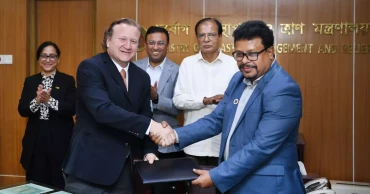
IRC, Bangladesh sign strategic partnership MoU
The International Rescue Committee (IRC) has signed a strategic partnership Memorandum of Understanding (MoU) with the Ministry of Disaster Management and Relief and the Prime Minister's Office, establishing a three-year framework to strengthen disaster preparedness.
The partnership will support Forcibly Displaced Myanmar Nationals (FDMNs) and Bangladeshi communities vulnerable to natural disasters and humanitarian emergencies.
The agreement was signed on Tuesday at the Ministry of Disaster Management and Relief by the ministry's Secretary, Md. Saidur Rahman Khan, and IRC Vice President Julio E. Rank Wright, the IRC said on Wednesday.
Disaster Management and Relief Minister Asadul Habib Dulu, MP, Prime Minister's Adviser on Foreign Affairs, and Disaster Management and Relief Ministry affairs Humaiun Kobir, and IRC Asia Deputy Regional Director Hasina Raman were present at the signing ceremony.
As climate and humanitarian challenges continue to grow in Bangladesh, the agreement will support the Government of Bangladesh's efforts to build resilience and promote sustainable solutions for both Forcibly Displaced Myanmar Nationals (FDMNs) and Bangladeshi host communities.
This will be achieved through technical support, policy dialogue, and strengthening government institutions.
Speaking at the event, Disaster Management and Relief Minister Asadul Habib said the agreement will further strengthen Bangladesh's disaster preparedness through international cooperation, technological innovation, and institutional capacity building.
"This partnership will play an important role in further consolidating Bangladesh's international leadership in disaster risk reduction and humanitarian assistance activities, as well as in achieving the goal of long-term resilience," he said.
Under the partnership, the IRC will work closely with the Government of Bangladesh to strengthen institutional capacity, support policy development, and enhance strategic cooperation.
The partnership will also help build resilient and prepared communities, promote inclusive development, support research and innovation, improve knowledge sharing, and strengthen international cooperation and resource mobilization.
The International Rescue Committee (IRC) responds to the world's worst humanitarian crises, helping to restore health, safety, education, economic well-being, and power to people devastated by conflict and disaster.
26 days ago
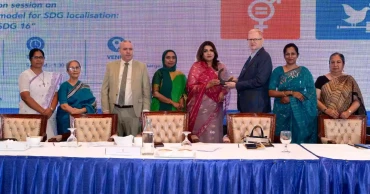
Achieving SDGs requires strong local leadership, meaningful participation of women: Shama Obaed
State Minister for Foreign Affairs Shama Obaed Islam on Wednesday said achieving the Sustainable Development Goals (SDGs) requires strong local leadership and the meaningful participation of women in decision-making.
"Initiatives that empower young women today are laying the foundation for a more inclusive, equitable, and resilient Bangladesh tomorrow," she said.
The State Minister joined senior government officials, United Nations representatives, development partners, educators, youth leaders, and civil society organisations at a discussion titled "Building a Model for SDG Localisation: SDG 5 and SDG 16," organised by the United Nations Office for Project Services (UNOPS) Bangladesh at a hotel in Dhaka.
The national workshop forms part of the Joint Programme, "Enhancing Women's Political Leadership through SDG 5 and SDG 16 Localisation in Bangladesh," implemented by UNOPS in coordination with UN Women and in partnership with Naripokkho, with support from the Joint SDG Fund.
Building on successful implementation across Dhaka, Chattogram, and Rajshahi, the dissemination workshop showcased key findings, lessons learned, and practical recommendations from the localised SDG model.
Participants also heard inspiring stories from young women leaders, students, mentors, and representatives of educational institutions who have contributed to advancing women's leadership and strengthening inclusive governance at the local level.
UNOPS Bangladesh and Bhutan Country Manager Sudhir Muralidharan delivered the welcome remarks, while UN Women Bangladesh Deputy Country Representative Navanita Sinha highlighted the importance of partnerships in accelerating progress on SDG 5 and SDG 16.
Naripokkho Executive Member Maheen Sultan presented the SDG localisation model.
Nasreen Jahan, Member (Secretary) of the Socio-Economic Infrastructure Division of the Bangladesh Planning Commission, attended the event as the special guest.
26 days ago
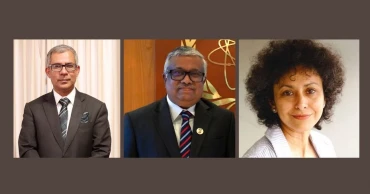
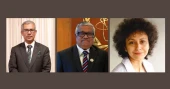
Salahuddin Noman Chowdhury likely to become next FS
The government is likely to appoint Ambassador Salahuddin Noman Chowdhury, the current Permanent Representative of Bangladesh to the United Nations in New York, as the next Foreign Secretary.
Besides, Foreign Secretary Asad Alam Siam is likely to be appointed Bangladesh's High Commissioner to India, a posting widely seen as one of the country's most important diplomatic assignments, officials said.
A senior official, indicating a number of important changes, told UNB on Monday that the government may appoint Irene Khan, the UN Human Rights Council's Special Rapporteur and an internationally renowned human rights activist, as Bangladesh's Permanent Representative to the United Nations in New York.
Irene Khan has been serving as the UN Special Rapporteur on the promotion and protection of the right to freedom of opinion and expression since August 1, 2020, the official said, noting that she is the first woman to hold the position since the mandate was established in 1993.
Ambassador Noman Chowdhury joined the Bangladesh Foreign Service in 1998.
Prior to his current posting, he served as Bangladesh's Ambassador to Nepal from November 2020 to December 2024.
During his diplomatic career spanning more than two decades, he has served in various capacities at Bangladesh missions abroad, including the Bangladesh High Commission in New Delhi, the Permanent Mission of Bangladesh to the United Nations in New York, the Consulate General of Bangladesh in New York, and the Bangladesh High Commission in Islamabad.
At the headquarters, he served in the United Nations, Economic Affairs, Administration, Protocol, External Publicity and Southeast Asia Wings, as well as at the Foreign Service Academy.
Current Foreign Secretary Asad Alam Siam has completed one year in office, having assumed the post on June 20, 2025.
A career diplomat, Ambassador Siam joined the Bangladesh Foreign Service in 1995.
Throughout his distinguished diplomatic career, he has served extensively both at home and abroad.
Prior to his current appointment, he served as Bangladesh's Ambassador to the United States, with concurrent accreditation to Guyana, and as Bangladesh's Permanent Representative to the World Bank (WB) and the International Monetary Fund (IMF).
From 2023 to 2024, Ambassador Siam served as Bangladesh's Ambassador to Austria, with concurrent accreditation to Hungary and Slovenia, and as Permanent Representative to the United Nations Office in Vienna and the OPEC Fund.
Before serving in Austria, Ambassador Siam was Bangladesh's Ambassador to the Philippines from 2017 to 2021, with concurrent accreditation to Palau, and as Bangladesh's Permanent Representative to the Asian Development Bank (ADB) and the International Rice Research Institute (IRRI).
Earlier in his career, Ambassador Siam served as the first Consul General at the Bangladesh Consulate General in Milan, Italy; as Assistant High Commissioner at the Bangladesh Assistant High Commission in Manchester, UK; and as a junior diplomat at the Bangladesh Embassies in Jakarta and Bangkok.
In addition to his overseas assignments, he held several important positions at the Ministry of Foreign Affairs in Dhaka.
He served as the Inspector General of Missions (IGM) at the ministry and as Rector of the Foreign Service Academy.
He also served as Chief of Protocol and Director General of the Europe and EU Wing. As Director, he served in the offices of the Foreign Adviser and the Foreign Secretary.
The post of Bangladesh's High Commissioner to the United Kingdom has remained vacant since March.
Besides, Mohammad Abdul Muhith, the current Rector of the Foreign Service Academy and former Permanent Representative of Bangladesh to the United Nations, is likely to be as Bangladesh's next High Commissioner to the United Kingdom.
Meanwhile, BNP Information and Technology Secretary AKM Wahiduzzaman is likely to be appointed Deputy Permanent Representative of Bangladesh to the United Nations in New York.
The government is also likely to appoint M. Farhadul Islam, Secretary (Intergovernmental Organizations) at the Ministry of Foreign Affairs, as Bangladesh's next Ambassador to Mauritius.
26 days ago
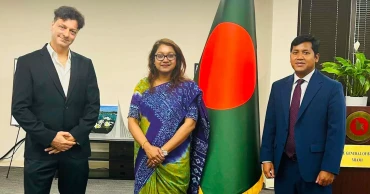
Bangladesh honorary consul in Costa Rica visits Miami mission
Honorary Consul General of Bangladesh in Costa Rica Michel Maher Hourani on Tuesday paid a courtesy visit to the Consulate General of Bangladesh in Miami and had a meeting with Consul General Seheli Sabrin.
They discussed the possible trade and investment opportunities between Bangladesh and Costa Rica.
Seheli Sabrin also showed Michel Maher Hourani Bangladeshi handicrafts, jute corner and ceramic products.
Michel Maher Hourani pointed out the tourism sector in Costa Rica and expressed his interest in some jute and pharmaceutical products.
Consul General Seheli Sabrin assured him of further cooperation in this regard.
Some traditional jute products and tourism brocheures were presented to him as a token of appreciation.
27 days ago
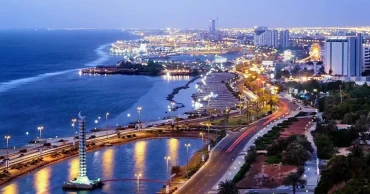
Saudi Arabia launches ‘Package Visa’ to integrate visa application with travel bookings
Saudi Arabia has announced the launch of “Package Visa”, a new digital initiative designed to simplify travel to the Kingdom by integrating tourist visa applications directly into curated travel bookings.
The launch is currently underway through qualified travel and tourism service providers across selected international markets, including Bangladesh, ahead of a broader rollout.
56,659 Bangladeshi Hajj pilgrims reach Saudi Arabia so far
The initiative builds on Saudi Arabia’s broader efforts to simplify travel to the country. Since launching the tourist e-Visa, it has introduced several additional entry options, including visa on arrival and the Stopover Transit Visa.
Together, these initiatives have supported the country’s rapid tourism growth, with Saudi Arabia welcoming more than 2.9 crore inbound visitors in 2025.
Commenting on the initiative, Saudi Minister of Tourism Ahmed Al Khateeb said, “As Saudi’s tourism sector continues to grow at pace, Package Visa reflects our commitment to making travel to Saudi more seamless for visitors. By integrating visa issuance with travel bookings, we are simplifying the visitor journey and creating a more connected travel experience. This initiative also strengthens collaboration across the tourism ecosystem and supports Saudi’s position as an increasingly accessible global destination.”
For visitors, Package Visa reduces the number of steps between planning a trip and travelling to Saudi Arabia. Instead of arranging flights, accommodation and a visa separately, eligible travellers can book everything through one integrated travel process, with the option to add events, activities and tourism experiences.
The initiative is expected to provide a simpler and more connected journey from booking to arrival.
For qualified travel and tourism service providers, the initiative creates an opportunity to offer more attractive travel packages, streamline the traveller journey and encourage longer stays and richer travel experiences.
Package Visa is available only through qualified travel and tourism service providers that meet defined service standards and provide 24/7 customer support.
The Saudi Tourism Authority (STA) is responsible for promoting Saudi’s tourism destinations globally and developing the country’s tourism offerings through programmes, packages and business support. STA operates 16 representative offices worldwide, serving 38 countries.
27 days ago
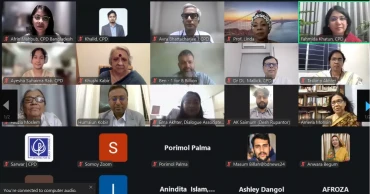
Future UN leadership must protect interests of all countries: Humaiun Kobir
Referring to Bangladesh's experience with the Rohingya crisis, Prime Minister's Adviser on Foreign Affairs Humaiun Kobir on Tuesday emphasised that future UN leadership must be capable of protecting the interests of all countries - large and small, developed and developing alike.
Speaking at a virtual discussion, he said the world is experiencing one of the most complex periods since the establishment of the United Nations.
Bangladesh seeks stronger UN support for peacekeeper, police deployments
The Centre for Policy Dialogue (CPD), in collaboration with Southern Voice and the 1 for 8 Billion campaign, organised the virtual discussion titled "Rethinking UN Leadership in a Fragmented World: A Bangladesh-Centred Perspective."
The panellists included international affairs expert Dr Amena Mohsin; Shaheen Anam, Executive Director of Manusher Jonno Foundation; Taslima Akter Lima, President of Bangladesh Garments Sramik Sanghati; Fauzia Moslem, President of Bangladesh Mahila Parishad; and Khushi Kabir, Member of the CPD Board of Trustees and Coordinator of Nijera Kori. CPD Executive Director Dr Fahmida Khatun chaired the session.
The event called for a more transparent, inclusive and accountable UN leadership selection process capable of responding effectively to the complex challenges of the twenty-first century.
The speakers said the UN Secretary-General selection process should be transparent, merit-based and less influenced by powerful states.
The discussion focused on the qualities, priorities and principles that should shape future UN leadership, particularly ahead of the selection of the next UN Secretary-General.
The Adviser stressed that the next UN Secretary-General must possess integrity, independence, professional excellence, diplomatic skills and moral authority to engage with all Member States while remaining committed to the principles of the UN Charter.
He also underscored the need for an open, merit-based, accountable and participatory selection process to strengthen both the legitimacy of the Secretary-General and the credibility of the United Nations.
The Adviser noted that the current process, under which the Security Council recommends a single candidate to the General Assembly, does not provide sufficient choice or scrutiny.
He suggested that the Security Council prepare a shortlist of candidates for the General Assembly to vote on so that the final selection reflects merit, credibility and experience.
The next UN Secretary-General will inherit a world marked by overlapping crises, including geopolitical fragmentation, armed conflict, climate emergencies, humanitarian displacement, debt distress, technological disruption and declining trust in multilateral institutions.
At this critical juncture, the selection of the next UN leader is not only about choosing an individual; it is also about determining whether the United Nations can become more representative, accountable and responsive to the needs of all countries, particularly those of the Global South.
Dr Fahmida chaired the session and said that although the discussion focused on leadership, the issue was much broader as it concerned the future of multilateralism itself.
She noted that the forthcoming selection of the next UN Secretary-General is not merely about choosing an individual but also about reflecting on how the institution itself can become more representative, accountable and effective.
Dr Fahmida stressed that a transparent and merit-based selection process, stronger accountability, institutional independence and greater responsiveness to vulnerable communities are essential if UN leadership is to deliver meaningful change.
In her keynote presentation, CPD Research Associate Afrin Mahbub noted that the current UN Secretary-General selection process remains heavily influenced by the five permanent members of the Security Council, with limited transparency beyond the publication of candidates' names and vision statements.
She pointed out that no woman has ever served as UN Secretary-General, while women remain underrepresented across the UN system.
Using Bangladesh as an analytical lens, she observed that women's representation remains limited despite the country's long history of female political leadership, and that symbolic representation does not automatically translate into substantive influence.
Drawing on civil society perspectives from Bangladesh, she emphasised that gender representation is necessary but not sufficient; it must be supported by institutional reform, accountability, inclusive governance and genuine decision-making power.
Adviser to the 1 for 8 Billion campaign Ben Donaldson said the nomination phase was nearing completion, but uncertainty remained because of the influence of the permanent members of the Security Council.
He also warned that backroom deals over senior UN appointments undermine transparency across the wider UN leadership system.
During the open-floor discussion, participants raised questions about how the next UN Secretary-General could represent the interests of both major powers and vulnerable developing countries facing climate change, debt, inequality and forced displacement.
The speakers reiterated the need to democratise the United Nations by strengthening the role of the General Assembly and amplifying the voices of Asia, Africa, Latin America and the wider Global South.
Concluding the session, Dr Fahmida said future UN leadership requires not only diplomatic skill but also moral authority, independence and the ability to navigate evolving geopolitical realities.
27 days ago
Bangladesh eyes stronger trade ties with CIS region
State Minister for Foreign Affairs Shama Obaed Islam on Tuesday urged business leaders to fully utilise the ample opportunities to expand mutually beneficial two-way trade and increase Bangladesh's exports to the Commonwealth of Independent States (CIS) region.
She highlighted the export potential of pharmaceuticals, jute and jute products, leather and leather products, ceramics, shrimp, tropical fruits, and IT products to the CIS region.
Shama Obaed said the present government, under the leadership of Prime Minister Tarique Rahman, has been striving to widen and strengthen cooperation with promising but largely untapped regions, including Eastern Europe and the CIS countries.
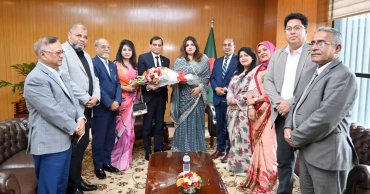
The State Minister emphasised trade diversification and investment promotion when the board of directors and office-bearers of the Commonwealth of Independent States-Bangladesh Chamber of Commerce and Industry (CIS-BCCI) met her at her office.
27 days ago
Italian companies offer technology to boost Bangladesh textile industry
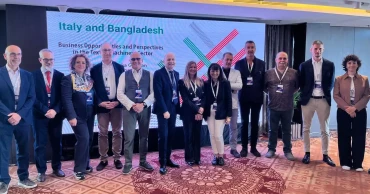
Italian Ambassador to Bangladesh Antonio Alessandro on Tuesday said Italian companies have contributed to the birth and development of the Bangladesh textile industry and now wish to provide their partners with critical technology to face the new sector’s challenges - sustainability, logistics and global demand.
He made the remarks while speaking at a function attended by the visiting Italian business delegation members.
Bangladesh Knitwear Manufacturers and Exporters Association (BKMEA) President Mohammad Hatem, Bangladesh Textile Mills Association (BTMA) Director Chowdhury Hanif Shoeb, and Bangladesh Garment Manufacturers and Exporters Association (BGMEA) Director Shah Rayeed Chowdhury, spoke at the event.
A business delegation of 11 small and medium Italian companies specialised in textile innovation and technology arrived on Monday in Bangladesh to promote trade and contacts with Bangladeshi industries.
27 days ago