Foreign-Affairs
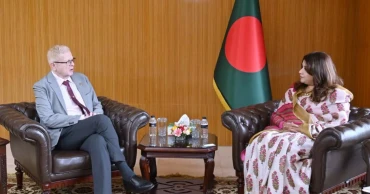
Shama Obaed for strengthening women’s leadership across all sectors
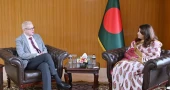
Highlighting the government’s development priorities, State Minister for Foreign Affairs Shama Obaed Islam has emphasised the importance of women’s empowerment, girls’ education and strengthening women’s leadership across all sectors.
She also underscored the need to intensify efforts toward achieving gender equality in line with SDG 5.
Terrorism can never be justified: Shama Obaed
The issues were discussed when Country Manager of the United Nations Office for Project Services (UNOPS) Sudhir Muralidharan met the State Minister for Foreign Affairs at the Ministry of Foreign Affairs on Monday.
Achieving gender equality and empowering all women and girls is not just the right thing to do, it is essential for sustainable development.
Goal 5 focuses on closing the gender gap and ensuring equal opportunities for all.
During the meeting, the State Minister appreciated the longstanding partnership between Bangladesh and the UN system, reiterating the present Government’s strong resolve to promote multilateralism and international cooperation in advancing sustainable development for people, planet and prosperity.
She encouraged UNOPS to explore new avenues of cooperation, with particular focus on initiatives that expand opportunities for women and girls and foster their meaningful participation in sustainable and inclusive development.
Muralidharan briefed the State Minister on UNOPS’ global and country-level priorities, ongoing programmes and future plans in Bangladesh.
He reiterated UNOPS’ commitment to supporting the Government of Bangladesh in achieving the SDGs through continued partnership, technical expertise and effective project implementation.
27 days ago
Prof Yunus invited to visit Iran
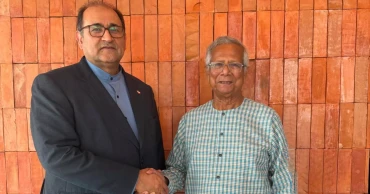
Ambassador of Iran to Bangladesh Jalil Rahimi Jahanabadi on Tuesday met Nobel Laureate Prof Muhammad Yunus and invited him to visit Iran.
During the meeting at Yunus Centre, Ambassador Jahanabadi extended an invitation to Prof Yunus for an official visit to Iran.
Prof Yunus underscored that dialogue and diplomacy remain the only path to lasting peace and stability in the Middle East, according to Yunus Centre.
Professor Yunus unveils social business project in 3 Italian cities
He stressed that regional peace is not merely desirable but essential for the prosperity and development of both the region and the wider world.
The Ambassador expressed his sincere appreciation to Prof Yunus for his leadership of the interim government and for guiding Bangladesh through a peaceful election in February this year towards a democratic transition.
Prof Yunus reiterated his profound condolences on the tragic passing of the Supreme Leader Ayatollah Ali Khamenei and expressed solidarity with the Iranian people in their pursuit of the rights of a sovereign nation.
27 days ago
BIMSTEC: Dhaka keen to deliver tangible benefits to peoples; ready to host sectoral meetings
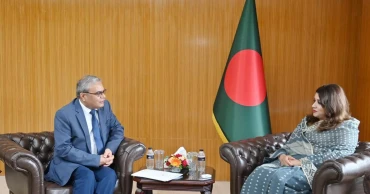
State Minister for Foreign Affairs Shama Obaed Islam on Tuesday reaffirmed Bangladesh’s continued commitment to the BIMSTEC process and reiterated its resolve to further advance regional cooperation during Bangladesh’s Chairmanship of BIMSTEC.
Reiterating to the government’s foreign policy priority of “Bangladesh First,” she underscored the importance of enhancing cooperation in priority areas, including trade and investment, connectivity, energy, climate change, and people-to-people contacts, with a view to delivering tangible benefits to the peoples of the region.
The issues were discussed when Secretary General of the Bay of Bengal Initiative for Multi-Sectoral Technical and Economic Cooperation (BIMSTEC) Indra Mani Pandey called on the State Minister Shama Obaed Islam at the Ministry of Foreign Affairs.
27 days ago
US ambassador meets commerce minister, discusses Sylhet development and investment
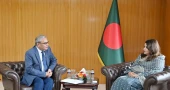
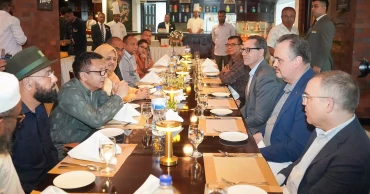
US Ambassador to Bangladesh Brent T. Christensen and members of his delegation met Commerce, Industries, Textiles and Jute Minister Khandaker Abdul Muktadir at a breakfast meeting in Sylhet on Tuesday, where they discussed the region's development, investment opportunities and the contribution of Bangladeshi expatriates in the United States.
The meeting, held at a hotel in the city, focused on Sylhet's development, the role of Bangladeshi expatriates, particularly the Sylheti diaspora in the US, the potential of the tourism sector, digital technology, and ways to expand bilateral trade and investment.
Speaking after the meeting, the commerce minister said the two sides exchanged views on Sylhet's rich cultural heritage, the prospects of its tourism industry and opportunities to accelerate the region's development by drawing on the United States' technological expertise.
They also held discussions on strengthening Bangladesh-US relations, expanding trade and economic cooperation, increasing US investment in Bangladesh, particularly in the Sylhet region, and further enhancing people-to-people ties between the two countries.
The minister expressed hope that such meetings and exchanges would help deepen the longstanding friendship between Bangladesh and the United States while promoting stronger economic cooperation and shared development.
Among those present at the meeting were lawmaker MA Malek, Tahsina Rushdir Luna, Emran Ahmed Chowdhury and Mufti Abul Hasan, Sylhet City Corporation Administrator Abdul Qayyum Chowdhury, Sylhet Development Authority Chairman Rezaul Hasan Qayes Lodhi, Acting Deputy Commissioner of Sylhet Pinki Saha, and Sylhet Metropolitan BNP General Secretary Emdad Hossain Chowdhury.
27 days ago
Bangladesh seeks stronger UN support for peacekeeper, police deployments
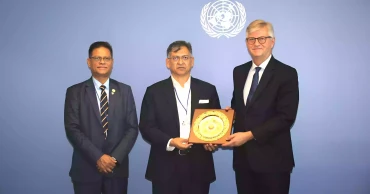
Home Affairs Minister Salahuddin Ahmed has sought stronger United Nations support for the deployment of Bangladeshi peacekeepers and police personnel to UN peacekeeping missions.
He made the call during separate bilateral meetings with two UN under-secretaries-general in New York on Monday, according to the Permanent Mission of Bangladesh to the United Nations.
During his meeting with UN Under-Secretary-General for Peace Operations Jean-Pierre Lacroix, the minister reaffirmed Bangladesh’s long-standing commitment to UN peacekeeping and requested support for the early verification of Rapid Deployment Level (RDL) status for Bangladeshi Formed Police Units (FPUs).
He also sought greater deployment of Bangladeshi individual police officers, consideration of a Bangladesh FPU in current or future UN peacekeeping missions, and increased leadership and professional positions for Bangladeshi officers at UN Headquarters and in field missions.
Lacroix appreciated Bangladesh’s sustained contribution to UN peacekeeping and its readiness to provide trained and capable police personnel to meet evolving mission requirements.
He also praised Bangladesh’s active and constructive role in multilateral diplomacy.
In a separate meeting with UN Under-Secretary-General for Operational Support Atul Khare, the home minister discussed operational and logistical support for Bangladesh’s planned specialised police deployments to Haiti.
The discussions covered contingent-owned equipment, shipment arrangements and reimbursement issues related to the deployment.
Khare commended Bangladesh’s significant contributions to UN peacebuilding and peacekeeping operations and assured continued operational support for Bangladeshi peacekeepers, the release said.
27 days ago
Bangladesh accedes to 3 international maritime conventions
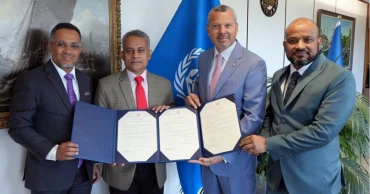
Bangladesh has marked a significant milestone in strengthening maritime governance and environmental protection by acceding to three key international maritime liability conventions, reinforcing its commitment to safe shipping, sustainable maritime trade, and the protection of coastal communities and the marine environment.
The Three Conventions acceded by Bangladesh are International Convention on Civil Liability for Oil Pollution Damage (CLC), 1969 as amended by the 1992 Protocol, International Convention on Civil Liability for Bunker Oil Pollution Damage, 2001 (Bunker Convention) and Nairobi International Convention on the Removal of Wrecks, 2007 (Wreck Removal Convention)
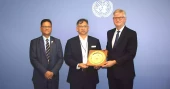
Road Transport and Bridges, Railways and Shipping Minister Shaikh Rabiul Alam on Monday formally handed over the instruments of accession to Secretary-General of the International Maritime Organization (IMO) Arsenio Dominguez at IMO Headquarters in London.
The Minister was accompanied by Dr. M. Nazrul Islam, Acting High Commissioner of Bangladesh to the UK, and Commodore Md Shafiul Bari, Director General of the Department of Shipping, Bangladesh.
This landmark achievement aligns Bangladesh with internationally accepted maritime standards, enhances protection against marine pollution and shipwreck-related risks, and further establishes the country as a responsible and trusted maritime nation, said the Bangladesh High Commission in London.
28 days ago
French ambassador calls on Energy and Power Minister; France to continue support in sector
Bangladesh and France on Monday underscored the importance of continued collaboration to support Bangladesh's transition toward a cleaner, more sustainable, and resilient energy future.
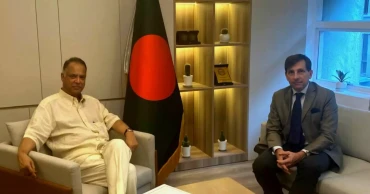
French Ambassador to Bangladesh Jean-Marc Séré-Charlet paid a courtesy call on Power, Energy and Mineral Resources Minister Iqbal Hassan Mahmood at his office at the Bangladesh Secretariat and discussed issues of mutual interest.
During the meeting, they reviewed the progress of the ongoing projects and explored opportunities to further expand cooperation in renewable energy, power infrastructure modernization, and energy efficiency, with a view to strengthening bilateral cooperation in the energy sector.
The ambassador expressed France's strong interest in supporting Bangladesh's energy transition, with a particular focus on accelerating the expansion of renewable energy in line with the new government's commitments to sustainable development.
28 days ago
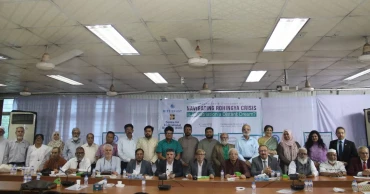
Global action urged for sustainable, dignified Rohingya repatriation: Experts at a roundtable
Speakers at a discussion meeting on Monday called upon the international community to play a more effective role in ensuring safe, dignified, and sustainable repatriation of Rohingya refugees sheltered in Bangladesh.
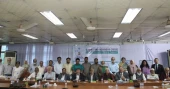
The call was made at a roundtable discussion titled "Navigating the Rohingya Crisis: Is Repatriation a Distant Dream?" held at the conference hall of the Bangladesh Institute of Islamic Thought (BIIT) in Uttara, Dhaka.
UN food relief agency steps up aid for Rohingays amid heavy rains
The event was jointly organized by the Center for Civilizational Dialogue (CCD) and the BIIT Trust.
Professor Yasin Aktay, a prominent Turkish academic, social thinker, and former chief advisor to Turkish President Recep Tayyip Erdogan, attended the program as the chief guest. Professor Dr. M. Abdul Aziz, founding President of CCD and Director General of BIIT, chaired the session.
In his speech, Professor Yasin Aktay highly praised Bangladesh’s humanitarian role in sheltering an immense number of Rohingya refugees.
"The friendship and partnership between Bangladesh and Turkey are long-standing. Turkey has always stood by Bangladesh in managing the Rohingya crisis and will continue to do so in the future," Aktay said.
Emphasizing that Turkey advocates for a safe, voluntary, and dignified repatriation of the Rohingya people, he assured further acceleration of humanitarian activities, including food aid, education, healthcare, and skill development training for the refugees.
Dr. M. Abdul Aziz termed the Rohingya tragedy as one of the major humanitarian crises for the Muslim world.
"This issue is no longer confined between two countries; it has evolved into a global challenge involving human rights, international law, security, and geopolitical stability," Dr. Aziz said.
He stressed the need for international solidarity, effective diplomatic initiatives, and coordinated efforts between think tanks and civil society to achieve a permanent solution.
Speakers at the roundtable expressed deep concern that the Rohingya issue has become significantly sidelined in recent times. They noted that despite severe resource constraints and high population pressure, Bangladesh set an unprecedented humanitarian example by sheltering nearly 1.4 million (14 lakh) displaced Rohingyas.
However, the prolonged crisis is now exerting immense socio-economic, environmental, and security pressures on the local communities in Cox’s Bazar and Bhasan Char.
Furthermore, issues like human trafficking, transnational crimes, and security lapses in maritime routes are threatening the regional stability of South and Southeast Asia, they added.
The discussants highlighted that creating a favorable political environment, ensuring safety, granting citizenship, and restoring peace in the Rakhine State are critical prerequisites for a sustainable repatriation process. To this end, they urged for stronger solidarity among the United Nations, ASEAN, OIC, and Muslim-majority nations, while requesting Turkey to take an even more proactive role in international forums.
The roundtable featured prominent speakers, including Dr. Badiul Alam Majumdar, Founder-Secretary of Shushashoner Jonno Nagorik (SHUJAN), Prof. Dr. Anisuzzaman, former VC of Global University, Prof. Dr. Mohammed Fozli Ilahi, former VC of UITS, Dr. Nakib Muhammad Nasrullah, former VC of Islamic University, Dr. Abul Hasan M. Sadeq, Founder VC of Asian University, Isam Shehadat, Senior Editor of Daily Sabah (Turkey), Dr. Ayman Zeidan, Deputy Director General of Al-Quds International Institution, Colonel (Retd) Mohammad Abdul Haque, Political Analyst, Mostafa Kamal Majumder, former Editor of The New Nation, Masud Mannan, former Ambassador of Bangladesh to Turkey
Prof. Dr. Abdul Latif Masum, VC of Patuakhali Science and Technology University.
Besides, researchers, human rights activists, and think-tank representatives of different sectors were also present at the event.
28 days ago
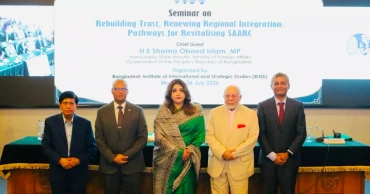
Moving beyond why SAARC failed, let's ask what must be done next: Tariq Karim
Seeking efforts to create a cooperative future worthy of South Asia’s peoples, former Ambassador Tariq A. Karim on Monday said if there is one domain where South Asia cannot afford paralysis, it is ecological security.
“Rivers, monsoons, glaciers, deltas, forests, air quality, disease patterns, food systems, and climate risks do not obey political borders. Bangladesh, as a lower riparian deltaic country, understands this reality with particular urgency,” he said, describing ecological security as the most practical starting point.
Dhaka doesn’t need to choose between SAARC, BIMSTEC: Shama Obaed
Ambassador Karim, Advisor, Centre for Bay of Bengal Studies, Independent University, Bangladesh, and visiting Research Fellow, Institute of South Asia Studies, National University of Singapore, made the remarks while delivering keynote address at a seminar.
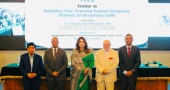
The Bangladesh Institute of International and Strategic Studies (BIISS) organised the seminar titled “Rebuilding Trust, Renewing Regional Integration: Pathways for Revitalising SAARC.”
Speaking as the chief guest, State Minister for Foreign Affairs Shama Obaed Islam reaffirmed Bangladesh’s longstanding commitment to regional cooperation and highlighted the importance of revitalising SAARC as a platform for promoting peace, stability, economic prosperity, and sustainable development in South Asia.
She emphasised that renewed regional dialogue and strengthened institutional cooperation are indispensable for addressing shared challenges and unlocking the region’s vast economic and strategic potential.
Ambassador Karim said SAARC may be comatose, but the idea of South Asian cooperation is not dead. He said it waits for political courage, intellectual honesty, and institutional patience.
“The costs of delay are rising: climate shocks, water insecurity, food stress, public health risks, economic fragmentation, and strategic vulnerability. Cooperation is difficult, but delay is dangerous,” he said.
“Let us therefore move beyond asking only why SAARC failed. Let us ask, instead, what must be done - patiently, pragmatically, and urgently - to rebuild trust, renew regional integration, and create a cooperative future worthy of South Asia’s peoples,” said the former diplomat.
Former Additional Foreign Secretary (SAARC & BIMSTEC), Ministry of Foreign Affairs, and CEO, Coders Trust Bangladesh, Md Shamsul Haque, and Prof, Department of International Relations, University of Dhaka, Dr Niloy Ranjan Biswas, spoke as discussants, while Director General, BIISS, Major General A. S. M. Ridwanur Rahman delivered the welcome and closing remarks.
Ambassador Karim said the 1996 Ganges Water Sharing Treaty between Bangladesh and India showed that cooperation is possible even on sensitive issues.
“But the treaty is due to expire in December 2026, and its renewal will test whether the region can adapt old agreements to new hydrological and climatic realities,” he said.
The former diplomat who served as Bangladesh High Commissioner to India and Bangladesh Ambassador to the USA said the Teesta remains unresolved, and Bangladesh and India share 52 more transboundary rivers.
“Across the wider region, water, food, energy, health, disaster management, and climate resilience are regional public goods. No country can secure them alone,” he said.
The former diplomat said the compulsions of ecological integrity may therefore be South Asia’s strongest argument for renewed cooperation.
He said the region should consider shared river-basin management, early-warning systems, climate adaptation financing, joint research, and a regional ecological security dialogue.
“Such cooperation would not require states to surrender sovereignty. It would require them to recognise that sovereignty in an age of climate stress is strengthened - not weakened - by cooperation achieved through its pooling,” said the foreign affairs expert.
He said South Asia’s dilemma is not the absence of shared destiny. “It is the inability, so far, to organise and embrace that destiny through trust, institutions, and imagination.”
Ambassador Karim said the peoples of South Asia remain connected by rivers, mountains, monsoons, cultures, labour, migration, markets, music, memory, and vulnerability.
“The question is whether our states can learn to treat those connections not as liabilities, but as foundations for cooperation,” he said.
An interactive open discussion followed the keynote presentation and panel discussion. Participants exchanged views on the structural limitations that have constrained SAARC’s effectiveness, the impact of regional geopolitical dynamics, and opportunities for advancing functional cooperation despite existing political differences.
Senior officials from different ministries and government agencies, ambassadors, high commissioners, former diplomats, senior civil and military officials, representatives from regional and international organisations, members of academia, researchers, university faculty members and students, media representatives, and policy practitioners participated in the seminar.
28 days ago
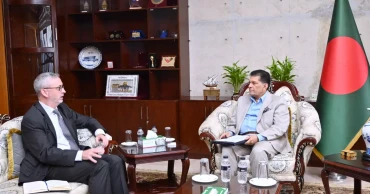
PM invited to deliver keynote address at Global Gateway Forum
President of the European Commission Ursula von der Leyen has invited Prime Minister Tarique Rahman to participate in the third edition of the Global Gateway Forum in June, 2027 and to deliver a keynote address at the Forum.
Ambassador of the European Union to Bangladesh Michael Miller met Foreign Minister Dr Khalilur Rahman at the Ministry of Foreign Affairs on Monday afternoon and handed over the invitation.
The third edition of the Forum will take place on June 8-9 next year in Brussels, Belgium, a senior official told UNB.
Building on the success of the 2023 and 2025 editions, the Forum will bring together Heads of State and Government, ministers, financial institutions, international organisations, private sector leaders, and civil society representatives to advance sustainable and trusted partnerships worldwide.
The visit will also provide an opportunity to hold a bilateral meeting between the two leaders, the Ministry of Foreign Affairs said.
28 days ago