foreign-affairs
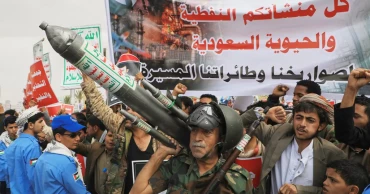
Bangladesh condemns Houthi naval blockade against Saudi Arabia
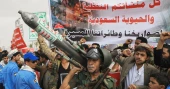
Bangladesh has strongly condemned the Houthis' declaration of a naval blockade against the Kingdom of Saudi Arabia.
It believes such actions risk escalating tensions, undermining regional peace and stability, and disrupting international maritime trade, the Ministry of Foreign Affairs said in a statement on Wednesday.
Bangladesh supports uninterrupted and lawful navigation of international maritime routes, including in the Red Sea, in accordance with international laws such as the United Nations Convention on the Law of the Sea (UNCLOS), the statement said.
Any disruption in the Red Sea, which is a vital conduit of global trade and energy supply, will result in serious economic consequences for people around the world, it said.
Bangladesh, therefore, calls for the safety and security of all seafarers and goods.
It also calls upon all parties to respect their obligations under international law, refrain from actions that could jeopardise maritime security, and engage in diplomacy.
Bangladesh remains deeply concerned about the continuing instability in the Middle East and reiterates its consistent position that dialogue, diplomacy and peaceful engagement are the only sustainable means to resolve conflicts.
12 days ago
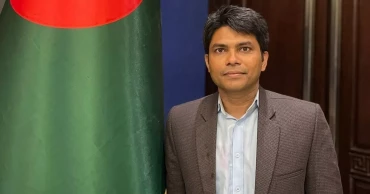
Tarique Choyon resigns as press secretary at Bangladesh’s Kolkata mission
Md Tariqul Islam Bhuiyan, better known as Tarique Choyon, has resigned from his post as first secretary (Press) at the Bangladesh Deputy High Commission in Kolkata, citing personal and professional reasons.
“I resigned from the Bangladesh Deputy High Commission in Kolkata due to personal and professional reasons,” he said in a post on his verified Facebook account on Wednesday.
Tarique Choyon said he spent a wonderful year and a half in the city of Kolkata and tried to fulfil his assigned responsibilities properly.
“I intend to write a book in the future about my professional life, office, colleagues and friends in Kolkata. Everyone, please pray for me. May Allah help us all,” he said.
12 days ago
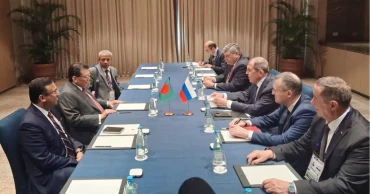
Dhaka eyes enhanced cooperation with key international partners
Foreign Minister Dr Khalilur Rahman on Wednesday held a series of high-level bilateral engagements with his counterparts from the US, Russia, China and Pakistan on the sidelines of the ASEAN Regional Forum (ARF) Foreign Ministers’ meeting in Manila, highlighting Bangladesh’s continued efforts to strengthen diplomatic relations with key international partners.
During the meetings, the Foreign Minister exchanged views on issues of mutual interest, including economic cooperation, trade and investment opportunities, and matters of shared concern on the global stage, a diplomatic source told UNB.
Dr Khalilur is leading the Bangladesh delegation to the 33rd ASEAN Regional Forum Foreign Ministers’ meeting and the 50th Anniversary of the Treaty of Amity and Cooperation of Southeast Asia.
Adviser to the Prime Minister for Foreign Affairs Humaiun Kobir accompanied the Foreign Minister in the meetings.
These meetings covered a broad spectrum of bilateral relations, including trade, investment, energy and connectivity, as well as regional and international issues, said the Ministry of Foreign Affairs.
During these meetings, the Bangladesh side underlined that the ‘Bangladesh First’ policy will guide Bangladesh’s external relations.
12 days ago
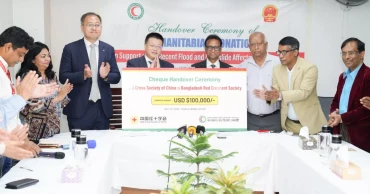
China always stands by Bangladesh in times of disaster, humanitarian need: Ambassador Yao
Chinese Ambassador to Bangladesh Yao Wen on Wednesday said China has consistently extended support whenever Bangladesh has faced disasters or humanitarian crises.
The Embassy of the People's Republic of China in Bangladesh donated USD 100,000 to the Bangladesh Red Crescent Society (BDRCS) to support its ongoing emergency response for communities affected by the recent floods and landslides across the country.
The humanitarian contribution was officially handed over by the Ambassador at a ceremony held at the Bangladesh Red Crescent Society National Headquarters in Dhaka.
The donation was received on behalf of BDRCS by its Chairman, Barrister Md Abdus Salam.
Speaking at the ceremony, Ambassador Yao said the recent heavy rains in Bangladesh have triggered severe flooding, claiming many lives, leaving millions of people stranded, and causing extensive damage to farmland and infrastructure.
“The Chinese people deeply sympathize with the people of Bangladesh during this difficult time,” he said.
On behalf of the Red Cross Society of China, the envoy said they are handing over USD 100,000 in emergency cash assistance to the Bangladesh Red Crescent Society. “This contribution reflects the sincere concern and solidarity of the Chinese Government and people with the people of Bangladesh."
The Ambassador said China has been supporting Bangladesh's disaster preparedness capacity through annual training programmes and the provision of flood response equipment.
Last year, China donated emergency response equipment to the Bangladesh Red Crescent Society, which is now being effectively utilized in the ongoing flood response.
The Ambassador also reaffirmed China's commitment to continuing humanitarian assistance and providing training for BDRCS volunteers whenever needed.
Speaking on the occasion, BDRCS Chairman Barrister Abdus Salam expressed his sincere gratitude to the government and people of the People's Republic of China and the Red Cross Society of China for their continued humanitarian support.
"We sincerely thank the Government and people of China for standing beside the people of Bangladesh during this difficult time. Our dedicated volunteers are already working in some of the hardest-hit and most remote areas,” he said.
With this generous support, he mentioned that they will be able to further expand their emergency response, including the distribution of emergency food assistance, safe drinking water, temporary shelter, hygiene kits, and medical services.
The Chairman said it is in times of crisis like these that true friendship is demonstrated. “On behalf of the Bangladesh Red Crescent Society, we once again express our heartfelt gratitude to the Government and people of China. We assure you that every dollar of this generous contribution will be utilized efficiently, transparently, and where it is needed most."
Highlighting the long-standing friendship between Bangladesh and China, he said, "The late President Ziaur Rahman initiated the bilateral relationship between Bangladesh and China, which was further strengthened by former Prime Minister Begum Khaleda Zia. Following the recent visit of the Prime Minister to China, we are confident that bilateral cooperation in humanitarian, economic, and development sectors will continue to grow stronger."
During the programme, BDRCS presented an overview of its emergency response activities carried out up to 21 July. The presentation highlighted that BDT 3.39 million had been released for emergency operations.
In addition, BDRCS has distributed more than 2,500 food packages, evacuated and rescued over 22,000 people, provided medical assistance to more than 2,000 people, distributed over 37,000 litres of safe drinking water, mobilized 12 Red Crescent Units, and deployed more than 3,500 volunteers to support the emergency response.
The programme was attended by Professor Dr. Md. Rafiqul Kabir, Vice Chairman of BDRCS; Dr. Abu Md. Mofakhkharul Islam Rana, Treasurer; Dr. Kabir Md. Ashraf Alam, ndc, Secretary General of BDRCS; senior officials of the International Federation of Red Cross and Red Crescent Societies (IFRC); officials from the Embassy of the People's Republic of China; representatives of the Red Cross and Red Crescent Movement; and other guests.
12 days ago
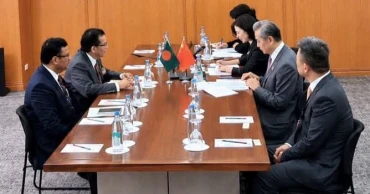
Dhaka, Beijing discuss transport corridors, energy cooperation
Bangladesh and China on Wednesday discussed a wide range of issues to advance comprehensive cooperative partnerships to jointly build a China-Bangladesh Community with a shared future.
Rohingya repatriation, transport corridors, investment and energy and economic cooperation, among other matters, were dicussed.
Foreign Minister Dr Khalilur Rahman, accompanied by Foreign Adviser to the Prime Minister Humaiun Kobir had a bilateral meeting with Chinese Foreign Minister Wang Yi on Wednesday in Manila on the margin of ASEAN Regional Forum Foreign Ministers Meeting and discussed the issues.
They held an impromptu meeting with Berris Ekinci, Deputy Minister of Foreign Affairs of the Republic of Türkiye, on the sidelines of the ASEAN Regional Forum (ARF) Ministerial Meetings in Manila on Tuesday, according to the Ministry of Foreign Affairs.
They had a cordial exchange of views on the growing fraternal partnership between Bangladesh and Türkiye.
The Foreign Minister reached Manila from New York on Tuesday afternoon.
US Secretary of State Marco Rubio is travelling to Manila, Philippines from July 19-23 to attend the ASEAN Post-Ministerial Conference, the East Asia Summit Foreign Ministers’ Meeting, and the ASEAN Regional Forum Foreign Ministers’ Meeting.
The US Secretary of State will also meet wsenior government officials from Indo-Pacific countries, according to the US Department of State.
The Secretary’s visit advances a clear US priority: a free and open Indo-Pacific that delivers safety, security, and prosperity for the region and for the American people.
Secretary Rubio will use this trip to demonstrate the tangible results of U.S.-ASEAN partnership and to deepen the United States’ comprehensive partnership with the Philippines, according to a press statement.
12 days ago
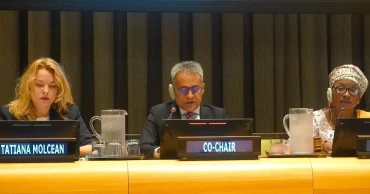
Bangladesh co-chairs UN road safety panel, calls for stronger institutions to save lives
Bangladesh has called for stronger institutions, coordinated implementation and greater accountability to accelerate global efforts to reduce road traffic deaths and serious injuries.
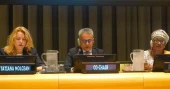
Road Transport and Bridges Minister Shaikh Rabiul Alam made the call while co-chairing a multi-stakeholder panel session at the United Nations Headquarters in New York on Tuesday.
Addressing the session, the minister said strong institutions must be complemented by effective action across the entire road transport system to deliver meaningful improvements in road safety.
Referring to the Progress Declaration, he stressed the need for close coordination among transport, health, police, finance, education, environment and local government authorities, supported by clearly defined institutional responsibilities and coherent public policies.
The minister also highlighted the role of local governments, the private sector, civil society, academia and young people in advancing road safety, saying their contributions should be guided by strong government leadership and accountability.
He urged participants to focus on translating political commitments into effective institutions, coordinated implementation and measurable reductions in road traffic fatalities and serious injuries.
Shaikh Rabiul Alam is leading the Bangladesh delegation at the United Nations High-Level Meeting on Improving Global Road Safety at the UN Headquarters.
The Bangladesh delegation also includes Road Transport and Highways Division Secretary Dr Mohammed Ziaul Haque and Bangladesh’s Permanent Representative to the United Nations Ambassador Salahuddin Noman Chowdhury, according to a PID handout.
12 days ago

Maldives envoy underscores media's role in boosting bilateral ties
Maldivian High Commissioner to Bangladesh Shiuneen Rasheed on Tuesday underscored the vital role of the media in strengthening bilateral relations between Bangladesh and the Maldives, saying journalism can help deepen mutual understanding and expand cooperation in key sectors.
Speaking during a visit to the offices of the Dhaka Tribune and the Bangla Tribune, she said the media plays an important role in promoting Bangladesh-Maldives cooperation and enhancing people-to-people connectivity through promoting culture, tourism and investment opportunities.
She visited the two media outlets at the invitation of their editors, toured the newsrooms, interacted with journalists and held discussions with their management.
The high commissioner commended the management and editorial teams for their valuable contribution to delivering timely and credible news to the public.
Dhaka Tribune Editor Reaz Ahmad and Bangla Tribune Executive Editor Udisa Islam, among others, spoke.
The Maldives eyes to transform its relationship with Bangladesh into a broader economic partnership while seeking more skilled Bangladeshi professionals to support its expanding healthcare, tourism and infrastructure sectors.
13 days ago
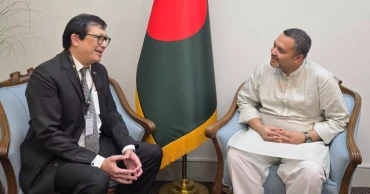
Singapore eyes deeper cooperation with Bangladesh in trade, aviation, education sectors
Charge d’affaires at the High Commission of Singapore, Mitchel Lee, on Tuesday met Adviser and Spokesperson of the Prime Minister’s Office Mahdi Amin and updated him on Singapore’s ongoing interests in port, logistics and aviation sectors.
He mentioned the digitalisation of airports and other government services, intentions to conclude a bilateral Free Trade Agreement, carbon credits collaboration, and capacity building for government officials.
They discussed cooperation in education and human resource development, sharing of experience in this sector, particularly in vocational education, said the High Commission of Singapore in Dhaka.
Lee described the meeting as a constructive discussion and said he looks forward to further interactions with the aim of deepening ties between Bangladesh and Singapore.
13 days ago
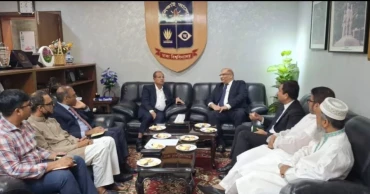
Pakistan envoy, DU VC discuss expanding cooperation in education
Pakistan High Commissioner to Bangladesh Imran Haider met Dhaka University Vice Chancellor Prof Dr A B M Obaidul Islam on Tuesday and discussed ways to strengthen educational cooperation between the two countries.
The meeting, held at the Vice Chancellor's office, focused on enhancing educational cooperation, promoting research collaboration, and expanding faculty and student exchange programmes.
During the meeting, the High Commissioner briefed the Vice Chancellor on the strong interest shown by Bangladeshi students in the Allama Iqbal Scholarships being offered under the Pakistan-Bangladesh Knowledge Corridor initiative.
Both sides agreed that education remains one of the strongest foundations for building mutual understanding, fostering collaboration and strengthening the longstanding ties between the peoples of Pakistan and Bangladesh.
13 days ago

Bangladesh, Türkiye discuss growing bilateral partnership on ARF sidelines
Foreign Minister Dr Khalilur Rahman and Prime Minister's Foreign Affairs Adviser Humaiun Kobir held an impromptu meeting with Türkiye’s Deputy Minister of Foreign Affairs Berris Ekinci on the sidelines of the ASEAN Regional Forum (ARF) Ministerial Meetings in Manila of the Philippines on Tuesday.
They had a cordial exchange of views on the growing fraternal partnership between Bangladesh and Türkiye, a senior official told UNB.
Foreign Minister Khalilur Rahman reached Manila from New York in the afternoon.
US Secretary of State Marco Rubio is visiting Manila to attend the ASEAN Post-Ministerial Conference, the East Asia Summit Foreign Ministers’ Meeting, and the ASEAN Regional Forum Foreign Ministers’ Meeting.
He will also meet senior government officials from Indo-Pacific countries, according to the US Department of State.
Marco Rubio’s visit advances a clear US priority: a free and open Indo-Pacific that delivers safety, security, and prosperity for the region and for the American people.
He will use this trip to demonstrate the tangible results of US-ASEAN partnership and to deepen the US comprehensive partnership with the Philippines, according to a press statement.
13 days ago