foreign-affairs
Bangladesh aims to be trusted global source of green jute solutions
The government on Tuesday expressed its firm commitment to working together to transform the jute sector into a modern industry, ensure fair prices for farmers, and establish Bangladesh as a trusted global source of climate-friendly jute-based solutions.
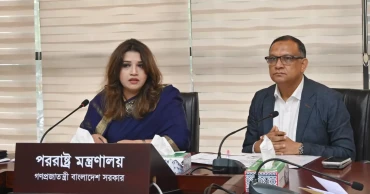
To achieve these goals, a coordination meeting titled “Strategic Economic Diplomacy and Export Expansion for Bangladesh’s Jute Sector” was jointly organised in Dhaka by the Ministry of Foreign Affairs and the Ministry of Textiles and Jute.
State Minister for Foreign Affairs Shama Obaed Islam and State Minister for Textiles and Jute Md Shariful Alam announced the formation of a joint working group between the two ministries and the organisation of an ‘International Jute Expo’ in the near future with a renewed global outlook.
Secretaries of both ministries, senior government officials, and representatives from the Department of Jute, the jute industry, research institutions, and development partner organisations attended the meeting.
13 days ago

Nothing more basic to life than water: ADB President
The Asian Development Bank (ADB) and the government of Japan on Tuesday established a new fund to strengthen water security and protect people across Asia and the Pacific from worsening floods, droughts, and other water-related shocks.
Japan will make an initial $10 million contribution to the fund, according to a message received from Tokyo, Japan.
Japan to host ADB's 60th annual meeting in 2027
“There is nothing more basic to life, or more decisive for development, than water,” said ADB President Masato Kanda, noting that when water systems fail, crops dry out, businesses slow, children miss school, and families become more vulnerable.
“When water is managed well, communities thrive, investment follows, and economies grow. Water is also a clean, reliable source of hydropower, and in today’s energy markets that matters more than ever. Asia and the Pacific has shown that progress is possible. Now we must move faster, invest smarter, and make water security the foundation of a more resilient future.”
ADB and the government of Japan created the Water Initiative for Security, Efficiency and Resilience (WISER) Fund.
The fund will help ADB developing member countries strengthen water systems, reduce disaster risks, improve water-use efficiency, and apply digital and innovative solutions to water challenges.
13 days ago
Comparison between BIMSTEC, SAARC 'misleading', hurts BIMSTEC's interests: SG
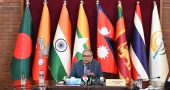
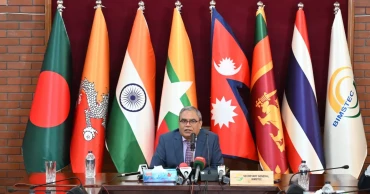
Secretary General of the Bay of Bengal Initiative for Multi-Sectoral Technical and Economic Cooperation (BIMSTEC) Indra Mani Pandey on Tuesday said the comparison between BIMSTEC and the South Asian Association for Regional Cooperation (SAARC) is "misleading and misplaced," and it hurts the interests of BIMSTEC.
"My request has always been that BIMSTEC deserves to be appreciated in its own right, and it should not be seen in the context of any other organisation, which has its own history and achievements," he said while responding to a question during an interaction with the members of the Diplomatic Correspondents Association, Bangladesh (DCAB) at the BIMSTEC headquarters.
He said BIMSTEC is poised to emerge as a leading regional organisation in the Indo-Pacific, noting that the regional grouping has made significant institutional progress since its establishment in 1997, evolving into a stronger platform for cooperation between South Asia and Southeast Asia.
Pandey said BIMSTEC was created to bring the two regions closer through practical and tangible cooperation, particularly in technical and economic fields.
"BIMSTEC enjoys the requisite political support of its members, focuses on forging tangible cooperation and stays away from political issues," said the BIMSTEC chief, noting that BIMSTEC is undergoing reforms and revitalisation in order to make it an efficient, effective and dynamic regional organisation.
13 days ago
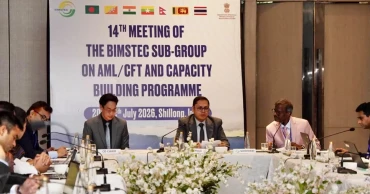
BIMSTEC finalises action plan to curb illicit financial flows
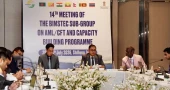
BIMSTEC Member States finalised an Action Plan to Prevent Illicit Financial Flows in the region as well as a Memorandum of Understanding(MoU) on capacity building to combat money laundering and terrorist financing.
In a meeting on Monday they also agreed to develop a BIMSTEC AML/CFT Work Plan (2026–2028) and emphasised the operationalisation of the BIMSTEC AML/CFT Contact Point Network to deepen cooperation among Financial Intelligence Units.
The Department of Revenue, Ministry of Finance, Government of India hosted the 14th meeting of the BIMSTEC Sub-Group on Anti-Money Laundering and Combating theFinancing of Terrorism in Shillong, India and discussed the issue.
The Member States reaffirmed their shared commitment to strengthening regional cooperation in combating money laundering, terrorist financing, proliferation financing and other evolving forms of financial crime.
13 days ago
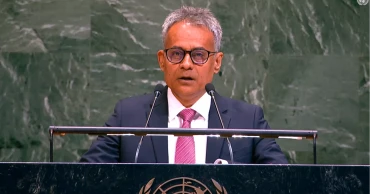
Bangladesh committed to halving road traffic deaths by 2030: Minister
Minister for Road Transport and Bridges Shaikh Rabiul Alam has reaffirmed the Government's commitment to reducing road traffic deaths and injuries by 50 percent by 2030.
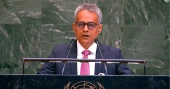
Speaking at the United Nations High-Level Meeting on Improving Global Road Safety, the Minister underlined Bangladesh's ongoing legal, policy and technological reforms to improve road safety in line with the Global Plan for the Decade of Action for Road Safety 2021–2030.
He also highlighted the Government's efforts to expand AI-enabled speed management, strengthen post-crash response systems and implement targeted highway safety interventions, particularly for pedestrians, said a press release of Permanent Mission of Bangladesh to UN.
The Minister reiterated the Government's commitment to finalising, endorsing and enacting a comprehensive Road Safety Law by December 2027 in line with the Safe System Approach and international best practices.
Reaffirming road safety as a national political priority, the Minister stressed that achieving the 2030 target would require strong political commitment, effective partnerships and shared responsibility.
He said Bangladesh remains committed to working with the international community to build safer, healthier and more equitable roads for all users.
Rabiul Alam is leading the Bangladesh delegation at the United Nations High-Level Meeting on Improving Global Road Safety being held at United Nations Headquarters.
13 days ago
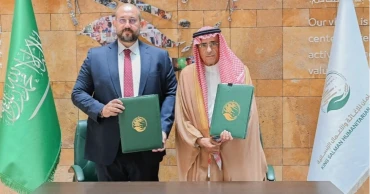
IOM, KSrelief sign USD 2.5 million deal to improve WASH in Cox's Bazar
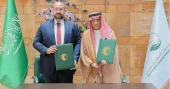
The International Organization for Migration (IOM) and the King Salman Humanitarian Aid and Relief Centre (KSrelief) have signed a USD 2.5 million agreement to strengthen safe, dignified and sustainable water, sanitation and hygiene (WASH) services as part of the Rohingya response in Cox's Bazar, Bangladesh.
The agreement, which was signed in Riyadh by Eng. Ahmed bin Ali Al-Baiz, KSrelief Assistant Supervisor General for Operations and Programs, and Othman Belbeisi, IOM Regional Director for the Middle East and North Africa, aims to support essential WASH services and improve critical infrastructure in areas supported by IOM.
The project will combine essential service delivery with durable infrastructure improvements.
Planned activities include upgrading solar-powered water networks; constructing and upgrading decentralized wastewater treatment systems; improving faecal sludge collection and transfer networks; and rehabilitating latrines and bathing facilities, among other activities, said the UN agency on Monday.
The initiative will also support distributing water containers, colour-coded waste bins and hygiene management kits; and strengthen community engagement and targeted training.
These efforts will help reinforce local capacity and promote longer-term ownership of WASH services.
“This agreement reflects the Kingdom of Saudi Arabia's continued commitment, through KSrelief, to supporting humanitarian responses with practical and sustainable solutions,” said Eng. Al-Baiz.
“By strengthening essential water and sanitation infrastructure and introducing environmentally effective waste management, the project will help in protecting public health and improve daily living conditions within the Rohingya Refugee camps in Cox's Bazar,” Eng. Al-Baiz added.
The agreement comes at a critical time for the Rohingya response.
Severe funding pressures, ageing facilities, overcrowding and limited space for sanitation infrastructure are increasing public health and protection risks.
Gaps in water supply, faecal sludge management, solid waste systems and access to essential hygiene materials threaten to reverse gains made over recent years.
“KSrelief's support will enable IOM to ensure the delivery of essential services while investing in systems that are safer, more efficient and more sustainable,” said Othman Belbeisi.
“This partnership moves beyond short-term assistance by improving durable WASH infrastructure and introducing innovative solutions.”
The KSrelief-funded project complements an earlier phase supported by the government of the United Kingdom through the Foreign, Commonwealth and Development Office.
The phased approach links urgent hygiene support with longer-term improvements to WASH infrastructure and service delivery.
KSrelief and IOM have built a long-standing strategic partnership to effectively respond to humanitarian needs across the globe.
This cooperation has supported life-saving assistance, recovery efforts, and more sustainable solutions across multiple humanitarian contexts.
14 days ago
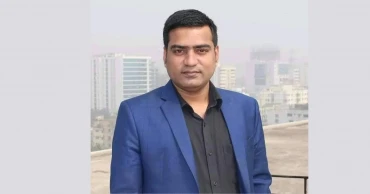
Journalist Saidur appointed Minister (Press) at Dhaka’s Mission in New Delhi
Journalist Saidur Rahman, currently serving as political and election affairs editor at the Daily Ittefaq, has been appointed Minister (Press) at the Bangladesh High Commission in New Delhi, India.
According to a gazette notification issued by the Ministry of Public Administration on Sunday, Saidur has been appointed on a contractual basis for a one-year term, effective from the date of his joining.
The position had remained vacant since the departure of journalist Faisal Mahmud in February after his contractual appointment was cancelled.
Mahmud, who had been appointed by the then interim government, served as Minister (Press) for nearly nine months.
14 days ago
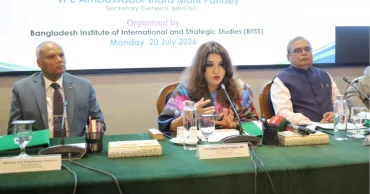
Connectivity must remain flagship of regional ambition: Shama Obaed
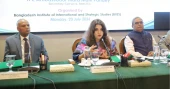
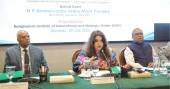
State Minister for Foreign Affairs Shama Obaed Islam on Monday said connectivity must remain the flagship of their regional ambition, stressing that the BIMSTEC Master Plan for Transport Connectivity provides the blueprint, while the challenge is implementation.
"Bangladesh will support progress on transport linkages and the proposed coastal shipping agreement while pursuing deeper energy and digital connectivity," she said while speaking as the chief guest at a seminar.
Bangladesh Institute of International and Strategic Studies (BIISS) organised the seminar on "Three Decades of BIMSTEC: Advancing Regional Cooperation for Shared Prosperity" at the BIISS Auditorium.
The seminar was organised in view of Bangladesh's ongoing chairmanship of the Bay of Bengal Initiative for Multi-Sectoral Technical and Economic Cooperation (BIMSTEC) and sought to generate informed policy discourse on strengthening regional cooperation for shared prosperity.
BIMSTEC Secretary General Indra Mani Pandey spoke as the special guest, while BIISS Director General Major General A S M Ridwanur Rahman delivered the welcome address.
The BIMSTEC Secretary General spoke on ongoing projects and actions in areas such as women's development, climate adaptation, grid interconnection, technical capacity-building in energy, security cooperation in drug control, cyber, maritime and human security, counterterrorism, transnational crime, tourism, visa facilitation, and trade and investment undertaken by BIMSTEC.
The State Minister highlighted the importance of institutional coordination, innovative financing, engagement with development partners and the private sector, and sustained political commitment to achieve the connectivity goals.
She said Bangladesh has been dealing with a crucial crisis - the Rohingya refugee crisis - and stressed that regional prosperity can only be sustained in an environment of peace, security and resilience.
As a trusted partner and friend, Shama Obaed said Bangladesh has truly hoped that the BIMSTEC framework and the members of this multilateral body shall be committed to creating the international pressure needed for the safe and dignified repatriation of the Rohingyas.
She said their region faces terrorism, violent extremism, human trafficking, drug trafficking, cyber threats, illegal fishing, climate-induced disasters, and humanitarian crises.
The State Minister said they should deepen practical cooperation in maritime security, law enforcement, disaster risk reduction, humanitarian assistance, and capacity building.
She said climate resilience and disaster preparedness must remain at the heart of their agenda because few countries understand the human and economic cost of a warming planet more intimately than Bangladesh.
The State Minister reaffirmed Bangladesh's strong commitment to BIMSTEC and to promoting a peaceful, resilient, and prosperous Bay of Bengal region.
She emphasised the importance of translating regional commitments into concrete actions through greater implementation, practical cooperation, and strengthened institutional mechanisms.
Shama Obaed also underscored Bangladesh's commitment, as the current Chair of BIMSTEC, to advancing economic integration, connectivity, trade, investment, the blue economy, and people-centric regional cooperation while working closely with all member states to realise the organisation's shared objectives.
She expressed confidence that the recommendations emerging from the seminar would help strengthen Bangladesh's leadership during its BIMSTEC chairmanship and support the organisation's future development.
"We must also invest in our people. Students, researchers, entrepreneurs, professionals, media representatives, and cultural practitioners create the human connections on which durable regional cooperation rests," Shama Obaed said.
As the current chair and host of the BIMSTEC Secretariat, she said Bangladesh recognises that its responsibility goes well beyond convening meetings.
"We will work closely with Bhutan, India, Myanmar, Nepal, Sri Lanka, and Thailand, as well as with the Secretary General, to strengthen the capacity of the Secretariat, fully operationalise the Charter, and translate the commitments of the leaders into practical outcomes," Shama Obaed said.
She said Bangladesh will work with all member states to build consensus and inject fresh momentum into those negotiations.
The State Minister said the blue economy offers another major avenue for shared prosperity.
The fisheries, shipping, renewable energy, and marine resources of the Bay of Bengal are a shared inheritance that must be developed responsibly and managed sustainably, she said.
She said Bangladesh will support practical cooperation, scientific research, and capacity building so that the Bay becomes a source of inclusive growth for present and future generations.
"We have the political commitment. Let us therefore work together with renewed purpose and confidence. Let us transform BIMSTEC from a forum of great promise into a platform of effective regional cooperation," she said.
14 days ago
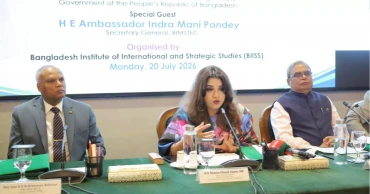
Dhaka writes to Delhi seeking ex-Home Minister's extradition: Shama Obaed
State Minister for Foreign Affairs Shama Obaed Islam on Monday said Bangladesh has sought the extradition of former Home Minister Asaduzzaman Khan Kamal, noting that a letter was sent to India through diplomatic channels seeking his extradition.
"Since he is a fugitive, we have given the letter that is required for his return. It has been sent recently, addressing only the former Home Minister," she told reporters while responding to a question after attending a seminar in the city.
Hasina will be arrested whenever she comes to Bangladesh: Shama Obaed
The State Minister said it is an ongoing process and people wish to see the court orders implemented against those who have been convicted and are fugitives including former prime minister Sheikh Hasina.
She said the government wants a fair trial, and feedback on Dhaka's extradition request depends on India.
"We will wait. We expect India will reply and will play its role in strengthening the relations between the two countries," Shama Obaed said.
Responding to a question, she said normally extradition request letters are sent separately and that they are sending letters for all individuals who remain fugitives.
The State Minister on Thursday said former Prime Minister Sheikh Hasina, currently staying in India, would be arrested whenever she comes to Bangladesh.
"Since she has been convicted, there is no scope for surrender. Whenever she comes to Bangladesh, she will be arrested. It will be done in accordance with the law," she told reporters at the Ministry of Foreign Affairs, noting that efforts are continuing to secure her extradition to Bangladesh.
The State Minister said the people of Bangladesh want court orders to be implemented against those living abroad. She said the Law Adviser and the Home Adviser had already explained the legal aspects.
"If she surrenders, the existing law will be followed. She will have to go to jail. The law will take its own course," Shama Obaed told reporters on Monday at the Ministry of Foreign Affairs.
She said Hasina's recent remarks from abroad appeared intended to encourage Awami League leaders and activists who have either gone into hiding or fled the country. "I see no other reason," she said.
Bangladesh has formally requested India to extradite Hasina under the bilateral extradition treaty.
Bangladesh is making sustained diplomatic efforts to bring Hasina back to face trial while acknowledging that the extradition process takes time.
Three ministries, including the Ministry of Foreign Affairs, have been pursuing the matter since the new government assumed office in February, building on efforts initiated under the interim government.
The government believes the people of Bangladesh want Hasina to be extradited.
On April 8, Bangladesh renewed its request for the extradition of Hasina and former Home Minister Asaduzzaman Khan Kamal, both of whom have been sentenced to death by the International Crimes Tribunal.
"We will continue to seek her extradition through a transparent judicial process. It has been discussed and will be dealt with through a transparent judicial process," Prime Minister's Foreign Affairs Adviser Humaiun Kobir told reporters in Dhaka.
14 days ago

Bangladesh-US joint military exercise ‘Tiger Lightning-2026’ commences
The opening ceremony of ‘Exercise Tiger Lightning (TL)-2026’ was held on Sunday at the Para Commando Brigade in Jalalabad Cantonment, Sylhet, with the participation of the Bangladesh Army and the United States Army Pacific Command (USARPAC).
The ceremony was attended by US Ambassador to Bangladesh Brent T. Christensen and Chief of General Staff of the Bangladesh Army Lieutenant General Md Mainur Rahman, according to an ISPR press release.
The joint exercise is being conducted under the supervision of the Bangladesh Army’s specialized formation, the Para Commando Brigade. The 13-day exercise will continue until July 31, 2026.
US Ambassador Brent T. Christensen mentioned that through this training, military-to-military interaction is serving as a cornerstone of the growing strategic partnership between the two countries.
Besides, it is not just a training but also a symbol of the long-standing friendship, mutual respect and shared commitment of both countries to an open, secure and prosperous Indo-Pacific region.
Chief of General Staff of Bangladesh Army in his speech said that 'Exercise Tiger Lightning' is one of the most important means of bilateral military relations between Bangladesh and the United States.
15 days ago