foreign-affairs
Modi expresses concern over Khaleda's health, offers support
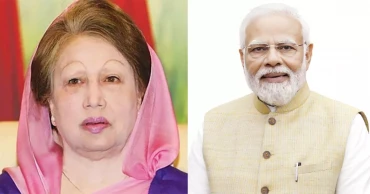
Expressing deep concern over BNP Chairperson Begum Khaleda Zia's health condition, Indian Prime Minister Narendra Modi on Monday (December 01) said India stands ready to extend all possible support in whatever way they can.
"Deeply concerned to learn about the health of Begum Khaleda Zia, who has contributed to Bangladesh’s public life for many years," Modi said in a message through his verified X handle.
Read more: Growing concerns over Khaleda’s health; Chinese team joins medial efforts
"Our sincere prayers and best wishes for her speedy recovery," he added.
The former Prime Minister remains in a critical state as her health deteriorated on Sunday night (November 30).
Since her admission to Evercare Hospital on November 23, Khaleda Zia has been under intensive treatment in the hospital’s Coronary Care Unit (CCU) for multiple complications affecting her liver, kidneys and heart.
On Sunday night, her condition worsened and she was placed on ventilator support.
Read more: Tarique Rahman likely to return home soon: Salahuddin
8 months ago

Pranay Verma lauds ITEC Alumni as Bangladesh-India friendship bridge
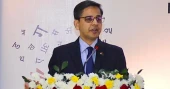
Indian High Commissioner to Bangladesh Pranay Verma on Monday highlighted the Indian Technical and Economic Cooperation (ITEC) as India’s commitment to South-South Cooperation, offering capacity building and human resource development programmes based on the needs and priorities of partner countries.
Noting that more than 5000 professionals from Bangladesh have undergone ITEC programmes over the years, the High Commissioner thanked the ITEC alumni in Bangladesh for serving both as a bridge of friendship and collaboration, and a channel for exchange of experience and knowledge between the two countries.
Addressing the gathering to mark the ITEC Day-2025, he also recognized the contribution of the ITEC Association of Bangladesh (IAAB) for their efforts to bring the ITEC alumni together on one platform.
The High Commission of India, Dhaka in collaboration with the ITEC Alumni Association of Bangladesh (IAAB), organized a reception-cum-get together to mark the Indian Technical and Economic Cooperation Day (ITEC Day 2025).
Around 150 ITEC alumni from Bangladesh participated in the event held in the High Commission premises.
During the event, many ITEC alumni shared their training experiences in India.
Dignitaries from some of the partners organizations, including Bangladesh Council of Scientific & Industrial Research (BCSIR), Bangladesh Atomic Energy Commission (BAEC), Bangladesh Space Research and Remote Sensing Organization (SPARSO), and Bangladesh Land Port Authority (BLPA) also joined.
To mark the occasion, a musical programme showcasing deep-rooted cultural links between India and Bangladesh was presented by the artistes from Bangladesh.
ITEC, a flagship programme of the Government of India, was instituted in 1964 as part of India's Development Assistance Programme.
It has been offering the benefit of India's development experience and technological progress to more than 160 countries across the globe.
Every year, more than 12,000 training slots are offered to ITEC partner countries through over 300 training courses in premier Indian Institutes in diverse areas like Agriculture, Accounts, Audit, Management, Good Governance Practices, Small and Medium Enterprises, Rural Development, Public Health, Parliamentary Affairs, Judiciary, Election Management, IT, Data Analytics, Remote Sensing, Renewable Energy, Advanced Computing and so on.
8 months ago

Germany to increase its funding contribution to Saidabad WTP Phase III project
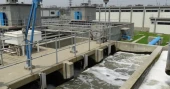
Bangladesh and Germany on Monday signed a ‘Loan Agreement’ for an additional EUR 70 million to another loan agreed earlier of EUR 90 million, and an ‘Amendment Agreement’ to the main loan, for the project titled “Climate Change Adapted Drinking Water Resources Management Dhaka II (Saidabad Water Treatment Plant Phase III)”.
The main objective of the project is to establish an environmentally friendly, sustainable, and people-friendly water supply system and to reduce dependency on groundwater by ensuring the efficient use of surface water.
On behalf of Bangladesh, Md. Shahriar Kader Siddiky, Secretary, Economic Relations Division (ERD), signed the agreements that took place at the Economic Relations Division. On behalf of Germany, Carla Berke, Head of Division, Urban Development, South Asia, KfW Frankfurt and Stefanie Klappenbach, Principal Portfolio Manager, Urban Development, South Asia, KfW Frankfurt, signed the agreements.
The project is being implemented by Dhaka WASA under the Local Government Division. The RDPP of the project was approved by the Executive Committee of the National Economic Council (ECNEC) on 23 March 2025.
The total estimated cost of the project is Tk 16,014.83 crore, of which the Government of Bangladesh will contribute Tk 4,536.17 crore, project loan amounts to Tk 11,448.66 crore, and the implementing agency will contribute Tk 30.00 crore from its own funds. The project implementation period is from 1 July 2015 to 30 June 2029.
Under the ‘Loan Agreement’, KfW Development Bank will provide the Government of Bangladesh with an additional EUR 70.00 million (approximately BDT 988 crore).
The financing will be used to construct a raw water intake and raw water pumping station on the Meghna River at Haria, build approximately 26 km of raw water transmission pipeline with an estimated diameter of 2,200 mm, and expand and upgrade approximately 54 km of the primary distribution network for supplying treated water.
Due to the additional EUR 70 million financing for the project, the Disbursement Period of the original EUR 90 million loan has been revised from 27 June 2024 to 31 December 2026, and the total financing amount has changed accordingly. As a result, the ‘Amendment Agreement’ has been signed.
The Government of Germany has been a long-standing development partner of Bangladesh. Since 1972, the total commitments of the German Government in financial and technical cooperation amount to approximately EUR 4.00 billion.
At present, KfW Development Bank is financing 13 projects in Bangladesh, including EUR 647.50 million in loans and EUR 170.00 million in grants.
8 months ago

Cyclone Ditwa: Bangladesh to send relief, rescue team to Sri Lanka on Dec 3
The interim government has decided to send relief materials and a rescue team to Sri Lanka on December 3 as the death toll from devastating floods and mudslides in the South Asian nation has risen to more than 330 amid one of its worst weather disasters in years.
Following directives from Chief Adviser Prof Muhammad Yunus, the relief supplies and rescue team will be dispatched on an urgent basis (if weather permits) via two special Bangladesh Air Force flights, the Ministry of Foreign Affairs said on Monday.
The Chief Adviser’s Office, the Ministry of Foreign Affairs, the Ministry of Disaster Management and Relief, the Ministry of Health, the Armed Forces Division, BGMEA, and Essential Drugs Company Limited are jointly coordinating the effort.
At least 355 people have died and 366 remain missing due to flash floods and landslides triggered by Cyclone Ditwa. More than 20,000 houses have been damaged, and approximately 210,000 people have been evacuated to temporary shelters.
Sri Lanka has declared a state of emergency in response to the crisis and appealed to the international community for assistance.
Bangladesh has a history of responding swiftly to natural and humanitarian disasters in South Asian countries and has previously extended similar support.
8 months ago

FAO@80: Bangladesh celebrates 50 years of partnership
Marking the 80th anniversary of the Food and Agriculture Organization of the United Nations (FAO) and five decades of Bangladesh–FAO collaboration, a milestone event was held in Dhaka on Sunday.
This year, FAO celebrates eighty years of global commitment to ending hunger and transforming agrifood systems, while also observing fifty years of its enduring partnership with the Government of Bangladesh to build a sustainable, inclusive and resilient food future.
To commemorate the twin occasions, the FAO Representation in Bangladesh organised a daylong programme titled “FAO@80 and Bangladesh: A shared legacy of agricultural transformation for five decades”.”
Bringing together officials from the government, FAO, diplomatic missions in Dhaka, international financial institutions, other UN agencies, private sector actors, civil society organizations, youth, farmers and other local partners, the event served as a platform to reflect on the Bangladesh agriculture’s transformative journey and to co-create a forward-looking vision for the next decade of partnership.
The celebration began early morning with “Innovators’ Brew with Youth”, an energizing conversation circle bringing together fifteen young agri entrepreneurs across the country who are redefining agriculture through innovation and ambition.
The main commemoration featured a high-level inaugural session with statements from high level representatives from the Government of Bangladesh and FAO; and a keynote address to highlight key milestones in FAO-Bangladesh cooperation.
It was followed by a high-level panel discussion session, titled, “Dialogue for Impact – Partnering Hand in Hand for Inclusive Transformation”, aiming to bring together voices from various stakeholders reflecting the collective commitment to advancing the agriculture development in Bangladesh.
“For over five decades, Bangladesh and FAO have worked hand in hand to strengthen policies, build resilience, and drive innovation across our food and agriculture sectors—achievements shared with government, partners, and our farming communities. As we approach LDC graduation, this partnership remains vital for advancing sustainable growth, boosting exports, and shaping a more food-secure and resilient future.”- said Md. Shahriar Kader Siddiky, Secretary, Economic Relations Division, Ministry of Finance as the chief guest.
Md Mahmudur Rahman, Additional Secretary (PPC Wing), Ministry of Agriculture as the Special Guest, said that , “FAO’s support—from flagship programmes like the Agriculture Transformation Programme and One Country One Product (OCOP) to climate adaptation, nutrition-sensitive agriculture, and emergency response—has strengthened national capacity, guided long-term reforms, and improved millions of farming lives. As we advance the formulation of a perspective plan for agriculture transformation Outlook 2050 to build a more competitive, climate-resilient, and market-oriented agriculture sector, Bangladesh deeply values FAO’s leadership and partnership in shaping a sustainable, hunger-free future”.
The dialogue session included distinguished dignitaries, A K M Sohel, Additional Secretary, Wing Chief, United Nations, ERD, Jean Pesme, Division Director for Bangladesh and Bhutan, World Bank, Hakon Arald Gulbrandsen, The Ambassador of the Royal Norwegian Embassy in Bangladesh, Antonio Alessandro, the Ambassador of Italy in Dhaka, Ambasciata d’Italia a Bangladesh, Uzma Chowdhury, Director, PRAN-RFL Group, Chairman, Meghna Bank, and BoD, Metropolitan Chamber of Commerce & Industries (MCCI).
In the afternoon there were parallel sessions, providing dedicated, in-depth spaces for technical stakeholders to delve into the findings and future pathways of specific flagship initiatives, namely the closure of Pesticide Risk Reduction in Bangladesh project and debriefing session of the EAF-Nansen Survey 2025, in the Bay of Bengal.
The day ended with a unique and flavorful journey into Bangladesh’s culinary heritage with Farida Akhter, Honorable Adviser, Ministry of Fisheries and Livestock as she talked about “Forgotten Foods and Diversified Dishes of Bangladesh”.
For the next generation of changemakers, this gathering offered an invaluable opportunity to discover how heritage foods can inspire sustainable futures, nourish communities, and shape tomorrow’s food systems.
With this celebration FAO reaffirmed its commitment to work Hand in Hand with the Government for a sustainable, inclusive, resilient and food secure Bangladesh ensuring better production, better nutrition, better environment and a better life, leaving no one behind.
8 months ago

Dhaka-Delhi ties won’t get stuck over Hasina issue: Foreign Adviser
Seeking convicted former Prime Minister Sheikh Hasina’s extradition, Foreign Affairs Adviser Md Touhid Hossain on Sunday said the relations between Bangladesh and India would not get stuck over a single issue.
He said Bangladesh’s efforts will also continue in line with its demands for Teesta water sharing deal and halting border killings, stressing that one issue is not dependent on another issue.
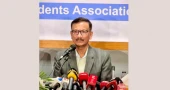
“Since she (Hasina) is convicted, we surely want her extradition to implement the punishment. I do not think other issues will get stuck for this (Hasina) issue,” Adviser Hossain said while responding to a question at ‘DCAB Talk’ at Jatiya Press Club.
Regarding convicted former Home Minister Asaduzzaman Khan Kamal, he said they know he is also in India but the government of Bangladesh is not officially notified.
The Adviser said he has no information that the extradition will begin with the return of Kamal.
8 months ago
Tarique’s pass could be issued today, may fly day after tomorrow: Foreign Adviser
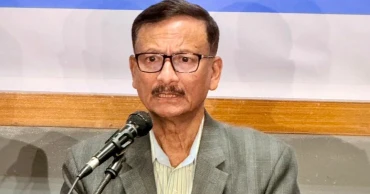
Foreign Affairs Adviser Md Touhid Hossain on Sunday said the government can issue a ‘one-time’ travel pass within a day, facilitating BNP Acting Chairman Tarique Rahman’s return to home if he wishes to come back home.
“If he (Tarique) says today that he wants to return, we can provide the pass tomorrow and he can catch the plane the day after tomorrow. There is no problem,” Adviser Hossain said while responding to a question during ‘DCAB Talk’ at the Jatiya Press Club.
The Adviser said this is a kind of ‘one-time’ pass which is usually issued if anyone does not have the passport or the passport expires. “It’s for once. It takes only one day to issue such a pass.”
Adviser Hossain said there are no restrictions from the government side.
Referring to BNP chairperson Begum Khaleda Zia’s health condition, he said she is not in a position at this moment that allows her travelling abroad for further treatment.
If her health improves to some extent, she will be taken abroad and the party is making arrangements to this end. “We are assisting.”
Diplomatic Correspondents Association, Bangladesh (DCAB) hosted the ‘DCAB Talk’ titled ‘Bangladesh’s Foreign Policy: Charting a Relevant Role in a Changing World’. DCAB President AKM Moinuddin and General Md Arifuzzaman Manun also spoke at the event.
The health condition of BNP Chairperson Begum Khaleda Zia remains unchanged, Senior Joint Secretary General Ruhul Kabir Rizvi said on Sunday.
Urging all to continue praying for the recovery of his critically ill mother, Khaleda Zia, Tarique said although he strongly wishes to return home and to be at her side, he is unable to do so freely because of the current political realities.
No objection to Tarique’s return, says govt
8 months ago
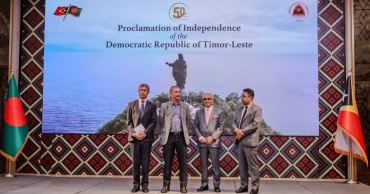
Bangladesh marks 50 years of Timor-Leste’s independence
Law Affairs Adviser Dr Asif Nazrul has highlighted the historic struggle and resilience of the Timorese people and praised Timor-Leste’s democratic progress and growing engagement in South Asia.
He was speaking at a reception as the chief guest commemorating the 50th anniversary of the Proclamation of Independence of the Democratic Republic of Timor-Leste.
The event was hosted on Friday evening by Engr. Kutubuddin Ahmed, Honorary Consul of Timor-Leste to Bangladesh.
The event brought together prestigious diplomats, government officials, senior military officers, academicians, business leaders, and friends of both nations, reflecting the warm and longstanding relationship between Bangladesh and Timor-Leste.
Ambassador Jorge Camoes, Director General, Ministry of Foreign Affairs and Cooperation and Emanuel Tilman, Director, Ministry of Foreign Affairs and Cooperation, two senior dignitaries from the Government of Timor-Leste were present at the event:
Both dignitaries expressed appreciation for Bangladesh’s long-standing support, particularly in peacekeeping, governance, capacity-building, and diplomatic cooperation.
Kutubuddin Ahmed, Honorary Consul of Timor-Leste to Bangladesh, Chairman of Envoy Legacy and Sheltech Group, underscored the significance of the 50-year milestone and emphasised the potential for deeper collaboration between the two countries.
He also highlighted Timor-Leste’s historic achievement of becoming the 11th member state of ASEAN in October 2025, noting that this development opens new avenues for enhanced regional and bilateral cooperation.
The event featured cultural performances and provided a platform for attendees to network, highlighting the enduring friendship and shared aspirations between Bangladesh and Timor-Leste.
8 months ago

Chinese investors can help transform Bangladesh into manufacturing hub: Prof Yunus
Chief Adviser Prof Muhammad Yunus has welcomed China’s interest in Bangladesh’s manufacturing sectors, noting that investors from the world’s second-largest economy could help transform Bangladesh into a manufacturing hub producing goods for export to developed nations including China.
“We can go full speed in these areas,” Prof Yunus said during a meeting with Vice-President of the Export-Import Bank of China Yang Dongning on Thursday, identifying pharmaceuticals and healthcare as additional sectors with strong potential for Chinese investment.
He said China, the world’s largest producer of solar energy, could play a significant role in supporting Bangladesh’s transition to green energy through investments in solar panels and rooftop solar systems.
The Chief Adviser also encouraged China to relocate manufacturing plants to Bangladesh, highlighting the potential utilization of country’s large pool of young workers, said the Chief Adviser’s press wing on Friday.
He suggested that closed state-run jute mills could be repurposed for new joint ventures.
“This is a very important dimension. We welcome this. We want to translate these into actions,” Prof Yunus said, referring to Chinese interest in jute-based manufacturing.
Vice-President of the Export-Import Bank of China Yang Dongning said Chinese investors are eager to invest in Bangladesh’s green technology, jute, textiles and pharmaceuticals as part of efforts to support the manufacturing transformation envisioned by Chief Adviser Prof Muhammad Yunus,
The visiting Exim Bank vice-president met with the Chief Adviser at the State Guest House Jamuna on Thursday.
She was accompanied by Dr Ma Jun, President of the state-run Institute of Finance and Sustainability.
Yang Dongning said that while China has long invested heavily in Bangladesh’s large infrastructure projects, its investors are now increasingly focused on key manufacturing sectors.
8 months ago

UN appreciates Bangladesh for leading with courage in global peacekeeping
The United Nations has expressed profound gratitude to Bangladesh as its peacekeepers continue to serve with unwavering dedication across seven missions worldwide.
Bangladesh is the third-largest contributor of UN peacekeepers, with more than 5,600 military and police personnel currently deployed in some of the world’s most fragile regions.
Leaving their families behind, these brave men and women work to protect vulnerable communities, support humanitarian operations, and help build conditions for lasting peace.
The UN has acknowledged the commitment, professionalism, and sacrifices of Bangladeshi peacekeepers, offering heartfelt thanks for their service.
Bangladesh first joined UN peacekeeping operations in 1988 by sending 15 military observers to the UN Iraq-Iran Military Observer Group (UNIIMOG). Since then, its role has expanded significantly.
Today, Bangladeshi peacekeepers are serving in Abyei, the Central African Republic, Cyprus, the Democratic Republic of Congo, Lebanon, South Sudan, and Western Sahara.
A total of 168 Bangladeshi peacekeepers have lost their lives while serving under the UN flag, a sacrifice the United Nations continues to honor with deep respect.
8 months ago