foreign-affairs

Democracy must be supported, protected from external interference, threats: Paris to Dhaka
France on Tuesday said it supports the holding of "free, fair and peaceful" elections in Bangladesh and welcomed the interest of the Bangladeshi authorities in the deployment of an EU (European Union) electoral observation mission.
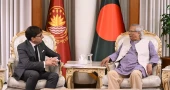
At a time when peace and security are under threat in many parts of the world, democracy must be supported and protected from all forms of external interference and threats, such as disinformation campaigns like those faced by European states from Russia, said the Embassy of France after French Ambassador Jean-Marc Séré-Charlet called on Chief Adviser Prof Muhammad Yunus at the State Guesthouse Jamuna.
The Ambassador thanked the Chief Adviser for his warm welcome as he was starting his assignment in Bangladesh and opening a new chapter in bilateral relations.
The Ambassador reiterated France and Europe's desire to be a long-term partner committed to Bangladesh.
France welcomes the electoral process initiated by Prof Yunus and the interim government and commends Prof Yunus' leadership.
France commended the efforts of the interim government and its success in achieving macroeconomic stability.
With Bangladesh set to reach the important milestone of LDC graduation in 2026, the EU is ready to engage in discussing the next steps and wishes to be considered a reliable long-term partner.
The establishment of structural cooperation is essential.
In that respect, a structuring partnership in the field of civil aviation, such as the one proposed by Airbus, would be particularly important and would demonstrate this commitment to long-term engagement, said the Embassy.
France has been supporting Bangladesh in the field of climate change adaptation, and for more than 10 years, AFD, the French Development Agency, has been investing around €2 billion in projects to mitigate the effects of climate change and preserve biodiversity in the country.
France intends to continue this work in close cooperation with the Bangladeshi authorities.
Cultural, scientific and educational relations between France and Bangladesh are long-standing and strong, notably thanks to the two Alliances Françaises which have been present for more than 65 years in Dhaka and Chittagong.
They are particularly active in promoting artists from both countries and teaching the French language.
France is also willing to develop student mobility between France and Bangladesh, as the number of Bangladeshi students choosing France for their higher education is increasing.
France hopeful of peaceful, credible election in Bangladesh
France commended Bangladesh for bearing the brunt of the Rohingya refugee crisis on its territory.
France has been a constant contributor to aid these refugees and is also determined to continue its engagement with the international community to find a long-standing solution to this crisis.
Last week, France voted in favour of the United Nations resolution to address this crisis.
8 months ago

France hopeful of peaceful, credible election in Bangladesh
Newly appointed Ambassador of France to Bangladesh Jean-Marc Séré-Charlet has expressed France’s readiness to initiate a new phase in its bilateral relations with Bangladesh, underscoring the strong alignment of interests between the two nations, particularly in the areas of democracy, development, and regional cooperation.
Ambassador Séré-Charlet made the remarks during a courtesy call on the Chief Adviser of the Interim Government, Professor Muhammad Yunus, at the State Guest House Jamuna on Tuesday.
The Ambassador expressed France’s expectation of a peaceful and credible election in Bangladesh in February and indicated that Bangladesh could benefit from France’s experience in conducting elections under challenging circumstances, said Chief Adviser’s Deputy Press Secretary Abul Kalam Azad.
As Bangladesh was heading to key general elections, he shared that some European nations have been contacted to confront orchestrated disinformation campaigns and efforts to create societal division in the electoral context.
The Ambassador stated that Bangladesh stands at an important juncture as the nation approaches a historic national election.
“This is a timely moment for France and Bangladesh to advance our partnership and expand our cooperation,” he said.
Ambassador Séré-Charlet, who assumed office earlier this month, highlighted Bangladesh’s importance within France’s Indo-Pacific strategy.
He noted that approximately 1.5 million French citizens reside in the Indo-Pacific region, accounting for nearly three percent of France’s total population.
“The Indo-Pacific remains a region defined by openness and free movement. France sees significant potential for enhanced engagement with Bangladesh,” he added.
8 months ago
Bangladesh finally starts sending long-waiting workers to Malaysia
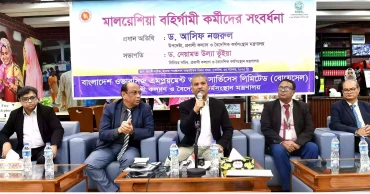
The government has officially started sending Bangladeshi workers to Malaysia who could not travel earlier despite completing all procedures.
The program targets workers who had completed all steps by May 31, 2024, but were unable to depart due to various issues.
The first batch of 60 workers left Dhaka for Malaysia under the government’s initiative through Bangladesh Overseas Employment and Services Limited (BOESL).
Dr. Asif Nazrul, Adviser to the Ministry of Expatriates’ Welfare and Overseas Employment, was present at Hazrat Shahjalal International Airport to see off the workers.
He expressed gratitude to the Malaysian government and the efforts of the ministry’s Chief Adviser in making the departures possible.
“After a long wait, dreams are finally coming true,” he said.
He mentioned the repatriation of 188 detainees from the United Arab Emirates, who had been held for participating in movements supporting the July uprising, and said arrangements are being made for their rehabilitation upon returning to Bangladesh.
Highlighting various initiatives taken by the current government for the welfare of expatriates, he emphasized that the government is fully committed to the well-being of overseas workers.
At the event, chaired by Senior Secretary of the Ministry of Expatriates’ Welfare and Overseas Employment Dr. Neyamat Ullah Bhuiyan, Malaysia-going worker Roni Mia, speaking on behalf of the returning workers, expressed deep gratitude for the Chief Adviser’s dedicated initiative and the continuous efforts of the Ministry’s advisers in fulfilling their long-cherished dreams of working abroad.
It is to be noted that on October 4, 2024, Malaysian Prime Minister Anwar Ibrahim, during his visit to Bangladesh, received a request from Chief Adviser Dr. Muhammad Yunus to facilitate the departure of workers who had been unable to travel to Malaysia.
Subsequently, from May 13–16, 2025, Adviser Dr. Asif Nazrul and the Chief Adviser’s Special Envoy for International Affairs, Lutfey Siddiqui, visited Malaysia to follow up on the initiative.
As part of this process, during the 3rd Bangladesh–Malaysia Joint Working Group meeting held on May 21–22, 2025, BOESL was assigned the responsibility of deploying a total of 7,873 workers, out of 17,777, who had completed all procedures by May 31, 2024, but were unable to travel to Malaysia.
The deployment was decided for workers in two sectors: construction and tourism.
On August 7, a formal agreement was signed with Malaysia’s Construction Labour Exchange Centre Berhad (CLAB) to facilitate the worker deployment.
UN human rights experts urge Bangladesh, Malaysia to intensify efforts to protect migrant workers
In the first phase, the Malaysian employer, CLAB, requested 500 workers, of whom 255 have already obtained visas and completed all preparations for departure.
The event was hosted by Md. Saiful Islam, Managing Director of Bangladesh Overseas Employment and Services Limited (BOESL).
Other distinguished guests included the Director General of BMET, Managing Director of the Wage Earners’ Welfare Board, Managing Director of Probashi Kallyan Bank, Managing Director of Biman Bangladesh Airlines, and the Executive Director of Hazrat Shahjalal International Airport.
8 months ago
Kathmandu mission to organise 'Bangladesh Fish Festival'
Bangladesh Embassy in Kathmandu is going to organise “Bangladesh Fish Festival” on November 28 on its premises.
A good number of diplomats, senior officials from the government and leading business entrepreneurs are expected to attend the festival, said the Embassy on Tuesday.
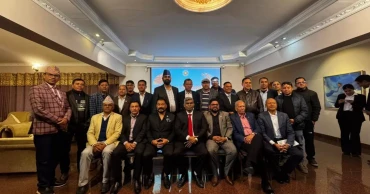
As a prelude to the grand Bangladesh Fish Festival, Bangladesh Embassy in Nepal hosted a display of fish items, participated by leading Bangladeshi fish exporters at the Embassy premises.
A good number of fish importers from the Nepali hospitality sector and the relevant business community including the managers and executives from different hotels and resorts, were present during the display, said the Embassy on Tuesday.
The President of the Hotel Association of Nepal Binayak Shah thanked the Embassy for organizing such an event.
Nepalese envoy stresses UN role for Bangladesh, others
In his welcoming speech, Ambassador Md Shafiqur Rahman highlighted the special flavour and rich culinary value of the sweet water and marine fishes of Bangladesh.
He referred to the history and delicacy of Bangladeshi fish dishes and their global fame. He pointed out the potential of the export-oriented fisheries sector of Bangladesh.
The Ambassador thanked the guests from the hospitality sector of Nepal for joining the Fish Display and also thanked the Hotel Association of Nepal (HAN) for joining the Fish Display event.
8 months ago
Korea, IOM sign USD 5 Million assistance to Rohingya Refugees in Cox’s Bazar
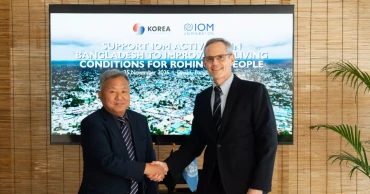
The Republic of Korea has provided the International Organization for Migration (IOM) with USD 5 million to improve the living conditions for Rohingya refugees in Cox’s Bazar.
This generous contribution from Korea will provide critical assistance to more than 420,000 Rohingya refugees who continue to live in highly congested camps eight years into the crisis, according to an IOM media release issued on Tuesday.
The funding will enable IOM to deliver life-saving water, sanitation and hygiene (WASH) services across seven camps and ensure sustained access to clean cooking fuel for refugees through the regular distribution of Liquefied Petroleum Gas (LPG) to 41,500 refugee families in 17 camps.
Support from Korea to IOM will improve the reliability and safety of water and sanitation facilities in the camps, enhance hygiene promotion, and ensure that vulnerable groups including women, girls, the elderly and persons with disabilities have access to safe, dignified and inclusive WASH services, the release reads.
The project will also address the cooking fuel needs of Rohingya households. The distribution of LPG is a vital element of support for Rohingya refugees in Cox's Bazar providing clean cooking fuel that contributes to food security and nutrition, reduces deforestation, lowers health risks, and strengthens protection for vulnerable groups, including women and girls who face gender-based violence when collecting firewood.
Park Young-sik, Ambassador of the Republic of Korea to Bangladesh, said: “This year, Korea has continued to stand firmly in its humanitarian support for the Rohingya in Bangladesh.”
Bangladesh seeks urgent international actions for Rohingya repatriation
“Our assistance — including USD 10 million in funding as well as an additional large shipment of rice — reflects Korea’s unwavering dedication to supporting those affected and addressing their needs. In addition, Korea remains committed to collaborating with international partners and local stakeholders to aid both Rohingya refugees and host communities, while also promoting sustainable solutions for the future,” he said.
Appreciating Korea's continued solidarity with Rohingya refugees and their host communities, IOM Bangladesh Chief of Mission Lance Bonneau said: “This contribution directly supports the safety, dignity and resilience of communities reliant on humanitarian aid for their daily needs.”
“The Republic of Korea has been a long-standing partner in the Rohingya response, supporting protection, health, and other essential services. This latest commitment reflects its continued engagement in promoting humanitarian well-being and stability in Cox’s Bazar,” Bonneau said.
Since the beginning of the emergency in August 2017, Korea has been a steady supporter of the Rohingya refugee response in Bangladesh.
8 months ago

World Bank urges Bangladesh to prioritize job creation to accelerate poverty reduction, combat inequality
Bangladesh must shift its economic focus to job creation for youth, women, and vulnerable populations to accelerate the pace of poverty reduction and address rising inequality, according to a new report from the World Bank.
The Bangladesh Poverty and Equity Assessment 2025, launched on Tuesday, highlights that while the country successfully lifted 25 million people out of poverty between 2010 and 2022, the progress has slowed significantly since 2016.
The report shows remarkable success, with extreme poverty dropping from 12.2 percent to 5.6 percent and moderate poverty falling from 37.1 percent to 18.7 percent over the 12-year period.
However, the economic growth pattern became less inclusive after 2016, disproportionately benefiting wealthier families and leading to a rise in income inequality.
Vulnerable Population: Nearly 62 million people—about one-third of the population—remain vulnerable to falling back into poverty due to economic shocks like illness or natural disasters.
Rural vs Urban: Poverty reduction was primarily led by rural areas, driven by the agriculture sector, while the rate was much slower in urban centers. By 2022, one in four poor Bangladeshis lived in a city.
Stagnant job market and skill mismatch:
The report identifies a slowing rate of job creation and a weakened labor income as primary barriers. The manufacturing sector's job growth has stagnated, with employment shifting to less productive sectors, severely impacting women and youth.
"A business-as-usual approach will not accelerate poverty reduction," said Jean Pesme, World Bank Division Director for Bangladesh and Bhutan. "The fastest path to reducing poverty and ensuring the dignity of people is through job creation, particularly for youth, women, and vulnerable populations."
The data reveals a critical skills gap and unequal opportunity:
Dhaka rivers to be revived with World Bank support: Adviser
Youth Unemployment: One in five young women is unemployed, and one in four educated young women is without a job.
Low-Paying Jobs: Half of all youth aged 15 to 29 work in low-paying jobs, suggesting a significant skill-mismatch.
Urban Challenges: Urban job creation stagnated outside Dhaka, with falling labor participation, especially among women.
The assessment outlines four key policy recommendations to restore and accelerate inclusive growth and shared prosperity:
1. Strengthen Foundations for Productive Jobs: Focus on creating more and better jobs for the poor and vulnerable.
2. Enable Markets for the Poor: Invest in modern processing and supportive business regulations.
3. Enhance Resilience: Improve fiscal policy and establish effective and better targeted social protection programs.
4. Improve Connectivity: Address spatial disparities, which are being exacerbated by climate risks, by improving connectivity and facilitating pro-poor value chains in agriculture.
The World Bank also noted that while remittances from international and domestic migration have served as a pathway out of poverty, social assistance programs remain inefficiently targeted. In 2022, $35$ percent of the richest families received social protection benefits, while half of the poorest families were missed.
"Our poverty assessment shows that by adopting innovative policies, Bangladesh can restore and accelerate the pace of reducing poverty and boosting shared prosperity," said Sergio Olivieri, World Bank Senior Economist and report co-author.
8 months ago
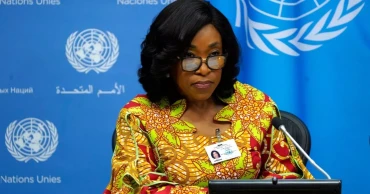
No woman is safe until all women are safe: Commonwealth SG
Commonwealth Secretary-General Shirley Botchwey on Tuesday said no woman is safe until all women are safe and that safety begins where fear ends -- in their homes, neighbourhoods, communities and countries.
“Violence against women is perhaps one of humanity’s oldest and least punished crimes,” she said in a statement issued marking the International Day for the Elimination of Violence Against Women.
She said it is committed in every region and in every community, often behind closed doors and often without consequences. “It is personal – for all of us. If you have ever had to tell your sister to “be careful” just for existing, you understand.”
Today is the International Day for the Elimination of Violence Against Women and marks the beginning of the 16 days of activism against Gender-Based Violence.
On this day, the United Kingdom reaffirmed their strong commitment to promoting gender equality, both globally and in Bangladesh.
Commonwealth Secretary-General said one in three women suffer from physical or sexual violence in their lifetime. “And if you are a young girl, a woman with a disability, or from minority groups, the risk is even higher.”
She said each bruise, each insult and each threat is not isolated, but part of a machinery of control. “We are not short of data.”
Botchwey said they are guided by the values in the Commonwealth Charter - values reaffirmed by the leaders - that gender equality must be a reality, not just a promise on paper. “That’s why, through our new Strategic Plan, gender is at the heart of everything we do, because it is essential for justice.”
She said they are working with governments and partners to do what must be done.
In countries where gender discriminatory laws make it harder for women to leave abusive partners and seek justice, Botchwey said they work with partners to reform them.
In economies where the cost of violence goes unnoticed, she said they have helped governments measure how much money they lose - and make a strong economic case for investing in prevention.
In communities where lack of income traps women in cycles of violence, Botchwey said they help break that cycle by investing in skills training, women-led businesses and policies that improve their access to opportunity.
“In decision-making spaces from climate policy to democratic participation, we work with member countries and partners to ensure they have a seat at the table and a voice in the outcome,” she said.
In civic spaces where women’s voices are too frequently sidelined, Botchwey said they work with partners to promote their rights to speak, mobilise and lead without fear.
“All of this helps. But let’s be honest, none of it is enough on its own. Not when the backlash is growing. We need a re-energised global movement – now – powerful enough to turn the tide and carry us toward justice. No excuse. We owe this not only to the women we have lost, but to those who survive every single day,” she said.
8 months ago
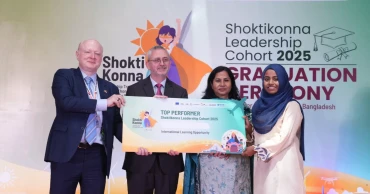
Shoktikonna graduation marks rise of women leaders in energy transition
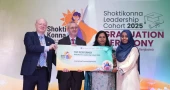
Shoktikonna Third Cohort Graduation Ceremony held Monday (November 24) celebrated a new generation of young women leaders committed to advancing Bangladesh’s sustainable and inclusive energy future.
Speaking at the event on Monday Ambassador and Head of Delegation of the European Union to Bangladesh Micheal Miller said European Union is proud to work with Shoktikonna, an initiative aims to empower women to strengthen skills, confidence, and leadership.
He said these efforts are contributing to a more equal, more innovative, wealthier and more sustainable Bangladesh.
"Congratulating the Shoktikonna graduates of 2025, we underline our support for training, combined with real workplace experience, that opens doors to employment and leadership roles in the green economy," said Ambassador Miller.
German Ambassador to Bangladesh Dr. Rüdiger Lotz said they are committed to a feminist transformation of the energy sector – one where women sit at decision-making tables, shape national priorities, and lead in both public and private institutions.
Read more: Tarique Rahman calls for childcare plan to empower women
8 months ago

Huma Khan leaving her role as head of UN human rights office in Dhaka
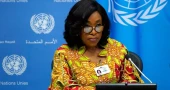
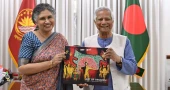
Outgoing head of the UN Human Rights Office (OHCHR) in Bangladesh Huma Khan paid a farewell call on Chief Adviser Professor Muhammad Yunus on Monday, also exchanging views on the upcoming general election and the country’s ongoing democratic transition.
During the meeting at the State Guest House Jamuna, they discussed recent developments following the July Uprising, including issues of justice, accountability and healing of the victims.
Khan served as the first head of mission of the newly established Dhaka outpost of the UN's Human Rights Council, helping to set up the operation out of a small office at UN House in the capital's diplomatic quarter earlier this year. Previously, she also served as senior rights adviser at the UN Resident Coordinator's Office.
The Chief Adviser commended Khan for her service during a critical period for Bangladesh and praised the role of the UN human rights office, particularly its independent investigation into the atrocities committed in July and August of last year, said Chief Adviser’s Deputy Press Secretary Abul Kalam Azad Majumder.
Their discussions also covered the strengthening of the national human rights institution, and the work of the commission on disappearances in probing cases of enforced disappearances and secret detention centres in the country.
SDGs Affairs Principal Coordinator and Senior Secretary to the government Lamiya Morshed was also present at the meeting.
8 months ago
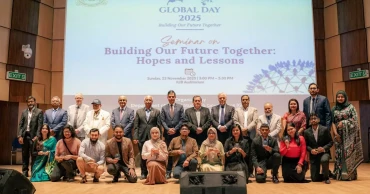
Nepalese envoy stresses UN role for Bangladesh, others
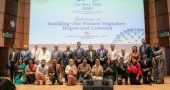
Nepalese Ambassador to Bangladesh Ghanashyam Bhandari on Monday stressed the role of the United Nations in strengthening multilateralism and reflected on its importance for countries like Bangladesh and Nepal.
He was speaking as the chief guest at a seminar on 'Building Our Future Together: Hopes and Lessons' held on the occasion of Global Day 2025 celebrations at Independent University, Bangladesh.
The Ambassador highlighted the challenges facing the UN and underscored the longstanding contributions of Bangladesh and Nepal, particularly their leadership roles in promoting peace, sustainable development, and inclusive multilateralism.
8 months ago