foreign-affairs
US sees 'incredible potential', plans to deepen investment ties with Bangladesh
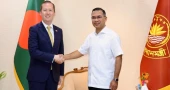
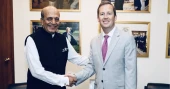
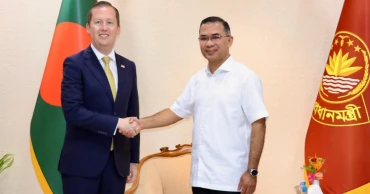
US Special Envoy for South and Central Asia Sergio Gor on Saturday said “great opportunities” exist between Bangladesh and the United States and the two countries can achieve real results by working together, stressing that the United States holds Prime Minister Tarique Rahman in the highest regard.
“The United States holds the Prime Minister in the highest regard….. The message that we want to make sure gets out there between our two sides is that there's incredible potential,” he told reporters after the meeting with the Prime Minister.
Gor who paid a “familiarisation and exploratory” visit to Bangladesh from July 30 to August 1, laid emphasis on strengthening economic cooperation and enhancing partnership between the two countries.
He discussed the “great opportunities” between the US and Bangladesh to strengthen economic cooperation and enhance our partnership.
2 days ago
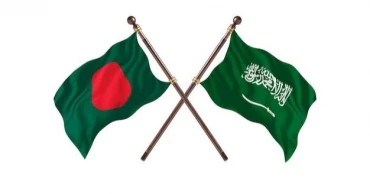
Bangladesh among 14 countries on board for Saudi-led maritime defense alliance
Fourteen countries, including Bangladesh, have reportedly expressed their support for a multinational maritime defense alliance headed by Saudi Arabia and welcomed the consensus reached on its foundational arrangements.
The current signatories are Saudi Arabia, Kuwait, Bahrain, Qatar, Pakistan, Türkiye, Egypt, Jordan, Yemen, Bangladesh, Nigeria, Sudan, Djibouti, and Somalia, the Saudi Press Agency reported on Friday.
Saudi Arabia and 13 other countries have announced the creation of a maritime military coalition to safeguard freedom of navigation through the Bab al-Mandeb Strait, the Red Sea and the Gulf of Aden, according to Al Jazeera.
In a statement published on Thursday, Saudi Arabia’s Ministry of Defence said the Multinational Maritime Defense Alliance was established as a framework to strengthen collective maritime defence cooperation.
The Saudi Ministry of Defense on Thursday hosted a meeting of chiefs of staff and representatives of friendly countries, as well as the Delegation of the European Union to Saudi Arabia, to discuss the Kingdom’s initiative to establish a multinational maritime defense alliance.
As an outcome of the meeting, 14 participating countries issued a joint declaration while other countries participating in the meeting also expressed support for the initiative and are in the process of completing their internal national procedures and approvals to join the joint declaration, reports SPA.
The declaration will remain open to those countries, as well as other interested states, once they complete their national procedures.
The meeting concluded with participants reaffirming their shared determination to complete the foundational procedures for establishing the multinational maritime defense alliance.
They underscored that the alliance would strengthen the collective ability to counter and deter threats to maritime security, protect international sea lanes, safeguard freedom of navigation and global trade, and promote regional and international security and stability.
The initiative forms part of efforts to strengthen maritime security, protect international sea lanes, and counter threats targeting maritime navigation and global trade.
The meeting saw broad participation from chiefs of staff and their representatives from 43 countries, alongside the EU delegation, out of 51 countries and organizations invited. Participants attended either in person or via videoconference. The extensive participation reflects growing international interest in strengthening maritime defense cooperation and underscoring the importance of unifying efforts to address shared threats to the security of international sea lanes within the alliance’s designated area of responsibility. Participants discussed the growing threats to maritime security, including attacks targeting commercial vessels, energy tankers, and maritime infrastructure. Discussions highlighted the risks threats pose to maritime navigation safety, global supply chain stability, and the international economy.
They stressed the importance of enhancing multilateral defense cooperation to counter and deter these threats and to safeguard the security of international sea lanes.
The meeting also reviewed the draft charter of the multinational maritime defense alliance, along with its reference documents, organizational structure, command-and-control arrangements, operating mechanisms, and future work plan.
These arrangements are intended to establish an effective institutional framework that strengthens maritime defense cooperation among participating countries and addresses shared maritime threats in the Bab al-Mandab Strait, the Red Sea, and the Gulf of Aden.
The meeting also discussed the foundational arrangements for the multinational maritime defense alliance initiative, foremost among them that Saudi Arabia would serve as the founding and leading state of the alliance and host its headquarters.
This reflects international confidence in the Kingdom’s leadership role in promoting collective maritime security.
The participants agreed that military planners from countries wishing to join the alliance would continue their work during the next phase to complete the alliance’s foundational procedures.
The work includes finalizing the alliance’s charter and reference documents, completing its organizational structure, command-and-control arrangements, and operating mechanisms, and establishing the necessary technical groups and frameworks.
In parallel, countries wishing to join the alliance will complete their national procedures in preparation for signing the charter, launching the alliance, and commencing its operations.
Saudi Arabia affirmed that the multinational maritime defense alliance is an open international initiative that welcomes all countries that share its objectives and principles.
The Kingdom welcomed their accession to and participation in the alliance’s efforts, in accordance with their national procedures.
The Kingdom noted that the initiative aims to strengthen collective maritime security, safeguard freedom of navigation and global trade, and embody the principle of shared international responsibility in addressing common threats.
It stressed that the initiative is based on the firm conviction that the security of international sea lanes is a collective responsibility requiring an effective and sustainable international partnership.
3 days ago
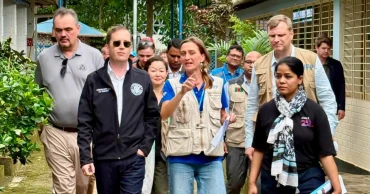
Rohingyas: US urges global partners to increase contributions
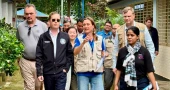
US Special Envoy for South and Central Asia Sergio Gor on Friday urged international partners to step up their support for the Rohingya camp in Cox’s Bazar, which is home to more than one million Rohingyas sheltered by Bangladesh.
"The United States has supported this camp and urges our partners around the world to increase their contributions," said Gor while visiting the Rohingya camp in Cox’s Bazar.
US Ambassador to Bangladesh Brent T Christensen, among others, was present.
Sergio Gor visits Rohingya camp in Cox's Bazar
"Today I visited Rohingya refugee communities in Cox’s Bazar with Ambassador Christensen. This is the largest refugee camp in the world, hosting over one million refugees," said the US Special Envoy.
He visited a Rohingya camp in Ukhiya of Cox's Bazar, leading a 14-member high-level delegation, reports UNB Cox’s Bazar Correspondent.
According to the Office of the Refugee Relief and Repatriation Commissioner (RRRC), the delegation arrived at Cox's Bazar Airport around 12pm and proceeded directly to the Rohingya camp in Ukhiya.
The delegation visited Camp-4, where they observed activities of the World Food Programme (WFP), including its humanitarian assistance operations for the displaced Rohingyas.
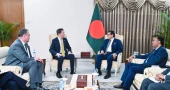
The US Special Envoy met Foreign Minister Dr Khalilur Rahman on Thursday evening and is scheduled to meet Prime Minister Tarique Rahman on Saturday.
"It was great to meet Foreign Minister Khalilur Rahman during my first visit to Bangladesh and discuss working together to strengthen the US-Bangladesh relationship. Lots of positive developments," Gor said on Thursday night.
Foreign Minister Dr Khalilur said bilateral relations between Bangladesh and the United States are moving in a very positive direction, noting that they will build on the achievements they have made so far.
"Our engagement with the US is not limited to one meeting. We remain engaged on all aspects and at all levels, and the relationship is moving forward," he told reporters at the Ministry of Foreign Affairs on Thursday night after his meeting with Gor at the State Guest House Padma.
The United States has updated its travel advisory for Bangladesh, and the improvement in the advisory "reflects growing US confidence" in Bangladesh's overall security environment and stability, Dhaka said on Thursday night.
The overall travel advisory has been lowered from Level 3 (Reconsider Travel) to Level 2 (Exercise Increased Caution), reflecting that Bangladesh is safer for travel, the Ministry of Foreign Affairs (MoFA) said.
The positive development follows the "productive" bilateral meeting held in Dhaka between Foreign Minister Dr. Khalilur Rahman and US Special Envoy for South and Central Asia Sergio Gor.
Immediately after the meeting, Gor conveyed the development to the Foreign Minister in a text message, the Ministry said.
"This evening, I informed Foreign Minister Dr. Khalilur Rahman that the State Department has taken into consideration the stable conditions on the ground and has deemed that Bangladesh is safer for travel. Accordingly, the United States' overall travel advisory has been downgraded from Level 3 to Level 2. A few areas have additional restrictions and should be avoided. Great news!" Gor said in a separate message.
Over the past six months, under the leadership of Prime Minister Tarique Rahman, the present government has achieved visible progress in strengthening law and order across the country, Dhaka said.
The decision also underscores the positive trajectory of the longstanding partnership between Bangladesh and the United States.
The government of Bangladesh views the improvement as recognition of its sustained efforts to ensure security, stability, and an enabling environment for international travel, trade, investment, and people-to-people connectivity.
3 days ago
'Strengthen breastfeeding support and health systems to give every child a healthy start in life'
Too many mothers and families around the world still lack access to services and interventions that enable and support breastfeeding.
Yet breastfeeding is one of the simplest and most powerful ways to protect a child’s health. It provides infants and young children with essential nutrition, increases immunity, helps protect against serious illness, and supports cognitive development.
UNICEF warns of growing climate threats to children worldwide
For mothers, breastfeeding brings important health benefits too, helping reduce the risk of noncommunicable diseases such as breast and ovarian cancers, and type 2 diabetes.
Encouragingly, breastfeeding rates around the world are going up. Exclusive breastfeeding in the first six months rose from around 37 per cent in 2012 to over 47 per cent today. In the past five years, the prevalence of breastfeeding up to two years of age rose from 38 per cent to 50 per cent.
These gains show that sustained investments in policies and programmes for mothers and families are working. Yet progress remains uneven, with many countries lagging behind global targets. Coverage of services supporting breastfeeding remains low, policies are inconsistently enforced, and service quality is often inadequate, especially in low-income, fragile, and humanitarian settings.
The evidence is clear: cost-effective interventions include skilled breastfeeding support in health systems, community-based counselling, maternity protection policies, and protection from the exploitative marketing of commercial milk formulas.
The returns are significant. Scaling up breastfeeding could prevent almost 400 000 child deaths and around 140 000 maternal deaths each year. Every US$ 1 invested in breastfeeding promotion generates an estimated US$ 59 in economic returns through lower health-care costs, improved cognitive development, higher educational attainment, and increased lifetime earnings.
This World Breastfeeding Week, under the theme, “Breastfeeding for a Sustainable Start in Life: Strengthen What Works,” UNICEF and WHO are calling on countries to:
strengthen health systems to provide quality breastfeeding support for mothers and newborns;
expand community-based counselling and peer programmes;
fully implement and enforce the International Code of Marketing of Breast-milk Substitutes;
invest in paid maternity leave and supportive workplace policies.
integrate breastfeeding interventions into antenatal, perinatal, and postnatal health-care services; and
sustain breastfeeding support in humanitarian and fragile contexts.
Breastfeeding is vital. By investing in proven solutions, we can give every child the best possible start in life and ensure every mother gets the care and services she needs.
3 days ago
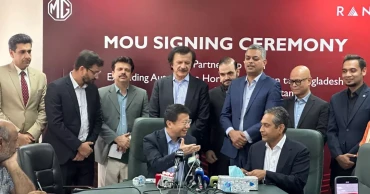
Pakistan to export automobiles to Bangladesh
Pakistan planned to export 100 vehicles to Bangladesh this year, while total exports are projected to reach 5,800 vehicles over the next four years, said the Pakistan High Commission in Dhaka on Friday.
A Memorandum of Understanding (MoU) was signed between MG JW Automobile Pakistan and Bangladesh's RANCON Group for the export of vehicles from Pakistan to Bangladesh.
Under the agreement, as informed by the Ministry of Industries and Production of Pakistan, 100 vehicles will be exported to Bangladesh during the current year, while total exports are projected to reach 5,800 vehicles over the next four years, said the High Commission.
The partnership is expected to benefit Bangladesh by expanding the range of vehicles available in the market, promoting healthy competition, and providing consumers with more choices at competitive prices.
The agreement will also contribute to closer economic cooperation between Pakistan and Bangladesh and encourage greater business-to-business collaboration.
Speaking on the occasion, Executive Director of RANCON Group, Muhammad Mostafizur Rashid Bhuiyan, said the agreement would introduce healthy competition in Bangladesh's automobile market while providing consumers with high-quality vehicles manufactured in Pakistan.
Special Assistant to the Prime Minister on Industries and Production, Haroon Akhtar Khan welcomed the agreement and expressed confidence that such partnerships would strengthen trade and economic relations between Pakistan and Bangladesh and open new avenues for cooperation between the private sectors of the two countries.
The ceremony was attended by senior officials of both companies, government representatives, and members of the business community.
3 days ago
EU provides €200 000 in response to severe monsoon in Chattogram division
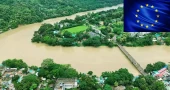
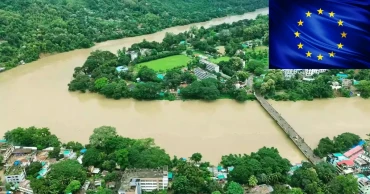
The European Union (EU) is providing €200 000 in humanitarian funding to support people affected by severe monsoon rains in Cox’s Bazar, Chattogram, Bandarban, Rangamati and Khagrachhari districts.
This funding will benefit 125,000 Rohingya refugees as well as vulnerable host communities in some of the most affected areas, said the EU Embassy in Dhaka on Friday.
Death toll from floods, landslides rises to 57
This EU funding will support the Bangladesh Red Crescent Society in providing emergency shelter materials, as well as rebuilding damaged shelters.
It will also help to repair essential water and sanitation facilities, provide seeds and gardening supplies, and give cash assistance to affected families.
Women, girls and others facing heightened protection risks will receive dignity items, information and referral support.
The operation will also restore landslide protection through cash-for-work. Communities impacted by the heavy rains will receive further training to better empower them to be more prepare for floods, landslides and other emergencies infuture.
The funding is part of the EU's overall contribution to the Disaster Response Emergency Fund (DREF) of the International Federation of Red Cross and Red Crescent Societies (IFRC).
Since 5 July, intense rainfall linked to a monsoon depression triggered flooding and landslides in Chattogram Division.
As of July 13, over 1.1 million people were affected. Thirty people had died and more than 38,000 had been displaced.
The rains damaged shelters, water and sanitation facilities, access routes and other essential infrastructure in the Rohingya refugee camps and surrounding host communities.
In the camps alone, over 4,300 shelters and hundreds of water and sanitation facilities were reported damaged.
The EU and its Member States are the world's leading donors of humanitarian aid. Relief assistance is an expression of European solidarity with people in need all around the world.
3 days ago
Sergio Gor visits Rohingya camp in Cox's Bazar
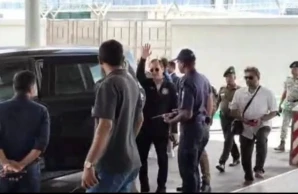
US Special Envoy for South and Central Asia Sergio Gor on Friday visited a Rohingya camp in Ukhiya of Cox's Bazar, leading a 14-member high-level delegation.
According to the Office of the Refugee Relief and Repatriation Commissioner (RRRC), the delegation arrived at Cox's Bazar Airport around 12:00pm and proceeded directly to the Rohingya camp in Ukhiya.
The delegation visited Camp-4, where they observed activities of the World Food Programme (WFP), including its humanitarian assistance operations for the displaced Rohingyas.
US Ambassador to Bangladesh Brent T Christensen accompanied the delegation during the visit.
Sergio Gor arrived in Dhaka on Thursday. On that day, he held a meeting with Foreign Minister Dr Khalilur Rahman.
He is scheduled to meet Prime Minister Tarique Rahman on Saturday.
3 days ago
Sergio Gor, Dinesh Trivedi hold "good" meeting in Dhaka
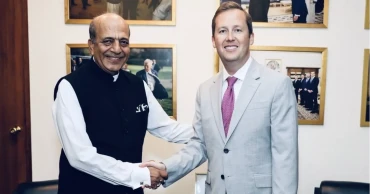
Indian High Commissioner to Bangladesh Dinesh Trivedi on Friday met visiting US Special Envoy for South and Central Asia Sergio Gor and discussed issues of mutual interest.
"The meeting was held at a city hotel in the morning. I can only tell you it was a good meeting," a diplomatic source on the US side told UNB.
It could not be learned what they exactly discussed during the meeting.
On June 25, Gor wished High Commissioner Dinesh Trivedi all the very best as he assumed his "important role" as India's new High Commissioner to Bangladesh.
"As the U.S. Special Envoy for South and Central Asia, I look forward to working closely with him," Gor said on June 25.
The US Special Envoy met Foreign Minister Dr Khalilur Rahman on Thursday evening and visited the Rohingya camp in Cox's Bazar on Friday.
He is scheduled to meet Prime Minister Tarique Rahman on Saturday.
Foreign Minister Dr Khalilur said bilateral relations between Bangladesh and the United States are moving in a very positive direction, noting that they will build on the achievements they have made so far.
"Our engagement with the US is not limited to one meeting. We remain engaged on all aspects and at all levels, and the relationship is moving forward," he told reporters at the Ministry of Foreign Affairs on Thursday night after his meeting with Gor at the State Guest House Padma.
3 days ago
Bangladesh safer for travel: US
The United States has updated its travel advisory for Bangladesh, and the improvement in the advisory "reflects growing US confidence" in Bangladesh's overall security environment and stability, Dhaka said on Thursday night.
The overall travel advisory has been lowered from Level 3 (Reconsider Travel) to Level 2 (Exercise Increased Caution), reflecting that Bangladesh is safer for travel, the Ministry of Foreign Affairs (MoFA) said.
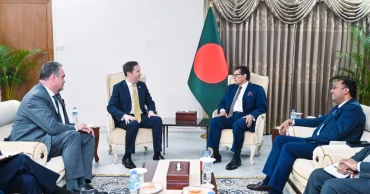
The positive development follows the "productive" bilateral meeting held in Dhaka between Foreign Minister Dr. Khalilur Rahman and US Special Envoy for South and Central Asia Sergio Gor.
Immediately after the meeting, Gor conveyed the development to the Foreign Minister in a text message, the Ministry said.
"This evening, I informed Foreign Minister Dr. Khalilur Rahman that the State Department has taken into consideration the stable conditions on the ground and has deemed that Bangladesh is safer for travel. Accordingly, the United States' overall travel advisory has been downgraded from Level 3 to Level 2. A few areas have additional restrictions and should be avoided. Great news!" Gor said in a separate message.
Foreign Affairs Adviser to the Prime Minister, Humaiun Kobir, was present during the discussions.
Over the past six months, under the leadership of Prime Minister Tarique Rahman, the present government has achieved visible progress in strengthening law and order across the country, Dhaka said.
The decision also underscores the positive trajectory of the longstanding partnership between Bangladesh and the United States.
The government of Bangladesh views the improvement as recognition of its sustained efforts to ensure security, stability, and an enabling environment for international travel, trade, investment, and people-to-people connectivity.
4 days ago
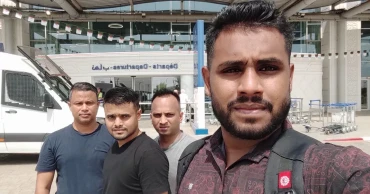
Four Bangladeshis repatriated from Algeria
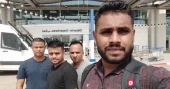
Four Bangladeshi nationals returned home from Algeria on Thursday.
The Algerian police had arrested them on the ground of illegal stay in Algeria without valid visa and work permit.
A total of 14 Bangladeshis were detained by the Algerian Police on 13 January 2025, most of whom had entered the country illegally through the human traffickers, according to the Embassy of Bangladesh in Algiers.
Upon being notified by the Algerian authorities, the Bangladesh mission immediately contacted the Algerian Ministry of Foreign Affairs and other related authorities.
With requisite financial support from the government of Bangladesh, the embassy
appointed a lawyer to assist the Bangladeshi detainees in the judicial process and had been following up the matter on a regular basis, including participation in court hearings and jail visits, it said.
Finally, on 30 June 2026, the court gave verdict releasing four individuals from custody.
The embassy said it remains fully engaged with the relevant host authorities for securing the earliest possible release of the remaining 10 Bangladeshi detainees and for their safe repatriation to Bangladesh.
It also keeps the families of the detainees updated of their situation regularly.
4 days ago