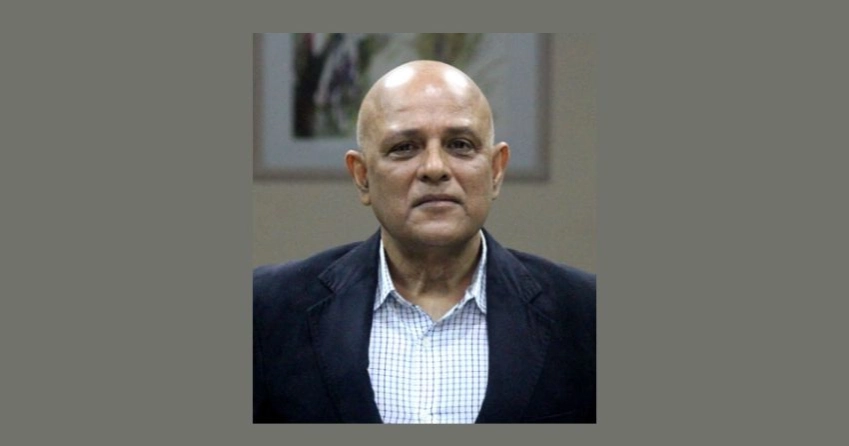
Former Director General of the Bangladesh Institute of Development Studies (BIDS) Dr KAS Murshid on Monday warned weak reform delivery and institutional gaps remain major barriers to sustained development.
“Ensuring macroeconomic stability in Bangladesh requires stronger attention to micro-level realities, institutions and implementation capacity,” he said.
Speaking at a discussion titled “Macroeconomic Insights: An Economic Reform Agenda for the Elected Government”, he said policymakers often focus on macro indicators such as interest rates, inflation and balance of payments, but tend to overlook the “micro foundations” that underpin them.
“In a development context, neglecting critical micro variables in the real sector, markets and institutions can quickly destabilise the broader economy,” he said.
The Policy Research Institute of Bangladesh (PRI) and Department of Foreign Affairs and Trade (DFAT) of the Australian Government jointly organized the event.
Murshid noted that sudden shocks at the micro level, such as a sharp rise in food imports, can significantly affect the country’s external balance, illustrating how closely linked macroeconomic stability is with sectoral performance and institutional efficiency.
Highlighting Bangladesh’s reform experience, Dr Murshid observed that major policy reforms historically gained momentum mainly during periods of external pressure, particularly when backed by international financial institutions.
Political economy constraints and fear of backlash often discourage governments from initiating difficult reforms independently, he said.
However, with the country preparing for LDC graduation and facing gaps in achieving the Sustainable Development Goals, he stressed that the need for urgent reforms will increasingly come from internal pressures rather than external compulsion.
“Macroeconomic stability is far more complex than maintaining a few indicators. It depends on how effectively institutions, markets and the real sector function together,” he said.
He emphasised that the main challenge is not identifying reforms but delivering them. While successive governments have spoken about initiatives such as one-stop services, special economic zones, financial sector restructuring and public service digitalisation, actual progress has been limited and often partial.
Even in areas presented as successes, such as digitalisation, he said systems frequently revert to manual processes, undermining intended efficiency gains.
To address implementation gaps, Dr Murshid suggested focusing on a limited number of core reforms instead of attempting sweeping changes across all sectors simultaneously.
Demonstrating success through targeted efforts could build public confidence and create momentum for broader reforms, he said.
He also proposed establishing an independent regulatory reform commission to research policy options, assess reform proposals and provide objective evaluations.
According to him, the absence of a neutral third-party mechanism means the same institutions are responsible for designing, implementing and monitoring reforms, which weakens accountability.
Another major gap, he said, is the lack of structured mechanisms within ministries to review policy recommendations coming from economists, researchers and the private sector. Although many proposals are submitted, there is often no systematic process to assess them or translate them into action.
He stressed that reforms must clearly identify who benefits, whether youth, women, workers or specific income groups, rather than assuming that all projects help everyone equally. Policymakers also need to pinpoint the main constraints in each sector, such as access to credit, infrastructure deficits, skills shortages or political resistance.
Pointing to resistance from vested interests, he said even relatively small changes, such as reforms in traffic management systems, can face strong pushback. Without proper stakeholder engagement and complementary policy measures, new initiatives risk failure.
He suggested piloting reforms on a small scale to test effectiveness before scaling them up nationwide, especially when introducing new approaches. At the same time, the government can reactivate underperforming existing projects where spending has been high but outcomes remain limited.
Restoring confidence in the economy will also be critical, he said, noting that uncertainty around elections and the broader political environment has held back private investment. Preventing instability and maintaining policy continuity will be key to encouraging investment in the coming months.
He added that changing global geopolitics and economic shifts will require Bangladesh to diversify its economic base over time, although this transition will not be immediate.
Beyond economic indicators, Dr Murshid warned that social challenges could undermine development gains if not addressed. Youth unemployment, growing social tensions and rising concerns over issues such as online gambling, gang activity and gender-based violence pose risks that can weaken the micro foundations of the economy.
“These social dimensions are not separate from the economy. They shape the very base on which stability rests,” he said, adding that the next government will need to address these concerns alongside economic reforms to ensure sustainable progress.