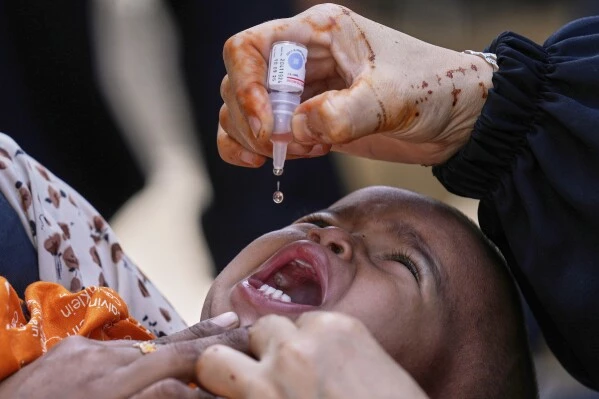
Sughra Ayaz, a frontline health worker in southeastern Pakistan, has spent the last decade knocking on doors to persuade parents to immunize their children against polio. Despite her efforts, she frequently encounters resistance—some families lack essentials like food and clean water, while others fear oral vaccines are designed to sterilize children.
Ayaz, navigating rampant misinformation and high pressure to meet eradication targets, revealed that some officials have instructed workers to falsely record children as vaccinated. She also pointed out that the necessary cold storage for oral vaccines is often compromised. “In many places, our work is not done with honesty,” Ayaz said.
Trump nominees should ‘steer clear’ of undermining polio vaccine, McConnell says
The World Health Organization and its partners launched a global campaign in 1988 to eliminate polio—only smallpox has been eradicated so far. Cases in Pakistan and Afghanistan dropped to just five in 2021 but resurged, reaching 99 last year, despite multiple missed eradication deadlines.
Afghanistan and Pakistan remain the only countries where wild polio continues to circulate. Over the past decade, the Global Polio Eradication Initiative (GPEI) has directed most of its resources into these two nations. Yet internal AP documents and interviews with workers and experts highlight persistent issues: falsified records, deployment of unqualified vaccinators, skipped campaigns, and continuing reliance on oral vaccine despite its rare risk of causing vaccine-derived outbreaks.
Pakistani health workers' boycotting halts polio vaccination drive in southwest
Ayaz described "fake finger marking"—placing the ink used to indicate vaccination on a child’s pinky without administering any dose. Local workers have repeatedly reported these problems to management, but according to insiders, their concerns remain largely unaddressed.
Dr. Jamal Ahmed, the WHO’s polio director, acknowledged field difficulties but defended the progress achieved. He stated efforts have protected countless children over four decades and expressed confidence that polio transmission in Pakistan and Afghanistan will end within 12–18 months, targeting 2029 for global eradication.
Experts like Dr. Zulfiqar Bhutta argue that sticking rigidly to outdated strategies and the oral vaccine is unlikely to succeed. Critics urge a major strategic overhaul, noting that alternative injectable vaccines are more costly and require extensive training, limiting their immediate use.
Despite vaccinating billions and preventing paralysis in millions, the initiative faces mistrust and backlash. Rural communities report boycotts, citing failures to address basic needs like clean water or other illnesses such as measles or tuberculosis.
Health workers continue to face life-threatening risks. More than 200 staff and security personnel have been killed in Pakistan since the 1990s. Misinformation, such as rumors that vaccines cause puberty delay or contain pig urine, fuels resistance, amplified by historical mistrust—especially after a CIA-backed fake health campaign in 2011 damaged vaccine credibility.
A woman in southeastern Afghanistan voiced the dilemma faced by many households: “If I allow it, I will be beaten and thrown out,” illustrating how social and family pressures block polio efforts even when some parents support vaccination.
Source: Agency