
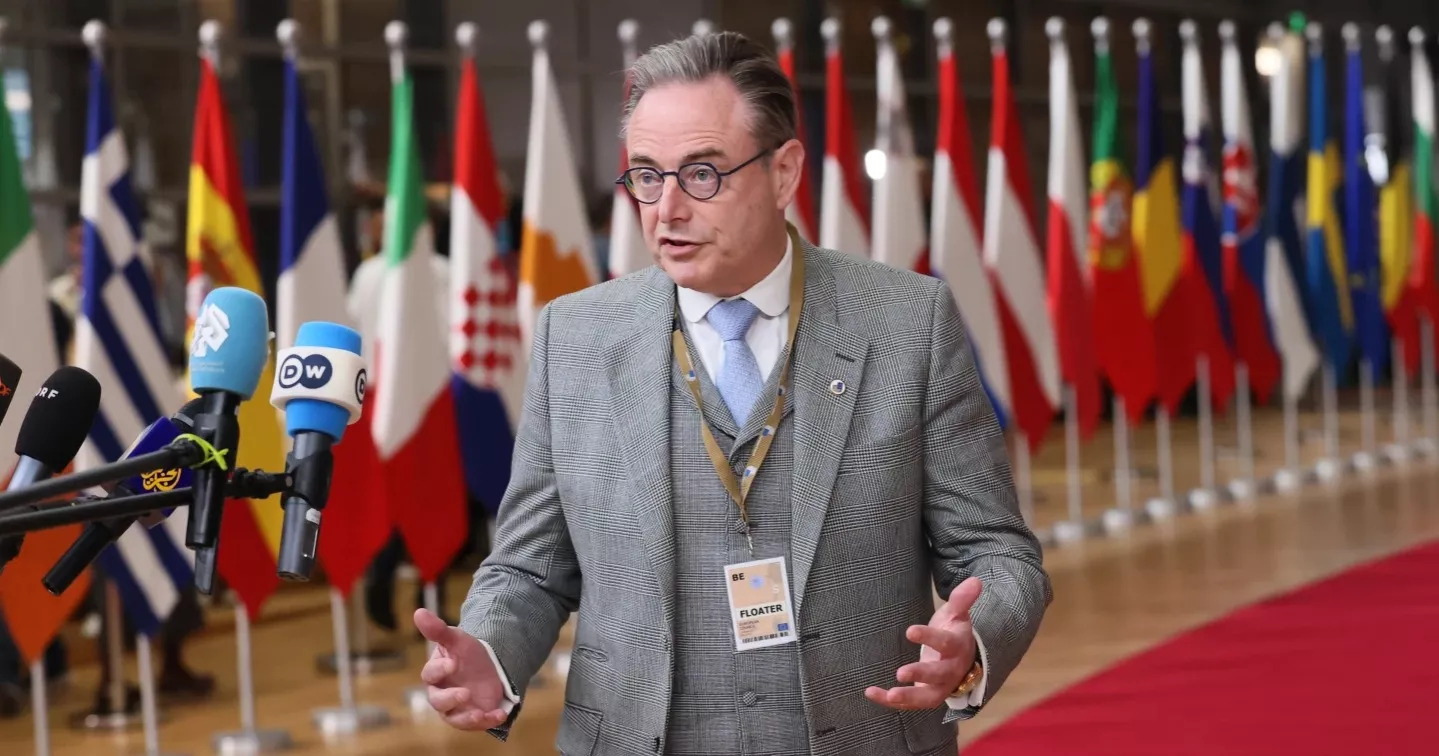
Belgian Prime Minister Bart De Wever on Thursday warned that European Union partners must share the risks if they plan to use billions of dollars in frozen Russian assets held in Belgium to support Ukraine’s economy and military efforts.
Ukraine’s projected budget and defense needs for 2026 and 2027 are estimated at around $153 billion. The European Commission has been developing a plan to use frozen Russian assets as collateral to secure funding, with the largest portion—approximately $225 billion—stored in Belgium. The Belgian government, however, is cautious about releasing the funds without guarantees from other EU nations.
“If we want to provide these funds to Ukraine, it must be a collective effort,” De Wever told reporters ahead of an EU summit in Brussels. “Otherwise, any Russian retaliation would hit Belgium alone, which is not reasonable. We are a small country, and retaliation could be severe, including the seizure of European-owned assets in Russia.”
The EU’s proposed mechanism, described by the European Commission as a “reparation loan,” would see member states guarantee a loan of about $165 billion to Kyiv. The money would not come directly from frozen Russian assets, and Ukraine would only repay the EU if Russia pays significant war reparations for the destruction caused during the conflict. If Moscow refuses, the assets would remain frozen.
Kremlin spokesman Dmitry Peskov has criticized the plan, calling it an attempt to “illegally confiscate Russian property.” Commission President Ursula von der Leyen clarified that the EU is not confiscating the assets but using their cash balances to issue a loan to Ukraine, with repayment contingent on Russia’s reparations.
De Wever emphasized that Belgium has yet to see the legal framework for the plan and called for careful scrutiny, noting, “This is a major step that has never been attempted, not even during the Second World War, so it cannot be taken lightly.”
Source: AP