US-Iran tensions
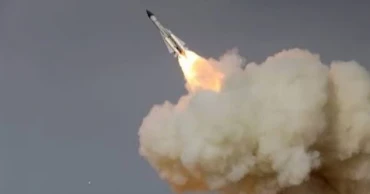
Iran claims retaliatory attack on U.S. bases in Jordan
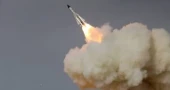
Iran's Islamic Revolution Guard Corps (IRGC) said on Monday that its aerospace forces carried out retaliatory drone and ballistic missile strikes against U.S. targets at two air bases in Jordan earlier in the day.
The strikes were in response to the "U.S. and Israeli air aggression" against Iran's southern Larak Island in Hormozgan province on Sunday night, the IRGC said in a statement published by its official news outlet, Sepah News.
It identified the targeted air bases as King Hussein and Al-Azraq, saying that the strikes hit technical and maintenance infrastructure as well as hangars of fighter aircraft belonging to the United States, causing heavy damage.
The IRGC said the attack was a "punishment for the aggressor," noting that "aggression and crime will not solve the enemy's desperation to weaken Iran's control over the Strait of Hormuz."
It added that every military action by the "enemy" would be met with more "devastating" responses.
In a statement on Sunday night, the IRGC said that many Iranian military personnel and civilians had been killed or wounded in the attack on Larak Island.
1 month ago
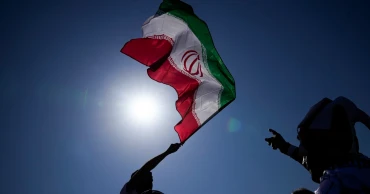
Iran brushes off US economic threats, other regional developments
Iran on Thursday dismissed threats by U.S. President Donald Trump of economic pain and isolation for the country, while six European nations condemned Israel over a settlement project.
Doctors Without Borders criticized the decision by Israel's military not to investigate two fatal attacks on the medical humanitarian organization's staff, and in Gaza City, a mass funeral was held for 50 people killed in Israeli airstrikes nearly three years ago but whose remains were just recovered.
Here’s a look at the latest developments in the Iran war and the wider Middle East on Thursday. Full coverage can be found here.
Iran denounces Trump's economic threat
Iranian Foreign Minister Abbas Araghchi has rejected the economic threats made against his country, saying that such “failed policies” will stir more hostility among Iranians and “bring more failures.”
Araghchi's comments came a few hours after Trump threatened “crushing economic measures” against Iran. The U.S. president promised “Economic Warfare and Isolation on an unprecedented scale,” but provided few details.
In a social media post, Araghchi maintained that the threats aim to divert the attention of the U.S. public from domestic financial problems, saying that U.S. “economic terrorism threatens the global economy and the national sovereignty of countries around the world.”
U.S. Treasury Secretary Scott Bessent said Thursday that Iran will face the “greatest coordinated economic isolation in the history of the world."
In a CNBC interview, Bessent threatened secondary sanctions on nations and companies that conduct business with Iran, saying it's time for U.S. allies to make a decision on where they stand.
China's government and India are major buyers of Iranian oil, though Bessent didn't call them out by name.
Doctors Without Borders condemns Israel's military
Doctors Without Borders said that the decision by Israel's military not to open a criminal investigation into two strikes that killed four people shows the country won't take responsibility for attacking civilians.
The international aid group now wants an impartial investigation into the deaths, but didn't specify who should lead the effort.
Doctors Without Borders asked Israel's military to investigate an attack on a Gaza City convoy in November 2023 and a strike on the organization's shelter in Khan Younis in February 2024. Israel’s announcement on Wednesday said that it wouldn't launch criminal investigations into the two cases, in which troops killed the organization's employees.
The decision by Israel's military shows “there is no prospect of accountability within the Israeli legal system for the killing of our staff, just as there has been no accountability for Israel’s ongoing genocide against Palestinians,” Doctors Without Borders said in a statement that cited 15 staff and 1,700 healthcare workers killed in Gaza since October 2023.
Israel denies accusations of genocide and war crimes and says it's targeting Hamas after the militant group's attack on southern Israel that killed 1,200 people and took 251 hostage on Oct. 7, 2023. Israel blames civilian deaths on Hamas, because it operates in populated areas in the tiny, overcrowded Gaza Strip.
UK and others rebuke planned West Bank settlement project
Six European countries along with Canada condemned the latest development in a contentious Israeli settlement project near Jerusalem that would effectively cut the occupied West Bank in two.
Israel’s Ministry of Construction and Housing issued a tender for constructing several compounds with more than 1,200 homes in total in an open tract of land east of Jerusalem. It’s the latest step in a project under consideration for more than two decades, which critics say would prevent the establishment of a contiguous Palestinian state in the territory.
The joint statement from the leaders of the U.K., France, Germany, Italy, the Netherlands, Norway and Canada said international law is clear the settlement is illegal and noted “unprecedented levels of violence by settlers against civilians.”
“We urge the government of Israel to retract these plans immediately and end its expansion of settlements in the West Bank. Not only will they take us further from peace, but they further undermine Israel's international standing,” the countries wrote.
Egypt and Jordan also condemned Israel’s move.
Israeli Foreign Minister Gideon Saar responded on Thursday by defending “the historic right of the Jewish people to reestablish their national home in the Land of Israel — including in the area in question.” Saar criticized the U.K. government for “blaming only Israel while ignoring Palestinian extremism.”
Gaza funeral for 50 killed in opening strikes of war
A mass funeral Thursday in Gaza City remembered 50 Palestinians killed in Israeli strikes in the opening months of the Israel-Hamas war, but whose remains were only recently recovered from under rubble.
Dozens of mourners carried the remains, draped in Palestinian flags, through debris-strewn streets before lowering them into graves. Some held portraits and posters with photos of the deceased.
“We were able to recover them after three years of war, after three years of anguish, pain and torture. We were able to recover them, and dignify them in their final resting place. We were able to pray over them and bury them,” said Lina Karam, who lost her father and other members of her family.
The 50 bodies were from three families who were killed in airstrikes in November and December 2023.
The nearly three-year war has killed more than 73,400 Palestinians, according to Gaza’s Health Ministry. The ministry, which was part of the Hamas-run government, maintains detailed records viewed as generally reliable by U.N. agencies and international organizations. It doesn’t distinguish between civilians and militants, but says women and children make up around half of the toll.
US sanctions network supporting Hezbollah
The U.S. announced new sanctions Thursday against a network of people who allegedly funneled cash into Lebanon for the Iran-backed Lebanese militant group Hezbollah.
The network run by Turkish businessman Yunus Alper Yilmaz uses couriers traveling on commercial flights between Lebanon, Turkey, the UAE and Iran “to move up to hundreds of millions of dollars between jurisdictions, providing an avenue outside the formal financial system” to move funds to Hezbollah, the U.S. Department of Treasury said in a statement.
The Treasury also redesignated Hezbollah — which was already sanctioned by the U.S. — as an Iranian proxy acting on behalf of Iran’s Islamic Revolutionary Guard Corps Quds Force rather than a stand-alone operation.
The redesignation aims to underscore that Hezbollah “operates with little to no regard for Lebanese sovereignty, the Lebanese people or the Lebanese state,” the Treasury statement said.
Turkey denies delegation had visited air base in Syria
Turkey has denied that a Turkish military delegation had visited an air base in northern Syria that was hit by Israeli airstrikes, and vowed to continue supporting Syria in its efforts to rebuild its military.
The Israeli strikes targeted the Abu Duhur base early on Tuesday, causing damage but no casualties. Israeli Prime Minister Benjamin Netanyahu’s office said that Israel had attacked the base because Syria was “on the verge of breaching” an agreed-upon “status quo in security matters” by allowing Turkish troops to deploy there.
Syrian officials have said that a Turkish delegation visited the base before the Israeli strike to review rehabilitation work underway there.
Syria's top diplomat discusses Middle East in Pakistan
Syrian Foreign Minister Asaad al-Shibani arrived in Islamabad for talks expected to focus on regional issues, Pakistan's Ministry of Foreign Affairs said.
The visit comes days after Israeli airstrikes targeted an air base in northern Syria, causing damage but no casualties.
Pakistan's officials say the country's political and military leadership remains in contact with both Iran and the United States over efforts to de-escalate tensions and push for the resumption of talks, after a 60-day deadline under a June memorandum of understanding expired. The agreement was brokered by Pakistan with help from regional countries.
Bodies of Pakistani sailors returned after Houthi attack
The bodies of two Pakistanis killed in last week’s Houthi attack on a Tanzanian-flagged commercial vessel in the Bab el-Mandeb Strait have been repatriated to Pakistan.
Six Pakistani sailors who were wounded in the attack have also safely returned to the country, Foreign Minister Ishaq Dar said in a post on X.
1 month ago
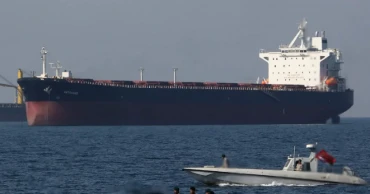
Experts flag possible energy pressure for Bangladesh amid US-Iran tensions
Bangladesh could face mounting energy and financial pressures amid rising tensions between the United States and Iran, with concerns growing over possible disruptions in the Strait of Hormuz, a key route for the country’s energy imports.
With 65-70 percent of the nation's energy demand met through imports—primarily Liquefied Natural Gas (LNG), crude oil, and Liquefied Petroleum Gas (LPG)—sector experts warn that a prolonged regional war could paralyze the economy.
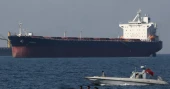
The Strait of Hormuz is the world’s most vital oil transit point. Reports indicate that Iran’s Revolutionary Guard has begun transmitting radio warnings that vessels may be barred from the passage. If the Strait is officially closed, international research agencies forecast that crude oil prices could surge to between USD $95 and $110 per barrel.
For Bangladesh, this is a direct threat. The country relies on this specific maritime route for:
LNG: 55 percent of total imports (mainly from Qatar and Oman).
Crude Oil: 20 percent of annual demand (sourced from Saudi Arabia and UAE).
LPG: Almost 100 percent of supply is Middle East-centric.
How Bangladesh Will Be Affected
The disruption of this supply chain is expected to trigger a domino effect across several sectors.
Severe Power Shortages: As Qatar is a primary source of gas for power plants, any disruption in LNG shipments will lead to widespread load-shedding during the upcoming peak summer season.
Gas Crisis: Professor M. Tamim, an energy expert and Pro-VC of Independent University, warned that "a continued war will spike oil prices and disrupt Qatar's LNG supply, creating a grave gas crisis."
LPG Scarcity: The domestic market, which requires 1.2 lakh tonnes of LPG monthly, is already facing a shortage. A supply chain break would cause prices to skyrocket and supplies to vanish.
Economic Strain: Rising global oil prices will put immense pressure on Bangladesh's foreign exchange reserves and increase the cost of living.
Dr. Ijaz Hossain, Professor and Dean of Engineering, Specialization Energy and Environment of BUET told UNB that energy supply from the Middle East will be severely disrupted if the war prolonged.
“Impact of this both energy supply and electricity generation in Bangladesh would be affected vastly as there is no immediate alternative. The national storage capacity is small for our country,” he added.
Despite the looming threat, the Bangladesh Petroleum Corporation (BPC) maintains that refined oil supplies are "safe" until June, as they are sourced from Malaysia, China, and Singapore, bypassing the Strait of Hormuz. However, the BPC Chairman, Md. Rezanur Rahman, admitted they are "closely monitoring" the crude oil situation.
Petrobangla Director (Operations) Engr. Md. Rafiqul Islam echoed these concerns, stating that while they are monitoring the situation 24/7, a closure of the Qatari shipping route remains a major cause for anxiety.
Energy Minister Iqbal Hassan Mahmood, has called an emergency meeting to discuss the crisis. "We are monitoring the situation and planning to explore alternative import sources to ensure Bangladesh does not fall into an energy vacuum," the Minister told reporters.
Industry leaders, including East Coast Group Chairman Azam J. Chowdhury, have urged the government to establish advanced communications with alternative suppliers like Indonesia and Malaysia to mitigate the risk.
7 months ago
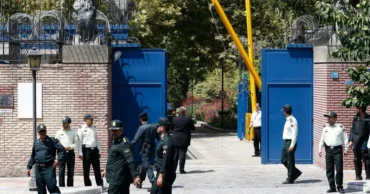
UK pulls Tehran embassy staff amid rising US-Iran tensions
The United Kingdom has temporarily withdrawn staff from its embassy in Tehran as escalating tensions between the United States and Iran raise security concerns across the Middle East.
In a statement, the UK Foreign Office said the embassy in Iran’s capital would continue its operations remotely, without providing details on how long the withdrawal would last.
The move comes as several countries issue warnings to their citizens in the region. The US Embassy in Israel has advised some non-essential staff that they may leave the country, according to media reports. US Ambassador to Israel Mike Huckabee was quoted as urging staff wishing to depart to do so immediately.
The developments follow indirect talks held a day earlier between Washington and Tehran, widely viewed as a last-ditch effort to prevent a military confrontation over Iran’s nuclear programme.
Several other countries, including China, India and Canada, have also urged their nationals to leave Iran as soon as possible amid fears of potential hostilities.
Donald Trump has warned of possible military action if Iran fails to reach a deal on its nuclear activities. He has ordered what officials describe as the largest US military build-up in the Middle East since the 2003 US-led invasion of Iraq. Iranian authorities, meanwhile, have vowed to respond forcefully to any attack.
US Vice-President JD Vance told the Washington Post that military strikes remain an option, but said there was “no chance” of the United States entering a prolonged war.
Mediator Oman said Thursday’s indirect negotiations in Geneva produced “significant progress” and that further talks would be held soon. While Washington has yet to comment officially, Tehran has also described the discussions as yielding positive results.
The growing uncertainty has heightened concerns across the region, with diplomatic missions reviewing security arrangements and governments closely monitoring developments related to the standoff between the United States and Iran.
With inputs from BBC
7 months ago

EU labels Iran’s IRGC terrorist as tensions with US and Tehran escalate
The European Union has officially designated Iran’s Islamic Revolutionary Guard Corps (IRGC) as a “terrorist organisation,” a move praised by EU officials and strongly condemned by Tehran amid rising US-Iran tensions.
EU foreign policy chief Kaja Kallas announced that the decision followed a meeting of European foreign ministers, calling the designation “necessary” to hold the regime accountable for its violent suppression of domestic protests. European Commission President Ursula von der Leyen described the action as “long overdue” and expressed solidarity with the Iranian people’s struggle for freedom.
Iran reacted sharply. Foreign Minister Abbas Araghchi termed the EU’s decision a “publicity stunt” and a “strategic mistake,” accusing Europe of selective outrage by ignoring Israeli actions in Gaza while targeting Iran. The Iranian armed forces warned that the move violates international law and could have serious consequences for European policymakers.
Tehran also announced planned live-fire naval exercises in the Strait of Hormuz next week, signaling readiness for “immediate and powerful” response to any potential attack. Meanwhile, Pakistan’s Prime Minister Shehbaz Sharif and Iranian President Masoud Pezeshkian stressed dialogue and diplomatic engagement to maintain regional peace during a recent phone call.
The IRGC, founded after the 1979 Iranian Revolution, operates alongside Iran’s regular military under Supreme Leader Ayatollah Ali Khamenei, overseeing ballistic missile and nuclear programs, and supporting regional proxy groups. The US first designated the IRGC a foreign terrorist organisation in 2019. Analysts say the EU move intensifies Iran’s already high-stakes geopolitical position, as the country faces growing Western pressure and regional instability.
With inputs from ALJAZEERA
8 months ago
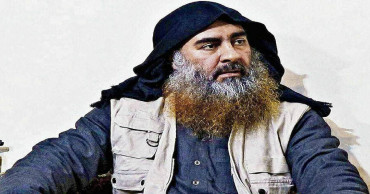
IS tries to stage comeback amid rising US-Iran tensions
The Islamic State group's self-styled "caliphate" across parts of Iraq and Syria seemed largely defeated last year, with the loss of its territory, the killing of its founder in a U.S. raid and an unprecedented crackdown on its social media propaganda machine.
6 years ago

Iraqis worry US-Iran tensions are eclipsing their protests
Young Iraqis who drove mass protests demanding sweeping political reforms are worried that the conflict between the U.S. and Iran, which is playing out in part on Iraqi soil, is killing their momentum.
6 years ago

US-Iran tensions thrust foreign policy into Democrats' race
Democratic presidential candidates are lambasting President Donald Trump's decision to kill Iran's top general in an airstrike, a move that has thrust foreign policy to the forefront of the primary and revived intraparty disputes over military intervention in the Middle East.
6 years ago