Dhaka
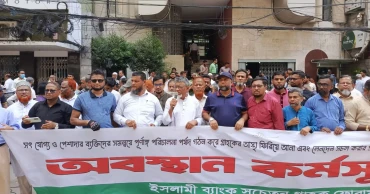
Islami Bank customers’ forum, terminated employees stage protests in Dhaka
Islami Bank Bangladesh PLC Concerned Customers’ Forum and a group of dismissed bank employees staged separate demonstrations in Motijheel and Jatiya Press Club area to press home their respective demands.
Demonstrators from both groups gathered in front of the Jatiya Press Club, Islami Bank’s head office in Dilkusha and near Shapla Chattar area early in the morning.
Members of the Concerned Customers’ Forum took position at the base of the Islami Bank Tower in Dilkusha, held a rally and chanted slogans to safeguard depositors' interests.
Besides, a group of terminated bank officials and employees staged a demonstration along the roads connecting Jatiya Press Club and Secretariat, chanting slogans including, “One point, one demand -- we want our jobs back.”
Protesters demanding job reinstatement were joined by several terminated officials and employees who traveled from Patiya in Chattogram.
Demonstrators announced plans to march from the Press Club to Secretariat to submit a formal memorandum outlining their charter of demands.
Addressing the rally outside the bank headquarters, Professor Nurunnabi Manik, President of the Concerned Customers’ Forum, said depositors would collectively resist any attempt to destabilise Islami Bank or carry out unlawful operations within the institution.
To restore operational stability and rebuild customer trust, Manik urged authorities to form a full-fledged board of directors through meaningful discussions with relevant stakeholders.
He further demanded immediate measures to trace, recover, and confiscate assets siphoned abroad by the S. Alam Group for the direct financial benefit of the bank.
1 month ago
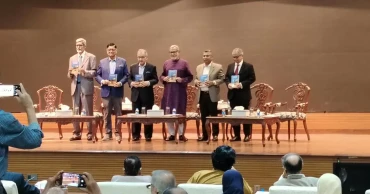
Two books by former ambassadors launched in Dhaka
Two books authored by former Bangladeshi diplomats - "Serendipity in Diplomacy, Between Protocol & Politics", a memoir by Ambassador Mahmud Hasan and "In Search of a Role Model" by Ambassador M. Fazlul Karim - were launched in Dhaka on Saturday.
The books were launched at a programme organised by the Association of Former Ambassadors of Bangladesh (AOFA) at the Foreign Service Academy.
Ambassador Farooq Sobhan, a former foreign secretary and former ambassador, attended the programme as the chief guest.
Ambassador Golam Mohammad, Secretary General of AOFA, delivered the welcome remarks, while AOFA President Ambassador Abdullah Al-Hasan moderated the discussion sessions on both books.
1 month ago
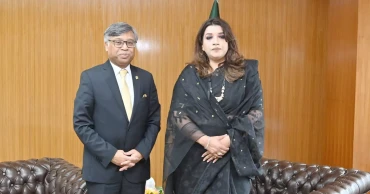
Dhaka reiterates commitment to revitalising SAARC
State Minister for Foreign Affairs Shama Obaed Islam on Monday reaffirmed Bangladesh’s commitment to revitalising the South Asian Association for Regional Cooperation (SAARC) and highlighted the ministry’s intention to play a more proactive role.
She emphasised sustained political engagement, cultural initiatives and broader stakeholder involvement.
The issues were discussed when outgoing Secretary General of SAARC Ambassador Md Golam Sarwar paid a farewell call on the State Minister at the Ministry of Foreign Affairs.
Both sides underscored the importance of renewed political attention and sustained efforts to reinvigorate the SAARC process and strengthen regional cooperation in South Asia, said the Ministry of Foreign Affairs.
2 months ago
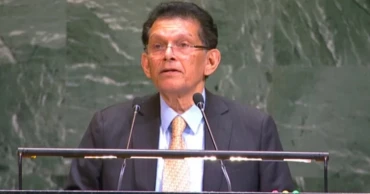
Dhaka hopes New Delhi won't undermine any pillar of state again: FM
Seeking an enabling environment to take forward relations with India, Foreign Minister Dr Khalilur Rahman on Monday said Bangladesh wants all countries across the world to respect the entire structure of the state, and he believes India has understood Bangladesh’s concerns.
“My impression, after speaking with them, is that they have understood it. We hope they will not do anything to undermine any pillar of our state again. This is our expectation, and based on my conversations with them, I am somewhat reassured that this incident will not be repeated," he told reporters at the MoFA, referring to convicted former Prime Minister Hasina’s recent press appearance in New Delhi virtually.
Dr Khalilur said a state has three pillars - Executive, Legislative, and Judiciary - and for convicted Hasina, her place is within the judiciary.
Explaining Bangladesh’s position, the foreign minister said Sheikh Hasina has been tried and convicted by a competent court and that any defence or legal response should be made through the judicial process.
“So what Hasina did on the 5th August was… she showed disrespect to the judiciary, one of the pillars of the state. And the Indian government allowed that to happen,” Khalilur said.
He also clarified that an invitation was extended and addressed to the Chairperson of BIMSTEC. "Please try to understand this distinction."
“Prior to that, the Prime Minister of India, Narendra Modi, wrote a letter to our Prime Minister Tarique Rahman, which was handed over on the day our government was formed. He extended an invitation there,” he said.
“There is an invitation. We will look into it at an appropriate time,” he added.
Pressed on whether Bangladesh would accept either invitation, the foreign minister said, “We have not taken any policy decision on this matter yet.”
Briefing the reporters on the outcome of the courtesy meeting between the Prime Minister and Indian High Commissioner to Bangladesh Dinesh Trivedi, Dr Khalilur said Bangladesh urged India to expedite the extradition of convicted former Prime Minister Sheikh Hasina and hand over the suspected killers of Shaheed Osman Hadi to Bangladesh as early as possible.
"We asked them to expedite this extradition process. We hope India will respond positively in this regard,” the foreign minister said.
Bangladesh also hoped that the issue that emerged on August 5 following Hasina’s virtual press appearance would not be repeated, as Dhaka wants an enabling environment to take forward bilateral relations.
Regarding the Hadi issue, the Foreign Minister said Bangladesh has provided all the documents to India and expects the quick extradition of his suspected killers from India.
“This is an extremely sensitive issue for us as well. We requested that these killers be extradited to us as quickly as possible,” he added.
Dr Khalilur said matters such as river management and other substantive bilateral issues are not usually discussed during a courtesy meeting.
Asked about India’s reaction to Bangladesh’s position concerning Sheikh Hasina’s activities on August 5, the foreign minister said New Delhi had understood the seriousness of the matter.
“No, regarding August 5th, we have clearly stated our position. The Indian authorities have understood its importance with gravity,” Dr Khalilur said.
“They told me this yesterday (Sunday), and they told the Prime Minister today as well,” he added.
Dr Khalilur said the Indian High Commissioner also shared his experiences in Bangladesh over the past few weeks with the Prime Minister and “expressed his immense pleasure at being in Bangladesh.”
Bangladesh on Friday said it desired to maintain a constructive, mutually beneficial, and forward-looking relationship with India based on sovereign equality, mutual respect, non-interference in each other's internal affairs, and national dignity.
"Regrettably," the Ministry said, "Bangladesh’s repeated requests to the government of India for returning convicted criminal Hasina to Bangladesh under the Extradition Treaty signed between Bangladesh and India in 2013 have not yet elicited a response."
"On the contrary, allowing her the opportunity to openly interact with the media under any pretext is deeply hurtful to our people’s sentiments and detrimental to the development of harmonious bilateral relations between Bangladesh and India," said the Ministry.
Bangladesh was outraged that the absconding "convicted genocider" Sheikh Hasina was allowed this evening to engage in a live interaction with the media in New Delhi, where she and her henchmen launched venomous vitriol against Bangladesh and its people.
2 months ago
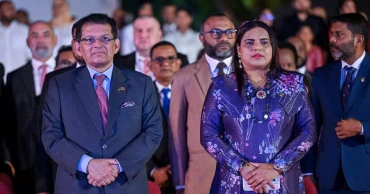
Dhaka, Malé reaffirm enduring friendship, enhanced bilateral collaboration
Bangladesh and the Maldives have reaffirmed their longstanding friendship, underscoring the strong people-to-people ties and close cooperation that have formed the foundation of their bilateral relationship over the years.
During the first official visit of Foreign Minister Dr Khalilur Rahman to Malé from July 25 to 27, the two countries reviewed their existing bilateral cooperation and discussed opportunities to further strengthen collaboration in areas of mutual interest, including health, education, trade and investment, tourism, labour and human resource development, and cooperation in regional and multilateral fora.
The two countries also exchanged views on regional and international developments and reaffirmed their shared commitment to enhancing cooperation in support of the mutual interests and prosperity of both nations.
Foreign Minister Dr Khalilur attended the 61st Independence Day Parade of the Republic of Maldives on Sunday at Republic Square in Malé as the special guest of the Government of Maldives.
He was received at the venue by Maldives Foreign Minister Iruthisham Adam.
The parade featured a ceremonial march-past and impressive displays by various branches of the Maldives National Defence Force, showcasing the country's discipline, heritage and national pride on the occasion of the 61st anniversary of the Independence of the Republic of Maldives.
Following the parade, Dr Khalilur attended a vibrant cultural programme highlighting the rich traditions and cultural heritage of the Maldives.
The Independence Day celebrations concluded with a spectacular fireworks display, the Ministry of Foreign Affairs said on Monday.
He also planted a Christina (Syzygium campanulatum) tree at Lonuziyaarai Park in Malé under the Five Million Trees Project launched by President Dr Mohamed Muizzu.
2 months ago

Two improvised bombs found in Motijheel may have targeted Rath Yatra, say officials
Members of the DMP's specialized Bomb Disposal Unit on Friday night defused two improvised bombs found beneath the Motijheel Metro Rail Station in the capital, officials said.
While a suspected bomb was being defused, it exploded, critically injuring a man who was passing through the area.
The injured, Miraj Ahmed, 23, an employee of the Ministry of Education, was taken to the emergency department of Dhaka Medical College Hospital (DMCH) around 8:30 pm.
Pedestrian injured in explosion during bomb disposal in Motijheel
According to intelligence officials who spoke on condition of anonymity, extensive security measures had been put in place in the Motijheel area since the afternoon for the return Rath Yatra procession of Hindu community.
2 months ago
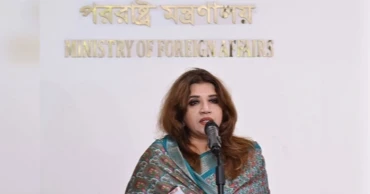
Dhaka hopes India will come forward understanding importance of Ganges Water Treaty
State Minister for Foreign Affairs Shama Obaed Islam on Thursday said the issue related to the renewal of the Bangladesh-India Ganges Water Treaty is moving in a positive direction.
"I think it is moving in a positive direction. I hope India will understand its importance and come forward accordingly," she told reporters when her attention was drawn to the renewal of the treaty.
The Bangladesh-India Ganges Water Treaty, which is expiring in December this year, needs to be "reviewed and reformed comprehensively" before going for a renewed treaty by engaging economists, urban planners, sociologists, and environmentalists in the planning, as Dhaka shares the "risk" of not sharing it appropriately, experts said.
Officials said Bangladesh's agriculture and food availability will be badly affected, while climate vulnerability will increase substantially if the treaty is allowed to expire with no new sharing agreement in place.
The Ganges Water Treaty was signed on December 12, 1996, for a period of 30 years, which makes this the last year covered by it.
Bangladesh and India share 54 rivers including the Ganges.
To discuss all relevant issues that form part of this cooperation, the two countries have a bilateral mechanism in place, the Joint Rivers Commission.
Given the willingness and interest of both sides to reset the relationship, an arrangement for sharing the Ganges waters in an "equitable and climate-proof manner" will be one of the first tests of the reset.
Former Bangladesh High Commissioner to India Tariq A. Karim said the 1996 Ganges Water Sharing Treaty between Bangladesh and India showed that cooperation is possible even on sensitive issues.
"But the treaty is due to expire in December 2026, and its renewal will test whether the region can adapt old agreements to new hydrological and climatic realities," he said while speaking at a seminar recently.
The former diplomat, who also served as Bangladesh Ambassador to the USA, said, "Across the wider region, water, food, energy, health, disaster management, and climate resilience are regional public goods. No country can secure them alone."
The former diplomat said the compulsions of ecological integrity may therefore be South Asia's strongest argument for renewed cooperation.
He said the region should consider shared river-basin management, early-warning systems, climate adaptation financing, joint research, and a regional ecological security dialogue.
"Such cooperation would not require states to surrender sovereignty. It would require them to recognise that sovereignty in an age of climate stress is strengthened - not weakened - by cooperation achieved through its pooling," said the foreign affairs expert.
"MoFA (Ministry of Foreign Affairs) has to do a lot of homework, and data sharing is key. We need to keep in mind that the situation in 1996 and 2026 is not the same. This can't be seen only from engineering or diplomatic prisms; they should include economists, urban planners, and sociologists in the planning," international affairs expert Prof. Shahab Enam Khan told UNB recently.
3 months ago
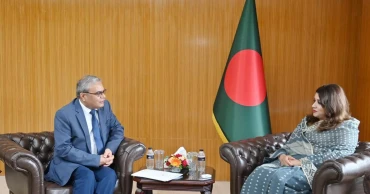
BIMSTEC: Dhaka keen to deliver tangible benefits to peoples; ready to host sectoral meetings
State Minister for Foreign Affairs Shama Obaed Islam on Tuesday reaffirmed Bangladesh’s continued commitment to the BIMSTEC process and reiterated its resolve to further advance regional cooperation during Bangladesh’s Chairmanship of BIMSTEC.
Reiterating to the government’s foreign policy priority of “Bangladesh First,” she underscored the importance of enhancing cooperation in priority areas, including trade and investment, connectivity, energy, climate change, and people-to-people contacts, with a view to delivering tangible benefits to the peoples of the region.
The issues were discussed when Secretary General of the Bay of Bengal Initiative for Multi-Sectoral Technical and Economic Cooperation (BIMSTEC) Indra Mani Pandey called on the State Minister Shama Obaed Islam at the Ministry of Foreign Affairs.
3 months ago
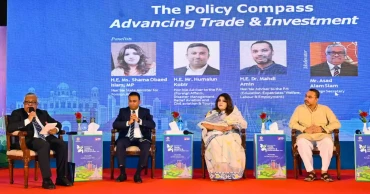
Dhaka wants cooperation with Delhi despite existing challenges: Humaiun Kobir
Prime Minister’s Foreign Affairs Adviser Humaiun Kobir on Saturday said Bangladesh wants cooperation and good working relations with India based on mutual respect despite the challenges that the relationship is facing.
"We want cooperation with India, but it must be based on mutual respect. We should have a good working relationship with India," he said while responding to a question during a panel discussion.
State Minister for Foreign Affairs Shama Obaed Islam and Prime Minister’s Adviser on Education Mahdi Amin also spoke, with the discussion moderated by Foreign Secretary Asad Alam Siam.
Local Government, Rural Development and Cooperatives Minister Mirza Fakhrul Islam Alamgir, Finance Minister Amir Khosru Mahmud Chowdhury, Foreign Minister Dr Khalilur Rahman and BIDA Executive Chairman Chowdhury Ashik Mahmud, among others, spoke at the event.
The Adviser said it is the norm of diplomacy to regularise working relationships within the neighborhood, and the government intends to do that.
"You know, we've made a visit. We expect visits to Dhaka, and either way, we will build the visibility of a working relationship with India. We intend to do that. But the environment must be conducive to accommodating this approach."
Adviser Humaiun Kobir said there are challenges in the relationship, and there has been a "tremendous deficit" in the relationship that they picked up over the last 15 years.
"It was one way, and it was not done with the interests of the people of Bangladesh in mind," he said.
He, however, said they remain positive, given the recent visit of Foreign Minister Dr Khalilur Rahman to New Delhi. Adviser Humaiun Kobir was part of the visit.
The Adviser highlighted the positive mindset of the leadership of both countries, who are committed to moving forward and making progress.
"We can do that. And it can be achievable. Of course, there are challenges. There are always challenges. When you have a terrorist who has fled from Bangladesh after killing one and a half thousand people, and who, to date, has shown no remorse and is trying to destabilise the country from over there, of course, there are challenges," Humaiun Kobir said.
4 months ago
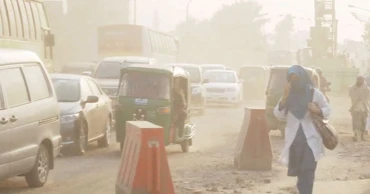
Dhaka ranks 4th among world’s most polluted cities
Dhaka ranked fourth among the world’s most polluted cities on Wednesday morning, recording an Air Quality Index (AQI) score of 134 at 8:35 am.
According to the AQI scale, the capital’s air quality was classified as “unhealthy for sensitive groups,” meaning that while the general public is unlikely to be affected, children, older adults and people with respiratory or heart conditions may face health risks if exposed for prolonged periods.
Uganda’s Kampala topped the list with an AQI score of 173, followed by Indonesia’s Jakarta at 164 and the Democratic Republic of Congo’s Kinshasa at 148.
An AQI score between 101 and 150 is considered “unhealthy for sensitive groups,” while readings between 151 and 200 are classified as “unhealthy.” Scores ranging from 201 to 300 are deemed “very unhealthy,” and readings above 301 are considered “hazardous,” posing serious health risks.
The AQI serves as a daily measure of air quality, indicating how clean or polluted the air is and the potential health effects associated with exposure.
In Bangladesh, the AQI is calculated based on five major pollutants: particulate matter (PM10 and PM2.5), nitrogen dioxide, carbon monoxide, sulphur dioxide and ozone.
Dhaka has long struggled with severe air pollution. Air quality generally worsens during the winter months and improves during the monsoon season.
According to the World Health Organization, air pollution is responsible for around seven million deaths globally each year, primarily due to stroke, heart disease, chronic respiratory diseases, lung cancer and acute respiratory infections.
4 months ago