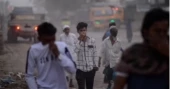
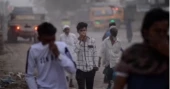
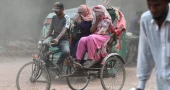
Dhaka residents
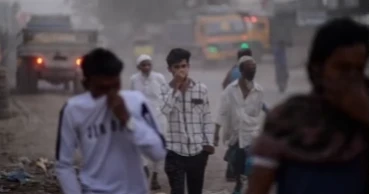
Dhaka struggles with ‘very unhealthy’ air quality
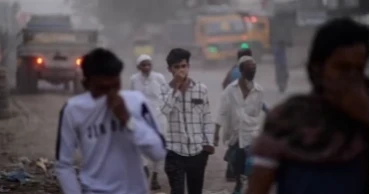
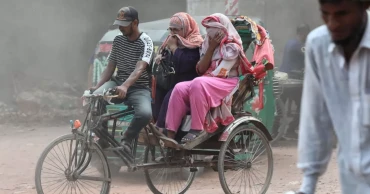
Dhaka, the overcrowded capital city of Bangladesh, has ranked third on the list of cities with the worst air quality with an AQI score of 234 at 9:40 am this morning (November 12, 2025).
Today Dhaka’s air was classified as ‘very unhealthy’ referring to an alarming health threat, according to the AQI index. Such air quality continued for the past few days, rising concerned over public health among the city dwellers.
When the AQI value for particle pollution is between 50 and 100, air quality is considered ‘moderate’, usually sensitive individuals should consider limiting prolonged outdoor exertion, between 101 and 150, air quality is considered ‘unhealthy for sensitive groups’, between 150 and 200 is ‘unhealthy’, between 201 and 300 is said to be 'very unhealthy', while a reading of 301+ is considered 'hazardous', posing serious health risks to residents.
India’s Delhi, Pakistan’s Lahore and again India’s Kolkata cities respectively occupied the first, second and fourth spots on the list, with AQI scores of 761, 364, and 232 respectively.
The AQI, an index for reporting daily air quality, informs people how clean or polluted the air of a certain city is and what associated health effects might be a concern for them.
‘Very unhealthy’ air quality continues in Dhaka risking life
The AQI in Bangladesh is based on five pollutants: particulate matter (PM10 and PM2.5), NO2, CO, SO2, and ozone.
Dhaka has long been grappling with air pollution issues. Its air quality usually turns unhealthy in winter and improves during the monsoon.
As per World Health Organization (WHO), air pollution kills an estimated seven million people worldwide every year, mainly due to increased mortality from stroke, heart disease, chronic obstructive pulmonary disease, lung cancer, and acute respiratory infections.
11 months ago

‘Very unhealthy’ air quality continues in Dhaka risking life
Dhaka, the overcrowded capital city of Bangladesh, has ranked third on the list of cities with the worst air quality with an AQI score of 262 at 9:30 am this morning (November 10, 2025).
Today Dhaka’s air was classified as ‘very unhealthy’ referring to an alarming health threat, according to the AQI index.
Though the capital had experienced ‘unhealthy for sensitive groups or unhealthy’ air quality for the past few days, for the second consecutive day on Monday it continued ‘very unhealthy,’ rising concerned over public health.
When the AQI value for particle pollution is between 50 and 100, air quality is considered ‘moderate’, usually sensitive individuals should consider limiting prolonged outdoor exertion, between 101 and 150, air quality is considered ‘unhealthy for sensitive groups’, between 150 and 200 is ‘unhealthy’, between 201 and 300 is said to be 'very unhealthy', while a reading of 301+ is considered 'hazardous', posing serious health risks to residents.
Air pollution: 5 ways to protect yourself from poor air quality
India’s Delhi, Pakistan’s Lahore and again India’s Kolkata cities respectively occupied the first, second and fourth spots on the list, with AQI scores of 490, 394, and 262 respectively.
The AQI, an index for reporting daily air quality, informs people how clean or polluted the air of a certain city is and what associated health effects might be a concern for them.
The AQI in Bangladesh is based on five pollutants: particulate matter (PM10 and PM2.5), NO2, CO, SO2, and ozone.
Dhaka has long been grappling with air pollution issues. Its air quality usually turns unhealthy in winter and improves during the monsoon.
As per World Health Organization (WHO), air pollution kills an estimated seven million people worldwide every year, mainly due to increased mortality from stroke, heart disease, chronic obstructive pulmonary disease, lung cancer, and acute respiratory infections.
11 months ago
Dhaka’s air turns ‘unhealthy’ this morning
Dhaka, the overcrowded capital city of Bangladesh, has ranked eighth on the list of cities with the worst air quality with an AQI score of 177 at 9:40 am this morning (November 6, 2025).
Today Dhaka’s air was classified as ‘unhealthy’ referring to a health threat, according to the AQI index.
When the AQI value for particle pollution is between 50 and 100, air quality is considered ‘moderate’, usually sensitive individuals should consider limiting prolonged outdoor exertion, between 101 and 150, air quality is considered ‘unhealthy for sensitive groups’, between 150 and 200 is ‘unhealthy’, between 201 and 300 is said to be 'very unhealthy', while a reading of 301+ is considered 'hazardous', posing serious health risks to residents.
India’s Delhi, Kolkata and China’s Beijing cities respectively occupied the first, second and third spots on the list, with AQI scores of 722, 216, and 205 respectively.
The AQI, an index for reporting daily air quality, informs people how clean or polluted the air of a certain city is and what associated health effects might be a concern for them.
The AQI in Bangladesh is based on five pollutants: particulate matter (PM10 and PM2.5), NO2, CO, SO2, and ozone.
Dhaka’s air ‘unhealthy for sensitive groups’ this morning
Dhaka has long been grappling with air pollution issues. Its air quality usually turns unhealthy in winter and improves during the monsoon.
As per World Health Organization (WHO), air pollution kills an estimated seven million people worldwide every year, mainly due to increased mortality from stroke, heart disease, chronic obstructive pulmonary disease, lung cancer, and acute respiratory infections.
11 months ago
Dhaka’s air ‘unhealthy for sensitive groups’ this morning
Dhaka, the overcrowded capital city of Bangladesh, has ranked 15th on the list of cities with the worst air quality with an AQI score of 124 at 9:20 am this morning (November 5, 2025).
Today Dhaka’s air was classified as ‘unhealthy for sensitive groups,’ referring to a health threat, according to the AQI index. Though the air quality had been in ‘moderate zone’ for the past few days, it turned ‘unhealthy for sensitive groups’ today, indicting a worsening condition.
When the AQI value for particle pollution is between 50 and 100, air quality is considered ‘moderate’, usually sensitive individuals should consider limiting prolonged outdoor exertion, between 101 and 150, air quality is considered ‘unhealthy for sensitive groups’, between 150 and 200 is ‘unhealthy’, between 201 and 300 is said to be 'very unhealthy', while a reading of 301+ is considered 'hazardous', posing serious health risks to residents.
India’s Kolkata, United Arab Emirates’ Dubai and again India’s Delhi cities respectively occupied the first, second and third spots on the list, with AQI scores of 267, 209, and 207 respectively.
The AQI, an index for reporting daily air quality, informs people how clean or polluted the air of a certain city is and what associated health effects might be a concern for them.
The AQI in Bangladesh is based on five pollutants: particulate matter (PM10 and PM2.5), NO2, CO, SO2, and ozone.
‘Moderate’ air quality continues in Dhaka
Dhaka has long been grappling with air pollution issues. Its air quality usually turns unhealthy in winter and improves during the monsoon.
As per World Health Organization (WHO), air pollution kills an estimated seven million people worldwide every year, mainly due to increased mortality from stroke, heart disease, chronic obstructive pulmonary disease, lung cancer, and acute respiratory infections.
11 months ago
Dhaka struggling with ‘unhealthy’ air quality
Dhaka, the overcrowded capital city of Bangladesh, has ranked sixth on the list of cities with the worst air quality with an AQI score of 157 at 9:30am this morning (October 30, 2025).
Today Dhaka’s air was classified as ‘unhealthy,’ referring to a health threat, according to the AQI index. For the past few days, Dhaka continued to experience the unhealthy air.
When the AQI value for particle pollution is between 50 and 100, air quality is considered ‘moderate’, usually sensitive individuals should consider limiting prolonged outdoor exertion, between 101 and 150, air quality is considered ‘unhealthy for sensitive groups’, between 150 and 200 is ‘unhealthy’, between 201 and 300 is said to be 'very unhealthy', while a reading of 301+ is considered 'hazardous', posing serious health risks to residents.
Pakistan’s Lahore, India’s Delhi and China’s Beijing cities respectively occupied the first, second and third spots on the list, with AQI scores of 571, 471, and 202 respectively.
The AQI, an index for reporting daily air quality, informs people how clean or polluted the air of a certain city is and what associated health effects might be a concern for them.
Super-rich lifestyles depleting world’s remaining carbon budget: Oxfam
The AQI in Bangladesh is based on five pollutants: particulate matter (PM10 and PM2.5), NO2, CO, SO2, and ozone.
Dhaka has long been grappling with air pollution issues. Its air quality usually turns unhealthy in winter and improves during the monsoon.
As per World Health Organization (WHO), air pollution kills an estimated seven million people worldwide every year, mainly due to increased mortality from stroke, heart disease, chronic obstructive pulmonary disease, lung cancer, and acute respiratory infections.
11 months ago
Dhaka’s air turns ‘unhealthy for sensitive groups’
Dhaka, the overcrowded capital city of Bangladesh, has ranked eighth on the list of cities with the worst air quality with an AQI score of 140 at 10:25am this morning (October 23, 2025).
Today Dhaka’s air was classified as ‘unhealthy for sensitive groups,’ referring to a health threat, according to the AQI index.
When the AQI value for particle pollution is between 50 and 100, air quality is considered ‘moderate’, usually sensitive individuals should consider limiting prolonged outdoor exertion, between 101 and 150, air quality is considered ‘unhealthy for sensitive groups’, between 150 and 200 is ‘unhealthy’, between 201 and 300 is said to be 'very unhealthy', while a reading of 301+ is considered 'hazardous', posing serious health risks to residents.
Pakistan’s Lahore, India’s Delhi and Iraq’s Bagdad cities respectively occupied the first, second and third spots on the list, with AQI scores of 251, 240, and 196 respectively.
The AQI, an index for reporting daily air quality, informs people how clean or polluted the air of a certain city is and what associated health effects might be a concern for them.
The AQI in Bangladesh is based on five pollutants: particulate matter (PM10 and PM2.5), NO2, CO, SO2, and ozone.
Dhaka’s air quality continues to be ‘unhealthy’
Dhaka has long been grappling with air pollution issues. Its air quality usually turns unhealthy in winter and improves during the monsoon.
As per World Health Organization (WHO), air pollution kills an estimated seven million people worldwide every year, mainly due to increased mortality from stroke, heart disease, chronic obstructive pulmonary disease, lung cancer, and acute respiratory infections.
11 months ago

Dhaka’s air quality continues to be ‘unhealthy’
Dhaka, the overcrowded capital city of Bangladesh, has ranked fifth on the list of cities with the worst air quality with an AQI score of 164 at 9:35am this morning (October 22, 2025).
Today Dhaka’s air was classified as ‘unhealthy,’ referring to a health threat, according to the AQI index. Such air quality continued for the past few days. With the arrival of winter, the air quality is apparently worsening day by day in the capital.
When the AQI value for particle pollution is between 50 and 100, air quality is considered ‘moderate’, usually sensitive individuals should consider limiting prolonged outdoor exertion, between 101 and 150, air quality is considered ‘unhealthy for sensitive groups’, between 150 and 200 is ‘unhealthy’, between 201 and 300 is said to be 'very unhealthy', while a reading of 301+ is considered 'hazardous', posing serious health risks to residents.
India’s Delhi, Pakistan’s Lahore and Democratic Republic of the Congo’s Kinshasa cities respectively occupied the first, second and third spots on the list, with AQI scores of 277, 244, and 192 respectively.
Dhaka’s air quality continues to be ‘unhealthy’
The AQI, an index for reporting daily air quality, informs people how clean or polluted the air of a certain city is and what associated health effects might be a concern for them.
The AQI in Bangladesh is based on five pollutants: particulate matter (PM10 and PM2.5), NO2, CO, SO2, and ozone.
Dhaka has long been grappling with air pollution issues. Its air quality usually turns unhealthy in winter and improves during the monsoon.
As per World Health Organization (WHO), air pollution kills an estimated seven million people worldwide every year, mainly due to increased mortality from stroke, heart disease, chronic obstructive pulmonary disease, lung cancer, and acute respiratory infections.
11 months ago

Dhaka’s air quality continues to be ‘unhealthy’
Dhaka, the overcrowded capital city of Bangladesh, has ranked seventh on the list of cities with the worst air quality with an AQI score of 152 at 9:30am this morning (October 20, 2025).
Today Dhaka’s air was classified as ‘unhealthy,’ referring to a health threat, according to the AQI index. Such air quality continued for the past few days. With the arrival of winter, the air quality is apparently worsening day by day in the capital.
When the AQI value for particle pollution is between 50 and 100, air quality is considered ‘moderate’, usually sensitive individuals should consider limiting prolonged outdoor exertion, between 101 and 150, air quality is considered ‘unhealthy for sensitive groups’, between 150 and 200 is ‘unhealthy’, between 201 and 300 is said to be 'very unhealthy', while a reading of 301+ is considered 'hazardous', posing serious health risks to residents.
Pakistan’s Lahore, India’s Delhi and Mumbai cities respectively occupied the first, second and third spots on the list, with AQI scores of 297, 287, and 182 respectively.
The AQI, an index for reporting daily air quality, informs people how clean or polluted the air of a certain city is and what associated health effects might be a concern for them.
Dhaka’s air quality continues to be ‘unhealthy’
The AQI in Bangladesh is based on five pollutants: particulate matter (PM10 and PM2.5), NO2, CO, SO2, and ozone.
Dhaka has long been grappling with air pollution issues. Its air quality usually turns unhealthy in winter and improves during the monsoon.
As per World Health Organization (WHO), air pollution kills an estimated seven million people worldwide every year, mainly due to increased mortality from stroke, heart disease, chronic obstructive pulmonary disease, lung cancer, and acute respiratory infections.
11 months ago
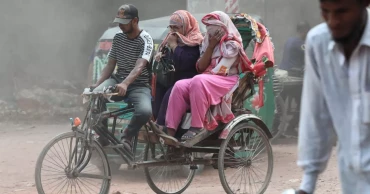
Dhaka’s air quality continues to be ‘unhealthy’
Dhaka, the overcrowded capital city of Bangladesh, has ranked seventh on the list of cities with the worst air quality with an AQI score of 152 at 9:30am this morning (October 19, 2025).
Today Dhaka’s air was classified as ‘unhealthy,’ referring to a health threat, according to the AQI index. Such air quality continued for the past few days and the AQI score stayed over 150.
When the AQI value for particle pollution is between 50 and 100, air quality is considered ‘moderate’, usually sensitive individuals should consider limiting prolonged outdoor exertion, between 101 and 150, air quality is considered ‘unhealthy for sensitive groups’, between 150 and 200 is ‘unhealthy’, between 201 and 300 is said to be 'very unhealthy', while a reading of 301+ is considered 'hazardous', posing serious health risks to residents.
Pakistan’s Lahore, India’s Delhi and Kolkata cities respectively occupied the first, second and third spots on the list, with AQI scores of 292, 238, and 183 respectively.
UN: CO2 hit record high last year, worsening extreme weather
The AQI, an index for reporting daily air quality, informs people how clean or polluted the air of a certain city is and what associated health effects might be a concern for them.
The AQI in Bangladesh is based on five pollutants: particulate matter (PM10 and PM2.5), NO2, CO, SO2, and ozone.
Dhaka has long been grappling with air pollution issues. Its air quality usually turns unhealthy in winter and improves during the monsoon.
As per World Health Organization (WHO), air pollution kills an estimated seven million people worldwide every year, mainly due to increased mortality from stroke, heart disease, chronic obstructive pulmonary disease, lung cancer, and acute respiratory infections.
1 year ago

Dhaka’s air quality continues to be ‘unhealthy’
Dhaka, the overcrowded capital city of Bangladesh, has ranked sixth on the list of cities with the worst air quality with an AQI score of 174 at 10:50am this morning (October 17, 2025).
Today Dhaka’s air was classified as ‘unhealthy,’ referring to a health threat, according to the AQI index. Such air quality continued for the past few days and the AQI score stayed over 150.
When the AQI value for particle pollution is between 50 and 100, air quality is considered ‘moderate’, usually sensitive individuals should consider limiting prolonged outdoor exertion, between 101 and 150, air quality is considered ‘unhealthy for sensitive groups’, between 150 and 200 is ‘unhealthy’, between 201 and 300 is said to be 'very unhealthy', while a reading of 301+ is considered 'hazardous', posing serious health risks to residents.
Pakistan’s Lahore, India’s Delhi and Kolkata cities respectively occupied the first, second and third spots on the list, with AQI scores of 304, 215, and 200 respectively.
The AQI, an index for reporting daily air quality, informs people how clean or polluted the air of a certain city is and what associated health effects might be a concern for them.
The AQI in Bangladesh is based on five pollutants: particulate matter (PM10 and PM2.5), NO2, CO, SO2, and ozone.
Dhaka’s ‘unhealthy’ air persists
Dhaka has long been grappling with air pollution issues. Its air quality usually turns unhealthy in winter and improves during the monsoon.
As per World Health Organization (WHO), air pollution kills an estimated seven million people worldwide every year, mainly due to increased mortality from stroke, heart disease, chronic obstructive pulmonary disease, lung cancer, and acute respiratory infections.
1 year ago