Satire
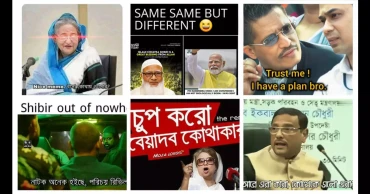
From posters to punchlines: How Bangladesh’s politics got 'Meme-ified'
Bangladesh now stands at a threshold where the familiar theatre of politics is being rewritten before our very eyes. Once, the story was told through posters plastered on cracked walls, festoons strung across narrow lanes, and the blare of megaphones cutting through the night.
Now, the script has changed. The new battlefield is the screen; the new weapons are memes. Laughter slices deeper than slogans. Irony pierces harder than pamphlets.
Once, citizens gathered in town squares, markets, or outside city halls to speak up, protest, and debate. They held signs, chanted slogans, and faced one another. Today, that stage has mostly shifted - into our phones. Social media is now the battlefield, the meeting place, the soapbox all in one.
In this new “public square,” comment threads, TikTok videos, meme pages, and viral posts have replaced physical rallies. Political stories, grievances, and loyalties are born, spread, and challenged in real time - often by ordinary people, not just by the powerful.
This change brings both hope and danger. On the bright side, a single meme or clever post can circle the country overnight. Voices once ignored - students, artists, the quiet observers - can now speak and be heard.
It is now obvious that the great battle for power is no longer fought only in the streets — it is being waged in the feeds of the masses.
The ‘Youthquake’ that lit the fire: July 2024
The turning point came with the student uprisings of July 2024. Streets thundered with chants, but the internet raged with a parallel storm. Memes seared authority with biting wit, hashtags outpaced the speed of slogans, and protest art became the new graffiti—spray-painted not only on the walls, but also across screens.
What once was dismissed as jest turned into a clarion call, it was not just mere annotation anymore. It was mobilization. And in that moment, the internet was not just a witness to history, it became history’s weapon.
Our soil is especially ripe for this transformation because Bangladesh is a young country. Youth make up about one-third of our population. Among registered voters, more than 30 percent are under 35.
But until recently, many of those young people stayed away from elections. A survey found that 54 percent of youths had never voted in a general election. Another study reported 75 percent of youth said they had never participated in a national election.
Then came July 2024. The student uprisings shook things, and young people poured into streets and into screens. Hashtags, meme pages, comment threads - politics became a conversation again, not just a grand show by old parties. Some who had never voted before began reading debates in comments, watching candidate profiles, sharing sarcastic memes about corruption, inequality, demand for change.
The mix of memes and youth has created new fault lines. The young are less patient with old speeches, more drawn to sharp humor, more likely to share than just listen. In a filtered feed, one clever meme can travel faster and wider than a campaign leaflet ever could.
Satire sharpens its edge: DUCSU 2025
The tide swelled in 2025 through the Dhaka University Central Students Union (DUCSU) and hall union elections. Campaigns abandoned hollow chants and embraced parody. Posters mocked currency. Slogans dripped with sarcasm, and memes that were once laughed off as simple jokes began to carry real weight, almost like political manifestos.
But every sword casts a dreadful shadow as well. With satire came smear. Falsehoods spread like wildfire, targeting candidates, especially women, with venomous precision. The Election Commission intervened with warnings. It felt as if online missteps could carry the same weight as tampering with ballots.
A sobering truth emerged - satire was no longer just harmless fun. It had become a fatal double-edged weapon, capable of ending someone’s career as easily as saving it.
Faceless army: The bot Invasion
Yet hidden behind the scene, a silent power directs the show. Bot armies, silent and relentless, amplify narratives, drown dissent and create illusions of consensus. A candidate’s popularity, or its perception at least, can be inflated in minutes. Critics can be buried beneath waves of coordinated noise.
For the common voter scrolling through their feed, the line between genuine support and engineered approval has all but disappeared. Humor may lighten the meme wars, but distortion fuels them. And in this strange new arena, the opponent may not be another citizen; but an ‘Army of Shadows’.
Election 2026: Rules of war rewritten
As the nation steels itself for the 13th general election in 2026, the Election Commission has laid down a new code of combat. The old order is gone.
Posters, festoons, and PVC banners - all summarily banished. Billboard ads, once towering symbols of influence, cut down to just twenty per constituency. Every social media handle must now be declared, every message subject to scrutiny. A single misleading post could summon not applause but imprisonment and a fine sharp enough to cripple a campaign.
Clearly, the age of poster wars has ended. The age of meme wars has begun.
No longer will victory belong to those who command the walls of a city. It will belong to those who command its feeds. Candidates who wield satire with skill and algorithms with precision will surge forward. Those clinging to the relics of the old world will fade into irrelevance.
But the danger is stark as one careless meme can undo a career. One viral punchline can crown a leader. The margin between triumph and ruin has never been so thin.
Warnings from Abroad
Look abroad for signs of what may come. In Germany’s 2021 federal election, researchers documented how campaigns and disinformation used social media to sway voters. Platforms struggled to stem the tide of fake news flooding timelines. One study found that extra ad impressions on social media could shift vote shares by a few percentage points. (OUP Academic)
Meanwhile, in Tanzania, ahead of its 2025 election, the government blocked access to X (formerly Twitter) after alleged “cyberattacks” — raising questions about whether this new “public square” can be shut down at will.
These examples reveal both the promise and peril of digital politics: memes and algorithms can spark change, but they can also be captured, censored, or twisted by those in control.
Perils of the ‘new age’
Yet the odyssey ahead is artful. The imposed regulations on ‘harmful content’ may become a stern shackle for dissent. Legions of bots could shake the very foundations of democracy, turning honest debate into a battlefield of deception. It is certain that the eco-friendly reforms will save the environment, but there lies risks of sidelining candidates who lack digital muscle to compete.
Thus, the stage of Bangladeshi politics has been transformed. The festoon and the poster, once the lifeblood of campaigns, now surrender to social media, memes and hashtags. What once simply entertained has become a calculated strategy. What once adorned walls now shapes destinies.
As the countdown to the 2026 election continues, one thing is clear - the real fight won’t be in crowded squares or noisy rallies, but in the digital feeds where stories are crafted, sharpened, and spread. And make no mistake, that battle is already underway.
The streets may still reverberate with echoes, but the screens will be the dominant medium, for sure. And, in this kingdom of pixels and punchlines, the victor will not be the one who shouts the loudest, but the one who makes the world laugh, click and believe.
1 year ago
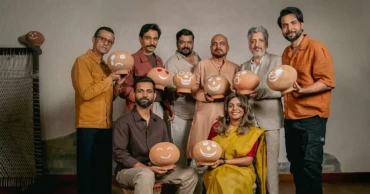
Mirzapur, Scam 1992, Paatal Lok, Panchayat talents unite for ‘Baaghi Bechare’
A dynamic lineup of talent from some of India’s most acclaimed web series and films has united for Baaghi Bechare, a new satire marking the directorial debut of writer-editor Sumit Purohit.
Known for his work on Inside Edge and the biopic Srikanth, and a BAFTA Breakthrough India participant in 2020/2021, Purohit is stepping behind the camera for the first time.
The film features a stellar cast led by ‘Scam 1992’ star Pratik Gandhi and ‘Paatal Lok’ and ‘Stree 2’ actor Abhishek Banerjee, reports Variety.
Joining them is Panchayat’s Faisal Malik and Mirzapur creator Puneet Krishna, who co-writes the film with Purohit.
Described as a sharp satire, Baaghi Bechare reflects a growing trend of prominent performers turning to independent, experimental storytelling beyond mainstream formats.
“Satire, for me, is a form of catharsis. It helps us confront truths that are too absurd to believe and too real to ignore,” says Purohit. “Collaborating with so many creative and talented people on this journey gives me hope that we can continue telling stories that are honest and unafraid to reflect the times we live in.”
Warner Bros secures dismissal of ‘Superman’ foreign copyright lawsuit
Gandhi, fresh off his comedic role in Madgaon Express, speaks of the artistic freedom the film provides. “It’s refreshing to be part of a film rooted in genuine artistic collaboration and craft. There’s a rare freedom in working without the usual market pressures,” he says.
“As an actor, being in such an ecosystem is truly inspiring. You feel a responsibility to support it and be a part of its journey.”
Baaghi Bechare is produced by BE8 Films Production (Ashwani Kumar), Traintripper Films (Chippy Babu and Abhishek Sharma), with Inclusive Pictures serving as co-producer.
1 year ago

‘Hoyto-Noyto': A satire on the times
Once there was a fairy tale kingdom, where the king was so ataraxic about his tenants that he wasn’t even concerned about the existing crises like the food crisis and price hikes in the realm. The bureaucracy of the whole system, hiding money in the name of development, was responsible for these circumstances.
These things were ironically illustrated in ‘Hoyto-Noyto’, a drama staged at the Teachers and Students Cultural Centre of Rajshahi University (RU) on Monday (21 November, 2022) evening.
The stage drama was organized by ‘Samakal Natyachakra’ of Rajshahi University, where the members of the organization performed in the different characters of the fairy tale realm.
That was such a comedy-drama, where the irregularities were presented so ironically and in such a brilliant way that the spectators can relate these things with their surroundings.
Read more: Chanchal returns to theatre with Aranyak's 'Rarang' – 'cry to rise up'
In drama, the tenants were asking the king what they should do as they don’t have any food to eat. The bureaucrats of the throne replied that they should eat food by chewing and drinking while having food, and while not having food they should eat by ‘not chewing’ and ‘not drinking’.
In another part of that drama, the minister of the realm said that the taxes on ‘luxurious products’ like rice, oil, vegetables, salt, and sugar were increased. That’s how the authorities are solving the existing problems mocking the life of the mass people.
They also showed where and how the donations are gone in the name of mass people’s development.
However, the plot was written by Radharaman Ghosh and directed by Mithu.
‘Samakal Natyachakra’ of Rajshahi University was launched on 25 November, 1981. Since then, they have been producing more than 70 stage and street dramas.
Read more: 'Wolfed Down': One-woman theatrical show memerises Dhaka audience
3 years ago