defaulted loans
Defaulted loans reach Tk 5.45 lakh crore: Finance Minister
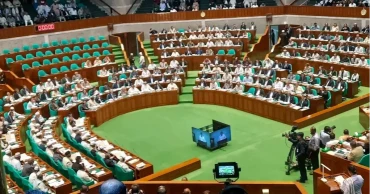
Defaulted loans in Bangladesh’s banking sector stood at Tk 5.45 lakh crore at the end of 2025, Finance Minister Amir Khosru Mahmud Chowdhury told Parliament on Monday.
“As of December 31, 2025, the total amount of defaulted loans in the banking sector is Tk 5,44,831 crore,” he said replying to a tabled question from NCP lawmaker Md Abul Hasnat who is popularly known as Hasnat Abdulla (Cumilla-4).
The parliament session resumed at 3:30 pm with Deputy Speaker Barrister Kayser Kamal in the chair.
The Minister also placed the list of top 20 loan defaulters in the House.
The 20 top loan defaulters are S. Alam Super Edible Oil Limited, S. Alam Vegetable Oil Limited, S. Alam Refined Suger Industries Limited, S. Alam Cold Rolled Steels Limited, Sonali Traders, Bangladesh Export Import Company Ltd, Global Trading Corporation Limited, Chemon Ispat Limited, S. Alam Trading Company Private Ltd, Infinite CR Strips Industries Limited, Keya Cosmetics Limited, Deshbandhu Sugar Mills Limited, Power Pac Mutiara Keranigonj Power Plant Ltd, Power Pac Mutiara Jamalpur Power Plant Ltd, Pacific Bangladesh Telecom Limited, Karnafuly Foods (Pvt.) Limited, Murad Enterprise, CLC Power Company Limited, Beximco Communications Limited, and Rongdhanu Builders (Pvt) Ltd.
Highlighting government efforts to recover defaulted loans, the finance minister said banks with more than 10 percent classified loans will be reviewed quarterly and action plans will be adopted to identify and address obstacles to loan recovery.
He said progress in recovering dues from the top 20 defaulters will be monitored at each bankers’ meeting organised by Bangladesh Bank and guidelines will be formulated for banks with high levels of classified loans.
“Banks have been instructed to strengthen the existing legal team/law department of the bank,” said the minister.
He said banks have been instructed to set a target of cash recovery of at least 1% of the defaulted loan balance of each bank by June 30, 2026 following Alternative Dispute Resolution (ADR).
The finance minister said an action plan has also been adopted to resolve the problem of non-performing loans.
According to the action plan, Bangladesh Bank is currently working to amend the existing laws including Bank Company Act, Negotiable Instrument Act, Orthro Rin Adalat Ain and Bankruptcy Act to resolve the problem of non-performing loans.
Other proposed measures include reviewing agricultural loan rescheduling policies, publishing lists of defaulters and wilful defaulters, strengthening incentives for regular borrowers, identifying good borrowers to promote a stronger credit culture, and setting borrowing limits across the banking sector, said the minister.
Further steps include legal reforms to deal with wilful defaulters involving experienced bankers in money loan courts, preventing misuse of writ petitions to delay recovery, and enacting laws to establish private-sector Asset Management Companies (AMCs), he added.
The minister also informed the House that loans taken from banks and financial institutions by members of parliament and their related entities amount to Tk 11,117.31 crore.
6 months ago
Top court orders removal of Manna’s name from loan defaulters list
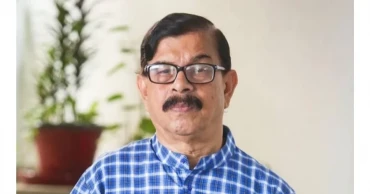
The Appellate Division on Monday (December 29, 2025) ordered the immediate removal of Nagorik Oikya President Mahmudur Rahman Manna’s name from the list of loan defaulters, clearing the way for his participation in the upcoming national polls.
A single member bench of Justice Md Rezaul Haque passed the order after hearing a petition submitted by Manna challenging a High Court (HC) order.
The court also stayed the HC order for eight weeks.
Following the order, Manna has now no barriers to contest the election from the Bogura-2 constituency.
Read more: Arms smuggling attempts rise ahead of Bangladesh polls: Home Adviser
Senior lawyers Ahsanul Karim, Syed Mamun Mahbub, Barrister Jyotirmoy Barua, and Mostafizur Rahman stood for Manna while senior lawyer Abdul Kaiyum represented Islami Bank during the hearing at the court.
The appeal followed the HC’s rejection of Manna’s writ petition on Sunday seeking removal of his name from the loan defaulter list.
Earlier, on Wednesday, an HC bench of Justice Md Bazlur Rahman and Justice Md. Mansur Alam dismissed the petition, barring him from taking part in the elections.
Then, deputy attorney general Shafiqul Rahman said as the court had rejected Manna’s petition, thereby he was disqualified now.
Later, Manna filed another petition with the Appellate Division on Sunday challenging the HC order.
The legal controversy surfaces after a notice issued by Islami Bank Bangladesh Limited’s Bogura Bargola branch on December 10 regarding Afacu Cold Storage Limited, a company led by Manna.
The notice demanded repayment of Tk 38.04 crore in defaulted loans, instructing full payment by December 18 and warning of legal action in case of non-payment.
Awami League could return if PR system is used in polls: Manna
The notice, signed by branch manager Touhid Reza, was sent to the company’s chairman Manna and Managing Director ABM Nazmul Kadir Shajahan Chowdhury.
According to the documents, Manna owns 50 percent of the cold storage, while couple Shajahan Chowdhury and his wife Ismat Ara Laizu each hold 25 percent shares.
Although the company was profitable, it failed to pay regular profits, charges and fines, resulting in the outstanding amount. The bank described the notice as a final warning to prompt repayment, according to the notice.
The bank manager said Manna had made no effort to repay the loan despite the company’s profitability. As per the agreement, the payment obligations were not fulfilled, which prompted the notice.
9 months ago

Bangladesh’s economy holds glimmers of hope amid IMF-ADB’s lower growth forecasts: Experts
Bangladesh’s economy is showing signs of a gradual recovery, though GDP growth remains under pressure due to historically low tax revenues and a struggling banking sector burdened by about 35 percent of defaulted loans.
Professor Selim Raihan of the Economics department at Dhaka University, and also Executive Director of the South Asian Network on Economic Modelling (SANEM), told UNB that the IMF has downgraded Bangladesh’s GDP growth forecast, citing weak revenue collection, persistent inflation and growing fiscal stress.
“This signals a slowing economy characterised by declining job creation, fragile private sector investment and increasing external vulnerabilities. Inflation is likely to remain high, placing further strain on household budgets and eroding purchasing power,” Dr Raihan explained.
To address these issues, he recommended widening the tax base, cutting subsidies, and enhancing public financial management, and stressed the importance of bolstering the central bank’s independence, containing inflation and encouraging private investment through regulatory reforms.
Dr Raihan also emphasised that diversifying exports, improving infrastructure, and investing in education and healthcare would strengthen economic resilience and support sustainable long-term growth.
Bangladesh’s banking system continues to face major challenges, with a large share of defaulted loans constraining the flow of credit to the private sector, contributing to the downward revision of GDP growth forecasts by global lenders.
Dr Raihan also noted that the government’s move to reduce allocations for mega development projects has compounded the slowdown.
The IMF recently adjusted its GDP growth projection for the current fiscal year (FY 2024–25) to 3.76 percent – a slight drop from the 3.8 percent forecast in December 2024 and a notable decrease from the 4.5 percent projected in October 2024.
ADB projects 3.9% GDP growth for Bangladesh in FY2024-25
Despite the revised outlook, Bangladesh ranks as the ninth-largest economy in Asia based on total GDP, now valued at US$450.5 billion according to 2024 data.
The Asian Development Bank (ADB), in its 2025 Basic Statistics report, placed Bangladesh as the second-largest economy in South Asia, after India, among 46 countries surveyed (excluding Japan).
The IMF’s projected 3.76 percent growth would mark the lowest since FY 2019–20, when the COVID-19 pandemic severely disrupted economies worldwide. For FY 2025–26, the IMF has also trimmed its growth forecast to 6.53 percent from the previously estimated 6.7 percent.
While the IMF report did not provide detailed reasons for the downward revision, Chris Papageorgiou, Chief of the Development Macroeconomics Division in the IMF’s Research Department and head of a recent mission to Bangladesh, said the economy continues to face “multiple challenges amid elevated global uncertainty”.
He highlighted a slowdown in GDP growth to 3.3 percent year-on-year during the first half of FY25, down from 5.1 percent during the same period in FY24.
The decline was attributed to domestic unrest, tighter monetary and fiscal policies, and a general climate of uncertainty that has dampened investment sentiment.
The ADB’s latest outlook closely mirrors that of the IMF, projecting 3.9 percent growth for FY 2025, rising to 5.1 percent in FY 2026.
The Bank also warned of challenges such as subdued domestic demand linked to political transitions, the threat of natural disasters, labour unrest and persistently high inflation.
Inflation remains one of the key concerns. The IMF expects inflation to stay around 10 percent during the current fiscal year, potentially easing to 5.18 percent in FY 2026.
The ADB, meanwhile, forecasts an increase to 10.2 percent in FY 2025, with a projected decline to 8 percent in the following year.
Bangladesh’s GDP growth 6.12% in Jan-Mar of FY 2023-24: BBS
Despite these downward adjustments, both the IMF and ADB foresee a gradual recovery in Bangladesh’s economic trajectory over the medium term. But, the current outlook underscores the significant headwinds the country must navigate to sustain its previous high-growth momentum.
Dr M Masrur Reaz, macroeconomist and Chairman of Policy Exchange Bangladesh, told UNB that despite the sluggish pace, the economy is gradually moving towards recovery.
He highlighted that export earnings and remittance inflows are helping to stabilise the foreign exchange reserves and revitalise the rural economy – factors which are contributing positively to macroeconomic stability.
“Severe regulatory lapses in the banking sector and massive loan scams have delayed the recovery of the macroeconomy. However, recent efforts to reform the banking sector and restore public confidence in financial institutions will be vital to reviving GDP growth,” he said.
He cautioned that the IMF’s projections should not be interpreted as an indication that the economy is in dire straits.
1 year ago

Bangladesh Bank introduces “Exit Policy” for expediting default loan recovery
Bangladesh Bank has formulated a new "Exit Policy" aimed at expediting the recovery of defaulted loans. This policy allows both defaulters and non-defaulting business customers to settle their industrial loans by paying off the balance, with specific conditions attached.
According to the central bank's new notification, applicants must deposit at least 10 percent of the loan amount upfront to qualify for this facility. Banks have been instructed to develop their own policies in line with the central bank's guidelines, incorporating similar conditions.
Under the policy, there will be no change in the quality of the loan until it is fully repaid, and customers utilizing the exit facility will not be eligible for new loans during this period.
Read more: 'Publish list of loan defaulters in parliament': AK Azad
"If a businessperson takes this facility, they must repay the entire loan within a maximum of three years. These customers will not be identified as willful defaulters," the notification stated.
The central bank noted that borrowers' businesses or projects might incur losses due to uncontrollable factors, leading to hindered debt collection activities and insufficient cash flow for loan repayment. Consequently, such loans are classified as defaults but not as willful defaults.
The notification also emphasized that genuine adverse financial conditions can reduce the chances of debt recovery. Therefore, there is a need for a uniform policy to facilitate debt recovery or adjustment through the exit mechanism, as banks have been following varied procedures.
In this context, the new policy aims to maintain liquidity flow and reduce defaulted loans in the banking sector. Regular loan exit facilities may be granted for recovering adversely classified loans with poor recovery prospects or in cases where projects or businesses have closed due to uncontrollable reasons.
Read more: Process on to prepare list of loan defaulters, finance minister tells Parliament
To apply for the facility, borrowers must pay a minimum of 10 percent of the existing loan balance in one-time cash. Banks are required to settle these applications within 60 working days of receipt.
2 years ago

Stop loan default culture to save economy: Anisul Islam Mahmud
The main opposition Jatiya Party lawmaker Anisul Islam Mahmud on Tuesday (February 13, 2024) demanded the government of Bangladesh put an end to the loan default culture to save the country’s economy.
“In this situation, we need to stop the culture of wilful loan default,” he said.
Anisul Islam, a veteran parliamentarian and the deputy leader of the opposition, placed the demand in the House, taking the floor on a point of order.
Citing a newspaper story, he said the banking sector's defaulted loans soared by over 20 percent to Tk 145,633 crore in 2023 as both governance and accountability continue to get looser.
98 percent of the country's demand for medicine is produced locally: Health Minister
“Whenever this issue is being discussed, we are told that Bangladesh Bank and other banks are taking measures to reduce this (defaulted loans). But we never see that defaulted loans are declining, rather it is going higher,” he said.
The Jatiya Party MP said the amount of defaulted loans was Tk 28,000 crore as of 2008. The number of defaulted loans has increased to Tk 1.45 lac crore since 2008 to as of today which is very alarming.
He said there is a cash crisis and a dollar crisis in the banking sector. Some strong measures have been taken to tackle this situation.
With Pahela Falgun-Valentine’s Day, the nation eyes a festive February 14
Anisul said Bangladesh Bank (BB) is telling that they want to reduce the amount of defaulted loans from existing nine percent to eight percent of total outstanding loans.
“But their (BB) track record says that they will not do so,” he continued.
The opposition lawmaker requested the Finance Minister to give importance to stopping the loan default culture.
“The issue of loan default culture has been discussed in parliament so many times. But nothing has happened,” he added.
Govt okays project to provide freelancing training to youths in 48 districts
2 years ago
Publish list of loan defaulters who laundered money abroad in JS: AK Azad
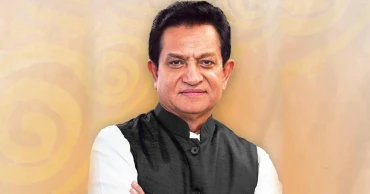
Independent MP AK Azad on Monday (February 12, 2024) demanded a list of those who have laundered money abroad taking loans from banks be placed in Parliament.
Azad, who was elected MP for the first time, came up with the demand while participating in the discussion on the thanksgiving motion on the President’s speech.
He said that Prime Minister Sheikh Hasina is totally against corruption and Awami League's manifesto also cited that.
“First of all, good governance will have to be established in the banking sector,” Azad said.
Read more: Bangladesh Bank sets an 11-point roadmap to realise default loans
Welcoming Bangladesh Bank's roadmap for reforming the banking sector, Azad, also President of Newspapers Owners Association of Bangladesh (NOAB), said the amount of defaulted loans in Bangladesh is around Tk 1,45,633 crore.
“But in reality, the amount is much more. But through write off, the amount of debt is shown less. Those who have taken loans and invested in factories and failed to repay, may be exempted subject to investigation,” he said.
He demanded to bring to justice those who did not invest loan money in any business, and instead laundered the money.
“They made home at Begum Para, and second homes. Their list should be published in the parliament,” he demanded.
Read more: Bank MDs working under increased stress due to default loans, board interference: Experts
He also commented that Bangabandhu's dream will not be realised unless they are brought under the law.
The independent MP said that those who looted banks are responsible for the rise in commodity prices and inflation.
Azad said that he wants to be accountable to the countrymen and voters through this parliament.
Azad also said he wants to make the parliament effective and lively through constructive criticism of the government.
He expected cooperation of the Speaker in this regard.
Read more: Businesses should get opportunities to turn around before wholesale declaration of loan defaulters: FBCCI President
2 years ago

Finance Minister places names of top 20 loan defaulters in JS
The total amount of debt to the top 20 defaulters is Tk 19,283.93 crore while the amount of defaulted loan is Tk 16,587. 92 crore.
Finance Minister AHM Mustafa Kamal divulged the amount in parliament on Tuesday responding to a tabled question from ruling Awami League MP Shahiduzzaman Sarker.
The finance minister placed the list the names of top 20 loan defaulters, amount of total debt and the amount of defaulted loans to them.
He also informed the House that the total number of defaulters in the country is 7,86,065.
According to the list, among the top 20 loan defaulters, the debt status of CLC Power Company Limited is Tk 1,732.92 crore while their defaulted debt is 1,649.44 crore.
The debt status and amount of defaulted loan of 19 others are: Western Marine Shipyard Ltd, Tk 1,855.39 crore, defaulted debt, 1529.74 crore; Remex Footwear Ltd, Tk 1,077.63 crore, all those amount are defaulted loans; Rising Steel Company Ltd, 1,142.76 crore, defaulted debt, Tk 990.28 crore; Mohammad Elias Brothers (Pvt.) Ltd, Tk 965.60 crore, all those amount are defaulted loans.
Rupali Composite Leather Wire Ltd.'s status and amount of defaulted loans are the same. Their defaulted debt is Tk 873. 29 lakh.
Crescent Leathers Products Ltd.'s status and amount of defaulted loans is Tk 855.22 crore.
The status and amount of defaulted loans of Quantum Power Systems Ltd. is Tk 811.33 crore.
The debt status of Saad Musa Fabrics Ltd. is Tk 1,131.83 crore, the amount of their defaulted loans is Tk 776.63 crore.
The status of amount of BR Spinning Mills Ltd. and the amount of defaulted loans is Tk 721 Crore 43 Lakh.
The debt status of SA Oil Refinery Ltd. is Tk 1,172.69 crore. The amount of their defaulted loans is Tk 703.53 crore.
Debt status of Maisha Property Development Ltd. is Tk 686.14 crore. The amount of their defaulted loans is Tk 663.18 crore.
Read more: JP’s Rustum Ali Faraji blasts Finance Minister for his silence on state of economy
Debt status of Radium Composite Textile Ltd. is Tk 770.48 crore. The amount of their defaulted loans is Tk 660.42 crore.
Debt status of Samannaz Super Oil Ltd. is Tk 1,130.68 crore. The amount of their defaulted loans is Tk 651.7 crore.
Manha Precast Technology Ltd.'s debt status and defaulted debt amount is Tk 647.16 crore.
Asian Education Ltd.'s debt status is Tk. 653 Crores. The amount of their defaulted loans is Tk 635.94 crore.
Debt status of SM Steel Re-Rolling Mills Ltd. is Tk 888.71 crore. Their defaulted loan amount is 630.26 crore.
The debt status of Apollo Steel Complex Ltd. is Tk 872.72 crore. The amount of their defaulted loans is Tk 623.34 crore.
Debt Status of Ehsan Steel Re-Rolling Ltd. is Tk 624.27 crore. Their defaulted loans amount is Tk 590.23 crore and the debt status of Siddiqui Traders is Tk 670.68 crore while the amount of their defaulted loans is 541.20 crore.
In response to a question from reserved seat lawmaker from ruling party Nazma Akhtar, the finance minister told the parliament that there is no plan to waive interest on agricultural loans.
Mentioning the reason for this, the minister said that banks give loans to farmers with money collected from depositors. As depositors have to be paid interest, it is not possible for the bank to waive the interest on the loan given to the farmers.
Responding to a question from lawmaker Habibur Rahman, Kamal said that no loan has been received so far from the International Monetary Fund (IMF) in the current financial year (2022-23) while negotiations with the IMF regarding a loan are ongoing.
“A loan of 300 million US dollars has been received from the World Bank in the current financial year. This loan is repayable in 30 years with a grace period of five years,” he said.
Read more: 1st quarter performance of FY22-23 budget satisfactory: Finance Minister
Replying a question from the ruling party lawmaker elected from Chattogram Md Abdul Latif's question, the minister said that the Japanese government has released 921.61 million US dollars for the overall development of Bangladesh till December of the current financial year.
To a question of Jatiya Party lawmaker Syed Abu Hussain referring to the fact that the tax revenue was less than the target in the last financial year, Kamal said that the desired revenue collection has failed due to the post-Covid economic recession, Russia-Ukraine war, global monetary policy and austerity policy.
In response to another question of Latif, he highlighted the various initiatives of the government to reduce the dollar crisis in the parliament.
He informed that domestic banking units (local banks) have been given the right to raise foreign currency funds from their offshore banking operations, which will remain in force till June 30, 2023.
In order to ensure a sufficient supply of edible oil, chickpeas, pulses, peas, onions, spices, sugar and dates at a bearable level during the month of Ramadan, all these products have been given a 90-day delay payment system to import these products, said the finance minister. It will remain in force till March 31, 2023.
He said that with the aim of facilitating trade with China, the opportunity to trade with the country’s currency has been provided.
3 years ago