Mid-range gaming phone

realme P4 5G Review: A True Mid-Range Game Changer?
realme has carved its space in the mid-range smartphone market with the P series, blending performance and affordability. The latest addition, P4, expected to be launched on 20 August 2025, continues this legacy with fresh upgrades. Let's delve into the main features, drawbacks and pricing of the realme P4 5G in Bangladesh.
Key Features of realme P4 5G
.
Design and Build Quality
The realme P4 5G takes a big leap forward in terms of design, offering a sleeker profile and a more polished finish than the realme P3. At 185 grams, it feels noticeably lighter in hand compared to the P3’s 194 g, making it more comfortable for long usage.
The frame feels sturdy, with a refined matte texture that prevents smudges, while its IP68/IP69 rating ensures durability against dust and water exposure. This is an upgrade over the Samsung Galaxy A17, which only offers IP54 protection, making the P4 more reliable for users who live in environments prone to dust or heavy rain.
Read more: Best 10 Smartphones Releasing in August 2025
On the other hand, the Motorola Moto G56 matches the P4 with its rugged IP68/IP69 resistance, even going a step further with MIL-STD-810H compliance for drop resistance. While Moto’s build favours ruggedness, the realme P4 strikes the right balance between style and toughness, leaning more towards premium aesthetics without sacrificing durability.
Display Quality
The 6.77-inch HyperGlow AMOLED panel with HDR10+ support is where the realme P4 truly shines. With a maximum of 144Hz refresh rate, 1080 by 2392 resolutions, and 4500 nits peak brightness, it easily outclasses the realme P3’s 120Hz AMOLED panel capped at 2000 nits. The jump in refresh rate makes animations smoother, gaming more fluid, and everyday scrolling an absolute delight.
Compared to the Samsung Galaxy A17, which only offers a 90 Hz Super AMOLED display, the P4’s screen feels far more responsive, particularly for gaming and high-frame-rate video playback. Meanwhile, the Moto G56 packs a 120Hz IPS LCD panel, which, although solid, lacks the deep blacks and vibrant colour reproduction of the P4’s AMOLED display. Overall, the realme P4 clearly outshines its competitors in the display department, positioning itself as a strong mid-range entertainment device.
Read more: Vivo Y400 4G Review: Worth It or Just Hype?
Camera Performance
realme has packed the P4 with a dual (50 MP + 8 MP) rear setup. Its 50 MP AI primary rear sensor features a 5P lens, f/1.8 aperture, 27 mm focal length, and a 76-degree field of view. The other rear sensor is an 8 MP wide-angle camera that offers a 5P lens, f/2.2 aperture, 16 mm focal length, and a 112-degree field of view. The primary rear sensor can shoot at most 4K footage at 30 fps.
P4 5G also bears a standard 16 MP AI selfie shooter. It is a 4P lens with an f/2.4 aperture and an 85-degree field of view. It can capture a maximum of 1080-pixel video footage at 30 fps.
Daylight shots pop with colour accuracy, while low-light photography benefits from better noise reduction and optical image stabilisation (OIS)—a feature missing on the P3. The Samsung Galaxy A17 offers a triple-lens system with an ultrawide sensor, which gives it more versatility in framing, but its 13 MP selfie camera pales in comparison to the P4’s 16 MP front shooter.
Meanwhile, the Moto G56 also boasts a solid dual setup, with a 50 MP main sensor and an ultrawide lens, plus a 32 MP selfie camera.
However, realme P4 competes with good video stabilisation and selfie performance, making it particularly appealing for vloggers and social media creators.
Read more: Apple iPhone 17 Series: Leaks, Rumours and Probable Release Date
Processor Performance
At its core, the realme P4 5G runs on the MediaTek Dimensity 7400 Ultra, paired with an Adreno 810 GPU. Compared to the Qualcomm Snapdragon 6 Gen 4 powering the P3, the Dimensity chip feels more optimised for multitasking, app switching, and power efficiency. Apps launch quicker, and even heavy workloads like video editing or running multiple apps in the background are handled effortlessly.
Against the Samsung Galaxy A17’s Exynos 1330, the P4 feels significantly faster, with less stutter during prolonged usage. The Moto G56’s Dimensity 7060 offers strong competition, but the 7400 Ultra delivers slightly higher clock speeds and better GPU stability, giving the P4 the upper hand in raw performance. Simply put, the realme P4 5G offers flagship-level smoothness at a mid-range price point, easily outperforming both its predecessor and some of its closest rivals.
Gaming Performance
Gaming is where the realme P4 truly earns its place as a mid-range powerhouse. Titles like PUBG Mobile, Call of Duty, and Genshin Impact run effortlessly on high settings, maintaining stable frame rates without excessive heating. The 144Hz refresh rate display enhances gameplay fluidity, while the upgraded cooling system prevents throttling during extended sessions—a problem the realme P3 occasionally faced under load.
Read more: Vivo X200 FE Review: The Compact Champion Featuring Zeiss Cameras and a Massive Battery
Compared to the Samsung Galaxy A17, which maxes out at 90 Hz and struggles with demanding titles at higher settings, the P4 is leagues ahead. The Moto G56 also delivers a strong performance thanks to its Dimensity 7060 and 120Hz display, but it does not match the same buttery-smooth experience as the P4’s 144Hz AMOLED. If you are a mobile gamer, the realme P4 5G offers one of the best gaming experiences under 40,000 Taka.
Battery Life
One of the biggest upgrades in the realme P4 5G is its massive 7000 mAh battery, a huge step up from the 6000 mAh unit in the P3. With this battery size, the P4 can easily last two full days on moderate use, even with the high refresh rate enabled. realme pairs it with 80W fast charging, capable of reaching 50% in just 25 minutes—an improvement over the P3’s 45W charging.
Compared to competitors, the Samsung Galaxy A17’s 5000 mAh battery with 25 W charging feels underwhelming, while the Moto G56’s 5200 mAh unit with 30 W charging is solid but still falls short of the P4’s incredible endurance and charging speed. For heavy users who stream, game, and multitask, the P4 sets a new benchmark in battery reliability.
Read more: Tecno Spark 40 Pro Review: Budget Brilliance or Just Another Buzz?
Software and User Interface
The realme P4 5G ships with Android 15 layered with realme UI 6.0, offering a clean, fluid, and customisable experience. Compared to the P3, which also launched with Android 15, the P4 feels slightly more optimised thanks to performance tweaks tailored for the new chipset. While Samsung’s One UI 7 on the Galaxy A17 offers longer update support, Realme’s UI feels lighter and less bloated, appealing to users who prefer speed over excessive features.
The Moto G56’s near-stock Android 15 experience is great for purists, but Realme’s additional features like Smart Sidebar, enhanced privacy tools, and UI customisation provide a nice balance of simplicity and functionality. Overall, the P4 offers a polished software experience that bridges the gap between stock Android and heavily customised skins.
Storage Options
realme provides the P4 with 6GB or 8GB of RAM and storage variants of 128GB and 256GB, expandable via microSDXC using the hybrid SIM slot. It is equipped with UFS 3.1 mechanism.
This mirrors the storage flexibility of the realme P3 but with faster optimisation under the new chipset. Against the Samsung Galaxy A17, which maxes out at 256 GB, and the Moto G56, which goes up to 512 GB with 12 GB RAM, the P4 sits comfortably in the middle ground.
Read more: Best Smartphones Releasing in July 2025
For most users, the 128GB/8GB variant will be more than enough, especially with the expansion slot. While it does not push boundaries like Motorola, it offers a practical balance between price and performance, keeping it attractive for the majority of mid-range buyers.
Pros and Cons of realme P4 5G
.
Pros
- Premium AMOLED display with HDR10+ and 144Hz refresh rate- Powered by MediaTek Dimensity 7400 Ultra for smooth performance- Records video in 4K@30 with OIS support- Large 7000 mAh battery with 80 W fast charging- IP68/IP69 certification for dust and water resistance- Expandable storage via microSD card slot- In-display fingerprint sensor and face unlock- Stereo speakers with loud and clear sound- 5G connectivity with wideband support- Sleek and lightweight design compared.
Read more: vivo T4 Ultra Review: A Game-Changing Mid-range Flagship
Cons
- No 3.5mm headphone jack- No FM radio support- Infrared port missing- Slightly heavier than some competitors due to the big battery
Price of realme P4 5G
realme P4 5G costs Rs. 18499 in India, which converts to around 25,832 TK. However, after the official release, the device is expected to be priced at BDT 30,000 to 35,000 in Bangladesh.
Verdict
The realme P4 5G is perfect for gamers, content creators, and heavy users who want powerful performance, a vibrant display, and long battery life. However, if you need a 3.5mm jack, FM radio, or a versatile triple-camera setup, this phone may not be for you.
Read more: Infinix GT 30 Pro Review: Best Budget Gaming Phone with Flagship Features in 2025
1 year ago
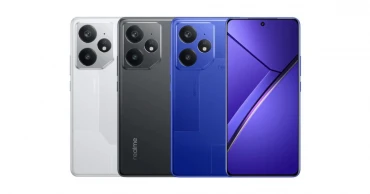
realme Neo7 Review: Is This Mid-Range Gaming Powerhouse Worth Buying?
Released on December 11, 2024, the realme Neo7 has quickly gained attention for its impressive features tailored to gamers and multitaskers alike. With a sleek design, powerful performance, and standout camera capabilities, it aims to dominate the mid-range market. In this review, we’ll break down the realme Neo7’s key specs, pros, cons, and pricing in Bangladesh to see if it lives up to the hype.
Key Features of realme Neo7
.
Design and Build Quality
The realme Neo7 boasts a robust design with dimensions of 162.6 mm by 76.4 mm by 8.6 mm and a weight of 213g. It is slightly heavier (191g) and thicker (8.7mm) than the realme GT Neo6. The inclusion of IP68/IP69 certification sets Neo7 one step ahead of the realme GT Neo6 and other competitors like the OnePlus Ace 5 and Honor GT, as these devices only offer IP65 resistance.
Its sleek design and sturdy Crystal Armor glass on the front make it more premium and durable. However, its heft may not appeal to users preferring lightweight devices.
Read more: Honor Magic7 Pro Review: A Flagship Killer or Just Another Premium Phone?
Display Quality
The realme Neo7 features a 6.78-inch LTPO AMOLED display with a resolution of 1264 by 2780 pixels (~450 PPI). The screen delivers vibrant colors and deep contrasts, supported by a peak brightness of 6000 nits, which is superior to the Honor GT’s 4000 nits and OnePlus Ace 5’s 4500 nits but comparable to the realme GT Neo6.
Its 120 Hz refresh rate ensures fluid scrolling and gaming, matching the industry standard for premium mid-range devices. However, while the HDR support is excellent for media consumption, the Honor GT’s slightly smaller screen (6.7-inch) offers a more compact alternative for one-handed use.
Camera Performance
The realme Neo7 houses a dual rear camera setup featuring a 50 MP (f/1.9) primary sensor with OIS and an 8 MP (f/2.2) ultrawide lens. The main sensor excels in low-light photography and delivers well-balanced colors, outperforming the realme GT Neo6 in dynamic range but falling short of the triple-camera system on the OnePlus Ace 5, which includes a dedicated macro lens. Meanwhile, the Honor GT’s camera performance is comparable but lacks the advanced image processing algorithms of the Neo7.
Read more: OnePlus Pad 2 Review: Is It Worth Buying?
For selfies, the 16 MP (f/2.4) front camera provides decent quality but lags behind the 32 MP selfie camera of the GT Neo6, which captures more details.
The Neo7’s rear sensor supports a maximum of 4K video recording with stabilization, ensuring smooth footage, similar to its competitors.
However, the realme GT Neo6’s front camera can capture up to 4K footage which outwins Neo7, OnePlus Ace 5, and Honor GT featuring 1080p of utmost video recording capacity each.
Processor Performance
Under the hood, the Neo7 is powered by the MediaTek Dimensity 9300+ chipset, paired with an octa-core CPU and Immortalis-G720 MC12 GPU. This 4 nm architecture ensures blazing-fast performance, placing it on par with the Snapdragon 8 Gen 3 found in the OnePlus Ace 5 and Honor GT.
Read more: Xiaomi Redmi Turbo 4 Review: Is It a Value-for-money Midranger?
Compared to the realme GT Neo6’s Snapdragon 8s Gen 3, the Neo7 delivers marginally better thermal efficiency, making it a better choice for extended heavy usage. Benchmark tests show the Neo7 excelling in multitasking and intensive applications, with its chipset providing a significant upgrade over its predecessor, the GT Neo6.
Gaming Performance
Gaming enthusiasts will appreciate the realme Neo7’s HyperBoost gaming engine, which optimizes frame rates and reduces latency for a smoother experience. Popular games like Genshin Impact and PUBG Mobile run at high settings without noticeable frame drops. Thermal management is efficient, keeping the device cool during extended sessions, which is a slight improvement over the GT Neo6.
While the OnePlus Ace 5 and Honor GT offer comparable gaming experiences, the Neo7’s larger battery gives it an edge in terms of playtime. Its immersive display and stereo speakers further enhance the gaming experience.
Read more: Best Air Purifiers in Bangladesh: Price Guide, Top Models, and Buying Tips
Battery Life
The realme Neo7 features a massive 7000 mAh battery, a standout among its peers. This capacity allows for more than a day of heavy usage, even with demanding applications.
In contrast, the GT Neo6 has a 5500 mAh battery, and the Honor GT offers 5300 mAh. While the OnePlus Ace 5 comes close with a 6415 mAh battery, it still falls short of the Neo7’s endurance.
Charging of Neo7 is handled by an 80W wired solution, which can fully charge the device in just over an hour. Although the GT Neo6 offers faster 120W charging, the Neo7’s larger battery capacity compensates by requiring less frequent charging.
The absence of wireless and reverse wired charging in this price range can be a deal breaker for the realme Neo7.
Read more: Top Smartphones Launching in January 2025: What to Expect
Software and User Interface
Out of the box, the Neo7 runs Android 15 with realme UI 6.0, offering a smooth and user-friendly experience. The updated interface includes enhanced customization options, improved widgets, and better multitasking features. Compared to the realme GT Neo6’s Android 14-based UI 5.0, the Neo7 provides a more polished software experience.
The OnePlus Ace 5 and Honor GT run Android 15 with ColorOS 15 and MagicOS 9, respectively. While these UIs offer similar features, realme UI 6.0 stands out with its efficient resource management and minimal bloatware. However, the lack of long-term software updates compared to OnePlus devices may concern some users.
Storage Options
The Neo7 offers extensive storage configurations, including 256GB and 512GB options with 12GB or 16GB of RAM, as well as a premium 1TB variant. The use of UFS 4.0 technology ensures faster read and write speeds, ideal for data-intensive tasks.
However, none of these models support expandable storage, which might be a downside for users who need additional space.
Read more: Best Projectors to Create Home Theaters in Bangladesh in 2025
The GT Neo6, OnePlus Ace 5, and Honor GT offer similar storage configurations.
Pros and Cons of realme Neo7
.
Pros
- IP68/IP69 dust and water-resistant.- LTPO AMOLED display with 120Hz refresh rate and 6000 nits brightness.- Powered by the Dimensity 9300+ chipset, great for gaming and multitasking.- 12/16GB RAM and up to 1TB UFS 4.0 storage.- Massive 7000 mAh battery with 80W fast charging.- Crystal Armor glass for enhanced durability.- 5G, NFC, and infrared port support.- Dual rear camera (50MP) and 16MP selfie camera.- Supports 4K video recording.- Runs Android 15 with realme UI 6.0.- Stereo speakers and under-display fingerprint scanner.
Read more: Vivo iQOO Z9 Turbo Plus Review: A Game-Changer Among Mid-Range Gaming Smartphones
Cons
- No 3.5mm audio jack.- Lacks expandable memory (no MicroSD card slot).- No reverse charging support.- No wireless charging support.- Selfie camera limited to 1080p video recording.- Missing optical zoom or advanced camera features.- FM radio is not supported.- Gyro-EIS for video stabilization is unavailable.
Price of realme Neo7 in Bangladesh
The realme Neo7 is priced at BDT 45,000 in Bangladesh, and its competitive pricing makes it an appealing option in the mid-range segment.
Takeaways
The Neo7 is perfect for gamers, multitaskers, and users seeking a durable, high-performance device with excellent battery life. However, it may disappoint those needing expandable storage, advanced camera features, a 3.5mm audio jack, and reverse or wireless charging supports. However, if these are no issues, the realme Neo7 is a competent gaming smartphone in the mid-range segment.
Read more: ZTE Nubia Red Magic 10 Pro Review: Is It a Value-for-money Gaming Smartphone?
1 year ago

iQOO Neo7 SE Review: Competent Mid-range Gaming Phone
vivo’s subsidiary company iQOO has had a reputation for producing value-for-money phones since 2019. In this wave, iQOO launched another gaming-centric device Neo7 SE. Recently, the phone had its global launch which brought it in the spotlight. Let’s have a look at where it can be the right gaming phone for you.
Key Specs of Vivo iQOO Neo7 SE
Design and Build Quality
There’s an obvious caveat of having a plastic build all around on a budget-friendly to lower mid-range phone. The Neo7 SE is also no different. The plastic frame and back have a mix of matte and glossy frosted finish which gives it a glass-like look.
The Neo7 SE comes in at around 164.8 mm by 76.9 mm by 8.6 mm with 193 g weight. It’s a relatively lightweight build with a considerably large footprint. The camera housing on the back is reminiscent of the Neo7 with the iconic squared cut. The front features a near-uniform punch-hole display with a slight bottom chin.
Read more: ZTE Nubia Red Magic 9 Pro Plus Review with Pros and Cons
Ports and buttons are identical to the Neo6 SE. Users will be missing out on the 3.5 mm headphone jack and the extendable card storage on the Neo7 SE.
Overall the design and the build quality are okay for its price. It matches the expectation for a sub 35K BDT smartphone.
The Display
The display on the Neo7 SE is a 6.78-inch AMOLED panel with a 12 Hz refresh rate, HDR10+ support, and 1300 nits of peak brightness. The panel has 1080 by 2400 pixels with a 20:9 aspect ratio and 388 PPI. The slight bottom chin accounts for an 87.6% screen-to-body ratio.
The Neo6 SE also had a similar spec albeit with a higher pixel density thanks to the smaller screen size. Competitions in this price point like the Redmi K60E bring higher resolution with nearly the same features.
Read more: Asus ROG Phone 8 Review: 2024’s First Flagship Gaming Device
But as for the performance, the Neo7 SE holds its ground. The sharp brightness provides great contrast both indoors and outdoors. The viewing angles were great and the high refresh rate worked smoothly in day-to-day use. For the price, it’s hard to beat what Neo7 SE brings to the table.
2 years ago

Xiaomi Redmi K60 Ultra Review: A Gamer's Delight
Since Redmi became the independent sub-brand of Xiaomi, the concept of value for money has become an integral part of its identity. Xiaomi’s Redmi flagship phones have consistently delivered exceptional performance. From the K20 series to the K60 lineup, each of these phones provides top-notch specifications at an astonishingly competitive price point. This trend persists with the introduction of the Redmi K60 Ultra. While K60 Ultra was released on August 15, 2023, it was available in Bangladesh on August 25. Let’s see the details of this phone.
Key Features of Xiaomi Redmi K60 Ultra
Design
In the K60 Ultra mobile phone, Redmi has made a significant change by removing the plastic brackets on all four sides of the screen. The immediate result of this change is a noticeably enhanced screen-to-body ratio.
At the bottom of the phone, the adoption of the COP packaging process and the ultra-slim border create a visual effect where the bottom appears almost as wide as the left and right sides of the screen. weighing 204g, its dimensions are 162.2 mm by 75.7 mm by 8.5 mm.
Read more: Apple iPhone 15 Plus Review: What are the major upgrades?
The K60 Ultra phone has three cameras on the back. The main camera is really good because it’s the same kind as the one in the Mi 13. There are also two other cameras for wide-angle and close-up shots. On the top right corner of the camera, there’s a special light that helps take better pictures in different lighting. Right next to it, there’s a sensor that helps the camera work better, too.
On the top of the phone, there’s a really good speaker all by itself. To the right of it, there are sensors for a remote control and two microphones that help block out noise.
At the bottom of the phone, there’s another speaker that works together with the one on the top to give you stereo sound. To the right of it, there’s a port where you can plug in your charger and headphones, a microphone, and a slot for your SIM card.
Read more: Apple iPhone 15 Pro Review: Worth the Price?
Display
The K60 Ultra boasts a 6.67-inch OLED display with a typical brightness reaching up to 2600 nits. What sets it apart is its impressive peak brightness of 2600 nits, surpassing even the most premium flagship devices like the iPhone 14 Pro Max and Galaxy S23 Ultra.
Even more significant is the screen’s 1.5K resolution at 2712 x 1220 pixels. Because of this high resolution, you can enjoy an exceptionally immersive, detailed, and vibrant viewing experience with the phone.
Furthermore, it doesn’t skimp on performance, sporting a 144Hz refresh rate that ensures a seamlessly smooth gaming experience.
Read more: Apple iPhone 15 Review: What's New?
Camera
The Redmi K60 Ultra has a top-notch camera setup. It features a 50 MP main camera with an IMX800 sensor. This sensor comes with Optical Image Stabilization (OIS), which helps you take sharp and clear photos without blurriness.
In addition to the 50 MP main camera, the phone also has an 8MP ultra-wide camera and a 2MP macro lens.
On the front, there’s a 20MP selfie camera that takes high-resolution selfies. Plus, there are various camera modes to help you get the best possible photos.
In daylight photos, the Redmi K60 Ultra captures colors that look true to life, and it gets the white balance just right. When paired with Xiaomi Imaging Brain 2.0, it gives the photos a distinctive atmosphere and mood. Even though it doesn’t have a telephoto lens, the picture quality remains excellent with high resolution.
Read more: realme 11x 5G Review: Budget 5G Phone with a Great Camera
3 years ago