harvest
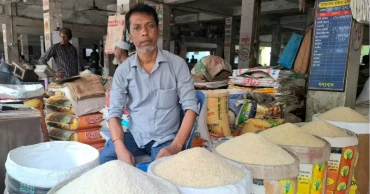
Harvest in full swing, yet rice prices rise in Naogaon
Rice prices have increased in both wholesale and retail markets in Naogaon, defying expectations during the peak Boro harvesting season when prices usually remain stable or decline.
Naogaon, one of Bangladesh’s major rice-producing districts, is currently witnessing full-scale harvesting of Boro paddy, with most farmers already bringing their produce home and local markets reporting an ample supply of paddy.
Despite the seasonal abundance, rice prices have risen by Tk 2 to Tk 3 per kg over the past week, causing concern among consumers.
At the municipal retail rice market, Swarna-5 rice is currently selling at Tk 48-49 per kg, up from Tk 45-46 a week ago. Old Katari rice is being sold at Tk 73-75 per kg, compared to Tk 70-72 previously, and Tk 70 per kg from Tk 68, depending on varieties.
Consumers alleged that the unusual price hike during the peak harvest season may be linked to market manipulation and called for stricter market monitoring and anti-hoarding drives at rice mills.
“I work for a private company, and most of my salary is spent on household expenses. Rice prices have increased by Tk 2 to Tk 3 per kg in just a week, putting additional pressure on families like ours,” said local consumer Iqbal Hossain.
Another buyer, Manik Hossain, questioned the logic behind the price increase during the harvest season and urged the administration to investigate whether any unscrupulous groups were hoarding rice to influence the market.
Retailer Uttam Sarkar, owner of Laxmi Rice Store in the municipal market, said prices of both fine Katari and coarse Swarna-5 rice have increased due to higher wholesale prices and limited supply of newly milled rice.
General Secretary of the Naogaon District Rice Mill Owners’ Group Farhad Hossain Chakdar said damage to some crops caused by natural calamities, rising paddy prices in local markets, and the government’s ongoing paddy and rice procurement drive have pushed up wholesale rice prices by Tk 2 to Tk 3 per kg.
Naogaon’s Controller of Food Md Farhadh Khandokar, however, said rice prices have not increased abnormally and the market remains stable at present.
He said Swarna-5 paddy is currently not yet entering markets in significant quantities, leading to a temporary shortage of paddy and a slight increase of Tk 1 to Tk 2 per kg in both wholesale and retail markets.
Farhadh said the suspension of the government’s Open Market Sale (OMS) programme, the halt in rice imports, and farmers selling coarse paddy to government food warehouses at Tk 1,440 per maund have also influenced market dynamics.
“Despite the slight increase, the market is currently in a balanced position and farmers are receiving fair prices for their produce,” he said, expressing optimism that prices will be normal once harvesting is completed and fresh paddy fully enters the market.
“Given the volume of paddy produced in Naogaon this year, there is no possibility of a major rise in rice prices. The current situation is only temporary,” the official added.
4 months ago
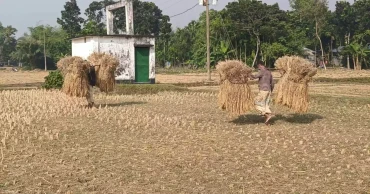
New harvest, no festival? Lalmonirhat's ‘Nabanna’ spirit slips into memory
Once a vibrant fixture of rural Bengali culture, the traditional ‘Nabanna Utsab’, the festival celebrating the first harvest, is quietly fading from many villages across Lalmonirhat, according to local residents.
With the end of the Bangla month of Hemanta and the touch of approaching winter, farmers across the district are busy harvesting Aman paddy.
Golden fields still stretch across the horizon, carrying the familiar scent of new grain, yet the festive celebration that once marked this season is rarely seen nowadays.
Villagers said that although the joy of harvesting remains, the communal spirit of sharing the first cooked rice from the new crop—a hallmark of the ‘Nabanna Utsab’ —has largely diminished.
“We heard from our parents how festive the day used to be. People would go to each other’s houses to eat the first rice. But now we hardly see such practices,”said Saiful Islam, an SSC student from Shialkhowa village in Kaliganj upazila.
Recalling the joy and celebrations of the past, 70-year-old farmer from Aditmari upazila, Shafique Mia said they were poorer 30 years ago, but the joy of the new harvest was greater.
“We used to make pitha, polao and share with neighbours after offering the first rice to the imams. Now income has increased, but happiness has decreased. The young generation doesn’t even know what ‘Nabanna’ really means,” he said.
Farmer Jomir Ali, drying paddy in the field, shared a similar memory. “We used to cook rice from the new crop and give the first plate to the imam of the mosque for blessings. We did doa and ate together. That tradition is almost gone now,” he said.
Read more: Continuous rain flattens half-ripe paddy in Lalmonirhat, farmers worried
Saleha Begum, another elderly villager, said people once respected tradition and valued togetherness.
10 months ago

Chapainawabganj farmers reap benefits of bountiful summer onion harvest
In Chapainawabganj district, the abundant harvest of summer onions and favorable market prices have delighted local farmers. The successful cultivation of the N-53 variety has made this season particularly profitable.
The Department of Agriculture Extension (DAE) played a pivotal role in this success. They provided farmers with essential resources, including 1 kg of N-53 onion seeds, 20 kg of fertilizers (MoP and DAP), pesticides, and Tk 2,800 in cash for labor costs per bigha of land.
Habiganj admin sets limits on onions purchase by retailers and consumers
This comprehensive support was part of a government initiative benefiting 4,500 farmers. Additionally, the DAE offered crucial training, which contributed to the bumper yield.
During a visit to Ghorapakhia in the Sadar upazila, the scene was one of industriousness, with farmers diligently harvesting their crops. Sayem Ali, a local farmer, shared his experience: "I've grown onions before, but the N-53 variety has brought an unprecedented yield. I'm expecting to harvest 108 maunds per bigha and, with favorable weather, even 120 maunds." He further noted the profitable market prices, with one maund selling for Tk 2,200. Despite investing Tk 30,000 of his own funds, the returns have been encouraging. Sayem intends to continue with N-53 cultivation, irrespective of government incentives.
Govt directs to intensify field-level monitoring on onion prices
2 years ago