Domestic Workers Rights Network
A decade on, domestic workers still fight alone against ‘dumb development’
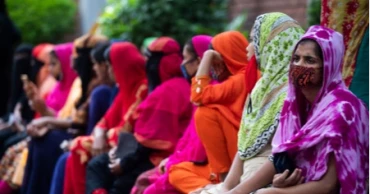
Behind the high walls of countless Dhaka households, an invisible labour force toils day and night -- unrecognised, unregulated and largely unprotected.
These are the domestic workers, mostly women, some barely teenagers, who cook, clean, care for children and perform a multitude of chores in private homes.
Their contributions, however, remain overlooked in the broader discourse of development and workers' rights.
As Bangladesh observed International Domestic Workers' Day on June 16, another year passes without any meaningful recognition or change in the status of domestic workers, despite persistent advocacy by rights activists.
A Growing but Vulnerable Workforce
Surveys indicate a marked rise in women’s participation in the workforce, with the female labour force participation rate rising from 23.9 per cent in 1999–2000 to 36.3 per cent in 2016–17.
In 2011, the Domestic Workers Rights Network (DWRN) estimated that approximately 2 million domestic workers were employed in Bangladesh, many of them young girls from impoverished families.
Globally, the scale is staggering. According to estimates, 10.5 million people are paid domestic workers worldwide—around one-quarter the population of Canada.
Yet in Bangladesh, these workers earn an average of just USD 15 per month, according to the Bangladesh Institute of Labour Studies (BILS).
Begging booms in Dhaka while demand for domestic help remains high
An Oxfam study in 2022 revealed that 93 per cent of women domestic workers reported facing harassment at work:
· 67 per cent reported emotional abuse
· 61 per cent faced verbal abuse
· 21 per cent experienced physical abuse
· No Contracts, No Protection
Despite their essential role in maintaining urban households, the vast majority of domestic workers operate outside any formal employment framework. Over 90 per cent work without written contracts, according to BILS.
“There are no fixed hours. I start at dawn and work until everyone sleeps,” said Rina, 16, who has been working in a Dhanmondi household since she was 12. “If I get sick or make a mistake, I get shouted at or beaten. There’s no one to complain to,” she said.
Abuse Behind Closed Doors
Recent incidents have brought renewed attention to the mistreatment of domestic workers. Human rights organisations continue to document cases of physical assault, verbal humiliation, and even sexual violence. Most of these cases go unreported due to fear of reprisal or loss of livelihood.
Farzana Akhter, a caseworker at the rights group Ain o Salish Kendra (ASK), said, “We receive regular complaints, especially from young girls who were brought to the city through informal channels. Most are from extremely poor families. Some were promised schooling or better opportunities, but end up trapped in exploitative situations.”
Recruitment Through Shadows
Many of these young workers are trafficked into cities through unregulated brokers—informal “recruitment agents” or even distant relatives. These middlemen operate in a legal vacuum, pocketing commissions while placing girls into unfamiliar and often unsafe households.
“It’s a shadow market,” admitted a former agent, speaking on condition of anonymity. “There’s no legal registration, no government monitoring. It’s just supply and demand. Some girls are passed around like property.”
Another domestic help in Dhaka falls to her death
In some corners of Dhaka, a few agencies have emerged offering trained domestic workers for higher pay, but these efforts remain limited in scale.
Policy in Paper Only
In 2015, the government introduced the Domestic Workers Protection and Welfare Policy (DWPWP), which outlined key protections including:
· Minimum wages
· Defined working hours
· Rest periods and holidays
· Safeguards against abuse
· Access to legal complaint mechanisms
The policy marked a milestone in acknowledging the sector, yet implementation has remained virtually nonexistent. There is still no legal obligation for employers to follow the policy, as domestic work remains outside the purview of the Labour Act 2006.
“A standalone policy isn't enough. Without legal binding and enforcement, nothing changes,” said Dr. Nazma Aktar, President of the Awaj Foundation. Rights groups continue to call for domestic work to be formally recognised under labour laws.
A Generation in Peril
Beyond legal and economic struggles, the unregulated domestic work sector has deeper consequences—especially for children. With limited access to education and support, thousands of girls are pushed into labour at a young age, perpetuating cycles of poverty.
Munni, now 14, dropped out of school after class three. “I wanted to be a teacher,” she said softly. “Now I look after other people’s children while mine is with my mother in the village.”
15-year-old domestic help's body recovered from in front of building where she worked; 2 in custody
Many children of domestic workers grow up with absent mothers, often in villages or slums, adding layers of emotional strain to the economic hardship.
As Bangladesh marches forward in its pursuit of development, the question remains: Whose development? Until domestic workers—who keep millions of households running—are brought into the fold of legal protection and societal respect, the promise of progress will remain painfully incomplete.
1 year ago

'Unveil true circumstances of Preeti's death': Domestic Workers Rights Network
The Domestic Workers Rights Network has called for a thorough investigation and legal intervention into "the murder of an indigenous teenage domestic worker" at the residence of The Daily Star's Executive Editor, Syed Ashfaqul Haque.
In a press release, the organization expressed concern over the death of 15-year-old Preeti Urang and urged the government and administration to unveil the true circumstances of the incident. They emphasize the need for appropriate action to prosecute those responsible to prevent such occurrences in future.
Read more: DSCC Mayor serves legal notice on The Daily Star seeking Tk 100 crore over satire article
"In recent years, there has been a concerning rise in torture, killings, and violations of human rights against domestic workers. These workers are entitled to just treatment and respect as human beings. The absence of enforcement for the 'Domestic Workers Protection and Welfare Policy, 2015' and their exclusion from labor laws contribute to a pattern of abuse, with perpetrators emboldened by a lack of consequences. Imposing exemplary punishment for such incidents could deter future acts of violence against domestic workers," it said.
Earlier on Feb 6, police recovered the body of a teenage domestic help from in front of a multi-storey building at Shahjahan Road in Dhaka’s Mohammadpur.A case was filed following a complaint lodged by Preeti’s father Lokesh Urang the next day.
Ashfaqul Haque and his wife Tania Khondoker were denied bail and sent to jail, where investigators interrogated them on February 8-9 at the jailgate.
Read more: 15-year-old domestic help's body recovered from in front of building where she worked; 2 in custody
2 years ago