Waterlogging
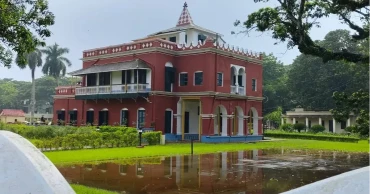
Waterlogging engulfs Shilaidaha Kuthibari, visitors express frustration
Heavy rainfall has left the historic Shilaidaha Kuthibari, the ancestral estate associated with Nobel laureate Rabindranath Tagore, waterlogged, raising concerns among people.
Located around 800 metres west of the Padma River in Kumarkhali upazila of Kushtia, Shilaidaha Kuthibari is closely associated with some of Tagore’s most celebrated literary works.
Tagore wrote numerous poems, songs, plays and short stories there. Many of the works included in his Nobel Prize-winning collection Gitanjali were also written at the estate.
The site attracts thousands of visitors from home and abroad every day.
However, several days of continuous heavy rain have submerged much of the compound, including the main entrance, open-air stage, murals, museum courtyard and flower and fruit gardens.
Local visitors and tourists expressed frustration over the situation and urged the authorities to drain the water quickly and restore the site’s natural beauty.
During a recent visit, the main gate and the open-air stage of the site were submerged by the rain water. The stage could no longer be used for poetry recitations or gatherings.
Water had also accumulated around the mural and inside the museum courtyard. Several trees in the gardens were bent under the water, while some appeared at risk of being uprooted.
Visitors were largely confined to paved walkways and were unable to fully enjoy the surroundings.
Habib Khan, who came from Pangsha in Rajbari district, said he had long dreamed of visiting Tagore’s home.
“I came from so far away only to find the entire area flooded. There is hardly a dry place even to take photographs. It is very disappointing,” he said.
Nahid Khan, who visited the site with a group of 40 students from Rajshahi, said they had planned to recite poems at the open-air stage and take photographs in the mango garden.
“But the areas are also underwater. The authorities should take immediate action,” he said.
Ishtiaq Ahmed, a private-sector employee who visited the site with his family from Kushtia town, said he felt embarrassed after bringing guests to the waterlogged premises.
“This is a historic heritage site. Such a condition is unacceptable. There should be a properly planned drainage system here,” he said.
Another visitor, Ashraful Islam, said Shilaidaha Kuthibari was not merely a tourist attraction but a national heritage site.
“The same situation occurs every year during the rainy season. When will there be a permanent solution?” he asked.
ATM Fariduzzaman, who came from Tangail, said the natural surroundings had inspired Tagore’s writings.
“It is painful to see water from nature now threatening the place that preserves his memory,” he said.
Kuthibari employees are also facing difficulties because of the waterlogging. A damp smell has developed inside and outside the museum, while several trees have been damaged by prolonged waterlogging.
Sakib Hossain, an employee of the Kuthibari, said many flowering and fruit-bearing trees in the gardens were at risk of dying.
He said the Padma River is around 800 metres east of the Kuthibari and that rainwater previously drained toward the river through a narrow canal beside the road.
“The canal has gradually become unusable because of encroachment and pollution. That is why the Kuthibari is facing this situation,” he said.
Al Amin, custodian of Shilaidaha Rabindra Kuthibari, said visitors were suffering because of the waterlogging.
“We do not have our own drainage system. Previously, water from the Kuthibari used to drain into a nearby bill. But this year, due to heavy rainfall, water from the bill is flowing into the Kuthibari instead,” he said.
He said the matter had already been brought to the attention of the local administration and urged immediate measures to drain the water.
“Otherwise, the infrastructure and valuable archaeological objects of the Kuthibari could be damaged,” he warned.
Assistant Commissioner (Land) of the upazila Navid Sarwar said the authorities would visit the site soon and take necessary measures to address the problem.
2 months ago

Heavy rains, waterlogging heighten dengue risk in Dhaka
Days of heavy rainfall and widespread waterlogging in the capital have heightened the risk of dengue, with stagnant water accumulating on roads, at construction sites and in residential areas, creating ideal breeding grounds for Aedes mosquitoes.
2 months ago
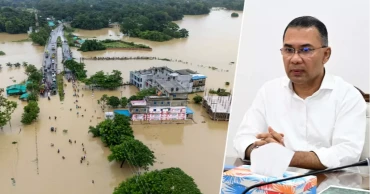
PM orders maximum preparedness to protect lives, property amid waterlogging
Prime Minister Tarique Rahman on Sunday directed all relevant agencies and field-level administration to remain on maximum alert and work in close coordination to protect lives and property affected by widespread waterlogging caused by heavy rainfall, and ensure prompt relief distribution and healthcare services.
The directive came during a virtual meeting from the Prime Minister's Office with divisional commissioners, deputy inspectors general (DIGs) of police, deputy commissioners (DCs), superintendents of police (SPs), civil surgeons and other field-level officials from all eight divisions.
During the meeting, officials briefed the Prime Minister on the latest waterlogging situation in their respective areas, including the extent of damage, the condition of shelter centres, rescue operations, relief distribution and healthcare services.
Downpour triggers waterlogging across Dhaka
The Prime Minister said protecting people's lives and property must remain the administration's highest priority during the ongoing emergency and stressed that there was no room for negligence.
He instructed the authorities to ensure the swift distribution of relief materials, including dry food, safe drinking water, baby food, essential medicines and healthcare services to affected people.
Tarique Rahman also emphasised maintaining safe conditions at shelters by ensuring adequate sanitation, uninterrupted electricity and communication facilities.
He gave special instructions to ensure healthcare services and security for women, children, the elderly, persons with disabilities and pregnant women.
PM asks authorities to complete Dhanmondi, Gulshan lake projects on time
To maintain law and order, the Prime Minister directed law enforcement agencies to remain on the highest alert to prevent any criminal activities, including theft, robbery, hoarding, misappropriation of relief goods and other offences taking advantage of the disaster situation.
He also stressed transparency and accountability in relief distribution, saying priority must be given to those genuinely affected.
The meeting also discussed disaster preparedness, rescue operations, coordination among different agencies, river water levels and regular monitoring of weather forecasts.
Officials joining from Chattogram informed the meeting that waterlogging in the port city started to ease gradually.
However, they said the situation is worsening in the Sylhet region following damage to an embankment on the Manu River, while fresh waterlogging was feared in Rangpur division.
Heavy rains inundate parts of Khulna; effectiveness of Tk 823cr drainage project questioned
Following the briefing, the Prime Minister instructed the authorities to take all possible precautionary measures, keep the necessary manpower and equipment ready and continue working in a coordinated manner to support affected communities.
2 months ago

PM urges MPs to raise public awareness to reduce waterlogging
Prime Minister Tarique Rahman on Wednesday called upon MPs to raise public awareness to help reduce waterlogging across the country, saying blocked drains, canals and other water channels worsen the problem particularly in urban areas.
“The problem in urban areas lies with big drains, lakes and canals. We use different things like plastic bottles and polythene. We are unintentionally blocking these canals and beels (by dumping these things into the water channels),” he said.
The Prime Minister made the remarks at Parliament after treasury bench lawmaker Sayeed Al Noman (Chattogram-10) on a point of order raised the issue of waterlogging and public suffering in Chattogram city.
Pointing at the lawmaker, Tarique Rahman said he has already spoken with the Mayor of Chattogram City Corporation in this regard and the mayor is working to address the issue.
Noting that it has been a severe waterlogging and it would take time to address it, he said, “For the suffering caused by this, I sincerely express my sorrow to the residents of Chattogram city. We are trying our best to bring people out of this problem as quickly as possible.”
Referring to media reports on inundation in Chattogram city, the Prime Minister said the problem is not confined to the port city alone but exists across the country including in Dhaka where blocked drains during rainfall often lead to serious waterlogging.
Describing the waterlogging as a long-standing problem, he recalled that former president Ziaur Rahman had once taken initiatives to address it through canal re-excavation across the country, which created water reservoir and thus control flood and remove waterlogging.
“We exactly need to return to that kind of work again,” he said, adding that the current government has already begun canal excavation programmes.
Although the government has undertaken efforts to clean drains and improve drainage systems in Dhaka city, the problem often resurfaces within 7-10 days as people continue to dump waste indiscriminately that blocked the drains again, he said.
Citing that the waterlogging problem is there in many constituencies including Dhaka-12, he said several lawmakers including Dhaka-12 MP Saiful Alam have raised similar concerns with him. “It is a huge problem. I believe the government will continue to take more initiatives,” he said.
He also stressed reducing the use of plastic bottles, polythene and similar materials and ensuring proper disposal after use.
"As members of parliament, I think we have a moral responsibility to make people aware of this issue," said the Prime Minister.
5 months ago
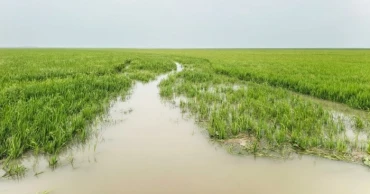
Upstream rains flood haors, endanger boro harvest
Thousands of hectares of boro paddy in Sunamganj’s haor areas are under threat as severe waterlogging triggered by unusually heavy upstream rainfall continues to inundate croplands across the district.
The situation has turned critical since the last week of March when excessive rainfall in upstream catchment areas caused rivers to swell and overflow, sending water rushing into the low-lying haors.
Farmers are now locked in a dispute over how to manage the excess water.
While those in the upper haors are pressing to cut embankments to ease waterlogging, downstream farmers are resisting the move, fearing their fields will be submerged.
According to official data, at least 1,189 hectares of boro land have already gone under water.
Sources at the Water Development Board (WDB) said 710 Project Implementation Committees (PICs) were formed this season across 53 haors to construct crop protection embankments.
Although earthwork has been completed turfing is still underway in many areas.
Rainfall data shows a sharp increase this year, with Sunamganj recording around 200 millimetres of rain in March compared to just 5 millimetres during the same period last year.
“The excessive rainwater from upstream has overflowed rivers and entered haors from multiple points,” said a senior WDB official.
An emergency meeting held by the district administration on March 31 was followed by field inspections to assess drainage requirements.
Khulna division reports 56 suspected measles cases in 24 hours
Authorities have so far cut embankments in at least 10 haors on a limited scale to release trapped water.
However, tensions among farmers persist.
“If farmers in the upper areas cut the dams, those downstream resist to protect their crops,” said Md Selim, a resident of Mohanpur village in Sunamganj Sadar upazila.
According to the Department of Agricultural Extension (DAE), boro has been cultivated on 223,511 hectares in more than 200 haors in the district this season.
“If fully harvested, the crop could yield around 1.4 million tonnes of rice, with an estimated market value of Tk 5,050 crore,” said DAE Deputy Director Md Omar Faruk.
“But farmers now fear significant losses due to waterlogging and the possibility of further heavy rainfall,” he said.
Waterlogging has already affected several haors, including Mini Pagnar, Halir, Kailani, Chhayar, Putiyar, Dakuar, Joalbhanga and Kanlar.
Local farmers complained that many natural drainage canals have been encroached upon or filled up over the years, worsening the situation.
Chittaranjan Talukder, vice-president of Haor Banchao Andolan, said early and intense rainfall has overwhelmed the natural water bodies.
“Rivers, canals and beels that usually act as reservoirs are already full and overflowing. Waterlogging is widespread, and farmers are struggling to cope,” he said. adding that proper dredging of rivers and wetlands could help mitigate the crisis.
WDB Executive Engineer Mamun Howlader said emergency drainage efforts are underway.
“Rainfall in both Cherrapunji and Sunamganj has been significantly higher this year. Some haors are already being drained,” he said.
Officials warned that the situation may worsen, with heavy rainfall forecast for April 6–7.
“As the season progresses timely intervention is crucial to prevent large-scale crop losses,” said Omar Faruk.
With uncertainty looming, haor farmers are now anxiously waiting for effective measures to save their standing crops.
6 months ago
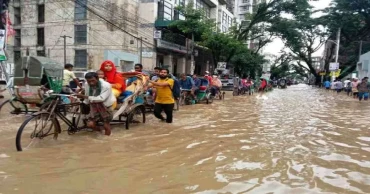
Sylhet waterlogging mitigation project delayed again; sees 44pc cost surge
A project to reduce chronic waterlogging, improve roads, and ensure safe drinking water in Sylhet City Corporation has been delayed again, increasing the cost by nearly 44 per cent.
Waterlogging remains a serious problem in Sylhet city, causing long-term hardship for residents despite repeated attempts to tackle the issue.
Millions of taka have been spent, but results have largely fallen short of expectations.
Officials at Sylhet City Corporation said several plans were drawn up after the devastating 2022 floods to protect residents, but implementation has been limited.
Read more: COMFLOT West project extended by 2 years; cost nearly doubles
The cost of the project titled Alleviation of Waterlogging, Supply of Safe Water and Infrastructure Development of Sylhet City Corporation (Second Revised) has increased mainly due to prolonged implementation delays and an expanded scope of work, according to official documents.
It was originally approved at Tk 1,228.02 crore and it has now stood at Tk 1,766.05 crore, reflecting an increase of about Tk 538 crore.
The Local Government Division is the sponsoring authority while Sylhet City Corporation (SCC) is implementing the project.
According to the Planning Commission documents, the bulk of the revised cost, Tk 1,520.56 crore will come from government funds, with the remaining Tk 245.49 crore to be met from SCC’s own resources.
The project was initially scheduled for implementation between January 2020 and December 2023.
Its timeline was later extended to December 2024 under the first revision, followed by a further extension to June 2025 without any cost escalation.
Under the second revision, the completion deadline has been pushed back again to June 2026, citing the need for additional and more durable works.
Officials said the revised scope reflects Sylhet’s vulnerability to heavy rainfall and upstream hill flows, which frequently cause severe waterlogging and damage to roads.
Read more: Bangladesh Bank to launch Tk 10,000 crore bond for housing, rail projects
To ensure long-term sustainability, the project now places greater emphasis on RCC roads, drains and retaining walls instead of conventional surfacing.
Major components of the project include construction of 269.18 kilometres of roads and 363.92 kilometres of drains, along with 6.73 kilometres of retaining walls.
The plan also covers 22.75 kilometres of road dividers with tree plantation, slope protection works using CC blocks and RCC retaining walls, and construction of boundary walls stretching 12.71 kilometres.
One public toilet and 1.37 kilometres of steel railings along large drains are also included to enhance public safety.
To improve urban services, the project include installation of 236.05 kilometres of water pipelines and 263.50 kilometres of electrical works, including an expanded number of streetlights to ensure safer night-time movement in newly extended city areas.
Besides, 74 units of essential machinery and vehicles will be procured to support regular excavation and maintenance of 13 major canals and streams flowing through the city.
The revision also accounts for increased road repairs including asphalt overlay on roads already showing cracks and potholes, and reconstruction of boundary walls demolished with homeowners’ consent during road widening.
Sylhet’s Gowainghat house fire caused by short circuit, police confirm no communal link
As of June 2025, the project’s cumulative expenditure stands at Tk 2,186.51 crore, with financial progress at 92.09 per cent and physical progress at 92.50 per cent, according to official records.
The Planning Commission, in its recommendation, said successful completion of the project would significantly enhance civic amenities in Sylhet City Corporation by improving roads, drainage, footpaths and the supply of safe drinking water, thereby boosting overall urban resilience in one of the country’s most rain-prone regions.
8 months ago

Kushtia farmers upset over canal blockage, fear permanent waterlogging
Allegations that a government canal is being blocked to construct a pipe culvert have raised serious concerns among farmers in Kumarkhali upazila of Kushtia, with at least 70 hectares of agricultural land at risk of permanent waterlogging.
Local residents of Nandlalpur Union recently submitted a written complaint to the Upazila Nirbahi Officer (UNO), accusing influential individuals of obstructing a key canal at Buzruk Bakhai Bottola intersection to install a narrow pipe culvert.
They fear the move will severely disrupt natural water flow.
According to the complaint and local sources, the nearly one-kilometre-long canal runs from Buzruk Bottola in Nandlalpur Union to Mirzapur Bazar in Shilaidaha Union.
Read more: Fertiliser crunch threatens Kushtia’s onion boom despite high prices
It plays a crucial role in draining water from the Buzruk Bakhai, Chandpur, and Bahalbariya beels into the nearby Gorai and Padma rivers. However, the canal has not been properly excavated or maintained for several years.
Local farmers alleged that portions of the canal have gradually been encroached upon, with multiple pipe culverts constructed to create makeshift roads.
This has led to prolonged waterlogging in the surrounding lowlands for at least six months each year. As a result, farmers in the area are able to cultivate only one crop—Boro rice—during the irrigation (IRRI) season.
The situation has worsened following a recent initiative to block a 22-foot-wide section of the canal at Buzruk Bakhai Bottola, replacing it with a three-foot-wide pipe culvert under a Union Parishad project reportedly costing around Tk 6 lakh.
Farmers fear the narrow culvert will further obstruct water flow, rendering vast tracts of farmland uncultivable throughout the year.
A visit to the site revealed a concrete bridge over the canal at Bottola intersection. The western side of the canal has been partially filled with sand, while the remaining portion has been narrowed to about three feet with concrete casting.
At least 27 pipes were observed stacked in the courtyard of a nearby house, suggesting preparations for the culvert installation.
Meanwhile, farmers and labourers were busy transplanting Boro seedlings in adjacent fields.
Read more: As haor waters recede, Sunnamganj farmers sow hope in every field
Suman Hossain, a local resident, said, “People associated with the chairman started blocking the canal to install pipes in the morning. Locals protested and forced the workers to leave. We later filed a written complaint with the UNO demanding that the work be stopped.”
Rashidul Sheikh, son of farmer Azizul Sheikh from Buzruk Bakhai village, stressed the canal’s importance. “The canal is the only route through which water from the beels flows to the Padma River. We get only one harvest a year. If the canal is blocked, there will be no crop at all,” he said, demanding the immediate cancellation of the project.
9 months ago

Dhaka drowning: Who can save it?
A heavy spell of rain early Monday once again exposed Dhaka’s unresolved waterlogging and inadequate drainage, paralysing the city for hours and reigniting debate over who can rescue the capital from its recurring misery.
Md Amin, 30, a shop employee, collapsed near Najira Bazar intersection in Bangshal around 9:30am while wading through waterlogged streets during the downpour.
He was rushed to Dhaka Medical College Hospital (DMCH) unconscious at about 9:45am, where doctors declared him dead, said Inspector Md Faruk, in charge of the DMCH police camp.
Across the city, commuters were seen trudging through ankle- to knee-deep water as they struggled to reach offices, schools and other destinations.
Roads and lanes lay submerged in Mouchak, Malibagh, Dhanmondi, Mohammadpur, Kalabagan, Karwan Bazar, Green Road, Monipuripara, New Market, Asad Gate, Jigatola and several other neighbourhoods.In some places, the water rose to knee level; in others, it reached the waist.
Keya Sarker, an employee of a private company, shared her ordeal, saying, “Usually, it takes me 20 to 25 minutes to reach my office. Today, it took more than an hour. Travelling by bus from Kakrail to Mouchak felt like crossing a river.”
Shop employee electrocuted on Dhaka’s waterlogged road
At Shantinagar intersection, she saw a van laden with goods trapped in water after its driver failed to notice a pothole hidden beneath the murky surface, worsening the traffic jam.
Social media reflected similar frustrations, often touched with humour.
Dhaka University student Tuli, from the Department of Mass Communication and Journalism, wrote on Facebook, “My class was at 8:30am. When I woke up, I felt like I was floating on an island, as the hall was filled with water. I somehow swam out, but when I reached New Market, it was impossible to cross even by swimming. The rickshaw pullers were refusing to go. Finally, one agreed – but demanded Tk 850, though it seemed he felt bad about saying no.”
Romana, another private employee, said, “The gridlocked traffic and flooded roads turned the morning rush into an ordeal. I had to wade through stinking water to reach my office.”
Meteorologist Hafizur Rahman reported that 107mm of rainfall had been recorded in the capital over 24 hours till noon on Monday, while Feni district registered the highest rainfall at 116mm.
A Met Office bulletin said the sky might remain overcast for the next six hours, with daytime temperatures likely to drop slightly.
Dhaka South City Corporation later issued a press release saying arrangements had been made to drain water quickly from inundated areas using temporary portable pumps.
Roots of a Recurring Crisis
Experts point to unplanned development as the prime cause of Dhaka’s chronic waterlogging. Illegal encroachment, landfill and diversions have choked stormwater drainage systems, obstructing the natural flow of water. As a result, the city is regularly exposed to irksome flooding, particularly during the monsoon.
1 year ago

DNCC upset over filling of water body near Airport Railway Station, fears waterlogging
Dhaka North City Corporation (DNCC) has expressed concern over the filling of a water reservoir near the Airport Railway Station fearing a severe waterlogging in a vast area including Uttara Sectors 3 and 4 and a large area of the Civil Aviation during the upcoming monsoon.
DNCC Administrator Mohammad Azaz expressed this concern while visiting the development works at the Ashkona Rail Gate adjacent to the Airport Railway Station and its surrounding areas on Monday.
“We are apprehending a major waterlogging in the entire (DNCC) ward-50. The spot where we are standing now was a water reservoir. But it was filled due to the construction works of the three big mega projects,” he said.
He said the railway authority and elevated expressway authority and all others filled the water reservoir.
5,500 volunteers to work with DNCC to curb mosquito menace: DNCC administrator
"If there is no coordination (among the DNCC and the authorities concerned) and there is a heavy rain, the entire airport road will go underwater. There will be waterlogging in Uttara Sectors 3 and 4 and this entire place of the civil aviation,” said Mohammad Azaz.
He said they came there to create water channels there for rain water so that the magnitude of waterlogging is not so high.
The DNCC administrator hoped that the project authorities will restore the water reservoir as there are many KPIs including airport there.
He said a water reservoir is filled during the implementation of a project, but later the project implementers forget that there was a water reservoir there and don’t restore it. Then they want make it a field or build a market or commercial establishments there, he said.
In this context, he said Bangladesh Railway, Dhaka Elevated Expressway and Dhaka North City Corporation will work together to resolve waterlogging in the Airport-Ashkona area during the upcoming monsoon season.
"As work on several mega projects is ongoing, we are afraid of severe waterlogging this year, so preparations are being made to drain the maximum water before the monsoon," he said.
The DNCC administrator said that reservoirs are essential to mitigate major urban floods caused by climate change.
Trade licences to be revoked if businesses occupy footpaths: DNCC Administrator
He requested all concerned not to fill the reservoirs during the development project implementation. “If they do, they should restore reservoirs on completion of the project works,” he added.
DNCC Chief Executive Officer Abu Sayeed Md Kamruzzaman, Chief Engineer Brig Gen Md Moin Uddin, among others, were present.
1 year ago

Newly appointed DNCC administrator sets out priorities in meeting with journalists
Dhaka North City Corporation (DNCC) Administrator Mohammad Ejaz has announced that environmental protection, public health preservation, and resolving the issue of waterlogging will be prioritized in the city corporation’s development initiatives under him.
The newly-installed administrator held a views-exchange meeting with journalists at the DNCC hall room on Monday (February 17).
Before the meeting, Mohammad Ejaz inaugurated a photo gallery titled “Immortal Memory of the July Uprising” at the entrance wall of Gulshan Nagar Bhaban’s ground floor. The gallery sequentially presents the events of the July Uprising through photographs.
Mohammad Ejaz said, “Ensuring a livable city for Dhaka means maintaining a healthy environment, ensuring clean air, saving rivers and canals, and creating open spaces for children to play, and for people to walk and relax. Roads, drainage, water, and waste management systems must function efficiently.”
“Initiatives have been taken to recover and excavate canals to alleviate waterlogging during the upcoming monsoon. Drainage system improvements will be coordinated with WASA and the Dhaka South City Corporation. DNCC’s development projects will prioritize democratic processes, involving local residents and stakeholders in decision-making. Special emphasis will be placed on ensuring fair civic services for marginalized communities,” he added.
DNCC drive in Mirpur removes battery-powered rickshaws from main roads
On the removal of illegal banners and posters, Ejaz stated, “Banners and posters will be removed from roads. PVC banners, which are extremely harmful to the environment, are strictly prohibited. The July Uprising graffiti on walls will be preserved, and fines will be imposed for placing posters or banners. DNCC will also remain free from political influence.”
He also noted, “I have visited Uttarkhan after taking charge. Initiatives have been taken to establish a park, a playground, and a community complex by demarcating and evicting illegal structures at three locations. The park will be built beside the Teromukh Bridge, while a playground and a community complex will be constructed in Amaya and Kanchkura.”
Administrator Ejaz announced the formation of three honorary advisory committees for DNCC operations: the Biodiversity Committee, the Diaspora Committee, and the General Committee.
The meeting was also attended by Chief Executive Officer of DNCC Abu Sayeed Md. Kamruzzaman, Secretary Mohammad Masud Alam Siddique, Chief Engineer Brig. Gen. Md. Moin Uddin, Chief Health Officer Brig. Gen. Imrul Kayes Chowdhury, Chief Waste Management Officer Commodore ABM Shamsul Alam, and other officials.
1 year ago