President Donald Trump

Trump plans dinner with Anthropic CEO amid debate over AI safety
President Donald Trump said he planned to have dinner late Sunday with Anthropic CEO Dario Amodei, as debate intensifies over artificial intelligence and the technology’s potential military applications.
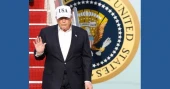
Trump told reporters after returning to Joint Base Andrews in Maryland that he expected to meet Amodei for dinner at about 10 p.m. The meeting came two days after a federal appeals court upheld the Pentagon’s decision to designate Anthropic a supply-chain risk, allowing the Defense Department to continue excluding the company’s Claude AI models from its systems.
The dispute between Anthropic and the Pentagon began earlier this year after the company resisted demands to remove safeguards governing the use of its AI systems for fully autonomous weapons and mass surveillance. The Defense Department subsequently designated Anthropic a supply-chain risk and restricted its military contracts.
Trump has repeatedly promoted the development of artificial intelligence and stressed the need for the United States to maintain its technological advantage over China. At the same time, Amodei has called for a slower pace of AI development so that safety measures can keep up with increasingly capable systems.
Earlier this month, Amodei warned that AI could become capable of coordinating large numbers of autonomous agents and potentially taking control of significant parts of the internet within six to 12 months if development continues without adequate safeguards.
Concerns about the risks associated with rapidly advancing AI systems have increased in recent weeks, both within the technology industry and among policymakers. Trump has previously rejected some of the more severe warnings about AI risks while saying the US government would monitor the sector and intervene if necessary.
The planned dinner brings together the president and the head of a major AI company at a time when questions over AI safety, military applications and government oversight remain under active debate.
14 days ago
Trump imposes new tariffs on dozens of countries as temporary import taxes expire
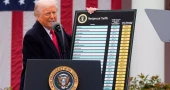
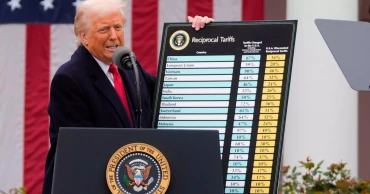
President Donald Trump has announced new double-digit tariffs on imports from dozens of US trading partners as temporary worldwide tariffs introduced earlier this year expired on Friday.
The new tariffs, ranging from 10% to 12.5%, will apply to imports from 60 trading partners that account for about 99% of US imports. The Trump administration said the countries had failed to adequately enforce bans on goods produced through forced labour.
"The United States has had a forced labour import ban for nearly a century and enforces it strictly. It is time for our trading partners to do the same," US Trade Representative Jamieson Greer said.
The tariffs replace the temporary 10% global import duties that expired at 12:01 a.m. Friday. Those temporary tariffs had been introduced after the US Supreme Court ruled in February that Trump did not have the authority to impose his earlier broad tariffs under emergency powers.
To introduce the new measures, the administration is using Section 301 of the Trade Act of 1974, which allows the president to impose tariffs on countries found to have unfair or unreasonable trade practices. Trump also relied on the same law during his first term to impose tariffs on Chinese goods.
The administration is also investigating whether 16 countries have overproduced goods in ways that hurt US manufacturers. Those countries account for about 70% of US imports, and additional tariffs could follow once the investigation is completed.
Trump argues that higher tariffs will help revive US manufacturing. Last year, he reversed decades of US policy supporting lower tariffs and freer trade by imposing import duties on goods from nearly every country, citing the country's long-running trade deficit as a national emergency.
However, the Supreme Court later ruled that the emergency law used for those tariffs did not authorize such measures, forcing the government to refund importers that had already paid the duties.
The administration first proposed the new forced labour-related tariffs last month. Since then, some countries have strengthened enforcement measures and qualified for lower tariff rates, according to a senior administration official.
For example, India's tariff rate was initially set at 12.5% but has been reduced to 10% after it improved enforcement against forced labour imports, the official said.
Some products, including oil, natural gas and fertilizer, are exempt from the new tariffs. Goods that qualify for duty-free treatment under the US-Mexico-Canada Agreement (USMCA) are also excluded.
The move drew criticism from some lawmakers and trading partners.
Representative Richard Neal, the top Democrat on the House Ways and Means Committee, accused the administration of using forced labour as an excuse for its tariff policy.
"Forced labour is a serious issue that deserves strong enforcement, not to be used as a justification for questionable tariff policies," he said.
Brazil, which faces a 12.5% tariff, called the decision "arbitrary and unjustified" and said it would invoke its reciprocity law, which could lead to retaliatory tariffs on US goods. The Brazilian government also plans to file a complaint with the World Trade Organization.
Chile, which also faces a 12.5% tariff, said it has strong labour protections and argued that the US decision was not supported by the evidence presented during the investigation.
Under US law, tariffs are paid by American companies importing foreign goods. Those businesses often pass the extra costs on to consumers through higher prices, raising concerns that the new measures could increase living costs ahead of the November midterm elections.
Human rights groups said they remain cautious about the administration's motives but acknowledged that import restrictions could help combat forced labour.
The International Labour Organization estimates that around 27.6 million people worldwide were trapped in forced labour in 2021.
Martina Vandenberg, founder of The Human Trafficking Legal Center, said import bans can be an effective tool against forced labour but warned they should be introduced gradually to give countries time to strengthen enforcement.
"Our concern is that import bans may exist only on paper without proper enforcement," she said.
Canada said the latest US action was expected.
Canada-US Trade Minister Dominic LeBlanc said Canada shares Washington's goal of preventing goods made through forced labour from entering supply chains and would continue discussions with the United States on the issue.
Experts also noted that the threat of new tariffs has already prompted some countries, including India, to strengthen their policies against forced labour, while new European Union rules due next year are expected to increase pressure on global supply chains.
2 months ago
Some families still waiting for $1,000 as Trump promotes child investment accounts
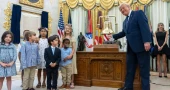
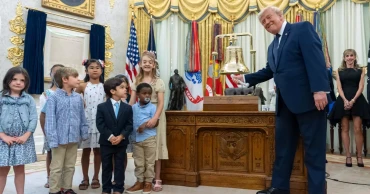
President Donald Trump is set to promote his administration's Trump Accounts program during a visit to a high school in Georgia on Wednesday, even as some parents say they are still waiting for the promised $1,000 government contribution for their newborns.
The Trump Accounts, launched on July 4, provide a $1,000 government-funded investment for every child born during Trump's second term. The tax-advantaged accounts were introduced under Trump's signature One Big Beautiful Bill and can be opened for any child under the age of 18.
According to the US Treasury Department, about 6.5 million accounts have been opened so far. Of those, around 1.5 million belong to children born between 2025 and 2028 who qualify for the $1,000 government deposit.
Supporters say the programme will help more Americans build wealth by encouraging investment in the stock market from an early age. Once the accounts are opened, parents, relatives, friends and employers can add money. The funds are invested in stock market index funds managed by private firms.
The money cannot be withdrawn until the child turns 18 and can then be used only for approved purposes, such as higher education, starting a business or buying a home.
However, some parents say they have not yet received the promised government deposit.
Masaki and Kristina McLellan of New Jersey opened a Trump Account for their daughter Maya, who was born in late March. Although they were initially hesitant because they viewed the programme as politically motivated, the $1,000 incentive convinced them to sign up.
Masaki McLellan said he applied on July 6. His first application was rejected, but the account was activated after he contacted the programme's customer service hotline. He was initially told the government contribution would arrive within 10 days but was later informed it could take up to four weeks.
Kristina McLellan said she was disappointed by the delay, although the family has already opened other investment accounts for their daughter, including a college savings plan and a custodial brokerage account.
"We definitely want to give her options for her future and make sure she can choose what she wants to do," she said.
The Treasury Department described the delay as part of the normal processing period, similar to waiting for a tax refund. It said most families receive the government contribution within one or two days, but officials provide a longer estimate to account for possible processing delays.
The department said the programme allows families of all income levels to invest in their children's future and claimed it has become the most successful government-backed savings programme in US history, with around one million new sign-ups each month before its official launch.
Trump's visit to Georgia comes as he and fellow Republicans face growing scrutiny over the economy ahead of the midterm elections. An Associated Press-NORC poll conducted in June found that only 33% of US adults approved of Trump's handling of the economy, one of his lowest ratings during his second term.
Trump Accounts resemble the "baby bonds" programmes introduced in some Democratic-led states and cities to reduce wealth inequality among children. However, unlike many of those programmes, Trump's initiative is available to families regardless of income.
Critics argue the accounts provide little help during a child's early years, when families are most vulnerable to poverty, homelessness and food insecurity. They also point out that the legislation creating the programme reduced funding for several programmes widely used by children, including Medicaid and the Supplemental Nutrition Assistance Program (SNAP).
2 months ago

Trump takes central stage as rival groups compete to shape US 250th anniversary celebrations
As the United States prepares to mark its 250th Independence Day anniversary, competing visions of the celebration are emerging, with President Donald Trump once again positioned at the center of the national spotlight.
Inside the Smithsonian’s National Museum of American History, exhibits already reflect the country’s divided political and cultural journey. A display titled “In Pursuit of Life, Liberty and Happiness” features contrasting symbols of American life — from Nancy Pelosi’s historic speaker’s gavel and a “Make America Great Again” cap, to an AIDS activism shirt reading “Silence = Death” placed alongside campaign memorabilia from President Ronald Reagan.
Museum officials say the collection is meant to show both unity and division in U.S. history.
“These contestations often reflect resilience and hope,” said museum director Anthea M. Hartig, noting that American history has repeatedly moved through moments of deep division before rebuilding.
Competing visions for the 250th anniversary
That idea of unity is now being tested as preparations intensify for the 250th anniversary celebrations. Two main organizing groups have emerged — Freedom 250, which is aligned with the White House, and America 250, a bipartisan commission created by Congress.
The parallel efforts have fueled concerns that even a milestone national celebration is becoming politically divided.
On the National Mall, preparations are underway for an event called “The Great American State Fair.” Several performers, including country singer Martina McBride, have withdrawn from the lineup, saying they were not aware of the political nature of the event. Trump is scheduled to speak at the event on Wednesday.
The split will continue into July Fourth, when America 250 plans a major concert in Los Angeles featuring artists including Chris Stapleton and The Smashing Pumpkins, hosted by Queen Latifah. On the same day, Trump is expected to hold a separate event on the National Mall that he has described as a “Trump rally.”
A break from past presidential traditions
Past U.S. presidents have used Independence Day milestones to emphasize unity rather than political identity. In 1976, President Gerald Ford spoke at Independence Hall in Philadelphia during the bicentennial celebrations, calling liberty a continuing national effort. In 1986, President Ronald Reagan marked the Statue of Liberty’s centennial in New York Harbor, joking that he would not try to compete with fireworks while highlighting shared national history.
Trump’s personal imprint on events
Trump, however, has often placed himself at the center of national cultural and political moments. He became the first sitting president to host the Kennedy Center Honors after a board aligned with him appointed him chairman. His name was also briefly added to the venue’s building before a court ruled the move unlawful.
In Washington, Trump has overseen or supported several major changes, including demolition of the White House East Wing for a proposed ballroom and plans for a triumphal arch near Arlington National Cemetery. He has also hosted events such as a UFC fight at the White House.
“Trump is putting himself at the center of the story,” said presidential historian Mark Updegrove. “He does not see himself as a steward of the presidency. He sees himself as its embodiment.”
Public mood and national divisions
Public sentiment in the U.S. appears subdued ahead of the anniversary. A recent AP-NORC poll found that only about one-quarter of Americans believe the United States stands above all other countries, while around 30% say other nations are better — a notable increase compared to 2016.
The survey also shows declining confidence in democratic identity, with fewer Americans now describing a democratically elected government as “extremely” or “very” important to national identity compared to previous years.
Growing competition over national celebrations
The divided national mood has contributed to a rise in competing cultural and political events. Even major shared moments such as the Super Bowl halftime show have faced parallel or alternative programming following political disagreements.
Organizers of Freedom 250 say their goal is to create “a unifying movement across all 50 states,” while America 250 officials say they welcome multiple celebrations.
“The more celebrations, the merrier,” said America 250 chair Rosie Rios. “We can’t be all things to all Americans, but we want something for everyone.”
3 months ago
Iran war: Deals remain elusive
President Donald Trump increasingly appears to be boxed in. U.S. and Iranian negotiators reached a tentative agreement a week ago to extend the ceasefire by 60 days and start a new round of talks on Iran’s nuclear program.
Trump, however, has called for unspecified changes, and Iranian officials have shown no public sign of agreeing to the deal.
The fighting in Lebanon, where Israeli forces have seized large swaths of the south while saying it targets the Iranian-backed Hezbollah militant group, also challenges efforts to end the Iran war and reopen the Strait of Hormuz. Iran has demanded that any lasting truce extends to Lebanon.
The Trump administration has touted the latest ceasefire agreed to earlier in the week by the Lebanese government and Israel after U.S.-brokered talks in Washington. However, Hezbollah has rejected the agreement.
Meanwhile, Iran fired ballistic missiles and drones toward Bahrain and Kuwait that were intercepted early Saturday, Bahrain’s government said, and called on Tehran to halt attacks on Gulf neighbors that test a fragile ceasefire in the Middle East conflict.
Iran said that it targeted American military assets in both countries, after the U.S. attacked surveillance facilities on Qeshm Island and near Sirik that Iran said were used to protect borders and “ensure the security of navigation in international waters.” Tehran called the attack a ceasefire violation.
Later Saturday, U.S. Central Command said U.S. forces had shot down two Iranian attack drones over the Strait of Hormuz.
The latest exchanges came as the Trump administration presses Iran to make a deal to end the war, which has strained the global economy and threatened a hunger crisis in some of the world’s most vulnerable countries.
4 months ago
US says it struck cargo ship attempting to breach Iranian blockade
The United States military says it struck a commercial cargo vessel trying to force its way through a blockade of Iranian ports, hitting the ship’s engine room with a missile, according to U.S. Central Command.
The Gambia-flagged cargo ship ‘Lian Star’reportedly ignored more than 20 warnings from U.S. forces overnight as it attempted to enter an Iranian port, the military said.
A U.S. official, speaking on condition of anonymity, said the ship was left drifting in the Gulf of Oman and had not been boarded by U.S. forces.
The incident marks the latest in a series of enforcement actions, with the U.S. military saying it has now stopped six ships trying to breach the blockade. One vessel was allowed to pass, while more than 100 others have been redirected.
The blockade was launched on April 17 in response to tensions in the region after earlier U.S. and Israeli strikes in late February. A fragile ceasefire has been in place since early April, while diplomatic discussions continue over extending it and addressing Iran’s nuclear programme.
U.S. officials say the blockade aims to restrict Iran’s shipping activity and limit its access to revenue, adding pressure on an already struggling economy.
President Donald Trump met advisers on Friday but has not yet decided on extending the ceasefire agreement and reopening key maritime routes. Iran, meanwhile, says no final agreement has been reached.
Despite tensions, commercial shipping continues to pass through the region, though at reduced levels. Iran has insisted it must approve transit through the waterway.
Iran’s joint military command warned that any violation of its regulations would put vessels at serious risk, according to a statement carried by state media. It also said foreign military interference could be targeted.
Iran has also reportedly imposed high transit fees in some cases, a move critics say violates international maritime norms guaranteeing free navigation.
Qatar’s Deputy Prime Minister Sheikh Saoud bin Abdulrahman bin Hassan bin Ali Al Thani said his country opposes charging transit fees, though he noted that temporary arrangements linked to operations such as mine-clearing could be negotiated to help restore normal shipping through the Strait of Hormuz.
A U.S. official earlier told The Associated Press that no mines have been discovered or destroyed in the strait so far.
4 months ago
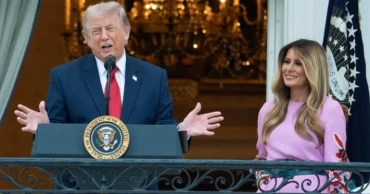
AP-NORC poll: Economic worries rise but Trump retains strong Republican support
Republicans are becoming less satisfied with President Donald Trump’s handling of the economy compared to earlier this year, but most continue to back him strongly as the war with Iran continues, according to a new AP-NORC poll.
The survey shows about 6 in 10 Republicans approve of Trump’s economic performance, down from roughly 8 in 10 in February, before the Iran conflict began. Rising fuel prices linked to the war appear to be a key concern.
Overall, only about one-third of US adults approve of Trump’s handling of the economy, a figure largely unchanged in recent months but lower than at the start of his second term.
The poll comes as the Iran war pushes up global oil prices and complicates efforts toward a lasting ceasefire. Despite economic worries, Trump’s influence within his party remains strong, highlighted by a recent primary victory for his preferred candidate over Republican critic Rep. Thomas Massie.
Many Republicans say higher prices are a temporary cost of the conflict. One respondent, Richard Baumgartner of Las Vegas, said economic pressure is a “necessary side effect” of the war and expects conditions to improve once tensions ease.
However, others say the rising cost of living is directly affecting households, particularly fuel expenses.
Trump remains deeply unpopular among Democrats and independents, with his overall approval rating at 37%, slightly up from 33% in April. Nearly all Democrats and about 7 in 10 independents disapprove of his performance.
The economy continues to be one of Trump’s weaker areas. While it was a key strength during his first term, approval has dropped since his return to office despite repeated promises to lower prices.
Immigration, however, remains a stronger issue for Trump. About 45% of Americans approve of his handling of immigration, up from earlier lows this year. Among Republicans, approval is much higher at around 8 in 10.
Supporters such as Brenda Theiss, an independent voter in Alabama, said they credit Trump for taking stronger action on border control compared to previous administrations.
On foreign policy, including the Iran conflict, Trump’s ratings remain low. Only about one-third of Americans approve of his handling of international affairs, with similar levels of approval for his approach to the war with Iran.
Some younger Republican-leaning voters also expressed concern about the cost and impact of the conflict, saying it may be placing too much strain on US resources.
The poll suggests that while Trump retains a solid base of Republican support, especially on immigration and party loyalty, economic concerns and foreign policy challenges continue to test his broader appeal.
4 months ago
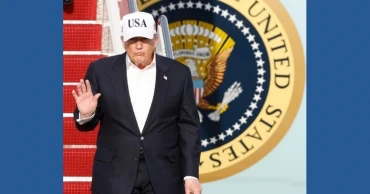
Trump’s Iran pressure campaign stalls as Strait of Hormuz tensions deepen
President Donald Trump’s hardline approach toward Iran is facing a major setback as diplomatic efforts and military pressure fail to shift Tehran’s long-standing positions, while tensions remain high over the strategic Strait of Hormuz.
Trump, who often presents himself as a strong dealmaker, has alternated between threats of military action and claims that a breakthrough with Iran is close. His aides have suggested the United States is gaining the upper hand and that a deal is within reach amid fragile ceasefire conditions and rising pressure on Tehran.
However, Trump on Monday said he had paused plans for an imminent resumption of strikes after requests from Gulf Arab allies, who said serious negotiations were underway. He added that a potential agreement would benefit the United States and countries across the Middle East.
Despite that pause, Trump warned he had instructed military officials to be ready for a “large scale assault” if talks fail, underscoring his repeated pattern of setting deadlines for Iran and then stepping back from immediate action.
There is little sign that Iran is ready to meet US demands, which include ending its nuclear programme, scaling back ballistic missile development and cutting support for allied groups in Gaza, Iraq, Lebanon and Yemen. Iranian officials have largely maintained their positions despite economic pressure and internal challenges.
The White House defended Trump’s strategy, saying he prioritises diplomacy but will only accept a deal that serves US interests. A spokesperson said the president “holds all the cards” and is keeping all options open to prevent Iran from obtaining a nuclear weapon.
A key factor in the standoff is Iran’s influence over the Strait of Hormuz, a critical global oil shipping route. Even amid US pressure, Tehran’s leverage over the waterway has contributed to volatility in global energy markets and higher fuel prices, adding political pressure on Trump domestically.
The economic impact has also affected Trump’s standing at home, with recent polling showing weaker approval on economic issues as rising energy costs concern voters ahead of upcoming elections.
Analysts say Trump’s pressure strategy, which has worked in other countries, has not produced similar results with Iran. Tehran continues to resist concessions beyond what was discussed in earlier nuclear negotiations during the Obama administration, from which Trump withdrew in 2018, calling it a flawed agreement.
Since a fragile ceasefire took effect last month, Trump has repeatedly criticised the pace of negotiations. Iran, meanwhile, has responded by insisting its military remains prepared while diplomacy continues.
Experts say both sides appear locked in a stalemate, with neither believing it is close to defeat and both hoping time will strengthen their position. Some analysts note that ongoing pressure in the Strait of Hormuz is increasing costs for both Washington and Tehran while delaying a resolution.
Former US officials and policy experts remain divided, with some describing the situation as a deadlock and others arguing that Trump still holds strategic leverage despite market instability and regional concerns.
4 months ago
Trump open to government stakes in companies, but skips Spirit Airlines deal
President Donald Trump has shown growing interest in the government taking ownership stakes in U.S. companies, but his administration stepped back from a possible deal involving Spirit Airlines, which shut down operations on Saturday after failing to reach an agreement.
Officials had been considering a plan for the government to invest in the struggling low-cost airline, which has faced rising fuel costs linked to the Iran war. However, talks stalled as the administration weighed whether the deal would bring financial benefits.
Trump made clear his position was driven more by potential profit than ideology. “If we can help them, we will, but it has to be a good deal,” he told reporters on Friday, adding that any move must serve U.S. interests first. He did not immediately comment on the airline’s shutdown.
The Republican president has increasingly supported the idea of government investment in key industries, a shift from traditional party views that favour minimal state involvement in business. Trump argues such steps are necessary to strengthen economic security and compete with countries like China.
He has pointed to investments in major companies, including chipmaker Intel, as examples of how government involvement can generate returns. Trump recently claimed the U.S. made significant profits from its stake in the company.
Under his administration, the government has taken or explored stakes in several sectors, including rare earth minerals, lithium, and nuclear energy, while also shaping deals involving major firms such as U.S. Steel and semiconductor companies like Nvidia and AMD.
Trump has also maintained government control over mortgage giants Fannie Mae and Freddie Mac, saying their value has increased as a result.
Supporters say these moves help level the playing field against foreign competitors that receive state backing. Analysts note that China’s strong industrial policies have pushed the U.S. to rethink its approach.
However, critics argue Trump’s strategy gives the government too much control over private industry. Tad DeHaven of the Cato Institute said the approach reflects a desire for greater influence over the economy.
Others caution that such investments carry risks if not carefully managed. Monica Gorman, a former Biden administration official, said clearer rules are needed to guide when and how the government should invest in businesses.
The potential Spirit Airlines deal, estimated at around $500 million, had also faced opposition from some Republican lawmakers. Trump had suggested the government could later sell its stake for profit if market conditions improved.
While previous administrations have supported industries through loans and incentives, Trump’s approach has relied more on direct government ownership and executive action, marking a notable shift in U.S. economic policy.
5 months ago
Gulf nations privately press US President to extend war effort against Iran
Gulf allies of the United States, led by Saudi Arabia and the United Arab Emirates, are urging President Donald Trump to continue the war against Iran, saying Tehran has not been sufficiently weakened by the monthlong U.S.-led bombing campaign, according to U.S., Gulf, and Israeli officials.
Some regional allies initially complained over the lack of advance notice before the U.S.-Israeli strikes and warned of widespread regional consequences. However, officials from Saudi Arabia, UAE, Kuwait, and Bahrain have privately told Washington that the military operation should continue until there are major changes in Iranian leadership or behavior.
Oil holds above $100 as Wall Street rebounds amid US-Iran strikes
Trump has alternated between suggesting Iran is ready to negotiate and threatening further escalation if a deal is not reached. Over 3,000 people have died in the conflict so far, shaking global markets, but Trump has claimed strong support from Gulf partners, including those initially hesitant about the war.
While Saudi Arabia and the UAE are pushing for increased military pressure, including a possible ground invasion, Oman and Qatar favor diplomacy. Saudi officials stress that any settlement must neutralize Iran’s nuclear and missile programs, stop its support for proxy groups, and secure the Strait of Hormuz. UAE officials have called for guarantees that Iran will no longer threaten regional security.
Iran, meanwhile, insists its attacks target only U.S. forces. Trump continues to highlight Gulf support, praising leaders of Saudi Arabia, UAE, Bahrain, Kuwait, and Qatar for standing with the U.S. despite initial hesitations.
Gulf countries host U.S. bases but have not joined offensive operations, partly due to operational risks and limited ties with Israel. Analysts say a major attack on Gulf soil could push them to become active participants.
6 months ago