one-stop crisis support
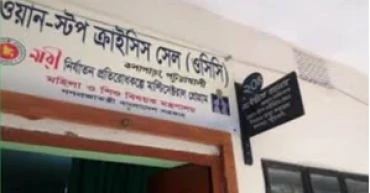
Govt moves to expand one-stop crisis support for victims amid rising violence
The government is set to expand its support system for victims of violence by establishing 95 one-stop crisis cells at district hospitals and upazila health complexes across the country, in a move aimed at improving access to integrated services for women and children.
Officials say the initiative comes at a time when violence against women and children continues to rise due to gaps in protection, justice and support mechanisms despite existing legal frameworks.
At present 67 one-stop crisis cells are operational—47 at district sadar hospitals and 20 at upazila health complexes—providing medical care, legal assistance, police support and psychosocial counselling under one roof, according to an official document.
According to official data, a total of 166,570 women and children have received services from these facilities till February, 2026.
Besides, the government has planned to establish 37 one-stop crisis centres (OCCs) at medical college hospitals in phases.
At present, 14 such centres are in operation, serving 80,395 victims with integrated support services.
Expanding trauma care and forensic support
A National Trauma Counselling Centre and four regional centres in Dhaka have so far provided counselling to 37,621 victims.
To improve investigation and prosecution, the government has set up a National Forensic Profiling Laboratory along with seven divisional DNA screening labs at Dhaka Medical College.
These facilities have processed 40,405 DNA samples as of February this year, helping strengthen evidence-based justice in violence cases.
Legal framework and emergency support
Bangladesh has enacted a series of laws to combat violence against women and children, including the Prevention of Violence against Women and Children Act, Domestic Violence Act, Child Marriage Restraint Act and Dowry Prohibition Act.
Bedides, women violence prevention cells and “safe homes” for temporary shelter are operating in six divisional cities, while the national toll-free helpline 109 provides round-the-clock assistance.
Officials said the helpline has received over 8.7 million calls till February 2026, reflecting both rising awareness and the scale of the problem.
A worsening reality
Despite these measures, experts warn that violence remains deeply entrenched in society.
A 2024 national survey by the Bangladesh Bureau of Statistics and UN agencies found that nearly three out of four women in Bangladesh have experienced some form of violence in their lifetime.
Intimate partner violence remains the most prevalent, affecting around 70 percent of women.
Child rights indicators are equally concerning.
Around 86 percent of children aged 1–14 face violent discipline at home, while nearly half of girls are married before turning 18, according to the survey.
Human rights groups have also reported a surge in sexual violence.
Analysts attribute this to weak law enforcement, social stigma and lack of awareness, which continue to discourage victims from coming forward.
Rights activists say that while the expansion of one-stop crisis services is a positive step, it must be accompanied by stronger enforcement, community engagement and institutional coordination.
They warn that without systemic reforms, violence against women and children will remain a persistent national challenge.
6 months ago