Antarctica
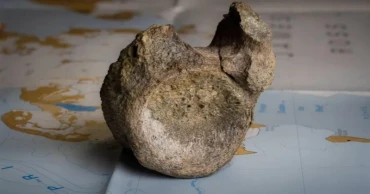
Forgotten fossil in drawer identified as Antarctica's first dinosaur bone
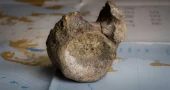
A fossil that sat unnoticed in a museum drawer for nearly 40 years has been identified as the first dinosaur bone ever discovered in Antarctica, giving scientists new clues about the continent's prehistoric past.
The fossil was found in 1985 on James Ross Island during a British Antarctic expedition. At the time, researchers were unsure what it was and labelled it simply as the vertebra of a "large reptile." It was later stored in the geology collection of the British Antarctic Survey (BAS) in Cambridge, where it remained largely forgotten.
The mystery was solved after Dr Mark Evans, collections manager at BAS, came across the fossil while reviewing thousands of specimens collected over decades of Antarctic expeditions.
Curious about the bone, Evans asked experts to examine it more closely.
Palaeontologist Professor Paul Barrett of the Natural History Museum confirmed that the fossil is a tail vertebra belonging to a Titanosaur, a group of giant, long-necked plant-eating dinosaurs that included some of the largest animals ever to walk the Earth.
Although the fossil appears ordinary, Barrett said its distinctive ball-and-socket joint structure made it easy to identify.
"As soon as I saw it, I knew it was a Titanosaur," he said, noting that the bone has features unique to this dinosaur group.
Because the fossil was collected in December 1985, scientists now believe it represents the first dinosaur fossil ever discovered in Antarctica.
More than 100 Titanosaur species have been identified worldwide. These dinosaurs walked on four legs, had long necks and tails, and some grew over 35 metres long and weighed around 60 tonnes.
Based on the size of the Antarctic tail bone, researchers estimate the dinosaur was about seven metres (23 feet) long, making it much smaller than its giant relatives.
Scientists believe it may have been either a young dinosaur or a smaller adult species.
The dinosaur lived about 82 million years ago during the Late Cretaceous Period, when Antarctica looked very different from today. Instead of being covered in ice, the continent had forests and a much warmer climate that supported a wide variety of plant and animal life.
Researchers say the discovery is important because dinosaur fossils are extremely rare in Antarctica, where thick ice covers much of the ancient rock.
The rediscovered fossil also highlights the scientific value of museum collections, showing that important discoveries can still be made from specimens collected decades ago.
Barrett said the finding helps scientists better understand the ecosystems that existed near the South Pole millions of years ago, proving that what is now one of the world's harshest environments was once home to thriving wildlife.
Source: BBC
3 months ago
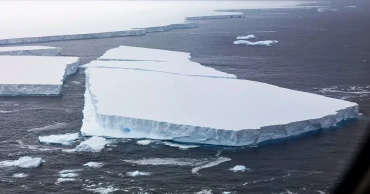
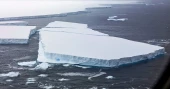
Historic iceberg A23a breaks apart, nears end after 40 years
One of the world’s oldest icebergs, known as A23a, is in its final weeks after an extraordinary 40-year journey that has fascinated scientists.
Once the largest iceberg on Earth, A23a covered more than twice the area of Greater London. Over the past year, it has melted, fractured, and broken apart, leaving only fragments that are now slowly disappearing in warmer waters far from Antarctica.
Scientists have closely monitored A23a to understand how Antarctic ice may respond to climate change. “It’s been an extraordinary journey, but it is on its last legs now,” said Prof. Mike Meredith of the British Antarctic Survey.
A23a broke off from the Filchner Ice Shelf in 1986, the same year as the Chernobyl disaster and Whitney Houston’s first Grammy. Initially about 4,000 sq km (1,540 sq miles), it stayed anchored in the Weddell Sea for over three decades before moving again in 2020. Today, it is considered the oldest iceberg tracked by satellites.
Despite its longevity, A23a began shrinking rapidly in 2025. By mid-year, it lost its title as the world’s largest iceberg. Mechanical forces in the South Atlantic, combined with warming waters, caused large chunks to break off, forming new icebergs named A23g, A23h, and A23i.
By late December, meltwater collected on its surface, accelerating its breakup. Scientists described this process as “hydrofracturing,” where water seeps into cracks, widening them and triggering calving events.
Although iceberg melting is natural, A23a’s disintegration provides clues about the stability of Antarctic ice shelves, which play a key role in controlling sea-level rise. Icebergs act as “travelling natural laboratories,” helping scientists predict how ice shelves may respond to warming conditions.
In its final stretch, A23a has traveled over 700 km (435 miles) northeast in the South Atlantic, exposed to surface waters nearing 10°C. Satellite images show further fragmentation, suggesting the iceberg may soon completely vanish. By March 5, its area had shrunk to roughly 180 sq km (70 sq miles).
Source: BBC
7 months ago

Icebreaker leaves Australia after 150 Antarctica trips
The giant orange icebreaker Aurora Australis left Australia for the final time on Saturday after more than 150 trips to Antarctica. Next stop: a shipyard in Dubai, where it will be refurbished and either leased or sold.
5 years ago
.jpg)
Antarctica is still free of COVID-19. Can it stay that way?
At this very moment a vast world exists that’s free of the coronavirus, where people can mingle without masks and watch the pandemic unfold from thousands of miles away.
6 years ago
First ever heatwave recorded in Antarctica
Even the world's coldest continent is not immune to rising global temperatures, with scientists recording the first ever heatwave event in Antarctica over the 2019-20 summer period.
6 years ago
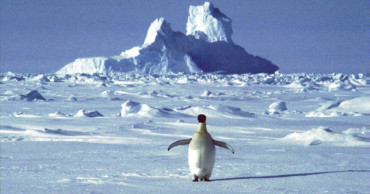
UN: Antarctic high temp records will take months to verify
Record high temperatures reportedly measured in Antarctica will take months to verify, the U.N. weather agency said Sunday.
6 years ago
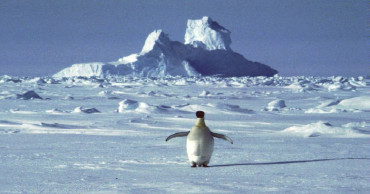
Antarctica appears to have broken a heat record
The temperature in northern Antarctica hit nearly 65 degrees (18.3 degrees Celsius), a likely heat record on the continent best known for snow, ice and penguins.
6 years ago