iPhones
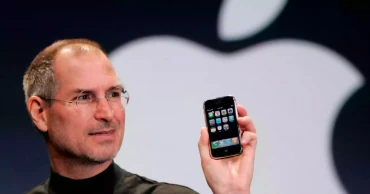
Americans remain deeply attached to iPhones despite concerns over overuse
Americans continue to have a complex love-hate relationship with the iPhone, a device that has become deeply embedded in daily life while also raising concerns about overdependence.
For many users, the iPhone feels almost essential, offering instant access to a wide range of services. People use it to take and share photos on social media, play games, watch videos, listen to music, send messages, check emails, browse the internet, follow news updates, get navigation directions and even make digital payments. Making or receiving phone calls, however, has become just one of many uses.
At the same time, critics say the device often encourages excessive screen time. Constant notifications and alerts can pull users into endless scrolling, reducing attention spans and making it harder for people to disconnect.
The debate reflects a broader paradox in American life as smartphones, including those powered by Apple’s iOS and Google’s Android systems, have become almost unavoidable in modern society.
The iPhone was first introduced in 2007 by Apple co-founder Steve Jobs, who predicted it would transform everyday life. Since then, it has reshaped communication, entertainment and work habits in ways few could have fully anticipated.
Some surveys even suggest that many people would choose to sleep beside their phones rather than their partners if forced to decide, highlighting how deeply integrated the devices have become in personal routines.
Now, observers are questioning how society can balance the benefits of smartphones with their potential downsides, including whether their impact should be compared to addictive products such as cigarettes, alcohol or junk food.
For now, however, the trend appears to continue toward greater digital dependence, as daily life becomes increasingly centered around glowing screens.
5 months ago

Apple to update AI news feature after BBC raises concerns
Apple has announced that it will update, rather than suspend, its new artificial intelligence (AI) feature that generated inaccurate news alerts on its latest iPhones.
In its first response to concerns, the company confirmed on Monday that it is working on a software update to "further clarify" when notifications are summaries generated by Apple’s AI system, the BBC reports.
What to know about Apple's $95 million settlement of the snooping Siri case
The BBC raised concerns last month after an AI-generated summary of its headline mistakenly informed readers that Luigi Mangione, the man accused of killing UnitedHealthcare CEO Brian Thompson, had shot himself.
Recently, Apple’s AI inaccurately summarised BBC app notifications, claiming that Luke Littler had won the PDC World Darts Championship hours before it started, and that Spanish tennis player Rafael Nadal had come out as gay.
This is the first time Apple has formally acknowledged the issues raised by the BBC, who pointed out that these errors appeared as though they originated from the BBC’s own app.
The BBC said that these AI summaries by Apple do not reflect – and in some cases completely contradict – the original BBC content.
Apple to pay $95 million to settle lawsuit accusing Siri of eavesdropping
"It is critical that Apple urgently addresses these issues as the accuracy of our news is vital for maintaining trust."
Apple said that the update would be available "in the coming weeks."
The company had previously explained that its notification summaries aim to allow users to "scan for key details" by combining and rewriting multiple recent app notifications into a single alert on the lock screen.
"Apple Intelligence features are in beta and we are continuously making improvements with the help of user feedback," the company said in a statement on Monday. It also emphasised that receiving the summaries is optional.
The feature, along with other AI tools, is only available on iPhone 16 models, iPhone 15 Pro and Pro Max handsets running iOS 18.1 and above, and some iPads and Macs.
RSF urges Apple to scrap AI feature after misleading headline incident
Reporters Without Borders, an organisation representing journalists, urged Apple to disable the feature in December, saying that the false headline about Mangione showed that "generative AI services are still too immature to produce reliable information for the public."
Apple is not the only company that has launched generative AI tools capable of creating text, images, and more. Google’s AI summary feature, which provides written summaries of search results, also faced criticism last year for delivering some erratic responses. A Google spokesperson said these were "isolated examples" and that the feature was generally working well.
1 year ago
.jpg)
Apple warns of security flaw for iPhones, iPads and Macs
Apple disclosed serious security vulnerabilities for iPhones, iPads and Macs that could potentially allow attackers to take complete control of these devices.
Apple released two securityreports about the issue on Wednesday, although they didn’t receive wide attention outside of tech publications.
Apple’s explanation of the vulnerability means a hacker could get “full admin access" to the device. That would allow intruders to impersonate the device's owner and subsequently run any software in their name, said Rachel Tobac, CEO of SocialProof Security.
Security experts have advised users to update affected devices — the iPhone6S and later models; several models of the iPad, including the 5th generation and later, all iPad Pro models and the iPad Air 2; and Mac computers running MacOS Monterey. The flaw also affects some iPod models.
Read: Apple iPhone 14 Pro: Know the Latest Leaks, Rumours
Apple did not say in the reports how, where or by whom the vulnerabilities were discovered. In all cases, it cited an anonymous researcher.
Commercial spyware companies such as Israel’s NSO Group are known for identifying and taking advantage of such flaws, exploiting them in malware that surreptitiously infects targets’ smartphones, siphons their contents and surveils the targets in real time.
NSO Group has been blacklisted by the U.S. Commerce Department. Its spyware is known to have been used in Europe, the Middle East, Africa and Latin America against journalists, dissidents and human rights activists.
Security researcher Will Strafach said he had seen no technical analysis of the vulnerabilities that Apple has just patched. The company has previously acknowledged similarly serious flaws and, in what Strafach estimated to be perhaps a dozen occasions, has noted that it was aware of reports that such security holes had being exploited.
4 years ago
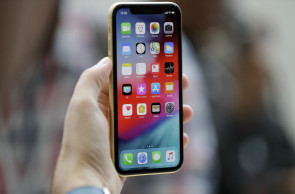
Operation indiscriminately infects iPhones with spyware
Dhaka, Aug 31 (AP/UNB) - Researchers say suspected nation-state hackers infected Apple iPhones with spyware over two years in what security experts on Friday called an alarming security failure for a company whose calling card is privacy.
7 years ago