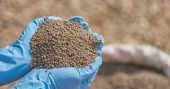
fertiliser

No shortage of fertiliser, action if artificial crisis created: Agriculture Minister
Agriculture and Fisheries and Livestock Minister Mohammed Aminur Rashid on Saturday said the country has sufficient fertiliser supplies and warned that strict action would be taken against anyone found creating an artificial shortage or charging farmers excessive prices.
He made the remarks at a meeting with government officials at the deputy comissioner’s office in Faridpur.
Faridpur Deputy Commissioner Mazharul Islam presided over the meeting.
The minister said the country imports 1.5 million tonnes more fertiliser than its total demand, leaving no scope for a shortage.
He said some fertiliser retailers are spreading rumours that fertiliser is unavailable in the market while supplying it when offered extra money.
The minister said the government is farmer-friendly and will do whatever is necessary for the development of farmers.“The government believes that the country will progress if farmers prosper.”
He said the quality of soil in the country has deteriorated for various reasons but Faridpur’s soil is still among the best in the country.
Such fertile soil is difficult to find in many other districts, creating significant opportunities to further develop agriculture in Faridpur, he added.
The minister said the government is working to stop imports of jute and onion seeds in the future.
He said another major government target in agriculture is to reduce imports of agricultural products and meet domestic demand through increased local production.
“Our main target is to ensure that we do not have to import any agricultural products in the future. We are trying to produce them ourselves. Everyone concerned will have to work hard and make efforts to achieve this,” he said.
He instructed dealers to play a responsible role in ensuring that fertiliser reaches farmers on time and at fair prices.
Director General of the Department of Agricultural Extension Mohammad Abdur Rahim, Faridpur, Additional Superintendent of Police Fatema Islam, Additional Deputy Commissioner Sohrab Hossain and Deputy Director of the Department of Agricultural Extension agriculturist Shahduzzaman, among others, attended the meeting.
1 month ago

Purchase body clears proposals for Tk 704.7 cr fertiliser, sulphur imports
The Cabinet Committee on Government Purchase on Wednesday approved procurement proposals worth more than Tk 704.7 crore including the import of urea fertiliser and sulphur for the country's agricultural and industrial needs.
The decisions were taken at a meeting of the committee atSecretariat with Finance Minister Amir Khosru Mahmud Chowdhury in the chair.
Import of 40,000 metric tonnes of urea fertiliser through the Direct Procurement Method (DPM) at a cost of Tk 348.56 crore was among the proposals.
The proposal submitted by the Ministry of Industries involves the purchase of urea from UAE-based Delta Star Trading FZ-LLC through its local agent Ibedita Trading, Dhaka.
The per-metric-tonne price has been fixed at US$707.01.
The committee also recommended approval of another fertiliser import proposal under a government-to-government arrangement.
Under the proposal, 25,000 metric tonnes of bulk granular urea will be imported from Saudi Arabia's SABIC Agri-Nutrients Company .
The Ministry of Industries estimated the procurement cost at Tk 185.13 crore, with the fertiliser to be supplied at a price of US$600.83 per metric tonne.
The committee approved another proposal for importing 15,000 metric tonnes of rock sulphur/bright yellow sulphur for TSP Complex Limited (TSPCL) at a cost of Tk 171.01 crore.
The proposal was also submitted by the Ministry of Industries, with Seychelles-based M/s Fabsco Construction Limited selected as the supplier.
According to the proposal, the sulphur may be sourced from a range of internationally recognised producers and refiners, including Formosa Petrochemical Corporation of Taiwan, Turkmengas of Turkmenistan, Mongstad Refinery of Norway, ADNOC of the UAE, Duqm Refinery of Oman, SOMO of Iraq and Reliance Industries of India, among others.
3 months ago

Govt approves procurement of 55,000 mt of fertiliser
The Advisers Council Committee on Government Purchase on Tuesday approved separate proposals for procurement of 55,000 metric tonnes of fertiliser .
The approval came at a meeting of the committee at the Cabinet Division conference room at the Bangladesh Secretariat with Finance Adviser Dr Salehuddin Ahmed in the chair.
The meeting approved a proposal from the Ministry of Agriculture to import 25,000 metric tonnes of Triple Super Phosphate (TSP) fertiliser through a state-level agreement between Groupe Chimique Tunisien (GCT) of Tunisia and the Bangladesh Agricultural Development Corporation (BADC).
The total cost of the import has been estimated at Tk 162.57 crore.
In another decision, the committee approved a proposal from the Ministry of Industries to import 30,000 metric tonnes of bagged granular urea fertiliser from Karnaphuli Fertilizer Company Limited (KAFCO) during the 2025–26 fiscal year. The procurement will cost Tk 158.65 crore, with per tonne price fixed at US$431, including bagging charges.
The day’s meeting also recommended approval of two proposals for the construction of fertiliser buffer godowns in Meherpur and Thakurgaon districts to strengthen storage and distribution facilities nationwide.
Under the project titled “Construction of 34 Buffer Godowns across the Country for Fertiliser Storage and Distribution (1st Revised)”, a godown with a storage capacity of 10,000 metric tonnes will be built in Meherpur at a cost of Tk 40.76 crore.
The work will be carried out by M/S SS Rahman International Ltd.
Another godown with a capacity of 20,000 metric tonnes will be constructed in Thakurgaon at a cost of Tk 59.19 crore, with M/S Mazid Sons Construction Ltd selected as the contractor.
8 months ago

Govt to procure 30,000 mt fertiliser, over 2.71 crore litres soybean oil
The government on Wednesday approved separate proposals to procure around 30,000 metric tonnes of urea fertiliser and over 2.71 crore litres of refined soybean oil to meet the country’s growing demand.
The approvals came from a meeting of the Advisers Council Committee on Government Purchase at the Cabinet Division Conference Room at the Secretariat with Finance Adviser Dr Salehuddin Ahmed in the chair.
Following a proposal from the Ministry of Commerce, the committee recommended procuring over 2.71 crore litres of refined soybean oil from the international market through the Direct Procurement Method (DPM) from NSRIC Green Supplies of Canada at a cost of around Tk 357 crore.
The move aims to ensure adequate domestic supply and stabilise the edible oil market ahead of the Holy Month of Ramadan. The per-litre cost of soybean oil has been fixed at Tk 131.49.
The meeting also approved a proposal from the Ministry of Industries to import 30,000 metric tonnes of bagged granular urea fertiliser from Karnaphuli Fertiliser Company Limited (KAFCO) under the 11th lot for the current fiscal year 2025–26 at an estimated cost of Tk 149.17 crore.
Under the consignment, the per-tonne cost of fertiliser will be USD 405.25.
In addition to these major import proposals, the committee positively considered several other agenda items, including the construction of fertiliser buffer warehouses in Faridpur and Gaibandha, procurement of high-speed boats for the Bangladesh Coast Guard, and multiple road safety and road connectivity projects across different regions of the country.
The meeting approved a procurement proposal for the construction of a fertiliser godown in Faridpur with a capacity of 10,000 metric tonnes at a cost of around Tk 48.45 crore under Package-2, Lot-3 of the project titled “Construction of 34 Buffer Warehouses at Different Locations Across the Country for Fertiliser Storage and Distribution (1st Revised)”.
Another proposal for constructing a fertiliser godown in Gaibandha, also with a 10,000-metric-tonne capacity, was approved at an estimated cost of Tk 47.35 crore under Package-4, Lot-4 of the same project.
Besides, a procurement proposal for the purchase of two large high-speed boats for the Bangladesh Coast Guard under the revenue budget involving around Tk 89.50 crore, was also approved at the meeting.
Moreover, three separate procurement proposals under the “Bangladesh Road Safety” programme were approved during the day’s meeting.
8 months ago
Fertiliser crunch threatens Kushtia’s onion boom despite high prices
Onion farmers in Kumarkhali Upazila are struggling with a fertiliser shortfall just as high market prices are driving record planting this season.
Last year, onions fetched prices ranging from Tk 35–40 per kilogram at the start of the season, climbing to Tk 120–135 per kilogram later in the year, locals said.
This fiscal year, they said, prices currently hover around Tk 85-90 per kilogram, while production costs stand at Tk 22–25 per kilogram, creating a lucrative margin that has prompted many farmers to expand cultivation.
Read more: Govt to procure 50,000 mt of non-basmati parboiled rice, 80,000 mt fertiliser
But farmers say a lack of essential fertilisers, including urea, TSP, MOP, and DAP, threatens the budding crop. Allegations of dealer collusion are rife, with sub-dealers and intermediaries reportedly charging Tk 5–10 more per kilogram than government-fixed rates.
Kumarkhali Upazila has a total cultivable area of 18,240 hectares. For the 2025–26 fiscal year, authorities set a target of 4,920 hectares for onion cultivation, with saplings already planted on 3,690 hectares.
Agriculture officials expect the area under cultivation to surpass the target, buoyed by the crop’s profitability.
Production costs, including land lease, seeds, fertilisers, and crop care, average around Tk 150,000 per hectare. Yet farmers on the ground say limited access to fertilisers could erode potential profits.
“Last year, onions sold for Tk 40 to Tk 135 per kilogram, which motivated many to switch to onion cultivation,” said Laltu Ali Sheikh of Panti Union. “But we cannot get sufficient fertilisers.”
Farmers claim dealers provide only 10–20 kilograms per bigha at official prices, forcing them to buy extra at higher rates. Sub-dealers are reportedly selling TSP at Tk 1,850–2,000 per sack, DAP at Tk 1,450–1,600, and MOP at Tk 1,150–1,200, significantly above official prices of Tk 1,350, Tk 1,050, and Tk 1,000, respectively.
Khondakar Abdul Gaffar, president of the Kushtia BCIC Fertiliser Dealers Association, acknowledged government supply shortfalls but denied deliberate overpricing by dealers. “Some sub-dealers and unscrupulous traders buy from various sources and sell at higher rates. Legal action is needed against them,” he said.
Local authorities maintain that fertiliser availability is stable.
Upazila Agriculture Officer Md Raisul Islam said, “Fertilisers are being sold at fair prices. Some unscrupulous traders sold at higher rates but were fined.”
Upazila Nirbahi Officer Farzana Akhter added that authorities are monitoring dealer syndicates and taking action to ensure fertilisers are sold at government-fixed rates.
Read more: Overuse of chemical fertilisers threatens soil health in northern Bangladesh
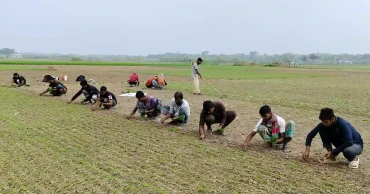
Meanwhile, fields in Yaduboyra, Panti, Bagulat, Nandalalpur, and Chapra unions are alive with activity. Groups of 20–30 people, including farmers, labourers, and students, are planting onion seedlings. Some students are earning Tk 500 per day to help cover labour shortages.
For Kushtia’s onion growers, the challenge is clear: lucrative returns are on offer, but without timely access to fertilisers, the season’s promise could be undercut, according to local market observers.
9 months ago

Govt to procure 50,000 mt of non-basmati parboiled rice, 80,000 mt fertiliser
The government has decided to procure 50,000 metric tonnes of non-basmati parboiled rice and 80,000 metric tonnes of fertiliser.
The decision was taken at a meeting of Advisers Council Committee on Government Purchase on Monday (December 15, 2025) at the Secretariat with Finance Adviser Dr Salehuddin Ahmed in the chair.
The Ministry of Food will procure 50,000 metric tonnes of rice at a cost of Tk 214.70 crore. India-based M/S Bagadiya Brothers Private Ltd has been selected as the supplier.
Officials said the rice import would help maintain adequate public food stocks and contribute to stabilising prices in the domestic market.
Govt happy with macroeconomic stability despite sectoral challenges: Salehuddin
The purchase committee also recommended approval of two proposals placed by the Ministry of Industries to import a total of 80,000 metric tonnes of fertiliser from Saudi Arabia.
Under the proposals, 40,000 metric tonnes of fertiliser will be imported as the 12th lot and another 40,000 metric tonnes as the 13th lot from SABIC Agri-Nutrients Company at a unit price of US$413.46 per metric tonne.
The committee further recommended approval of a proposal to construct a fertiliser buffer warehouse in Naogaon with a capacity of 25,000 metric tonnes at an estimated cost of Tk 54.70 crore to improve storage and distribution.
Another proposal to construct a fertiliser buffer warehouse in Bogura with a capacity of 20,000 metric tonnes at an estimated cost of Tk 59.28 crore was also recommended for approval.
Officials said the fertiliser imports and storage facilities would help ensure uninterrupted supply during peak farming seasons.
Safe, quality shrimp production must be prioritised: Adviser Farida
In addition, the meeting recommended approval of several major infrastructure procurement proposals aimed at improving roads, bridges and local infrastructure across the country.
Among them is a World Bank-supported project under the Local Government Engineering Department (LGED), with a contract value of Tk 363 crore.
The committee also cleared multiple road development proposals under the Road Transport and Highways Division, including four-lane upgrading of regional highways in Cumilla, Lakshmipur and Noakhali, as well as the construction of the Rabnabad Bridge over the Rabnabad River in Patuakhali.
Officials said the approved projects would enhance connectivity, improve logistics and support regional economic growth.
Read more: Govt to procure 50,000 mt non-Basmati parboiled rice, 10,000 mt lentil
9 months ago

Overuse of chemical fertilisers threatens soil health in northern Bangladesh
Soil fertility in eight districts of northern Bangladesh is steadily deteriorating, raising concerns about long-term agricultural productivity, according to a new research report by the Rangpur Divisional Soil Resource Development Institute (SRDI).
Researchers say that fertility loss, nutrient imbalance, and increasing soil acidity are spreading rapidly across the region, with organic matter, the foundation of healthy soil, falling to its lowest recorded levels in some areas.
“The decline is so severe that even heavy application of chemical fertilisers is failing to translate into higher productivity,” the report warns.
Researchers estimate that fertilisers worth hundreds of crores of taka are wasted annually, as crops are unable to absorb essential nutrients.
The SRDI conducted tests on soil samples from 38 upazilas across five districts in the Rangpur division. Md. Saifur Rahman, chief scientific officer of the institute, said healthy soil must contain adequate levels of nitrogen, phosphorus, potassium, sulfur, zinc, calcium, magnesium, boron, molybdenum, iron, manganese, copper, chlorine and organic matter to sustain crop production.
Read more: Enough fertilizer in stock to last till December: Agriculture Secretary
“Fertilisers should be applied based on soil health tests and nutrient requirements. This ensures satisfactory crop yields while preventing qualitative deterioration of the soil caused by arbitrary fertiliser use, which can reduce production,” he said.
The alarming soil condition is not confined to the north, he noted, but is also seen across other regions of Bangladesh.
Fertiliser Misuse
Md Sirajul Islam, additional director of the Rangpur Agricultural Extension Department, highlighted the widespread use of chemical fertilisers. “At least 20 types of fertilisers, both legal and illegal, are being used in agriculture. Farmers are most familiar with seven, including urea, molybdenum, magnesium, phosphorus, boron, potassium, and sulfur,” he said.
Farmers often rely on estimates rather than scientific measurement, resulting in imbalanced or inadequate application.
“Proper application is essential for soil health,” he said, warning that the issue affects not only the Rangpur and Rajshahi-Barendra regions but also districts across other river basins.
Experts pointed out that about 80% of farmers directly involved in agriculture are uneducated and apply fertilisers without guidance, exacerbating the decline in soil health.
Read more: Shahjalal Fertilizer Factory resumes production after five-month closure
Alarming Decline of Essential Nutrients
SRDI scientists say a healthy crop requires 16 essential nutrients, 13 of which must come from the soil. Latest tests, however, show nine of these nutrients are now at minimum or critical levels in many parts of northern Bangladesh.
Organic matter has dropped to 1–2% instead of the ideal 5%, soil pH has fallen to 4.4–5.5 rather than 6.0–7.5, nitrogen levels are 0.09–0.18% against a recommended 0.27–0.36%, and sulphur is far below the optimum 22–30 ppm.
Biological Systems under Threat
Excessive chemical use, coupled with reduced application of cow dung, compost, crop residues and other organic materials, has sharply reduced soil biodiversity. Beneficial organisms such as earthworms, which naturally mix soil layers and maintain fertility, have declined significantly.
“This breakdown of biological processes is damaging the soil’s long-term health,” said Saifur Rahman.
Although Bangladesh has 39 fixed soil-testing laboratories and several mobile labs, the majority of farmers never have their soil tested. Experts warn that without accessible soil testing and proper fertiliser use training, the country could face significant drops in food production in the coming years.
Read more: Hidden hands in the fields: Dealers blamed for artificial fertiliser shortage in north
Looming National Crisis
The SRDI report cautions that if current trends continue, Bangladesh may face reduced yields in staple crops, increased pest outbreaks, and a rising dependence on fertiliser imports. These challenges could make cultivation costlier and reduce farmers’ profit margins.
10 months ago
Hidden hands in the fields: Dealers blamed for artificial fertiliser shortage in north
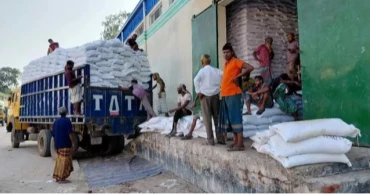
Farmers across five northern districts — Rangpur, Lalmonirhat, Kurigram, Gaibandha and Nilphamari — are facing mounting difficulties due to what they describe as an artificial crisis of non-urea fertilisers such as TSP, DAP and MOP.
Many have been forced to pay extra or delay cultivation, raising fears of reduced crop yields.
Although the Agriculture Department has dismissed the situation as artificial, farmers say fertilisers are simply unavailable through official dealers.
They allege that retailers are selling fertilisers at inflated prices, taking advantage of the high seasonal demand.
Officials insist that there is no genuine shortage, claiming that sufficient stock is available in the Bangladesh Agricultural Development Corporation (BADC) warehouses.
They blame a section of unscrupulous dealers for creating an artificial crisis to earn higher profits.
Farmers struggling to prepare land
With the potato and maize planting season approaching, many farmers have been unable to prepare their fields in time.
Abdar Hossain, a farmer from Karanpur village in Lalmonirhat, said, “When we go to dealers, they say fertiliser is out of stock. But retail shops have plenty—only they charge Tk 8–10 more per kilogramme.”
Govt approves purchase of 65,000 MT of fertilizer
Abu Taleb, a farmer from Baura in Patgram upazila, echoed similar concerns, “Land cannot be prepared without non-urea fertiliser. Fertiliser is needed most now, and demand will rise further in November. If we do not get it on time, we will suffer a big loss.”
In Rangpur’s Gangachara, farmer Sujan Mia said they are unable to get fertiliser even after offering to pay extra. “We are at a loss as to how to cultivate maize in the pasture,” he said.
Another farmer, Joynal Abedin of Kaunia, expressed frustration, saying, “Fertiliser is not available from dealers, but retailers sell it at a higher price. In which country do we live? Nothing seems to be in order.”
BADC Lalmonirhat warehouse assistant director Ekramul Haque said fertilisers are being sold through 144 authorised dealers in the district at government-fixed prices.
“The government sells TSP at Tk 25 per kg, DAP at Tk 19 and MOP at Tk 18 to dealers, who may add a Tk 2 profit per kg,” he explained.
Haque maintained that the warehouse holds sufficient stocks as per government allocation, though he acknowledged that the allocation is around 25 percent lower than total demand.
Similarly, the BADC additional director in Rangpur claimed there was no shortage in any district and blamed dishonest traders for creating panic in the market. “We are closely monitoring the market, and the problem will be resolved soon,” he added.
Sirajul Islam, additional director of the Department of Agricultural Extension in Rangpur, agreed that the crisis was being fuelled by a few profiteering traders. “There is sufficient fertiliser stock in BADC warehouses. Some traders are creating an artificial shortage in the hope of higher profits. Mobile courts are being conducted against such unscrupulous traders,” he said.
416 bags of fertilizer unauthorised for sale seized in Lalmonirhat
11 months ago
Finance Adviser denies ‘special advantage’ in fertiliser imports
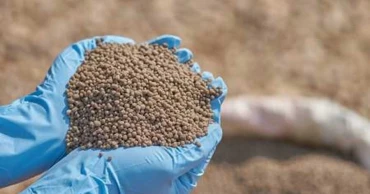
Finance Adviser Dr Salehuddin Ahmed on Tuesday dismissed allegations that a particular company got special advantage in fertiliser imports and said the matter falls under the purview of the ministries concerned.
“It is not correct to say that the Finance Ministry gave such approval. Fertiliser imports are mostly managed by the Bangladesh Agricultural Development Corporation (BADC) under the Agriculture Ministry along with the Industries Ministry. It is their responsibility,” he told reporters after chairing meetings of the Advisers Council Committee on Government Purchase and the Advisers Council Committee on Economic Affairs.
He said these responding to reporters query whether the government bypassed lower bidders in awarding fertiliser import contracts, leading to higher procurement costs.
Asked whether any inquiry was underway, he said, “I don’t know the details. If there are specific allegations those ministries concerned will look into it.”
He said if the lowest bidder was not selected it should be examined and such issues must be investigated.
The Agriculture Ministry on September 13 rejected recent media reports alleging irregularities in fertiliser procurement terming them ‘baseless, imaginary, motivated and untrue’.
According to the ministry, in line with government policy, non-urea fertilisers are imported both by private importers and under state-level contracts or G-to-G agreements.
After assuming office, the interim government decided to issue purchase orders only to companies offering the lowest prices which, it said, saved foreign currency and prevented abnormal profiteering.
Finance Adviser stresses efficient, client-friendly taxpayer services
Since no single country can simultaneously meet Bangladesh’s fertiliser demand imports are sourced from multiple countries to ensure uninterrupted supply.
The ministry said cost and freight (CFR) prices vary depending on distance and transportation costs, while international bulletins such as Argus FMB and FERTICON are used to verify rates.
Government data show that in the first phase of the 2025-26 fiscal year, 13 companies were awarded contracts to supply 30,000 tonnes of TSP, 2.55 lakh tonnes of DAP and 90,000 tonnes of MOP fertilisers.
In the second phase, six more companies received orders to supply 90,000 tonnes of TSP and 1.20 lakh tonnes of DAP at the same prices.
1 year ago
Govt okays procurement of edible oil, lentil, fertiliser
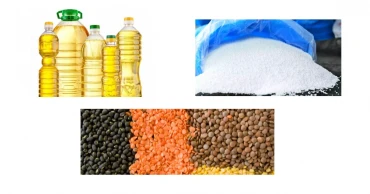
The government on Thursday approved proposals to procure essential commodities including 1.10 crore litres of edible oil, 10,000 metric tons of lentils, 1,00,000 metric tons of fertiliser and refined fuel oil to meet the country’s demand.
The approval came during a meeting of the Advisers Council Committee on Government Purchase (ACCGP) held at the Cabinet Division conference room at the Bangladesh Secretariat, with Finance Adviser Dr. Salehuddin Ahmed in the cahir.
State-run Trading Corporation of Bangladesh (TCB) will purchase 1.10 crore litres of soybean oil at Tk 189.14 crore from Super Oil Refinery Limited through the local Open Tender Method (OTM) for the current fiscal year with per litter oil at Tk 171.95.
Govt to procure soybean oil, lentil, LNG and fertiliser to meet domestic needs
In response to a proposal from the Ministry of Commerce, TCB will also procure 10,000 metric tons of lentils from Shabnam Vegetable Oil Industries Limited under OTM at an estimated cost of Tk 94.95 crore with per kg costing Tk 94.95.
The Bangladesh Chemical Industries Corporation (BCIC) will acquire 30,000 metric tons of bulk granular urea fertilizer from Qatar Energy Marketing under the 8th lot for the current fiscal year at approximately Tk 127.68 crore, with the cost per ton set at $354.67.
The Bangladesh Agricultural Development Corporation (BADC) under the Ministry of Agriculture will purchase 40,000 metric tons of DAP fertiliser from Saudi Arabia’s MA'ADEN, under a state-level agreement at Tk 296.16 crore.
Besides, BADC will procure 30,000 metric tons of TSP fertilizer from Morocco’s OCP NUTRICROPS SA at a cost of around Tk 158.40 crore.
The Energy and Mineral Resources Division will procure refined fuel oil for January to June 2025 through premium and reference price process from eight enterprises of seven countries at a cost of around Tk 11,479.04 crore.
The companies are PTTT of Thailand, OQT of Oman, ENOC of the United Arab Emirates, Petrochina of China, BSP of Indonesia, PTLCL of Malaysia, UNIPEC of China and IOCL of India.
The purchase is being made under the government-to-government (G2G) term agreement.
1 year ago