Democracy
Constructive criticism, peaceful protests beauty of democracy: President
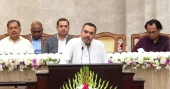
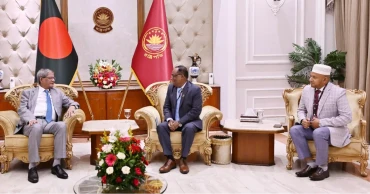
President Mirza Fakhrul Islam Alamgir on Wednesday said differences of opinion, constructive criticism and peaceful protests are the beauty of democracy.
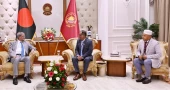
“Politics of revenge hinders the development of democracy,” he said when a delegation led by Hajee Mohammad Danesh Science and Technology University (HSTU) Vice-Chancellor Prof Dr M Enamullah met him at Bangabhaban.
During the meeting, the Vice-Chancellor briefed the President on the overall academic activities of the university.
He informed the President about a government allocation of Tk 600 crore for infrastructure development of the university.
The VC also sought the President’s cooperation in filling vacant teaching posts and resolving the accommodation crisis for female students among other issues.
The President assured the delegation of his cooperation in addressing the problems and urged the university authorities to maintain the quality of education while expanding higher education opportunities in the comparatively less-developed northern region of the country.
When the HSTU vice-chancellor invited the President to attend the university’s upcoming convocation he accepted the invitation .
The President’s Military Secretary, Secretary and Press Secretary, along with the university’s pro-vice-chancellor, treasurer and registrar, were present at the meeting.
5 days ago
Free, fair polls, space for opposition essential for democracy: President
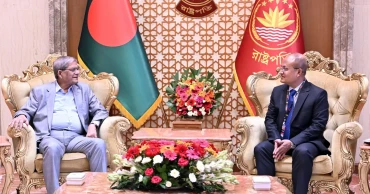
President Mirza Fakhrul Islam Alamgir on Sunday said democracy is a culture that is built gradually through regular practice, stressing the need for free, fair and impartial elections as well as adequate space for the opposition and political rivals to make democracy effective.
“Democracy is a culture that develops step by step through regular practice. Free, fair and impartial elections are essential for this,” he said.
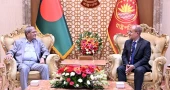
The President made the remarks when a delegation led by Dhaka University Vice-Chancellor Prof Dr ABM Obaidul Islam paid a courtesy call on him at Bangabhaban.
President's Press Secretary Md Sarwar Alam briefed reporters after the meeting.
The President also stressed the need to provide adequate space to the opposition and political rivals to make democracy effective.
“That is the beauty of democracy. Democracy must be allowed to function effectively in its own course,” he said.
Referring to Dhaka University, Mirza Fakhrul said the country's premier university is not only a leading centre of education but also a focal point of Bangladesh's politics, history, heritage and culture.
He called for further improving the quality of education at the university and taking it to the level of the world's leading universities.
During the meeting, the Vice-Chancellor congratulated Mirza Fakhrul on his election as President and briefed him on the university's overall academic activities.
VC Obaidul Islam invited the President, in his capacity as Chancellor of Dhaka University, to attend the university's upcoming 54th convocation.
The President accepted the invitation and assured the delegation that he would attend the convocation.
The President's Military Secretary, Secretary and Press Secretary, and Dhaka University's Pro-Vice-Chancellor and Treasurer were present at the meeting.
8 days ago
Protecting democracy now our biggest responsibility: President
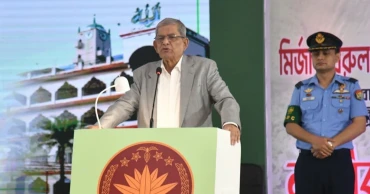
President Mirza Fakhrul Islam Alamgir on Tuesday said the democratic environment has returned to Bangladesh after years of struggle and sacrifice, and protecting democracy and giving it an institutional shape is now the biggest responsibility of all.
He said both ruling and opposition parties have a responsibility to sustain the democratic system and make Parliament effective.
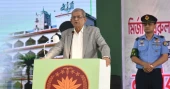
The President made the remarks while addressing a civic reception hosted by Sylhet City Corporation (SCC) in his honour in the afternoon. His wife Rahat Ara Begum was also present.
“We have achieved democracy. Protecting democracy is now our biggest task and responsibility,” he said.
Mirza Fakhrul said Parliament must be made effective and political differences should be resolved through dialogue.
He said people had made immense sacrifices for democracy in the past and the opportunity created through those sacrifices must not be wasted.
“Now our biggest challenge is to rebuild the country, strengthen democracy and build a healthy, beautiful and liveable Bangladesh for future generations,” the President said.
He called on people, irrespective of political affiliation, to work together in the national interest and make the most of the opportunity that has emerged after years of struggle.
Recalling his long-standing ties with Sylhet, Mirza Fakhrul said the region is one of his favourite places and that he visits whenever he gets the opportunity.
He expressed gratitude to the people of Sylhet for their warm hospitality.
The President highlighted Sylhet’s rich history, culture and heritage, saying many eminent personalities who have contributed to different fields of the country were born in the region.
He said Sylhet has made significant contributions to literature, music, culture, the War of Liberation and political movements. “The region’s distinct identity has also been enriched by the cultures of ethnic communities, tea estates and its large expatriate population.”
Referring to Sylhet’s tourism potential, Mirza Fakhrul said its hills, rivers, waterfalls, tea estates, forests and haors make it one of Bangladesh’s major tourist destinations.
Greater development of the tourism sector is possible if these resources are utilised through proper planning, he said.
Calling on Bangladeshi expatriates to invest in the country, the President said the Sylhet diaspora makes an important contribution not only to the regional economy but also to Bangladesh’s overall economy.
He said their investments should be integrated with tourism, agriculture, agro-processing, tea, fisheries, gas, information technology and small entrepreneurship.
Mirza Fakhrul also highlighted the potential for fish farming centred on Sylhet’s haors and water bodies and said there are opportunities to develop new industries by utilising the region’s natural resources.
He called for increased government, private-sector and expatriate investment in these areas.
On overseas employment, the President said the minister responsible for expatriates’ welfare and overseas employment is already working with different countries to expand labour markets. “Initiatives have also been taken to reopen some markets that had been closed,” he said, expressing hope that the sector will advance further.
Regarding Sylhet’s development, he said ministers, lawmakers and local representatives from the region are working on its problems and prospects, while efforts are underway to advance several major development projects.
Praising Bangladesh’s communal harmony, Mirza Fakhrul said people of different faiths and communities, including Hindus, Muslims, Buddhists and Christians, have long lived together in the country.
Commerce, Industries and Textiles and Jute Minister Khandakar Abdul Muktadir, Labour and Employment, and Expatriates’ Welfare and Overseas Employment Minister Ariful Haque Choudhury, Whip GK Gouse and Ambassador Mushfiqul Fazal Ansarey spoke as special guests at the reception, with SCC Administrator Abdul Quiyum Choudhury in the chair.
27 days ago
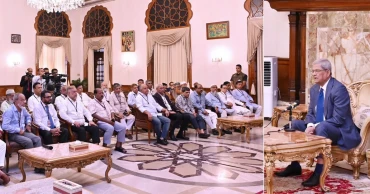
Strong local govt essential for stronger democracy: President
President Mirza Fakhrul Islam Alamgir on Sunday said democracy must be institutionalised and local government must be strengthened to make democracy stronger.
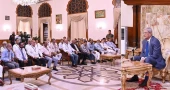
He made the remarks when administrators of 33 district councils met him at Bangabhaban in the afternoon, President's Press Secretary Md Sarwar Alam told UNB.
Describing local government the biggest strength of democracy, the President instructed the district council administrators to remain active and vigilant to break away from the corruption left behind by the fascist regime.
During the meeting, the district council administrators placed various demands before the President, including enhancement of their status.
Mirza Fakhrul assured them that steps will be taken promptly to resolve their problems, saying the present government is a government of the people.
He also said the government is working with due importance to strengthen the local government system as part of its efforts to decentralise power.
The President recalled with gratitude the active participation of the district council administrators in restoring democracy and in the long struggle against fascism.
He also gave the administrators necessary directives to accelerate development activities of the district councils, ensure citizen services at the local level and maintain administrative transparency.
29 days ago
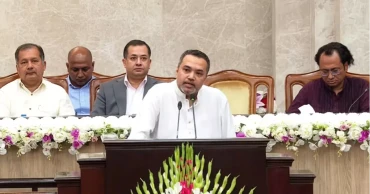
Govt’s first 180 days focused on democracy, good governance: PMO spokesperson
The BNP government has been on a “relentless journey” to consolidate democratic values, ensure good governance and fulfil its election pledges during its first 180 days in office, Prime Minister’s Office spokesperson Mahdi Amin said Monday.
Speaking at an exchange of views with journalists marking 180 days of the government, he highlighted a series of welfare, economic, administrative and institutional initiatives taken during this period.
Mahdi said the government’s journey, guided by the principle of “Bangladesh First,” has focused on accountability, transparency and people’s welfare, with Allah’s blessings, as it works to build a prosperous, self-reliant and welfare-oriented Bangladesh.
The exchange of views was held to mark 180 days of the government at the International Conference Centre “Shapla” at the Prime Minister’s Office in Tejgaon.
The Prime Minister’s Office spokesperson elaborately presented statistics on the government’s activities and achievements over the past 180 days as well as future plans.
He said the people’s power was ensured through the free, fair and neutral 13th parliamentary election held on February 12 after a long wait, and the representative government took the oath on February 17.
“The government’s 180-day journey is a direct reflection of accountability, transparency and responsibility to the people,” Mahdi said.
He said the government, formed through the continuation of the anti-discrimination movement and a 15-year-long struggle against fascism, received unprecedented public support.
Outlining various initiatives taken to implement the government’s election manifesto and welfare programmes, Mahdi said implementation began immediately after the election in line with the manifesto, the 19-point programme of Shaheed President Ziaur Rahman, Khaleda Zia’s Vision 2030, the BNP’s 27-point programme and the joint movement’s 31-point programme.
At its first cabinet meeting, the government waived loans including interest of up to Tk10,000 for 1.3 million farming families, he said.
The adviser said the government has also introduced the “Krishak Card” for farmers and “Family Card” for women, while initiatives for a “Probashi Card”, honorariums for imams, muezzins and religious leaders of other faiths, as well as nationwide canal excavation and tree plantation programmes, had been revived.
Referring to measures taken during Ramadan and Eid, Mahdi said the government has worked to prevent artificial syndicates and keep commodity prices under control while ensuring workers’ salaries and bonuses.
He also said Tk2,000 crore has recently been released to clear outstanding dues of retired MPO-listed teachers.
In the education sector, the adviser said a record number of ordinances have been converted into laws in parliament and a revised anti-terrorism ordinance has been used to ban a “fascist political organisation”.
The government also introduced new subjects into the education curriculum, provided free education for girls up to graduation, launched mid-day meals in primary schools and taken initiatives to provide free Wi-Fi facilities and opportunities for students to attend parliament, besides organising sports and innovation competitions, he said.
Mahdi said initiatives have also been taken to introduce 200 electric buses in Dhaka and an AI-based traffic management system.
Highlighting the government’s tough stance on law and order, the PMO spokesperson said steps have been taken to establish a police and administration free from political harassment.
He also said the United States has raised its travel advisory for Bangladesh to Level 2 and that visible progress has been made in several widely discussed cases, while legal procedures concerning the repatriation of former prime minister Sheikh Hasina are continuing.
1 month ago
Hard-earned democracy must be protected: Dulu
Whip M Ruhul Quddus Talukder Dulu on Saturday said democracy in the country has been restored through 17 years of struggle and sacrifice, urging all to remain vigilant in protecting it.
“Democracy achieved through blood must be safeguarded at any cost,” he said while addressing as the chief guest an Eid reunion and felicitation programme organised by the Natore District Journalists’ Association, Dhaka, at the Jatiya Press Club.
Dulu said the current government is committed to reforms in line with the July National Charter, adding that necessary changes can be implemented through parliamentary debate.
He also noted that the government remains active in ensuring people's voting rights and freedom of expression.
Highlighting development issues, the whip stressed the need for collective efforts to transform Natore into a prosperous district and to work for the welfare of the people.
Nature-3 MP Md Anwar - ul - Islam and Natore-4 MP Md Abdul Aziz also spoke at the event moderated by former health secretary Saidur Rahman.
At the programme, distinguished individuals and residents from Natore raised demands for the development of educational institutions, roads and overall infrastructure in the district.
The organisers presented the chief guest with a crest and a commemorative memento. The event was attended by leaders and members of the journalists' association, eminent personalities from Natore, and media professionals.
6 months ago
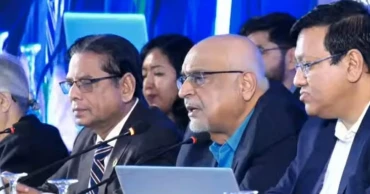
People to emerge as frontline guardians of democracy: Debapriya
The people of Bangladesh will emerge as the frontline guardians of democracy in the days ahead, Citizen’s Platform Convener Debapriya Bhattacharya said on Thursday, citing the country’s evolving political and social transformation.
“The people of Bangladesh are far more aware and far more capable than before. In the days ahead, safeguarding democracy will not require anyone else, the people of this country will themselves act as the principal guardians of democracy,” Debapriya said at a press briefing.
The event titled ‘National Election 2026: Citizens’ Recommendations for the Next Government’, organised by the Citizen’s Platform at a city hotel.
Debapriya said sustainable development and positive change in the country cannot be achieved through policy frameworks alone.
1971, 1990 and 2024 share same spirit of dignity, not conflict: Debapriya
To that end, alongside policy recommendations, the Citizen’s Platform has now introduced a national programme to monitor policy implementation. Under this initiative, the extent to which the recommendations are implemented over time will be closely tracked.
“Policy advice alone does not ensure implementation; oversight is essential,” he said, adding that education, health, social protection, and broader economic and social policy frameworks developed by the platform will be monitored through a ‘Reform Tracker’.
Debapriya also said the Reform Tracker will not be limited to the Citizen’s Platform’s proposals alone, but will also monitor how far political parties fulfill their manifesto commitments related to citizens’ development after the election.
Noting that civil society is currently more conscious than at any previous time, Debapriya said citizens will play the most decisive role in the country’s democratic transition. With a focus on improving people’s living standards, the Citizen’s Platform has structured its policy recommendations accordingly.
Politicians also face growing security concerns alongside citizens: Debapriya
Later, CPD Distinguished Fellow Mustafizur Rahman presented 12 policy recommendations aimed at achieving inclusive development in Bangladesh’s future socio-economic and democratic transition, while CPD Additional Director (Research) Towfiqul Islam Khan announced a 10-point action plan to implement those recommendations.
8 months ago

Jamaat calls for restraint, unity after Hadi’s death
Bangladesh Jamaat-e-Islami on Thursday urged patience, responsibility and national unity following the death of Sharif Osman Hadi, spokesperson of Inquilab Moncho and a July Movement activist, who died on Wednesday while receiving treatment in Singapore.
In a statement, Jamaat Ameer Dr Shafiqur Rahman said the nation is mourning Hadi’s death amid public anger over the failure to ensure his safety.
He said while grief and anger among students and the public are understandable, no group should exploit the situation for political gain, warning that such actions could derail the movement from its proper course.
Osman Hadi no more
Dr Rahman underscored the need for safeguarding media freedom, describing attacks on journalists as attacks on democracy and the rule of law, and stressed that protests must remain peaceful and lawful.
He also demanded quick identification and exemplary punishment of those responsible for Hadi’s killing, urging citizens and students to act with restraint and responsibility, adding that national unity and democratic processes are the only way forward during this critical period.
9 months ago
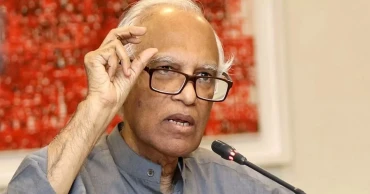
Quality of democracy cannot improve without behavioural change: Planning Adviser
Planning Adviser Dr Wahiduddin Mahmud on Sunday (December 07, 2025) said democratic institutions alone cannot guarantee the quality of democracy unless political behaviour and political culture change.
“A parliament elected by people, a government accountable to that parliament, and independent watchdog institutions are all prerequisites.But the real test will always lie in political behaviour something that cannot change overnight,” he said an event at Bangladesh Institute of Development Studies (BIDS) in the capital.
Dr Wahiduddin said Bangladesh must prioritise an effective democratic transition, stronger accountability systems and a long-term roadmap for building a fair, discrimination-free society.
The Planning Adviser was addressing as the chief guest at the Annual BIDS Conference on Development 2025: Democracy and Development organized by the Bangladesh Institute of Development Studies (BIDS) held at the conference hall of the Parjatan Bhaban in the capital's Agargaon area.BIDS Director General Prof Dr AK Enamul Haque gave the opening remarks.
“The expectations today are modest — we are trying to secure the basic foundations of a representative democratic system. It is unfortunate, yet we must move forward with the hope that a stable and lasting framework for governance will emerge in new Bangladesh,” he said.
Read more: Misinformation big threat to democracy: Shafiqul Alam
Dr Wahiduddin said nearly five and a half decades after independence the nation is still striving to establish a ‘functional democratic arrangement, which should have been achieved long ago.
The Adviser highlighted the link between political patronage, youth unemployment and the spread of cadre-based politics, saying these interconnected problems cannot be solved by blaming politics alone.
“Poor-quality education, high dropout rates and youth joblessness are closely tied to why many young people choose political patronage as a livelihood,” he said.
On the economic front, he said democratic governance does not automatically ensure development unless accompanied by deep administrative reforms and an end to the informal networks of collusion between business and bureaucracy.
“Reforms through new rules and regulations may help but their success depends entirely on the behavioural environment — the incentives created, the culture of trust, and the social norms within which markets operate,” he said.
Read more: US-based IRI assessing environment ahead of Feb polls
He pointed to global experiences to argue that market liberalisation has produced widely different outcomes in different countries.
“In some East Asian economies, discipline, trust and strong internal accountability systems delivered sustained growth,” he said citing China and Vietnam’s reform experiences.
“Administrative accountability must be matched with a sense of responsibility.”
Turning to Bangladesh’s statistical system, he said greater transparency in data production is essential for evidence-based policymaking.
Digitalisation of BBS datasets would allow researchers and journalists to independently examine national statistics, ultimately improving their quality.
“But even then, political will remains crucial. If there is political demand for illicit gains, no regulation alone can prevent it,” he said.
Addressing the broader goal of creating a discrimination-free society, the Adviser said the debate naturally falls outside political consensus-building initiatives like the July Charter or the Consensus Commission.
“Questions of redistribution, social protection, market-state relations and reducing inequality are inherently ideological,” he said. “Parties must articulate these issues clearly in their manifestos.”
No country can prosper if it fails to ensure the minimum livelihood needs of all citizens and achieving this requires both an appropriate economic structure and genuine political commitment, said the adviser.
He said that three issues are very relevant at the present stage of the country after the July Revolution and these are transition to an effective representative democratic system, that democratic system will ensure economic development and third the quality of that development.
Read more: Tarique hails Australian MPs’ call for democracy, election integrity in Bangladesh
10 months ago
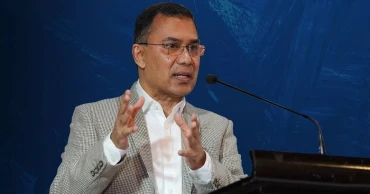
Tarique hails Australian MPs’ call for democracy, election integrity in Bangladesh
BNP Acting Chairman Tarique Rahman has expressed heartfelt gratitude to members of the Australian Parliament for speaking out on democracy, human rights and electoral integrity in Bangladesh, saying their position echoes the hopes and concerns of millions of Bangladeshis.
In a post on his verified Facebook page on Saturday (November 15), he said, “Many Bangladeshis, including myself, extend our sincere appreciation to the Australian parliamentarians who have spoken with clarity and conscience on the issues of democracy, human rights, and electoral integrity in Bangladesh. Their thoughtful intervention reflects a deep commitment to universal democratic principles and to the wellbeing of the Bangladeshi people.”
Across Bangladesh, the BNP leader said many citizens are expressing genuine concern about political uncertainty, security, and the need for an electoral process in which every voice can be heard without fear or restriction.
Tarique warns against political volatility, urges election participation
“These concerns come from ordinary people who wish only for stability, justice, and the opportunity to choose their future through a peaceful and credible democratic process,” he said.
At this pivotal moment, Tariaue said the call from Australian MPs to ensure the safety, dignity, and political rights of all election participants resonates strongly with the hopes of Bangladeshis at home.
“Their message acknowledges what millions have been saying for months: that democracy is strongest when it is inclusive, transparent, and safeguarded from violence or intimidation,” he said.
Tarique Rahman likely to return home by end of November: Salahuddin
The BNP leader also praised the Bangladeshi diaspora in Australia for their role in raising these issues internationally, noting their contributions to Australian society and their continuing commitment to Bangladesh. “Their advocacy, driven by love for their homeland, has helped ensure that the challenges and aspirations of Bangladeshis are understood globally,” he said.
Tarique also said Australia and Bangladesh share long-standing ties based on respect and cooperation.
He thanked the Australian representatives who have expressed solidarity, saying their support highlights the collective global commitment to democracy.
Tarique’s 31-point plan offers path to democratic revival: Ndileka Mandela
“When nations come together, we can encourage one another toward peace, justice, and progress,” he said.
10 months ago