Dhaka's air quality

Dhaka's air quality remains moderate
The air quality in Dhaka remained moderate on Friday morning, with an Air Quality Index (AQI) score of 95 at 9:10 am.
With the score, the capital ranked 16th among the world's most polluted cities.
Uganda's Kampala, Bahrain's Manama and Qatar's Doha occupied the top three spots on the list, with AQI scores of 179, 153 and 148, respectively.
An AQI score between 50 and 100 is considered "moderate" with an acceptable air quality, while one between 101 and 150 is considered "unhealthy for sensitive groups", while a score between 151 and 200 is classified as "unhealthy."
AQI readings between 201 and 300 are termed "very unhealthy", and anything above 301 is considered "hazardous", posing serious health risks.
The AQI is a daily indicator of air quality, showing how clean or polluted the air is and the possible health effects people may experience.
In Bangladesh, the AQI is calculated based on five major pollutants: particulate matter (PM10 and PM2.5), nitrogen dioxide, carbon monoxide, sulphur dioxide and ozone.
2 months ago

Dhaka's air quality remains moderate
The air quality in Dhaka remained moderate on Monday morning, with an Air Quality Index (AQI) score of 79 at 8 am.
With the score, the capital ranked 19th among the world's most polluted cities.
Uganda's Kampala, Pakistan's Lahore and Bahrain's Manama occupied the top three spots on the list, with AQI scores of 158, 154 and 147, respectively.
An AQI score between 50 and 100 is considered "moderate" with an acceptable air quality, while one between 101 and 150 is considered "unhealthy for sensitive groups", while a score between 151 and 200 is classified as "unhealthy."
AQI readings between 201 and 300 are termed "very unhealthy", and anything above 301 is considered "hazardous", posing serious health risks.
The AQI is a daily indicator of air quality, showing how clean or polluted the air is and the possible health effects people may experience.
In Bangladesh, the AQI is calculated based on five major pollutants: particulate matter (PM10 and PM2.5), nitrogen dioxide, carbon monoxide, sulphur dioxide and ozone.
2 months ago

Dhaka's air quality moderate this morning
Dhaka's air quality remained moderate on Sunday morning, with an Air Quality Index (AQI) score of 73 at 09:20am.
With the score, the capital ranked 25th among the world's most polluted cities.
Indonesia’s Jakarta, the United Arab Emirates' Dubai and DR Congo’s Kinshasa occupied the first three spots on the list with AQI scores of 168, 167 and 153, respectively.
Rain likely across Bangladesh, heavy falls forecast in places
An AQI score between 50 and 100 is considered "moderate" with an acceptable air quality, while one between 101 and 150 is considered "unhealthy for sensitive groups", while a score between 151 and 200 is classified as "unhealthy."
AQI readings between 201 and 300 are termed "very unhealthy", and anything above 301 is considered "hazardous", posing serious health risks.
The AQI is a daily indicator of air quality, showing how clean or polluted the air is and the possible health effects people may experience.
In Bangladesh, the AQI is calculated based on five major pollutants: particulate matter (PM10 and PM2.5), nitrogen dioxide, carbon monoxide, sulphur dioxide and ozone.
2 months ago

Dhaka's air quality turns ‘moderate’
Dhaka, the capital of Bangladesh, ranked 22nd among the world’s most polluted cities on Monday morning, with an Air Quality Index (AQI) of 79.
According to the AQI scale, the city’s air quality was classified as ‘moderate’ at 10:05am.
The Democratic Republic of Congo’s Kinshasa, Pakistan’s Lahore and Chile’s Santiago were the three most polluted cities, with AQI scores of 167, 161 and 157 respectively.
An AQI between 101 and 150 is considered ‘unhealthy for sensitive groups’, while a score between 151 and 200 is classified as ‘unhealthy’. AQI readings between 201 and 300 are termed ‘very unhealthy’, and anything above 301 is considered ‘hazardous’, posing serious health risks.
The AQI is a daily indicator of air quality, showing how clean or polluted the air is and the possible health effects people may experience.
In Bangladesh, the AQI is calculated based on five major pollutants: particulate matter (PM10 and PM2.5), nitrogen dioxide, carbon monoxide, sulphur dioxide and ozone.
Dhaka has long struggled with severe air pollution. Air quality usually worsens during winter and improves in the monsoon season.
According to the World Health Organization, air pollution causes around seven million deaths globally each year, mainly from stroke, heart disease, chronic respiratory diseases, lung cancer and acute respiratory infections.
3 months ago
Dhaka’s air quality 'Moderate' this morning
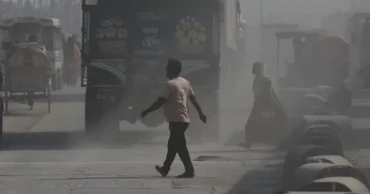
Dhaka, the densely populated capital of Bangladesh, ranked 22nd among the world’s most polluted cities on Tuesday morning, with an Air Quality Index (AQI) of 75 at 11:45 am.
The air was classified as ‘Moderate’, meaning it could pose health risks to people who are more vulnerable, according to the AQI scale.
Democratic Republic of the India’s Delhi, Pakistan’s Lahore and Nepal’s Kathmandu were the three most polluted cities, with AQI scores of 540, 196 and 155.
An AQI between 101 and 150 is considered ‘unhealthy for sensitive groups’, while 151–200 is ‘unhealthy’, 201–300 is ‘very unhealthy’, and anything above 301 is ‘hazardous’ and can cause serious health problems.
The AQI measures daily air quality, showing how clean or polluted the air is and what health effects people might experience.
In Bangladesh, the AQI is based on five main pollutants: particulate matter (PM10 and PM2.5), nitrogen dioxide, carbon monoxide, sulphur dioxide and ozone.
Dhaka has long faced serious air pollution. The situation usually gets worse in winter and improves during the monsoon season.
The World Health Organization says air pollution causes around seven million deaths worldwide each year, mainly due to stroke, heart disease, chronic respiratory illness, lung cancer and acute infections.
5 months ago
Dhaka's air quality remains ‘very unhealthy’
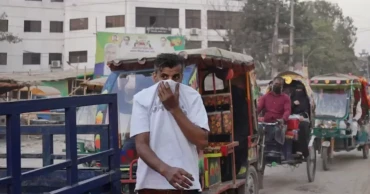
Dhaka, the densely populated capital of Bangladesh, ranked second among the world’s most polluted cities on Wednesday morning (January 21, 2026), recording an Air Quality Index (AQI) of 296 at 9:40 am.
Today, the city’s air was classified as ‘very unhealthy’, indicating a serious health threat, according to the AQI report.
Read more: How to Reduce Air Pollution in Bangladesh?
Lahore in Pakistan, Delhi in India, and Kolkata in India occupied the first, third, and fourth spots on the list, with AQI scores of 324, 293, and 232 respectively.
According to the AQI scale, a reading between 50 and 100 is considered ‘moderate’, with generally acceptable air quality, though sensitive individuals should limit prolonged outdoor exertion. AQI levels of 101–150 are ‘unhealthy for sensitive groups’, 151–200 is ‘unhealthy’, 201–300 is ‘very unhealthy’, and readings above 301 are considered ‘hazardous’, posing severe health risks.
The AQI, which reports daily air quality, informs residents how clean or polluted the air is and highlights potential health effects. In Bangladesh, the AQI is calculated based on five key pollutants: particulate matter (PM10 and PM2.5), nitrogen dioxide (NO2), carbon monoxide (CO), sulfur dioxide (SO2), and ozone.
Dhaka's air quality remains ‘very unhealthy’
Dhaka has long struggled with air pollution. Air quality usually deteriorates in winter and improves during the monsoon season.
The World Health Organization (WHO) estimates that air pollution causes about seven million deaths worldwide each year, primarily from stroke, heart disease, chronic obstructive pulmonary disease, lung cancer, and acute respiratory infections.
8 months ago
Dhaka's air quality remains ‘very unhealthy’
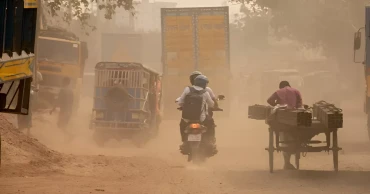
Dhaka, the densely populated capital of Bangladesh, ranked third among the world’s most polluted cities on tuesday morning, recording an Air Quality Index (AQI) of 296 at 9:02 am.
Today (January 20, 2026), the city’s air was classified as ‘very unhealthy’, indicating a serious health threat, according to the AQI report.
Read more: Weather likely to remain unchanged: BMD
Lahore in Pakistan, Delhi in India, and Kolkata in India occupied the first, second, and fourth spots on the list, with AQI scores of 558, 450, and 284 respectively.
According to the AQI scale, a reading between 50 and 100 is considered ‘moderate’, with generally acceptable air quality, though sensitive individuals should limit prolonged outdoor exertion. AQI levels of 101–150 are ‘unhealthy for sensitive groups’, 151–200 is ‘unhealthy’, 201–300 is ‘very unhealthy’, and readings above 301 are considered ‘hazardous’, posing severe health risks.
The AQI, which reports daily air quality, informs residents how clean or polluted the air is and highlights potential health effects. In Bangladesh, the AQI is calculated based on five key pollutants: particulate matter (PM10 and PM2.5), nitrogen dioxide (NO2), carbon monoxide (CO), sulfur dioxide (SO2), and ozone.
Dhaka has long struggled with air pollution. Air quality usually deteriorates in winter and improves during the monsoon season.
Read more: Dhaka's air quality remains ‘very unhealthy’
The World Health Organization (WHO) estimates that air pollution causes about seven million deaths worldwide each year, primarily from stroke, heart disease, chronic obstructive pulmonary disease, lung cancer, and acute respiratory infections.
8 months ago
Dhaka's air quality remains ‘very unhealthy’
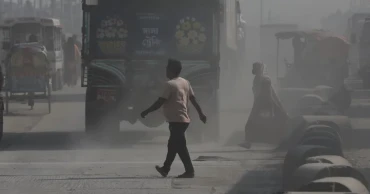
Dhaka, the densely populated capital of Bangladesh, ranked third among the world’s most polluted cities on Monday morning (January 19, 2026), recording an Air Quality Index (AQI) of 272 at 8:58 am.
Today, the city’s air was classified as ‘very unhealthy’, indicating a serious health threat, according to the AQI report.
Delhi in India, Lahore in Pakistan, and Kolkata in India occupied the first, second, and fourth spots on the list, with AQI scores of 541, 312, and 204 respectively.
Read more: Air pollution: 5 ways to protect yourself from poor air quality
According to the AQI scale, a reading between 50 and 100 is considered ‘moderate’, with generally acceptable air quality, though sensitive individuals should limit prolonged outdoor exertion. AQI levels of 101–150 are ‘unhealthy for sensitive groups’, 151–200 is ‘unhealthy’, 201–300 is ‘very unhealthy’, and readings above 301 are considered ‘hazardous’, posing severe health risks.
The AQI, which reports daily air quality, informs residents how clean or polluted the air is and highlights potential health effects. In Bangladesh, the AQI is calculated based on five key pollutants: particulate matter (PM10 and PM2.5), nitrogen dioxide (NO2), carbon monoxide (CO), sulfur dioxide (SO2), and ozone.
Dhaka's air quality turns ‘very unhealthy’
Dhaka has long struggled with air pollution. Air quality usually deteriorates in winter and improves during the monsoon season.
The World Health Organization (WHO) estimates that air pollution causes about seven million deaths worldwide each year, primarily from stroke, heart disease, chronic obstructive pulmonary disease, lung cancer, and acute respiratory infections.
8 months ago

Dhaka’s air at risk as Savar brick kilns defy closure orders
Despite the government’s declaration of Savar upazila as a ‘degraded airshed’, brick kilns in the area continue operating openly, raising serious concerns over air pollution in Dhaka.
The move, intended to protect the capital’s northern entry points, appears to have little effect on kiln owners, who are finding ways to circumvent official orders.
On August 17, 2025, the government formally designated the entire Savar upazila as a ‘degraded air shed’ under the Air Pollution (Control) Rules, 2022, explicitly banning all brick-burning and brick-manufacturing activities.
The decision followed mounting evidence that emissions from kilns in Savar significantly worsened air quality in Dhaka, especially during the dry season, posing grave health risks to the city’s densely populated residents.
Read more: Illegal brick kilns in Khulna: A silent peril to environment and public health
Yet, local residents and environmental activists report that many brick kiln owners treat the government’s circular as mere paperwork. Although authorities demolished chimneys of several kilns late last year, many have been rebuilt and resumed operations.
According to the latest data up to June 2025, Savar hosts 86 brick kilns, including 59 licensed and 27 unlicensed facilities.
In the Turag River area near Ashulia Bazar, brick burning remains widespread.
Ashulia Bricks and MCB Bricks, in particular, have continued production since the start of the season.
During a recent visit to Ashulia Bricks, hundreds of workers were observed manufacturing raw bricks, transporting them, and stacking finished products near the kiln. On the opposite side, others were removing fired bricks from the furnace.
Read more: Tk 20 crore fines imposed in nationwide anti-pollution drives
When contacted, Ashulia Bricks manager Md Madhu Mia defended the operation, saying, “The government has done its job and we are doing ours. We have already spent a lot of money on labour and other sectors. If we shut down the kiln, recovering that investment would be impossible. That’s why we were compelled to continue. We have communicated with various parties and they assured us.”
8 months ago
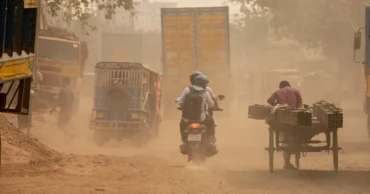
Dhaka's air quality turns ‘very unhealthy’
Dhaka, the densely populated capital of Bangladesh, ranked second among the world’s most polluted cities on Monday morning (January 12, 2026), recording an Air Quality Index (AQI) of 285 at 9:43 am.
Today, the city’s air was classified as ‘very unhealthy’, indicating a serious health threat, according to the AQI report.
Read more: Daily Danger in Dhaka: Food, air, water offer residents few safe choices
Cairo in Egypt, Chengdu in China, and Delhi in India occupied the first, third, and fourth spots on the list, with AQI scores of 300, 244, and 241 respectively.
According to the AQI scale, a reading between 50 and 100 is considered ‘moderate’, with generally acceptable air quality, though sensitive individuals should limit prolonged outdoor exertion. AQI levels of 101–150 are ‘unhealthy for sensitive groups’, 151–200 is ‘unhealthy’, 201–300 is ‘very unhealthy’, and readings above 301 are considered ‘hazardous’, posing severe health risks.
The AQI, which reports daily air quality, informs residents how clean or polluted the air is and highlights potential health effects. In Bangladesh, the AQI is calculated based on five key pollutants: particulate matter (PM10 and PM2.5), nitrogen dioxide (NO2), carbon monoxide (CO), sulfur dioxide (SO2), and ozone.
Dhaka's air quality turns `unhealthy for sensitive groups’
Dhaka has long struggled with air pollution. Air quality usually deteriorates in winter and improves during the monsoon season.
The World Health Organization (WHO) estimates that air pollution causes about seven million deaths worldwide each year, primarily from stroke, heart disease, chronic obstructive pulmonary disease, lung cancer, and acute respiratory infections.
8 months ago