PPP
PPP breathing new life into shuttered jute mills under BTMC
The government has initiated steps to revive closed state-owned textile and jute mills through public-private partnerships (PPP) and private leasing as part of its election manifesto, Textiles and Jute Minister Khandakar Abdul Muktadir told Parliament on Monday.
Replying to a starred question from Jamaat MP Mohammad Moslehuddin Farid (Jashore-2), the minister said Bangladesh currently has 25 state-owned textile mills under the Bangladesh Textile Mills Corporation (BTMC), while the private sector has around 1,780 spinning, weaving and dyeing-finishing mills affiliated with the Bangladesh Textile Mills Association (BTMA).
He also said there are 266 licensed jute mills across the country, including 25 state-owned mills under the Bangladesh Jute Mills Corporation (BJMC). Of these, 193 are operational and 73 remain closed.
The minister said, in line with the government's pledge to reopen shuttered industries, 15 of BTMC's 25 state-owned textile mills have been selected for operation under the PPP model.
"So far, agreements have been signed with selected private partners for four textile mills and their handover has been completed. Production has already begun at two of these mills," he said.
Work is underway to hand over another 11 closed textile mills to private entrepreneurs under the PPP initiative, he added.
Abdul Muktadir said production at all 25 BJMC-run state-owned jute mills was suspended in 2020 following a decision of the then Awami League-led government. However, the present government has taken initiatives to restart the mills in line with its election commitments.
According to the minister, 14 jute mills have so far been leased to private operators, of which nine have already resumed production.
The remaining mills are being leased out in phases, and production at those facilities is expected to begin by December 2026 under private management, he said.
The minister also outlined several other initiatives involving former BJMC mills.
He said plans have been taken to establish an Inland Container Depot (ICD) at MM Jute Mills Ltd under BJMC management.
Two mills—Latif Bawany Jute Mills Ltd and Karim Jute Mills Ltd—which fall within the jurisdiction of Dhaka South City Corporation are being processed for declaration as industrial zones through the Bangladesh Economic Zones Authority (BEZA), he said.
Among the three mills that remain outside the leasing process, Amin Jute Mill has been excluded because it falls within a city corporation area, while two others remain outside the programme due to pending legal cases.
The minister said the government is committed to strengthening the jute sector by increasing production, diversifying jute products, expanding exports and encouraging private investment
3 months ago

Bangladesh among 30 countries with the highest purchasing power parity in the world
Bangladesh has ranked 26th among 30 countries with the highest Purchasing Power Parity (PPP) in the World.
According to finance website, Insider Monkey, Bangladesh has a per capita GDP of $9.41 thousand based on purchasing power parity. In 2021, the country's GDP was little more than $1 trillion. In three years, it has risen to $1.6 trillion, making Bangladesh one of the world's fastest-growing economies today. GDP (PPP): $1,573,205,815,650, as per Insider Monkey.
People’s purchasing capacity has increased, says state minister Shafiqur
Top 10 countries with the highest purchasing power parity in the world:
1 China
GDP (PPP): $35,102,468,294,640
2. United States
GDP (PPP): $28,212,584,701,080
3. India
GDP (PPP): $13,837,886,095,650
4. Japan
GDP (PPP): $6,693,210,775,800
5. Germany
GDP (PPP): $5,737,921,135,920
6. Russia
GDP (PPP): $5,180,512,624,880
7. Indonesia
GDP (PPP): $4,706,381,666,640
8. Brazil
GDP (PPP): $4,533,438,662,610
9. France
GDP (PPP): $4,161,339,481,020
10. United Kingdom
GDP (PPP): $3,967,703,923,320
Govt's main task is to tame price hike and boost people's purchasing power: PM Hasina at Tungipara
What is PPP?
Purchasing Power Parity (PPP) is a macroeconomic concept used to compare the relative value of currencies between different countries. Value refers to how much purchasing a currency can do compared to different countries. So, to find that out, economists apply PPP, which is the exchange rate at which one country’s currency would be converted into another to purchase an identical basket of goods and services. The PPP metric is usually used to measure economic productivity and standards of living between countries, according to Insider Monkey.
In other words, utilising purchasing power parity, GDP is translated to a common baseline currency (international dollars), allowing for more realistic comparisons of nations and their worldwide positions.
Tackling inflation to protect people’s purchasing power key challenge: DCCI
Methodology
For its list of the ‘30 Countries with the Highest Purchasing Power Parity in the World’, Insider Monkey calculated the PPP using the GDP per capita by PPP of the 50 top countries with the largest economies in the world and their population. It then shortlisted the top 30 and compiled the list in ascending order. The base data for GDP per capita and population has been sourced from the International Monetary Fund and the CIA’s database and is accurate to 2024, the finance website said.
2 years ago
.jpg)
Seven agencies sign performance agreements with PMO
The annual performance agreements (APAs) 2022-23 were signed between the prime minister's office and its attached seven agencies including Ashrayan-2 project on Thursday.
PMO senior secretary Tofazzel Hossain Miah and the heads of the agencies inked the agreements on behalf of their respective sides at the PMO.
In the APAs, the seven agencies made different commitments over their performances for the fiscal year of 2022-23.
Also read: Increase oxygen supply, Corona beds: PMO
Prime Minister’s Principal Secretary Ahmad Kaikaus and Principal Coordinator for SDG Affairs at the PMO Zuena Aziz spoke at the signing event presided over by Tofazzel Hossain Miah.
The seven agencies are Bangladesh Investment Development Authority (BIDA), Bangladesh Economic Zone Authority (BEZA), Bangladesh Export Processing Zone Authority (BEPZA), National Skills Development Authority (NSDA), Public Private Partnership (PPP) Authority, NGO Affairs Bureau and Ashrayan-2 Project.
The APA is a result-based working plan to reach the desired goal through increasing the efficiency and accountability of the public servant.
In the 2014-15 fiscal year, the Awami League government introduced the APA method in a bid to get better performance from all the ministries and divisions.
In the process, all the subordinate departments, agencies or offices also sign the APAs with their respective ministries, divisions or higher offices.
4 years ago

We have failed to sell the PPP idea properly, says Mustafa Kamal
Finance Minister AHM Mustafa Kamal has admitted that the idea of public private partnership (PPP) has failed to meet the expectation.
“Actually, we could not sell the PPP idea properly. But now work has started. We have to give the time... Still we’ve been facing that teething problems”, he told reporters after a meeting of the Cabinet Committee on Economic Affairs (CCEA) on Thursday.
The Cabinet committee in principle decided to drop a project “Construction of Laldia Bulk Terminal” from the government’s PPP list. Now, the Chattagram Port Authority (CPA) will implement the project by its own fund.
Also read: Finance Minister wonders why people moving to Europe risking lives
Earlier, there was decision to implement the project through PPP by the CPA on 59.87 acres of land at Laldia Char area on the right bank of the Karnaphuli River.
Kamal said the government believes it would overcome the problems facing with the PPP.
He said now the government has been implementing projects by its own fund as there is no shortage of money.
“We need foreign direct investment under PPP....the more FDI attraction means the more benefits”, he said.
Also read: Finance Minister dismisses the claim of 2.5 crore new poor
“But we could not attract DFI as we didn’t have adequate infrastructures”, he said adding, infrastructures mean physical and non-physical both.
The finance minister said the government believes that as the country is having infrastructures, there will be no problem in attracting FDI and PPP projects.
Responding to another question, he said that he would try to find out if money from the government’s stimulus package was diverted to the country’s stock market as reported by media.
“I would inform you after my own finding whether the allegation is true or not. But so far the fund from stimulus package is not supposed to go elsewhere is it was provided to eligible beneficiaries from specific targeted sectors.
Meanwhile, the CCEA approved a proposal of the Ministry of Liberation War to award the contract to an event management company through direct procurement method without tender process to arrange the concluding programmers of the golden jubilee of the independence celebration with due manner to showcase the country at home and abroad.
It also approved another proposal to purchase Oracle Cloud for the Bangladesh Data Centre Company Limited through direct procurement method.
5 years ago
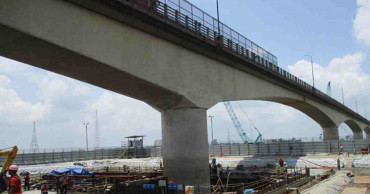
4.68km Bhola Bridge to be built under PPP
The 4.68km Bhola Bridge on Tentulia-Kalobador River will be built by private sponsor under the public-private partnership (PPP) scheme at a cost of Tk 12,916 crore.
6 years ago

Dhaka-Mymensingh highway to be upgraded to expressway
Dhaka (Joydebpur)-Mymensingh Highway is going to be upgraded to an expressway as the Cabinet Committee on Economic Affairs on Wednesday approved a proposal to develop the road under public-private partnership (PPP).
6 years ago
.jpg)
Parjatan’s Cox’s Bazar int’l tourism project fails to take off
Despite its repeated bids, Bangladesh Parjatan Corporation (BPC) has failed to select a partner for implementing its mega tourism project in Cox’s Bazar.
6 years ago