Humanoid robot
Could humanoid robots become the next soldiers on the battlefield?
Humanoid robots have long been a staple of science fiction, but some technology companies are now actively exploring whether they could one day play a role in military operations.
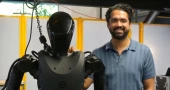
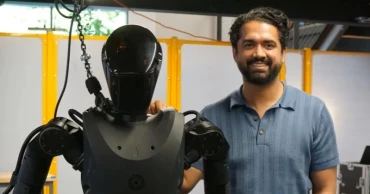
Inside a San Francisco robotics facility, a humanoid robot named Phantom is being trained not for combat today, but for basic tasks such as interacting with objects and understanding its surroundings. The robot, developed by startup Foundation Robotics, is designed for both civilian and military use.
The company says it is the only US-based firm currently building humanoid robots specifically for a wide range of defense applications.
Potential military roles include transporting supplies, conducting reconnaissance missions, inspecting dangerous areas, recovering equipment or injured personnel, and eventually supporting combat operations. The idea is that robots could take on high-risk tasks, reducing danger for human soldiers.
Foundation Robotics CEO Sankaet Pathak argues that humanoid robots could help keep troops out of harm's way, particularly in dangerous environments such as urban combat zones and buildings where ambushes are common.
However, the technology remains far from battlefield-ready.
The company's current model, Phantom MK-1, still faces major limitations. It lacks a battery, cannot operate in harsh weather, cannot stand up on its own after falling, and has limited hand movement and strength.
A more advanced version, Phantom MK-2, is now under development. According to the company, it will be weather-resistant, capable of operating for about six hours on a single charge, and able to recover after falling. Engineers are also working on more advanced robotic hands that could eventually handle tools and other equipment.
Foundation aims to produce up to 40,000 robots annually by the end of 2027 and eventually reduce costs to below $20,000 per unit.
The company has already secured $24 million in research contracts linked to the US military and says two of its robots are currently being tested by the Ukrainian military. While US military trials focus on handling and logistics tasks, weapon-related testing is reportedly taking place in Ukraine.
The startup drew additional attention after Eric Trump joined the company as an investor and adviser earlier this year.
Military interest in humanoid robots appears to be growing. Experts say armed forces are exploring whether such machines could assist troops in a variety of roles.
According to Dean Fankhauser of robotics advisory firm Robozaps, it is unsurprising that some companies see military applications as a business opportunity.
Modern battlefields already make extensive use of autonomous drones and robotic systems, particularly in the war in Ukraine. Some companies have also explored arming four-legged robotic systems, although they have not yet been widely deployed in combat.
Still, many robotics firms oppose weaponising humanoid robots, citing ethical concerns and the potential risks of autonomous weapons.
Pathak argues that humanoid robots offer unique advantages because they are built to operate in environments designed for humans. Existing tools, vehicles and equipment could potentially be used without significant redesign.
He insists humans should remain responsible for decisions involving lethal force, although he acknowledges there could be situations where autonomous responses are considered necessary.
Despite the growing interest, experts say significant technical barriers remain.
One of the biggest challenges is developing artificial intelligence capable of operating safely in unpredictable real-world environments. Robots must be able to interpret complex situations, adapt to changing conditions and make decisions in real time.
Phantom relies on an AI system called Cortex, which combines task-specific reasoning with broader environmental awareness. Cameras provide a 360-degree view, allowing the robot to navigate and react to its surroundings.
Yet specialists caution that current humanoid robots are still far from matching human abilities.
Fankhauser notes that many commercial humanoid robots today struggle with relatively simple tasks and remain largely untested in chaotic real-world conditions.
"If there were a conflict over Taiwan today, the idea that humanoid robots would play a major combat role is unrealistic," he said, although he believes the technology could advance significantly within the next decade.
Florida Institute for Human and Machine Cognition researcher Robert Griffin also sees potential benefits in reducing risks to soldiers but says unpredictable environments remain a major obstacle.
Tasks that humans perform naturally, such as navigating unfamiliar buildings or reacting to unexpected events, remain extremely difficult for robots.
Battery life is another major challenge. Moving on two legs and operating multiple joints consumes large amounts of energy, making long operating times difficult to achieve.
Experts say the vision of humanoid robot soldiers remains largely theoretical for now. While advances in artificial intelligence and robotics are moving quickly, turning humanoid machines into reliable battlefield assets will require overcoming major technological, practical and ethical challenges.
Source: BBC
4 months ago
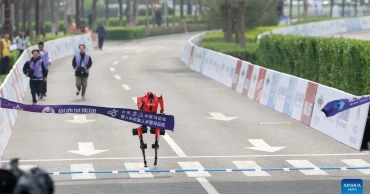
Humanoid robot beats human half-marathon record in Beijing race
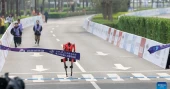
A humanoid robot named “Flash”, developed by Shenzhen Honor Smart Technology Development Co., Ltd., won the 2026 Beijing E-Town Half-Marathon on Sunday, completing the race in 50 minutes and 26 seconds using fully autonomous navigation.
Its performance surpassed the human half-marathon world record of 57 minutes and 20 seconds.
The current human record was set last month by Uganda’s long-distance runner Jacob Kiplimo at the Lisbon Half Marathon in Portugal.
This year’s race marked a significant advancement from the inaugural 2025 edition, when the robot Tiangong Ultra finished in 2 hours, 40 minutes, and 42 seconds, and only six of 20 teams completed the full 21.0975-kilometer course.
In the 2026 edition, more than 100 teams participated, including entries from Germany, France, and Brazil. The event showcased major improvements in humanoid robotics, with robots demonstrating greater speed, balance, and stability.
To ensure safety, robots and human runners followed the same course but ran in separate lanes. The robot category had a cutoff time of 3 hours and 40 minutes. Participants could compete either through remote control or autonomous navigation, with around 40 percent choosing full autonomy. Results for remotely controlled robots were adjusted using a 1.2 coefficient to encourage the development of independent navigation technology.
According to Liang Liang, deputy secretary-general of the Chinese Institute of Electronics, the scoring system is designed to promote autonomous navigation capabilities, which are seen as essential for future real-world applications of humanoid robots.
In the human category, China’s Zhao Haijie won the men’s race in 1 hour, 7 minutes, and 47 seconds, while compatriot Wang Qiaoxia took the women’s title in 1 hour, 18 minutes, and 6 seconds.
6 months ago
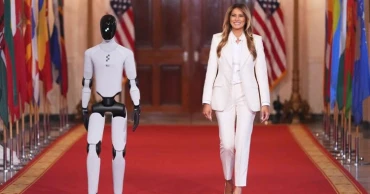
Melania Trump shares spotlight with humanoid robot at White House tech event
Melania Trump drew attention at a recent education and technology summit in Washington, but this time she shared the spotlight with a humanoid robot.
On Wednesday, the former first lady attended the final day of a global summit held in the White House East Room, organized under her “Fostering the Future Together” initiative. The event brought together international representatives to explore how education, innovation, and technologies like artificial intelligence can help empower children.
Melania Trump entered the venue walking alongside the robot, both moving slowly down a red carpet. Just before entering the East Room, she paused while the robot continued forward, circling a table of panelists before stopping at the center of the room.
After briefly scanning the audience, the robot introduced itself as “Figure 03,” a humanoid created in the United States. It expressed gratitude for being invited and highlighted its role in supporting efforts to advance children’s education through technology. The robot also greeted attendees in multiple languages before exiting the room the same way it had entered.
Melania Trump later thanked the robot, joking that it was her first American-made humanoid guest at the White House.
The robot, developed by California-based Figure AI, was unveiled in October 2025 as a third-generation model designed to assist with everyday household chores such as cleaning, laundry, and dishwashing.
Figure AI’s CEO, Brett Adcock, said he was proud to see the robot become the first of its kind to appear at the White House. The company is among several competitors—including Boston Dynamics, Tesla, and firms in China working to develop advanced human-like robots capable of performing practical tasks.
6 months ago
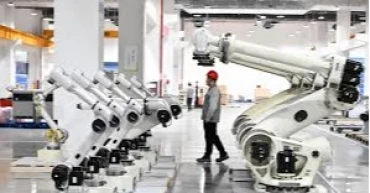
Chinese firm unveils humanoid robot powered by advanced action model
Chinese robotics company Westlake Robotics has introduced its humanoid robot, Titan o1, driven by a self-developed large-scale model known as General Action Expert (GAE), capable of replicating human movements in real time without constraints of time or space.
The company said the model allows multiple robots to carry out identical tasks simultaneously under the control of a single operator.
During a demonstration in Hangzhou, an operator wearing a motion-capture suit performed actions such as waving, turning and kicking a ball, while Titan o1 mirrored each movement within milliseconds.
The robot’s motions including arm swings, torso rotations, step length and leg lift during the kick remained closely synchronized with the operator’s rhythm.
“These actions were instant responses to the operator’s spontaneous movements,” said Westlake Robotics founder Professor Wang Donglin, adding that Titan o1 can quickly adjust to different operators and variations in movement.
He compared the GAE model to the human cerebellum, which coordinates movement, balance and precision, noting that it enables the robot to execute appropriate actions immediately upon receiving signals, even if the movements have not been performed before.
Westlake Robotics also said the GAE model supports cross-embodiment deployment, meaning it can be applied to various robots with differing designs and sizes.
6 months ago

Top 10 Humanoid AI Robots in 2023 So Far
Rapid technological progress has ushered in a new era of innovation in the field of AI and robotics. Diverse functional humanoid robots have already captured the attention of the scientific communities and the general people. Besides resembling and mimicking human beings in terms of appearance, the humanoid AI robots are designed to work for special purposes such as healthcare, entertainment, customer service, education applications, etc. Let’s take a look at the smartest humanoid robots in the world in 2023 so far.
World’s 10 Most Advanced Humanoid Robots in 2023
Ameca
Ameca, developed by Engineered Arts in 2021, stands as the epitome of sophistication among humanoid robots, surpassing all others in terms of advancement and realism. The debut of Ameca's inaugural video on December 1, 2021, garnered tremendous acclaim across Twitter and TikTok, capturing the attention of countless individuals. Its primary purpose revolves around propelling the field of robotics by exploring human-robot interaction.
Ameca incorporates an array of cutting-edge features, including embedded microphones, binocular eye-mounted cameras, a chest camera, and facial recognition software, enabling seamless engagement with the public. Furthermore, the interactions can be controlled either through GPT-3 or human telepresence. The utilisation of state-of-the-art technology extends to its artificial limbs, ligaments, and sensor arrays, underscoring its remarkable design.
Read more: Ameca: World’s Most Realistic Advanced Humanoid Robot AI Platform
Nadine
Nadine, an empathetic android developed by Japanese company Rokoro, emerged in 2013 as an exceptional creation. This social robot was modelled on Professor Nadia Magnenat Thalmann.
3 years ago

Ameca: World’s Most Realistic Advanced Humanoid Robot AI Platform
Engineered Arts, a leading creator, and producer of humanoid entertainment robots, produced Ameca which represents the most cutting-edge humanoid robotics technology. To date, Ameca is the most advanced, realistic humanoid robot ever made.
Ameca is a cloud-connected platform equipped with Engineered Arts' powerful Tritium robot operating system. This platform can be used to test and build AI and machine learning systems. With an artificial body, Ameca increases the power of artificial intelligence. This makes it possible for companies involved in robotic research to test their products.
What is more? Ameca platform enables companies creating AI or machine learning technologies to test and present their work in front of a live audience.
Read More: AI & Future of Jobs: Will Artificial Intelligence or Robots Take Your Job?
Engineered Arts' cutting-edge Mesmer technology has been applied in the hardware of Ameca. It is the innovation of their own research into humanoid robotics.
The friendly attitude of robot Ameca makes it the ideal platform for building interpersonal relationships in any Metaverse or virtual setting.
Additionally, owners of Ameca platform can enjoy global access to all robotic data. In other words Ameca will serve as their own personal avatar that is animated and simulated.
Read More: Robot artist sells art for $688,888, now eyeing music career
Does Ameca Robot Look Like Human?
The robot Ameca uses state-of-the-art technology in its mix of artificial limbs and ligaments, actuators, and sensor arrays. However, its lower half isn't working right now.
3 years ago
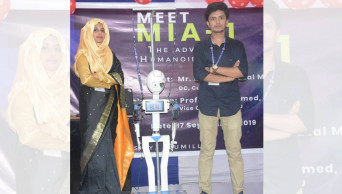
Humanoid robot made by Cumilla students turns heads
Cumilla, Sept 26 (UNB) – Two students of a private university in Cumilla say they have built, what they call, Bangladesh’s first open source humanoid robot.
7 years ago