Expatriates

Bangladesh’s remittance soars 56.3% in first 17 days of January
The upward trend in inward remittances continued and 56.3 percent growth in January, with receiving over US $1.86 billion in 17 days of the month.
Bangladesh received $18.12 billion in inward remittances from July to January 17, 2026, in the current fiscal year FY 2025-26. It was 14.96 billion in the same period of the previous FY2024-25, and saw a growth of 21.1 percent.
Read more: Stocks surge at DSE, CSE on strong buying as week opens
Blessed by strong remittances, Bangladesh’s gross forex reserves have surpassed $33 billion, up from $29 billion under the IMF’s BPM6 standard.
Arif Hossain Khan, Executive Director and spokesperson of Bangladesh Bank, said the expatriates have sent $1.86 billion in the first 17 days of January 2026, which was $1.19 million in the same period of January 2025. It means the remittance earnings grew by 56.3 percent in this time.
The growth is attributed to several factors, including incentives offered for sending money through legal banking channels, increased encouragement for using the formal system, and the active role of exchange houses.
In FY2025-26, Bangladesh received $2.47 billion in remittances in July, $2.42 billion in August, $2.68 billion in September, $2.56 billion in October, $2.88 billion in November, and $3.22 billion in December.
Read more: NBR launches automated system easing compliance for importers
This data revealed that the average inward remittance flow was over $2.42 billion in the last six months. This robust flow of remittance influences Bangladeshi policymakers to discourage lending from the IMF with tough conditions.
8 months ago

EC clarifies viral video of postal ballots in Bahrain
The Election Commission (EC) on Wednesday (14th January 2026) clarified a viral video showing a large number of postal ballots delivered to a single address in Bahrain, saying the incident resulted from differences in the country’s postal delivery system and did not involve any irregularities in the voting process.
EC Senior Secretary Akhtar Ahmed made the clarification while responding to a question from reporters at Nirbachan Bhaban in the evening.
Asked about the viral video showing many postal ballots reaching the same address, he said Bangladesh’s postal ballots are being sent through the Universal Postal Union (UPU) with the assistance of the Bangladesh Postal Department.
“This has happened in the case of Bahrain as the postal systems of some countries including the Middle East are different. There, about 160 ballots have been left in one place in one box,” he said.
Read more: Over 15 lakh people register for postal voting: EC
Akhtar Ahmed explained that the delivery system there is similar to student hostels, where letters are kept at a designated place and recipients collect their own mail from there.
“Some 160 (postal) ballots were placed in a box. Later, the expatriate Bangladeshi brothers opened the box and divided it among four or five people—whoever lives in the room next to them takes it or delivers it,” he said.
The EC Secretary said a video of the process was recorded and circulated, which he personally thinks should not have been done. “From what we understand, someone posted the video out of excitement at receiving a ballot paper. If you observe carefully, there is no evidence that any envelope was opened.”
Akhtar Ahmed said the matter was immediately communicated to Bahrain Post, which clarified that the ballots were not delivered directly by them. The Bangladesh Ambassador in Bahrain is also overseeing the issue. “Bahrain Post has informed us that they will conduct an on-site investigation and report back.”
Earlier on Tuesday, the BNP raised concerns before the Election Commission over the viral video related to the distribution of postal ballots in Bahrain.
A four-member BNP delegation, led by Nazrul Islam Khan, chairman of the party’s Central Election Steering Committee, placed their concerns during a meeting with Chief Election Commissioner AMM Nasir Uddin.
Nazrul Islam Khan alleged irregularities in the overseas distribution of postal ballots, claiming that videos circulating on social media showed leaders of a particular political party handling a large number of ballot papers in Bahrain.
Read more: Over 1.53m voters register for postal balloting: Shafiqul Alam
He said the Election Commission informed them that the matter had already come to its notice and that the Bangladeshi Ambassador in Bahrain had been contacted.
The Commission assured the BNP delegation that further investigation would be conducted and appropriate action would be taken based on the findings.
On Tuesday, BNP raised concern before the Election Commission over the viral video regarding the distribution of postal ballots in Bahrain.
A four-member BNP delegation, led by BNP’s Central Election Steering Committee Chairman Nazrul Islam Khan, raised the concern and allegation at a meeting with Chief Election Commissioner AMM Nasir Uddin.
Nazrul Islam alleged that the video circulating on social media shows leaders of a particular political party handling a large number of ballot papers in Bahrain.
He said the EC told them that the issue has come to their notice and already contacted the Bangladeshi ambassador in Bahrain.
The Commission assured the BNP team that further investigation would be conducted and action would be taken based on the findings.
A total of 1,533,683 voters have registered to vote through postal ballots, of whom some 772,000 are expatriate Bangladeshis residing in different countries across the world.
The 13th national parliamentary election is scheduled to be held on February 12 next.
Read more: Bangladesh Polls: Registration time for postal voting extended till Jan 5
8 months ago

Bangladesh remittance hits record $17.17 billion in 6 months as inflow surges
Bangladesh recorded a historic $17.17 billion in inward remittances during the first six months and seven days of fiscal year 2025–26, underscoring the resilience of overseas earnings and providing crucial support to the country’s foreign exchange reserves amid global trade headwinds.
The inflow marks a strong year-on-year increase from the same period of FY2024–25, when remittances totalled about $14.31 billion.
The latest figure represents an additional $2.86 billion, or nearly 19.9 percent growth, building on momentum from FY25, a record year in which annual remittances crossed the $30 billion threshold for the first time.
Bangladesh Bank Executive Director and Spokesperson Arif Hossain Khan attributed the sustained growth to a combination of structural and policy-driven factors.
Read more: Bangladesh sees $1.12bn in remittances in first 10 days of January
He cited restored confidence in formal remittance channels following the political transitions in late 2024, which prompted a shift away from the illegal “hundi” system.
Improved transparency and a growing sense of economic patriotism among expatriates have encouraged greater use of banking channels, he said.
The stabilisation of the taka against the US dollar has also played a critical role, reducing speculative behaviour. With a market-based exchange rate now in place, remitters are no longer delaying transfers in anticipation of sudden currency depreciation.
Government incentives remain another key driver, with the continued 2.5 percent cash incentive encouraging low-income migrant workers to send money through official platforms.
Besides, expanded digital remittance services, including mobile financial services and fintech solutions, have made transfers faster and more accessible, particularly for workers in the Middle East and Southeast Asia.
Bangladesh received $2.47 billion in remittances in July, $2.42 billion in August, $2.68 billion in September, $2.56 billion in October, $2.88 billion in November, and $3.22 billion in December.
The data show an average monthly inflow of more than $2.42 billion over the past six months.
This strong remittance performance is influencing policymakers to reconsider borrowing from the International Monetary Fund under stringent conditions.
Professor Mustafizur Rahman, Distinguished Fellow of the Centre for Policy Dialogue (CPD), told UNB that the remittance surge is offsetting recent weakness in the export sector, which showed a slight contraction in December 2025.
According to the Asian Development Bank (ADB) and local economists, robust remittance inflows are expected to be a key driver of consumption and GDP growth in 2026.
As of early January 2026, Bangladesh’s gross foreign exchange reserves have benefited significantly from the inflows, standing at around $33 billion under traditional calculation, providing the government with added fiscal space to manage external debt obligations and import costs, he said.
Syed Mahbubur Rahman, Managing Director and CEO of Mutual Trust Bank Limited (MTB), said confidence in the banking system has been restored, prompting expatriates to remit funds through formal channels.
He noted that exchange rate stability and a normalised curb market have reduced the appeal of hundi transactions, which deprive remitters of the 2.5 percent incentive or more.
Read more: Remittance inflow exceeds $632 million in first six days of December
“In such a situation, sending remittance through illegal hundi is a loss for remitters,” he said.
Mahbubur Rahman added that Bangladesh Bank’s policy measures have further encouraged migrant workers and non-resident Bangladeshis to send their hard-earned money through legal channels.
8 months ago
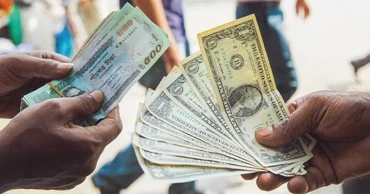
Bangladesh sees $1.12bn in remittances in first 10 days of January
The remittance from Bangladeshi expatriates continued its upward momentum in January, with the country receiving more than US$1.12 billion in the first 10 days of the month.
Bangladesh received $17.39 billion in inward remittances from July to January 10, 2026, in the current fiscal year, FY 2025-26. It was 14.49 billion in the same period of the previous FY2024-25, saw a growth of 20 percent.
Blessings on the remittance, the gross forex reserves of Bangladesh cross $33 billion. As per the IMF standard BPM6, the forex reserves stood at $29 billion plus.
Read more: Remittance inflow exceeds $632 million in first six days of December
Arif Hossain Khan, Executive Director and spokesperson of Bangladesh Bank (BB), said the expatriates have sent $1.12 billion in the first 10 days of January 2026, which was $7.17 million in the same period of January 2025. It means the remittance earnings grew by 57.2 percent in this time.
The growth is attributed to several factors, including incentives offered for sending money through legal banking channels, increased encouragement for using the formal system, and the active role of exchange houses.
In the FY2025-26, Bangladesh received $2.47 billion in remittances in July, $2.42 billion in August, $2.68 billion in September, $2.56 billion in October, $2.88 billion in November, and $3.22 billion in December.
The data showed an average inward remittance of over $2.42 billion in the past six months, prompting Bangladeshi policymakers to favour remittance inflows over borrowing from the IMF with stringent conditions.
Read more: Remittance fighters deserve more than just appreciation: Singer Asif Akbar
9 months ago
Bangladesh Bank orders same-day credit of remittances to customer accounts
Bangladesh Bank has directed all banks to ensure that inward remittances are credited to customers’ accounts on the same day they are received, in a major move to improve service for expatriates and their families.
The central bank issued a circular on Thursday (January 08, 2026), saying the directive aims to reduce delays, enhance efficiency in the payment process and improve the overall quality of customer service.
According to the circular, the new instructions will take effect immediately.
However, banks have been given time until March, 2026 to fully put in place the required technical infrastructure.
Read more: Forex reserves hit 3-year high as December remittances cross $3bn
Under the new guidelines, remittances received during banking hours must be credited on the same working day, while those received after banking hours must be credited no later than the next working day.
To speed up processing, Bangladesh Bank advised banks to adopt Straight-Through Processing (STP) or other risk-based expedited methods.
If essential information is available, banks are encouraged to credit the funds first and complete the remaining documentation or verification formalities later.
In cases where post-credit review is not possible, banks must complete verification and settle the transaction within a maximum of three working days.
To improve transparency, the central bank has also made it mandatory to use a Unique End-to-End Transaction Reference (UETR), which will allow digital tracking of remittances from receipt to final credit.
In addition, Bangladesh Bank plans to strengthen digital foreign currency platforms to gradually eliminate manual paperwork, including Form C and Form C (ICT).
The business community has welcomed the initiative, saying it will boost customer confidence and align Bangladesh’s remittance system with global best practices.
Read more: Remittances hit $2.93 billion in 28 days of December
Arif Hossain Kahan, Executive Director and spokesperson of Bangladesh Bank, said the move is a positive step towards modernisation.
“There are many operational challenges during the transition but the focus on digital tracking and faster settlement is essential for the future of our economy,” he said.
9 months ago
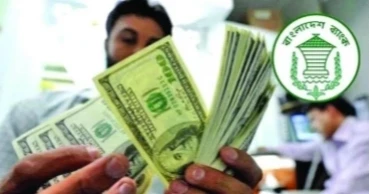
Bangladesh's remittance inflow shines bright with $2.27bn in April's 26 days
In a remarkable display of ongoing financial support from Bangladesh’s expatriates, the country has received $2.27 billion in remittances within just the first 26 days of April 2025.
The flow of remittances continues strong even after the Eid celebrations, underscoring the crucial role of overseas workers in sustaining the nation’s economy.
Before Eid, expatriates had already sent a record-breaking $3.29 billion in remittances, reflecting both the festive season's influence and the increasing trend of Bangladeshi workers sending money home.
According to the latest report from Bangladesh Bank, the inflow of remittances for the first 26 days of April comprises $853.8 million through state-owned banks, $119.4 million through a specialised bank, $1.29 billion via private banks, and $427 million through foreign banks.
Bangladesh received $1.97bn in remittances in first 21 days of April; a 40% surge
The consistent flow of remittances has played a pivotal role in stabilising the country’s foreign exchange reserves, taking the country’s Forex reserves to around $27 billion, a figure considered to be impactful on the nation's financial health.
In the first nine months of the current fiscal year (FY2024-25), Bangladesh has already received a total of $21.77 billion in remittances, a significant increase compared to the $17.07 billion remitted during the same period last fiscal year (FY2023-24).
The trend indicates that remittances continue to be a key driver for the country’s foreign currency reserves.
Looking at the trends from earlier in the year, remittances have been consistent.
In March, expatriates sent $3.29 billion, while February saw $2.53 billion, and January had $2.19 billion.
Eight banks receive no remittance despite record inflows from Bangladeshi expats
The previous months also saw substantial remittance inflows, with December reaching $2.64 billion, November at $2.2 billion, and October at $2.39 billion.
The steady rise in remittance inflows, particularly in recent months, highlights the ongoing support from the Bangladeshi diaspora, helping to bolster the nation’s economy during challenging times.
1 year ago
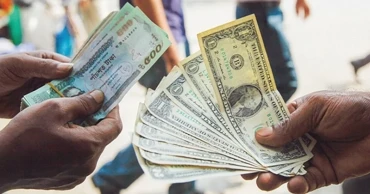
Expatriates sent $986 million remittance in first 12 days of October
Bangladeshi expatriates have sent US $986 million in remittance in 12 days of October, showing an upward trend of inward remittance flow in the legal channel.
According to the latest update of the Bangladesh Bank (BB), the expatriates have sent $8.22 crore in the country in a day till Monday (October 14).
Bangladesh received a $425mn remittance in 5 days of Oct: BB
Analysing the central bank data shows that state-owned 6 bank received $ 245.57 million in remittance, specialized Bangladesh Krishi Bank received $44.45 million, 43 private commercial banks received $693.57 million and 5 foreign commercial banks received $2.64 million in remittance till Monday.
Forex reserves increase thanks to positive trend in remittance inflow: Bangladesh Bank
In the current fiscal year FY2024-25, the expatriates sent $1.91 billion remittance in July, $2.22 billion in August, and $ 2.4 billion in September.
1 year ago
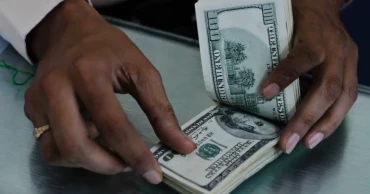
Bangladesh received $23.91bn remittance in FY2023-24, 2nd highest in fiscal history: Bangladesh Bank
Bangladesh has received US$ 23.915 billion in remittances for the fiscal year 2023-24, ending on June 30, marking the second highest remittance inflow in a fiscal year to date.
Md Mezbaul Haque, Executive Director and Spokesperson of Bangladesh Bank, told UNB that expatriate Bangladeshis sent $2.542 billion in remittances in June 2024. This brought the total remittance amount from July 1 to June 30 of FY 2023-24 to $23.915 billion, compared to $21.610 billion in the previous fiscal year.
Bangladesh Bank extends Tk 5000 crore refinance scheme to support food security
Remittance inflow to Bangladesh rose 15.59 percent year-on-year to $2.542 billion in June, as migrant workers sent more money home for Eid-ul-Azha. In May 2024, expatriate workers sent $2.253 billion in remittances.
Sector insiders attribute this growth to the higher exchange rate of the dollar and the festive occasion of Eid-ul-Azha, which prompted expatriates to send additional remittances to their families.
Economist Dr. Ahsan H. Mansur commented that Bangladesh can increase remittances through legal channels by enhancing financial and non-financial benefits for the remitters. He noted that many remitters prefer the illegal Hundi system due to its higher exchange rate, diverting legal remittances to illegal channels.
Read more: How to safely send remittance to Bangladesh?
2 years ago

Bangladesh received $2.16 billion remittances in February, highest in fiscal
Bangladesh received inward remittances of USD $2.16 billion in February, which is the highest in 8 months (July-February) in the current fiscal year 2023-24.
According to the provisional data of the Bangladesh Bank (BB) revealed on Sunday, the expatriates sent $2.16 billion remittance to the country through the legal channel. In the previous month January, the expatriates had sent $2.10 billion in remittances.
Bangladesh has received so far $13.26 billion in inward remittances in the first eight months of the year through the legal channel.
Md Mezbaul Haque, BB spokesperson, told UNB that inward remittances flow increased in the legal channel as the government and banks are providing incentives.
Read more: Brac Bank introduces digital Form C, electronic document submission platform for commercial remittances
He said the central bank instructed banks to provide additional incentives from their financial sources, which keeps a role in increasing the flow of inward remittances in the legal channel.
With the government's 2.5 percent incentive on expatriate income, banks can buy dollars at an additional 2.5 percent higher price. A total of 5 percent is getting incentives. As a result, remittances are coming to the country through legal channels.
The executive director of the private research institute South Asian Network on Economic Modeling (SANEM) Prof Dr. Selim Raihan said that a total of 5 percent incentive on remittances will help to boost remittances temporarily. But there will be no long-term solution.
Dr. Raihan said,”To increase remittances, hundi should be stopped. If you want to stop hundi, you have to stop money laundering. Now a lot of money is being smuggled abroad. It has to be controlled by any means.”
Read more: How to safely send remittance to Bangladesh?
2 years ago

Universal Pension Probash Scheme: Registration Process for Expatriate Bangladeshis
The Universal Pension Scheme 2023 has been launched with the aim of fostering socio-economic growth and ensuring social security for the citizens of Bangladesh. The notification was issued by the Finance Department under the Ministry of Finance of the Bangladesh Government on August 13, 2023. It was followed by the formal inauguration of the pension scheme by the Prime Minister on August 17, 2023. The scheme categorizes individuals into four primary groups based on their income patterns: private employees, workers in the informal sector, low-income individuals, and Bangladeshi expatriates. This article will discuss how Bangladeshi expatriates can register for the Probash package of the Universal Pension Scheme. Prior to that, let’s get familiarized with the fundamental regulations of this initiative.
General Rules of Universal Pension Scheme 2023
In recent years, the growing elderly population due to increased life expectancy has resulted in heightened dependency ratio. It potentially leads to future challenges. Simultaneously, financial instability has implications for the productivity of the working population. Addressing these concerns, the Universal Pension Management Act of 2023 was made as a solution.
The following are the general regulations pertinent to the wider public encompassed by the scheme:
- Bangladeshi citizens aged 18 to 50 can engage in this scheme with their national identity cards (NID). Citizens above 50 may participate with special consideration, limited to the 10-term scheme. It entails a lifetime pension after ten years of subscriptions.
- Applicants can enroll in any of the schemes through the online platform. But those already benefiting from the social security program must relinquish their prior benefits.
- Bangladeshi expatriates can join the program, registering with their passport if they lack a National Identity Card (NID). However, prompt preparation and submission of the NID is required.
- Each contributor will have a separate pension account created at the outset of the scheme.Should a pensioner pass away before reaching the age of 75 during the pension period, the remaining pensions will be disbursed to nominated heirs.
- If a contributor passes away before completing 10 years of contributions, the entire deposited subscription amount will be returned. The amount, along with accrued profit, will be given to the nominated heir.
- Pension contributions will be viewed as investments, subject to tax concession. Subsequent monthly pension payments will be exempt from income tax.
- It is noteworthy that a standardized service charge for mobile financial services was fixed on August 16, 2023. The existing cash out charge of 0.70% applicable to government services will also be imposed on this program.
Read more: Universal Pension Scheme: How will it work? What's in it?
Probash Pension Scheme for Bangladeshi Expatriates
Table: Monthly Pension against Installment Rate under the Probash Scheme for Bangladeshi Expatriates
Monthly Subscription Rate
BDT. 5,000
BDT. 7,500
BDT. 10,000
Total Period of Subscription (in years)
Potential Monthly Pension (BDT. )
42
1,72,327
2,58,491
3,44,655
40
1,46,001
2,19,001
2,92,002
35
95,935
1,43,902
1,91,870
30
62,330
93,495
1,24,660
25
39,774
59,661
79,548
20
24,634
36,951
49,268
15
14,472
21,708
28,944
10
7,651
11,477
15,302
Source: Bangladesh Gazette, Extra, August 13, 2023
Read more: Pragati Universal Pension Scheme: Registration Process for Bangladeshi Non-Government Employees
3 years ago