vote
What to know about Iceland’s vote on reopening EU accession talks
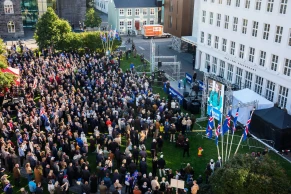
Icelanders will vote Saturday on whether the country should restart negotiations to join the European Union, more than a decade after its previous membership talks were suspended.
The referendum comes as Iceland reassesses its ties with Europe amid economic pressures at home and rising geopolitical uncertainty across the North Atlantic.
The result is expected to be close.
What are Icelanders voting on?The nationwide referendum on Aug. 29 will ask voters a straightforward question: Should Iceland reopen negotiations on EU membership?
The Althingi, Iceland’s parliament, approved the referendum in May by 34 votes to eight, with 14 lawmakers abstaining.
It is the first time Icelanders have been directly asked to decide through a referendum whether the country should resume EU accession talks.
A “Yes” vote would not automatically make Iceland an EU member. It would instead authorize the government to restart negotiations and determine what conditions could be secured for Iceland.
If an accession agreement is eventually reached, voters would have another chance to decide whether to approve it. Prime Minister Kristrun Frostadottir has said Iceland would only join the EU if the public approves membership in a second referendum.
Iceland already maintains close economic and travel links with the EU. It has been part of the European Economic Area since 1994 and is also a member of the Schengen Area and the European Free Trade Association.
Through the EEA, Iceland has access to the EU single market and follows a large portion of EU legislation, although it does not have a vote in many of the decisions behind those rules.
Why has EU membership returned to the agenda?Iceland submitted its EU membership application in 2009, after the global financial crisis severely damaged its banking sector and weakened the Icelandic krona. Formal negotiations began the following year.
The process effectively stalled after the 2013 election, when the EU-skeptic Independence Party and Progressive Party formed a government. The new administration halted the talks, with fisheries and agriculture among the major unresolved issues.
In 2015, Iceland notified Brussels that it no longer wanted to be treated as an EU candidate country.
The issue resurfaced after another political change. A coalition government formed in December 2024 by the Social Democratic Alliance, Reform Party and People’s Party promised to hold a referendum on whether to continue the accession process by 2027. Parliament subsequently set the vote for Aug. 29.
Economic considerations are again playing an important role. The coalition agreement linked the referendum commitment to an examination of Iceland’s currency options. Inflation, elevated interest rates and the economic vulnerabilities of a small, open economy have also contributed to the renewed debate over EU membership.
Lassi Heininen, a Finnish scholar specializing in Arctic geopolitics, told Xinhua that domestic political and economic considerations are the main forces behind the referendum, similar to the factors that prompted Iceland’s original membership application.
But geopolitical developments have also added urgency to the discussion.
Tobias Etzold, a senior adviser at the European Policy Centre in Brussels, said increasing competition among major powers in the strategically important North Atlantic has created greater uncertainty for smaller countries.
He cited concerns over the reliability of the United States, Washington’s interest in Greenland and questions about the future strength of NATO.
Iceland is a NATO member but has no standing army. Etzold said uncertainty surrounding US President Donald Trump’s commitment to regional security has encouraged Iceland to take a closer look at its relationship with Europe.
Foreign Minister Thorgerdur Katrin Gunnarsdottir has also highlighted rising protectionism, unexpected US tariffs and the increasing use of trade measures as instruments of foreign policy.
How close is the vote and what happens afterward?The referendum remains too close to predict.
A Gallup poll published Thursday showed 51.6% of decided voters opposed reopening negotiations, compared with 48.4% in favor. The margin was within the poll’s statistical uncertainty.
A Maskina survey released Tuesday produced the reverse result, with 51.3% supporting renewed talks and 48.7% opposing them.
Fisheries and agriculture are expected to remain among the most contentious issues. Marine products made up 38.9% of Iceland’s merchandise exports in 2025, and voters remain concerned about national control over natural resources, food security and the possible impact of EU policies on Iceland’s fisheries and protected agricultural sector.
The EU has indicated that there could be scope for compromise. EU Commissioner for Fisheries and Oceans Costas Kadis said in April that there was “definitely room for flexibility” on fisheries. EU enlargement chief Marta Kos has also suggested that innovative arrangements could be considered for Icelandic farming and fishing.
If voters approve reopening negotiations, the Icelandic government plans to formally notify the EU, appoint a negotiating team and seek to restart the process.
Icelandic officials estimate that negotiations could take roughly 18 months to two years. Kos has said they might be completed within one to two years because Iceland already follows much of the EU’s regulatory framework through the EEA.
However, the negotiations would not simply pick up from where they ended in 2013. An Icelandic parliamentary committee said in May that Iceland’s negotiating positions would have to be reassessed across all areas after more than a decade of political and regulatory changes.
The referendum could also have wider regional consequences.
Steven Blockmans, deputy director of the International Centre for Defence and Security, said a “Yes” vote could maintain momentum for EU enlargement and bolster the bloc’s geopolitical standing, while a rejection could strengthen doubts about further expansion.
Heininen said an affirmative vote could also influence political debates in Norway and potentially Greenland. If Iceland eventually became an EU member, he said, Nordic politics and aspects of regional security could become more closely linked to Europe, while the EU would gain additional influence in Arctic affairs.
If voters reject reopening the negotiations, the Icelandic government has said it will not restart the accession process. Iceland’s relationship with the EU would then continue primarily through existing arrangements such as the EEA and Schengen.
1 month ago
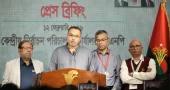
59.44 percent votes cast in national election:EC
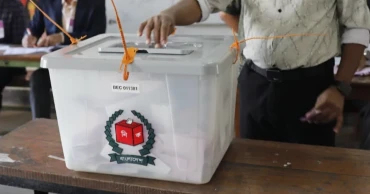
The voter turnout in the national election stood at 59.44 percent, the Election Commission (EC) said on Friday.
The information was shared around 11:30am by the Director of Public Relations wing of the Election Commission Md Ruhul Amin Mallik.
On Thursday night, the commission explained that since postal ballots were added in most constituencies, there was a possibility of error in providing immediate statistics.
The commission said it decided to disclose the turnout rate only after completing the counting process to ensure accuracy.
7 months ago
BNP thanks authorities, urges vigilance until final results announced
Claiming that its victory is inevitable, the BNP on Thursday urged party leaders and activists to remain vigilant until the final election results are announced.
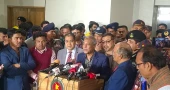
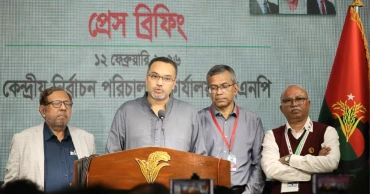
Speaking at a press conference, BNP’s Election Steering Committee spokesperson Dr Mahdi Amin also thanked the government, administration and Election Commission for performing their duty properly in holding the national election and referendum.
“BNP’s victory is inevitable and absolute, and no attempt to undermine it will succeed. We firmly believe that the surge of the sheaf of paddy symbolises the victory of BNP and of democracy. The victory of Bangladesh is imminent, Insha’Allah,” Mahdi told the press conference at the party’s Gulshan election office following the vote closing.
Any attempt to thwart elections to face mass resistance: BNP
Mahdi Amin said the people of the country exercised their voting rights with deep emotion and aspiration, expressing hope that, in a democratic Bangladesh, the government elected by people’s mandate would sincerely uphold those expectations.
“I earnestly call upon the pro-democracy people to remain vigilant to ensure the voting results,” Mahdi said.
Those from BNP and its associate and affiliated organisations who are involved in election steering activities must ensure that there are no irregularities in the proper counting of votes and the announcement of results,” he told the press conference at BNP’s Gulshan election office,” he said.
He thanked the Election Commission, the armed forces, the interim government and law enforcement agencies, along with all others involved in conducting the 13th national parliamentary election and referendum.
Expressing sympathy for those injured and condolences for those killed in election-related violence, Mahdi conveyed BNP’s solidarity with the affected families.
The BNP leader alleged that violence, irregularities and the use of black money had taken place in different areas since the previous night in an attempt to make the election controversial.
He, however, said security personnel played an important role and the public also demonstrated unity in resistance.
Mahdi also alleged that violations of the electoral code of conduct were aimed at offsetting what he described as a visible and large gap between BNP and its rival political party, claiming that voters were threatened and discouraged from going to polling centres. “Without such incidents, voter turnout could have been higher.”
Tarique Rahman confident of BNP's win in landmark election
He said pre-stamped ballot papers and fake votes were found in many places and that some people could not cast their own votes, which he described as a return to undemocratic practices of the past.
Mahdi claimed that attempts were made to create mobs through so-called local fake observers, which hindered voter presence, adding that the Election Commission had been informed earlier. “Although the commission took some steps in certain cases, more sincere and comprehensive measures could have prevented the situation.”
The BNP spokesperson also accused a particular political party of using social media in a way that created fear among voters regarding casting their ballots.
7 months ago
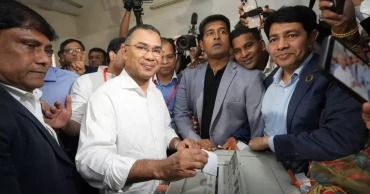
Tarique confident of BNP's victory after casting vote
BNP Chairman Tarique Rahman on Thursday expressed satisfaction after casting his vote, saying he is fully confident about his party’s victory in the national election.
He cast his vote at Gulshan Model High School and College centre in the capital around 9:40pm.
Talking to reporters afterwards, Tarique said people in Bangladesh have been waiting for this day for more than a decade.
He expressed the hope that the voters would exercise their franchise freely and help begin a new democratic journey for the country.
Referring to some unwanted incidents reported from different parts of the country on Wednesday night, Tarique said law enforcement agencies took strict steps to control the situation, which he found encouraging.
He urged voters and party leaders and activists to stay at the polling centres until the end of voting.
“If people remain at the centres throughout the day and exercise their rights, Inshallah any conspiracy can be resisted,” Tarique said.
When asked about the election outcome, Tarique said he and his party are '100 per cent hopeful' of winning.
Responding to a question about his expectations, Tarique said, “Inshallah, I am optimistic. I am firmly optimistic. I personally and firmly believe that if the people of Bangladesh come out throughout the day and exercise their rights by casting their votes, then Inshallah it will be possible to thwart any conspiracy.”
Asked about his party’s priorities if it wins the election, the BNP chief said improving the law and order situation would be the top priority.
“We have said before that if we win, our highest priority will be improving the country’s law and order situation so that people feel safe. The general people across the country must feel secure. That will be our main focus,” he said.
Festive mood marks peaceful start to national election across Bangladesh
Tarique said women constitute half of the country’s population and cannot be left behind.
“Half of Bangladesh’s population are women. We cannot move forward by leaving them behind. In our manifesto and in our commitments regarding women’s empowerment and development, we have outlined our plans. If we are able to form the government, we will start working on these issues from the very first day, Inshallah,” he said.
“We hope that together we will be able to usher in a new democracy in Bangladesh, which has long been the expectation of the people,” he added.
He expressed the hope for a beautiful and stable future with everyone together.
Earlier, Tarique Rahman cast his vote at a ground-floor booth of the polling centre.
It was for the first time he voted at the centre.
Previously, in 2001, he was a voter at Adamjee Cantonment Public School and College centre in Dhaka Cantonment.
Tarique is contesting the election with the 'Sheaf of Paddy' symbol from Dhaka-17 constituency. He is also running from Bogura-6.
His wife Dr Zubaida Rahman and their daughter Zaima Rahman also cast their votes at the same centre. This is Zaima’s first time voting.
Around 9:40am, Tarique entered the polling centre along with his wife and daughter.
His chief election agent Abdus Salam and Prof Farhad Halim Donar were present at the centre to welcome him.
7 months ago
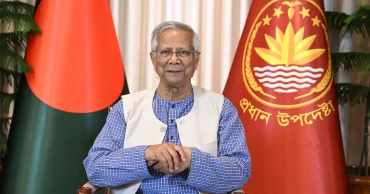
Key in your hands, use it wisely: Prof Yunus tells voters
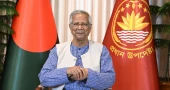
Chief Adviser Prof Muhammad Yunus on Tuesday urged the electorate to make the February-12 election day the ‘birthday of a new Bangladesh’, saying that voters themselves will write the history of the country’s glorious future.
“Your vote will write the history of Bangladesh’s glorious future. Let this election day be the birthday of a new Bangladesh. Let us make this festive election a reality and establish it as a memorable day in history,” he said in a televised address to the nation in the evening.
Calling on citizens to take ownership of the country’s future, the Chief Adviser encouraged voters to open the door to building a new Bangladesh through their valuable votes.
“The key to the country is in your hands. Use that key wisely. May Allah guide us on the right path,” Prof Yunus said.
He emphasised that a vote in the referendum is not merely a stamp on a piece of paper, but a decisive choice that will shape the future of the next generation, the security of families and the overall direction of the nation.
“The decisions you make today will influence education, employment, justice, democracy, and every level of governance. This is a moment when your rights and responsibilities as citizens come together,” he said, urging people to actively participate in the referendum. “Cast your vote and secure your future.”
“Let us make this historic moment a success through responsibility, awareness, and peaceful participation,” he added.
Prof Yunus said voters should go to polling stations with hope rather than fear, with responsibility instead of apathy, and with unity rather than division.
Only through a ‘free, fair, and credible’ referendum, he said, can the people of Bangladesh demonstrate their ability to determine their own future.
Once the elections are completed, he said, the elected government will promptly assume office, marking the end of the interim government’s responsibilities.
“We will hand over power to the newly elected government with joy and pride, wish them all-out success, and return to our respective work after bidding farewell,” Prof Yunus said, adding that the interim government is eagerly waiting for this auspicious moment.
He also urged voters to attend polling stations in groups with their families, in a festive atmosphere, and to exercise their right to vote freely and without hesitation.
Prof Yunus said there are moments in the life of every nation that carry far-reaching significance, days when the future direction of the state, the character and stability of democracy and the fate of future generations are decided. “The day after tomorrow is one such moment, when two elections will be held,” he said.
Flawed, violent polls invite destruction, benefit no one: Prof Yunus tells parties
The Chief Adviser said people will elect a new government and simultaneously determine the future structure of the beloved state of Bangladesh through a referendum. The formal election campaign has concluded and that the responsibility of decision-making now rests with people, he added.
Despite differences in opinion and ideology, Prof Yunus said, political parties have exercised restraint, candidates have acted responsibly, and citizens have remained vigilant. “This environment did not emerge overnight - it is the result of a shared sense of responsibility.”
Prof Yunus expressed sincere gratitude to all political parties, contesting candidates, voters, the Election Commission, civil society representatives, media professionals, and members of the law enforcement agencies and administration involved in the electoral process.
“With your collective efforts, we have reached the threshold of holding elections in a hopeful atmosphere,” he said.
A total of 51 political parties are contesting the elections - the highest number in the country’s history, Prof Yunus said. The total number of candidates, including independents, exceeds 2,000, a figure rarely seen in previous national elections.
He appealed to all candidates to rise above personal or party interests and place the greater national interest first, regardless of the outcome. “Just as victory is an essential part of democracy, defeat is also an inseparable reality of democracy.”
Following the elections, Prof Yunus said, all should dedicate themselves to building a new, just, democratic, and inclusive Bangladesh.
“Therefore, I am not merely requesting, but demanding - leave fear behind and bring courage to the polling stations. Your single vote will not only elect a government; it will respond to 17 years of silence, challenge unbridled fascism, reshape the nation, and affirm that this country will never again allow the voices of its youth, women, and struggling people to be silenced,” the Chief Adviser said.
He said the government has taken all necessary measures to ensure the elections are free, fair, impartial, and peaceful.
A record number of law enforcement personnel have been deployed for the polls, Prof Yunus said.
To maximise the use of technology, CCTV cameras have been installed nationwide on an unprecedented scale. Presiding officers at polling stations are using body-worn cameras, while drones and dog squads have been deployed for enhanced security and surveillance, he said.
“The sole purpose of these measures is to ensure that voters can exercise their right to vote without fear or anxiety and with dignity. Voting rights are not granted at anyone’s discretion; they are fundamental rights guaranteed by our Constitution,” Prof Yunus said.
He emphasised that ensuring a free, fair, and participatory election is not solely the responsibility of the government, but a shared responsibility of every citizen of the state.
8 months ago
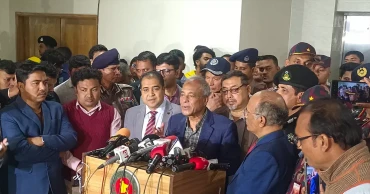
No chance of vote rigging, reaffirms Home Adviser
Home Affairs Adviser Lt Gen (retd) Md Jahangir Alam Chowdhury on Sunday said there is no possibility of vote rigging in the national election, expressing confidence that the polls will be peaceful, fair and festive ones.
“There is no scope for vote rigging. You cooperate with us. If any irregularity happens anywhere, inform us and we will take action immediately,” he told journalists after a law and order coordination meeting at the Rangpur Divisional Commissioner’s conference room.
Responding to questions about whether a fair election was possible amid the current law and order situation, Jahangir Alam said all necessary preparations had been taken in line with the specific needs of different areas.
“These issues were also discussed in today’s coordination meeting. The election will be held peacefully. It will be a free, fair and credible election,” he said.
The adviser said law enforcement agencies, the administration and the Election Commission had completed all preparations despite the short timeframe, leaving no opportunity for irregularities.
Election fever absent in Kurigram’s char areas amid daily struggles
Senior Secretary of the Ministry of Home Affairs Nasimul Gani, Rangpur Divisional Commissioner Md Shahidul Islam, Range Deputy Inspector General (DIG) Aminul Islam, Metropolitan Police Commissioner Md Majid Ali, and District Administrator Mohammad Enamul Ahsan were present at the meeting, along with senior officials from the field administration, intelligence agencies and law enforcement bodies.
Representatives from the Armed Forces Division, Rapid Action Battalion (RAB), Border Guard Bangladesh (BGB), Ansar and Village Defence Party, as well as regional and district election offices, also attended the meeting.
8 months ago
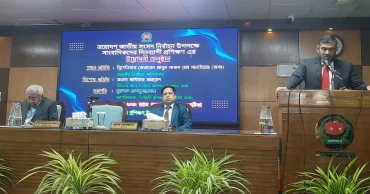
BD Polls: EC rejects proposal to increase polling centres, cites voting time
Election Commissioner Brig Gen (retd) Abul Fazal Md Sanaullah on Wednesday (December 03) said each voter would take an average of three minutes and 52 seconds to cast their vote but rejected increasing polling centres for the next election.
Sanaullah made the remarks while addressing the inaugural session of a daylong journalist training programme at Agargaon, Dhaka ahead of the national election.
Highlighting the importance of the election, he said, “The upcoming election is going to set the tone for what kind of country and democratic journey we want in the future.”
Read more: EU preparing large observer mission for Bangladesh election: Miller
Seeking cooperation from all in holding an acceptable election, Sanaullah said the election system has been heavily damaged and they are trying to repair it.
For the nation’s sake, he said, all must ensure a good election and everyone must responsibly play their part.
To prevent fake journalists from entering polling areas with bogus cards, the election commission is going to initiate a QR‑code system, Sanaullah added.
Read more: Over 156,000 Bangladeshi expats registered so far to vote
10 months ago

Steps of Hope: BNP to go door to door for hearts and votes
With the next national election only a few months away, BNP has decided to reach people directly through extensive door-to-door campaigns, aiming to build trust, counter propaganda and create a strong presence in the election field.
The party has also planned to immediately inform the grassroots about its candidates in over 150 constituencies to reduce internal conflicts and make its supporters more election-focused ones.
The decisions were taken at a BNP standing committee meeting on Monday night after reviewing the latest political situation, said a policymaker who attended the meeting, requesting anonymity.
He said their door-to-door campaign will particularly focus on mobilising women and youths from all walks of life, aiming to rebuild public trust that the party lost due to missteps and controversial activities of some leaders over the past year.
The BNP leader said poor results in recent student union polls at two universities and concerns over Islamic parties’ street programmes aimed at disrupting the February national election have prompted party policymakers to intensify grassroots engagement and mass contact through direct campaigns across the country.
“BNP leadership has realised, especially after the DUCSU elections, that certain mistakes were made. Our campaign is meant to acknowledge those shortcomings before the people and reestablish confidence,” he said.
The policymaker said they will explain to the people that unlike the government, BNP does not have state power to act against wrongdoers, but the party has shown its seriousness through organisational measures.
He said the door-to-door campaign will also seek to counter ‘negative propaganda’ spread on social media regarding BNP’s stance on the Liberation War, India and other sensitive issues.
Another BNP Standing Committee member said their meeting reviewed the current political situation, including the programmes announced by Jamaat-e-Islami and several other parties, who will begin protests from Thursday to press for proportional representation and other demands.
He said they see these moves as part of wider political bargaining, and they believe their own campaign must focus on connecting with ordinary people.
Salahuddin sees security risks if polls miss February deadline
The BNP leader said the campaign will not only involve male activists but also ensure strong participation of women leaders and workers. “We will explain to people why the election must be held in February.”
He said the party will also announce its candidates in over half of the total constituencies, aiming to field one candidate per seat in the next election. “Possible contenders are already carrying out local campaigns. The central leadership has instructed them to avoid internal conflicts or grouping and to work together in line with party discipline.”
The BNP leader said while Jamaat-e-Islami has recently announced fresh programmes to press for the July Charter and proportional representation, BNP does not want to engage in confrontational politics.
Tarique for urgent steps to tackle post-LDC graduation challenges
“Instead of taking a counter-street programme, BNP is adopting a mass-oriented strategy, going to every household to explain its position and vision for the upcoming election,” he said.
The standing committee member said they believe this campaign will help BNP address misperceptions and clarify why certain organisational decisions were taken.
Contacted, BNP Standing Committee member Khandaker Mosharraf Hossain said their party has decided to go to the people and carry out an election-focused campaign to present their views directly.
“Our campaign will focus on the election. We will engage with the people through our campaign to share our political views and thoughts, rather than directly counter any parties’ street programme,” he said.
Asked when they may start the campaign, the BNP leader said they have decided to carry out such a programme considering the overall political situation. “We’ll now work out our programmes and then announce our plans.”
Replying to a question, Mosharraf said they are not going to counter any party’s political programme through their campaign.
“Jamaat and other parties have announced their programmes making certain demands to the interim government and now it’s the government’s responsibility to respond. Any party can make demands, but the government should say whether it can accept those or not,” he said.
Jamaat’s movement threat over PR part of plan to create chaos: Rizvi
Responding to another question, the BNP leader said they thoroughly assessed the DUCSU election and its outcome at their party forum.
He, however, downplayed the significance of student union election results, such as DUCSU and JUCSU polls, on national election outcomes, citing historical precedents where student leaders did not turn campus success into parliamentary gains for their parties.
BNP Standing Committee member Salahuddin said any political party can go to the people or take to the streets with their demands and statements, exercising their democratic rights.
“We don’t consider any party as our opponent. During the election we may contest against each other, but we are not political enemies. We consider all democratic parties as our political friends and companions. We want to do politics in a cordial and friendly atmosphere, as per the desire of the people,” he said.
He said Jamaat and some Islamist parties have announced to take to the streets with their demands. “We’ll also go to people with our messages, statements and opinions and people will judge them.”
The BNP leader said there are various methods of public engagement such as rallies, processions, mass contact, campaigns and leaflet distribution. “The main thing is we’ll inform people about our position and drum up their support.”
1 year ago
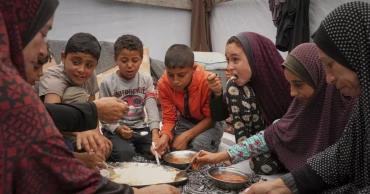
Israeli ministers to vote on whether to expand Gaza offensive
Senior members of Israel’s Cabinet were expected to convene Sunday to decide whether to broaden the country’s military campaign in the Gaza Strip, amid preparations for a larger offensive that include summoning thousands of reservists, according to Israeli officials.
On the same day, air traffic at Israel’s primary airport was temporarily suspended after a missile fired by Iranian-backed rebels in Yemen triggered alerts, police said. The military confirmed a projectile had landed near the airport, though it was unclear whether it was the missile itself or debris from an interceptor launched by Israel’s defense system.
The move to intensify operations in Gaza comes over a year and a half into the war, as the humanitarian situation in the enclave grows increasingly dire.
In an effort to pressure Hamas into agreeing to a ceasefire on Israel’s terms, the Israeli government halted the flow of goods into Gaza in early March. That decision has contributed to what aid groups say is the territory’s worst humanitarian crisis since the conflict began, affecting its population of 2.3 million.
Pakistani Ranger detained by India amid war tensions between countries
A temporary truce between Israel and Hamas that had lasted eight weeks collapsed in March. Israel resumed its offensive on March 18, taking control of parts of Gaza and causing heavy casualties. Local health officials report that hundreds of Palestinians have been killed since then. At least six Israeli soldiers have also died during this renewed phase of fighting.
One Israeli official said the security Cabinet would meet Sunday evening to vote on escalating the operation, while a military source confirmed that thousands of reserve troops were being called up. Both officials spoke anonymously, as required by protocol.
Far-right National Security Minister Itamar Ben-Gvir, speaking to Israeli Army Radio, voiced his support for a broader campaign. “We need to increase the intensity and continue until we achieve total victory. We must win a total victory,” he said, without offering specifics.
The Gaza war has continued to draw regional attacks against Israel, including Sunday's missile strike from Yemen by Houthi rebels, which activated sirens across several regions. Police confirmed debris had landed along Israel’s coast, though it remained unclear whether it came from the original missile or an interceptor.
Footage shared by Israeli media showed smoke billowing near the airport, as travelers screamed and scrambled for cover. Authorities did not immediately confirm whether the projectile landed within the airport grounds but said access to the area had been restricted as they assessed the situation.
1 year ago

FBCCI to vote to elect new directors on Monday
The Federation of Bangladesh Chambers of Commerce and Industry, the country's apex trade body, will vote to elect a new Board of Directors for the term 2023-2025 at the Bangabandhu International Conference Center on Monday.
This election is called to maintain formality as of the total 80 posts of the directors, 34 (17 from the chamber group and 17 from the association group) - are nominated while the remaining 46 are elected (23 from the chamber group and 23 from the association group).
Apart from this, 49 people are contesting as candidates against 23 posts of sector-wise association groups. Out of this, 23 people are contesting as director candidates from the panel of trade unions, 23 from the combined trade union panel, and 3 are contesting as independent candidates.
On Monday from 9 am to 4 pm non-stop polling, the votes will be counted and the names of the elected will be announced on that day. Elections for the posts of FBCCI President, Senior Vice-President, and six Vice-Presidents will be held on August 2, 2023, by the elected directors.
A Matin Chowdhury, Chairman of the Election Board told UNB that all the preparations for the election have been completed.
“'Necessary measures have been taken so that everyone can vote properly. We will try our best to complete this election in a fair and happy atmosphere,” he said.
Earlier, the FBCCI Election Board informed in the polling instructions that the polling officers will provide only one ballot paper to a voter for voting. No duplicate or extra ballot shall be issued to any voter.
FBCCI Board of Directors' poll on July 31, candidates submitting nomination papers
“Voter ID card will be kept from the voter at the time of delivery of ballot paper, which will not be returned. A voter can vote for 23 of the candidates mentioned in the ballot paper. If more or less than 23 candidates are voted, the said ballot will be considered invalid,” the election board said.
According to the instructions of the Election Board, no one other than the voter will have access to the polling station. No candidate or voter can enter the polling station without the prescribed voter ID card.
Candidates cannot campaign and show down within 100 yards of the polling station on polling day. No candidate can give gifts to voters in or around the polling station. Even a candidate or voter cannot carry any type of firearm or any dangerous object in the polling station.
FBCCI-HSBC to work together to boost exports between Bangladesh-UK
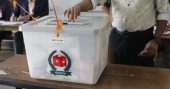
It should be noted that 15 minutes before polling, the transparent ballot box will be opened and displayed in the presence of all the candidates and the ballot box will be sealed and closed.
FBCCI and Faction sign MoU to boost research, innovation
3 years ago