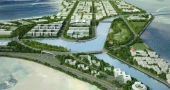
Bangladesh Economic Zones Authority
Mirsarai to host Bangladesh’s first defence manufacturing zone
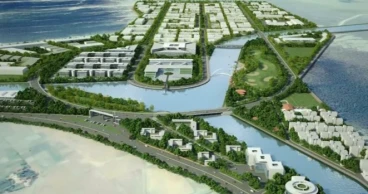
The Bangladesh Economic Zones Authority (BEZA) will set up the country’s first Defence Industrial Zone in Mirsarai, Chattogram, to produce military equipment for domestic use and export.
The decision was taken at a meeting of the Investment Promotion Agency (IPA) on Monday, chaired by Chief Adviser Prof Muhammad Yunus.
Speaking at a post-meeting press conference at the Foreign Service Academy, BEZA Executive Chairman Chowdhury Ashik Mahmud Bin Harun said the zone will be developed on about 850 acres of land in Mirsarai, and the decision was made in consultation with the Armed Forces Division and with government approval.
Ashik said the zone will initially focus on the production of basic warfare equipment. “Recent wars have shown that shortages often arise in basic military items such as bullets or tank components. If we have a dedicated zone to produce these locally, it will not only meet our own needs but also create a scope for exports in the future.”
Over 4 lakh expats cast votes through postal ballot till Monday
He said the land earmarked for the project had remained unused after the previously planned Indian Economic Zone was cancelled. “Several countries have already expressed interest in investing in this defence industrial zone, but their names cannot be disclosed due to security and confidentiality reasons.”
On arms exports, Ashik said Bangladesh’s existing arms-manufacturing facilities are not sufficient to meet full domestic demand.
“Once this zone is operational, we will gradually meet local demand and then move towards exports. Initially, work may begin on around 50 acres, with expansion taking place in phases. It has already been included in the master plan,” he said.
Alongside the defence zone, BEZA has also decided to establish a Free Trade Zone (FTZ) on 650 acres of land in Anwara, Chattogram.
Ashik said the FTZ will allow any country to store goods there without customs complications. “Dubai earns around $194 billion annually from a similar free trade zone, which accounts for 34 percent of its GDP. Bangladesh also wants to tap into the potential of the Bay of Bengal in the same way.”
Referring to trade facilitation, he said the absence of a free trade zone is one of the reasons why American cotton does not come to Bangladesh in large volumes. “If an FTZ is set up here, exports will become easier. Countries like the United States could also use this zone to re-export goods to other destinations such as Vietnam.”
The BEZA Executive Chairman said establishing a free trade zone would require amendments to eight legal and regulatory provisions involving multiple ministries. “We are completing the policy-level work. The elected government will carry out the work execution.”
Market stable, prices likely to ease further in Ramadan: Adviser Bashir
Ashik also said BEZA has decided to work on reviving the Kushtia Sugar Mill on 200 acres of land. In addition, to protect agricultural land, BEZA has decided to bring 331 municipalities—previously outside its jurisdiction—under its purview.
These initiatives are part of a broader effort to promote planned industrialisation while safeguarding agricultural land.
9 months ago
BEZA invites foreign investment in ambitious NSEZ project in Ctg
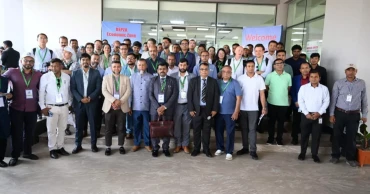
The Bangladesh Economic Zones Authority (BEZA) on Monday invited foreign investors to explore opportunities at the National Special Economic Zone (NSEZ), one of the country’s most ambitious development initiatives aimed at transforming its industrial landscape.
The call came as a delegation of around 60 foreign investors visited the NSEZ to assess its potential.
"We want to show the world that Bangladesh is a stable country with huge investment opportunities," one of the BEZA officials said welcoming the investors from South Korea, India, China, Japan, Australia and the Netherlands at the NSEZ.
The visit is part of the Bangladesh Investment Summit 2025 that kicked off in Dhaka on Monday marking a milestone event aimed at reinforcing the country’s commitment to economic progress, investment-friendly policies, and sustainable growth.
The NSEZ is strategically situated beside Bay of Bengal in south-eastern Bangladesh, with transportation routes such as Dhaka-Chattogram national highway Chattogram port and airport.
"For the first time, foreign investors have been brought to see the facilities in person. They have seen the opportunities in their own eyes and they are very impressed," Chief Adviser's Deputy Press Secretary Abul Kalam Azad Majumder told UNB.
Govt decides to transfer 9, 467-acres land in Sonadia from BEZA to Forest Dept
Attracting both domestic and foreign investment in chemical, basic steel, garments, leather products, pharmaceuticals, electronics, automobiles and agro-processing industries and promoting export-oriented and import substitute industries to support local value chains.
This industrial city will also accommodate residential area, financial hub, city centre, educational institutions, tourism facilities and other amenities.
To ensure sustainable industrialization, this city will comprise renewable energy solutions, environmental and social compliance management, green zones, dedicated service areas for effluent treatment and waste management.
The industrial enclave is expected to boost export earnings, contribute significantly to GDP growth and serve as a model for economic zones across Bangladesh.
The NSEZ has attracted approximately $19 billion worth local and foreign investment proposals.
As of today, the total number of investors is about 155, predicted to establish 500 industries in the future, BEZA officials said.
Dutch-Bangla Chamber signs MoU with BEZA
1 year ago

Progress in SEZs slows down for land scarcity amid pandemic
The progress of setting up Special Economic Zones (SEZ) has slowed down due to complexities in land acquisition and development activities due to the impact of Covid-19.
The Bangladesh Economic Zones Authority (BEZA) was established by law in 2010, with the aim to establish 100 economic zones by 2030 across the country. Special focus would be given to backward and underdeveloped regions to encourage rapid economic development through diversification of industry, employment, production and export’.
The Foreign Investors Chamber of Commerce and Industry (FICCI) in a survey report recently expressed their concern over the slow pace of SEZs project implementation.
Read: NBR slaps additional duty on 135 luxury items to discourage import
The organization represents investors from a total of 35 countries. About 90 percent of the total foreign direct investment (FDI) in the country comes from FICCI members.
The companies have investments in banking, non-bank financial institutions, cement, ceramics, chemicals, construction, housing, consulting, fast-moving consumer goods, gas-electricity, leather and leather goods, clothing and transportation.
According to the FICCI, the government has so far approved 97 zones, comprising 68 public and 29 private economic zones.
4 years ago
.jpg)
Special economic zones changing Bangladesh's industrial landscape: BEZA
The special economic zones are changing the industrial landscape of Bangladesh, Bangladesh Economic Zones Authority (BEZA) Executive Chairman Paban Chowdhury has said.
He said they are building a separate SME zone at Bangabandhu Shilpanagar in Mirsarai to raise the contribution of the SMEs to the GDP.
Paban Chowdhury was addressing as the chief guest at a webinar titled ‘Enabling Investment Climate to Realize Great Potential’ held recently.
Citi, in partnership with Chittagong Chamber of Commerce and Industry (CCCI) Bangladesh Center of Excellence (BCE), organised the webinar.
The discussion focused on the diversification of investment, readiness of economic zones to facilitate such diversification of investments, and potential sectors for investment.
The session was chaired by CCCI President Mahbubul Alam and moderated by N. Rajashekaran (Shekar), Citi Country Officer and Managing Director, Citibank, N.A. Bangladesh, said a media release on Monday.
Also read: Bangladesh to see more economic zones: Salman Rahman
Ahsan Khan Chowdhury, Chairman & CEO, Pran-RFL Group, Aameir Alihussain, Managing Director, BSRM Group of Companies and Miran Ali, Managing Director, Bitopi Group were among the distinguished panelists at the virtual discussion.
5 years ago
.jpg)
2 companies to invest $28.69 million in Bangabandhu Shilpa Nagar
Bangladesh Economic Zones Authority (Beza) on Monday signed agreements with four companies, including two Chinese ones to invest in Bangabandhu Sheikh Mujib Shilpa Nagar.
5 years ago

Inter-Asia Group to develop Sabrang Tourism Park in Cox’s Bazar
Singapore-based Inter-Asia Group Pte Ltd will develop the Sabrang Tourism Park in Cox’s Bazar.
6 years ago

Sreda teams up with BEZA to promote renewable energy at BSMSN, other economic zones
Sustainable and Renewable Energy Development Authority (Sreda) has tied up with Bangladesh Economic Zones Authority(BEZA) to promote renewable energy and energy efficiency at Bangabandhu Sheikh Mujib Shilpa Nagar (BSMSN) and all other economic zones across the country.
6 years ago

BEZA to sign land lease deal with Yabang Group
Bangladesh Economic Zones Authority (BEZA) is scheduled to sign a land lease agreement with Yabang Group of China on Tuesday.
6 years ago

Bashundhara and PowerPac to set up bag manufacturing plant at Mongla Economic Zone
PowerPac Economic Zone Private Limited signed a Land Lease Agreement (LLA) with Bashundhara Industrial Complex Limited (BICL) to provide 30 acres of land for a bag manufacturing plant at Mongla economic zone.
6 years ago