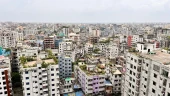
Housing
Bangladesh Bank to launch Tk 10,000 crore bond for housing, rail projects
Bangladesh Bank announced plans to issue the ‘Bangladesh Government Special Sukuk-1’, a Shariah-compliant bond worth Tk 10,000 crore, to finance selected national infrastructure and welfare projects.
The decision was finalised after meetings held last week by the central bank’s Shariah Advisory Committee under the Debt Management Department, which were presided over by Bangladesh Bank Deputy Governor Dr Md Kabir Ahmed.
According to the central bank, the Sukuk will have a tenure of 10 years and carry an annual profit rate of 9.75 percent.
Read more: Dhaka’s skyline transforms as flat owners reach 3.5 lakh
The bond will be issued based on the ‘Ijarah’ (leasing) method, a Shariah-compliant financing structure approved by the committee.
Proceeds from the issuance will support seven housing projects for government employees constructed by the Public Works Department.
Besides, the funds will be used for specific rail services operated under Bangladesh Railway, underscoring the government’s focus on both housing and transport infrastructure.
The ‘Special Sukuk-1’ is scheduled for issuance on January 14, 2026, through a private placement in favour of Sammilito Islamic Bank PLC.
The Sukuk represents part of Bangladesh’s ongoing efforts to leverage Shariah-compliant financing instruments to fund public projects while providing investors with profit-generating opportunities that align with Islamic finance principles.
Read more: House Rent Issues in Dhaka: A Growing Concern
8 months ago
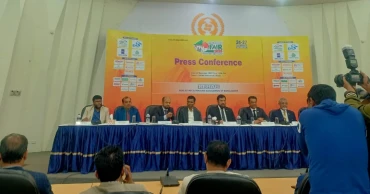
Dhaka’s skyline transforms as flat owners reach 3.5 lakh
The number of flat owners in Dhaka has risen to around 350,000 due to the steady expansion of the housing sector, said Real Estate and Housing Association of Bangladesh (REHAB) President Wahiduzzaman on Monday (December 22, 2025).
Wahiduzzaman said this while announcing the dates of the four-day ‘REHAB Fair 2025’ at a programme held at the CIRDAP Auditorium in the capital.
He said housing projects are expanding rapidly in Dhaka, leading to a growing number of flat owners. Buyers are showing increasing interest in condominiums developed on limited land.
“Currently, around 350,000 families in Dhaka own flats. The condominiums being developed now are of international standard. A flat is not just a place to live—it has become a marker of social status. We want to ensure that everyone gets the opportunity to become a flat owner in a fair and non-discriminatory manner in the future,” Wahiduzzaman said.
Read more: Tk 2105 cr housing projects for July martyrs’ families, injured get govt nod
Referring to the gazette of the Detailed Area Plan (DAP) published on December 14, the REHAB leader said they are satisfied with the new regulations, noting that many inconsistencies and complications of the previous DAP have been resolved.
“This DAP does not favour any particular group. It is a balanced DAP, which is why we have expressed our satisfaction. However, there are still some issues, and we will sit with the authorities to discuss them,” Wahiduzzaman added.
He said becoming a REHAB member is mandatory for anyone wishing to do business in the housing sector, as stipulated by a circular issued by the Ministry of Commerce.
About 1,500 real estate companies are still outside REHAB membership, and initiatives are underway to bring them under the association. “Many people fall victim to fraud by purchasing flats from non-REHAB members. We are working sincerely to address this problem,” he said.
Speaking about flat prices in Dhaka, REHAB Senior Vice President Liakat Ali Bhuiyan said prices in some areas exceed Tk 10 million mainly due to high land costs, while flats are comparatively cheaper in areas where land prices are lower. However, he noted that flat prices have increased overall compared to the past.
Read more: 3-day JCX Housing Fair kicks off in Dhaka
Meanwhile, REHAB Vice President-2 Akter Biswas said the association is committed to constructing earthquake-resistant buildings by following proper planning guidelines.
REHAB plans to organise a workshop in the future to further raise awareness among real estate developers on the issue, he added.
9 months ago
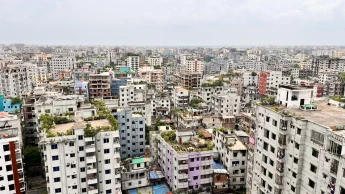
House Rent Issues in Dhaka: A Growing Concern
Dhaka, the fourth largest city in the world with a population of over 24 million people, faces a growing and significant challenge. The densely populated megacity in Bangladesh sees its population expand on a daily basis with people frequently migrating to Dhaka. The main driving forces behind migration to the city are poverty, job search, and societal pressure. According to the Population and Housing Census 2011, over 12 million people lived in the Dhaka division. But the Population and Housing Census 2022 reported that nowadays 44 million people live in the Dhaka division. So, the population growth rate at 1.74% in the division now stands. Between 1991 and 2001, population growth was 4.15 per cent and 7 per cent, respectively.
The Tenant-Landlord Burden and the Soaring Cost of Housing
The rental housing market in Dhaka is defined by a severe power imbalance between landlords and tenants, but the crisis runs deeper than a simple lack of regulation. It is fuelled by a vicious cycle where rampant land speculation directly translates into an unbearable burden for the city's millions of renters.
Increasing migration to cities and high population growth have resulted in a rapid decline of affordable urban land, causing house prices to exceed the reach of middle- and low-income households. This is not just due to a housing shortage but because land itself has been transformed into a high-yield financial asset. Land prices in Dhaka, for example, increased by an unprecedented 2,700% between 2000 and 2021, turning property into a speculative commodity rather than basic shelter.
In recent years, the cost of housing in Dhaka has been rising for clear financial reasons. With gains from land speculation far exceeding returns from traditional financial systems, a flood of capital—including a huge portion of the nation's 'black money' and a significant amount of foreign remittance—pours into the real estate market, driving prices ever higher. Consequently, house rent has been rising dramatically. Roughly 20–25% of Dhaka's overall population own their home; the remaining 75–80% of people rent their homes. The majority of middle-class families in this group are finding it difficult to deal with the unchecked increase in rent prices. And it is estimated that 65 per cent or more of their monthly income goes toward paying rent.
This unregulated environment persists despite the existence of a legal framework. The House Rent Control Act of 1991 was enacted to protect tenants from arbitrary hikes and unfair eviction. However, the law is widely considered obsolete and is almost never enforced, leaving tenants with little to no practical legal recourse against a market driven by powerful financial interests.
Read more: Rickshaws in Dhaka: The untold mystery of their numbers
Due to the rising demand for rental homes, landlords are raising rents. For many property owners, maximising rental income is essential to justify their high-cost investment in an asset-driven market. On average, tenants in Dhaka report annual rent hikes of 8-10% and often significantly more in high-demand neighbourhoods, far outpacing income growth. The house owner fixes the rent for the house as per their wishes, even though it is seen that sometimes house rent increases yearly three or four times. In rare instances, landlords would also put pressure on renters to vacate the property if the latter is unable to comply with the request.
In response to these mounting pressures, the new administration has acknowledged the public's concerns. Mohammad Ejaz, Administrator of the Dhaka North City Corporation, addressed the issue, stating, "We are also deeply concerned about this matter. It's truly unfortunate when 65% of a person's income is spent on house rent. We will take measures to bring rent under control. Furthermore, steps will be taken to amend and update the House Rent Control Act of 1991." He also pledged that these actions would be undertaken within their current term in office.
This crisis is felt across the city, although rents vary significantly between neighbourhoods like Bashundhara, Gulshan, Mohammadpur, and Mirpur. Multiple factors, including geographical location, house size, number of bedrooms, and number of bathrooms, are considered. Ultimately, these factors combine to create a deeply challenging rental market where the most powerful force is no longer just location or size but the treatment of housing as a speculative tool for financial gain.
The Economic Cost of High Rent
When high rents absorb a significant portion of the household income, leaving less available for consumption, investment or other expenses, it reduces the overall multiplier effect of the money circulating through the economy. When landlords or investors extract high rents without improvements to the housing or create new supply, this can cause market inefficiencies. Wealth is amassed by the rent-seekers, and less money is available for generating new goods or services. Moreover, young salary earners spending a giant chunk of their earnings means they have less money available for self-improvement, marriage or family, and the pursuit of higher education. Burdening the youth population with high rents means their futures are being affected during a time when they need to grow.
Read more: Is a rickshaw-free Dhaka really possible?
Government Structure and City Administration
The Local Government (City Corporation) Amendment Bill 2011, which was approved by the Bangladeshi Parliament, was used by the government to dissolve the Dhaka City Corporation on November 29, 2011, following its introduction to the Parliament on November 23. The city corporation will be divided into two corporations, North and South, with the southern wing controlling a larger portion of the city. Due to the fact that each corporation would be autonomous, Dhaka will have two mayors. According to the government, bifurcation would guarantee that the citizens of the city would receive better quality municipal services.
A total of 54 wards make up the Dhaka North City Corporation, which includes the thanas of Mirpur, Mohammadpur, Sher-e-Bangla Nagar, Pallabi, Adabor, Kafrul, Dhaka Cantonment, Tejgaon, Gulshan, Rampura, Banani, Airport, Khilkhet, Vatara, Badda, Uttara, and others. The Dhaka North City Corporation (DNCC) is currently led by Mohammad Ejaz, who was appointed as Administrator on February 12, 2025.
The 75 wards that make up Dhaka South City Corporation include those in Paltan, Motijheel, Jatrabari, Kotwali, Sutrapur, Bangsal, Wari, Ramna, Gendaria, Chowkbazar, Lalbagh, Hazaribagh, Dhanmondi, Shahbagh, New Market, Khilgaon, Kamrangirchar, and other thanas.
The Dhaka North City Corporation (DNCC) is currently led by Mohammad Ejaz, who was appointed as Administrator on February 12, 2025.
Currently, the Dhaka South City Corporation (DSCC) is being administered by Md. Shahjahan Miah, who was appointed as Administrator on February 13, 2025. There is also a recent court declaration stating that Ishraque Hossain is the new mayor of DSCC, but this is pending further action.
Read more: The Majestic Bengal Tiger: Conservation Success in the Sundarbans
Efforts and Challenges in Addressing Dhaka’s Housing Crisis
Urban Planning Initiatives: Both Dhaka North City Corporation (DNCC) and Dhaka South City Corporation (DSCC) have collaborated with the Chittagong Development Authority model to improve urban planning, with DNCC focusing on traffic management in high-density areas like Mirpur.
Housing Regulation Gaps: Despite administrative decentralisation, neither DNCC nor DSCC has implemented comprehensive rent control policies, leaving tenants vulnerable to arbitrary rent hikes. The lack of standardised rent criteria, as proposed, remains unaddressed.
Administrative Instability: The recent administrative appointments and the pending mayoral status for DSCC highlight governance challenges, potentially delaying critical housing reforms.
Overpopulation Pressure: The rapid population growth (1.74% annually) continues to strain municipal resources, with both corporations struggling to address housing shortages effectively.
Read more: Will the housing boom in Dhaka bury it alive?
Way Forward: People-friendly Standards and Regulation
To address the market imbalances and inefficiencies and to ensure a better future for the Bangladeshi youth, who make up more than half the country’s population, house rent should be fixed by a standard. The government must establish a criterion for determining a house's rent. It lessens the unfairness toward the tenants. The house rents in Dhaka city can be fixed upon the aforementioned thirteen features by enforcing this method of estimation, making it impossible for landlords to voluntarily determine the house rent.
Read more: As concrete spreads, Dhaka’s green canopy fades
1 year ago
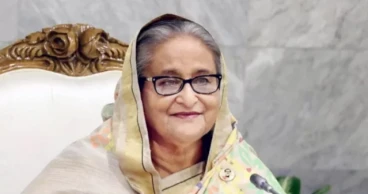
Not only the wealthy, rickshaw pullers and day labourers should be living in flats too: PM
Prime Minister Sheikh Hasina expressed her desire for inclusive housing development in Bangladesh, emphasizing that not only the wealthy should live in flats but also rickshaw pullers, daily labourers, and ordinary working people.
She shared these views today (11 May, 2024) while speaking at the 61st convention of the Institution of Engineers, Bangladesh (IEB) held at its premises in Dhaka.
The Prime Minister highlighted ongoing government initiatives aimed at providing flats for slum dwellers and low-income groups, including those traditionally marginalized such as sweepers, Harijans, and Dalits.
She mentioned that construction projects had already commenced to enable these communities to live healthy, dignified lives affordably.
None can isolate me from people: PM Hasina tells JS
Highlighting construction of houses for the landless and homeless under the Ashrayan project, the Prime Minister said that 334 upazilas of 21 districts have been declared free of landless and homeless families.
“Not even a single family in Bangladesh will be landless or homeless, that is our goal,” she said.
The Prime Minister also spoke about leveraging the intellectual power of the people to build the nation and underscored the importance of embracing modern technologies, such as satellites and nuclear power, to avoid being left behind.
“It doesn't matter what this or that group says. My concern is whether people of my country are doing well, whether they are improving, whether their fate is changing,” the PM said.
Prices have increased, but rural people are in better shape: PM Hasina
In her speech, Sheikh Hasina reflected on the development achievements of her administration over the past 15 years, including significant increases in per capita income and the purchasing power of grassroots populations.
The Prime Minister affirmed her government's continued dedication to improving the lives of all Bangladeshis and advancing the country’s development agenda.
2 years ago

Housing loans on the up as more consumers desire to own property
Banks and financial institutions in Bangladesh are offering long-term housing loans to customers, creating opportunities to become owners of property.
Some institutions are even approving loans within 48 hours of receiving the customer's application. However, most banks and financial institutions thoroughly verify the identity of the customer and the quality of his or her employer before granting loans.
As a result, the amount of default loans in this sector is less than in other sectors.
The overall size of the total housing loans portfolio of all banks was Tk85,663 crore at the end of June 2022, up from Tk77,698 crore in June 2021, an increase of Tk7964 crore or 10.25 percent in one year.
Also read: Best Home Loans in Bangladesh to Build Your Dream Nest
Five banks have disbursed most of the loans in the housing sector in a year. Out of this, IFIC Bank disbursed Tk 1,812 crore, Agrani Bank Tk 1,102 crore, Islami Bank Tk1,190 crore, Sonali Bank Tk 463 crore and Janata Bank Tk 139 crore.
President of Real Estate & Housing Association of Bangladesh (REHAB) Alamgir Shamsul Alamin told UNB that the housing sector has created opportunity to become flat owner for service holders.
Lower-middle income groups of people can dream to become a flat or plot owner jointly or individually in the housing sector, which is secured and a potential safeguard of hard earned money, he said. He is also managing director of Shamsul Alamin Real Estate Limited.
“There is no accurate count of how many people have acquired flats with loan facilities,” he said.
Read More: BBS thanks Walton for providing Tab in population & housing census
Around 54,000 people have bought flats with loans from the financial institution Delta Brac Housing or DBH Finance. And the number of customers who bought flats or built houses with loans from IFIC Bank is 18,500.
IFIC Bank Managing Director, Shah Alam Sarwar said, “We have achieved unprecedented success in housing loans. This financing is being done through our 1,200 branches and sub-branches.”
There is no hassle to get a loan, no extra charges. As a result, eligible customers who come to take loans take it easy, he said.
Banks are approving a maximum loan of Tk2.0 crore at the individual level to buy a flat. In this case, the ratio of bank loan and own money is 70:30. That is, to buy a flat of Tk1.0 crore, a client has to provide Tk30 lakh, and the bank finances Tk70 lakh.
Read More: Delta Brac Housing Finance Corp. Ltd renamed as DBH Finance PLC
On the other hand, there is no ratio in the case of loans to non-banking financial institutions. These institutions fix this ratio themselves. The maximum interest rate for housing loans from banks is 8 percent and interest from financial institutions is 12 percent.
IFIC Bank, the first private sector bank started offering these loans at reduced interest rates. Even in early 2015, the bank was charging 11.95 percent interest against home loans, which was reduced to 9.99 percent in December 2015.
At that time the interest rate in the banking sector was more than 15 percent. The IFIC Bank has a separate housing loan facility called 'Amar Bari'. The bank provides loans up to Tk2.0 crores for house construction and Tk35 lakhs for the construction of semi-finished buildings.
Demand has been created among the people for housing loans. As a result, more than 1000 real estate companies have been established in the country. Bangladesh House Building Finance Corporation (BHBFC) has also been established as a government initiative.
Read More: IFC, BRAC Bank to launch Bangladesh’s first ever housing bond
Apart from this, specialized financial institutions have been launched to provide loan facilities for the housing sector. As a result, people are able to own a flat with a loan along with their savings. Loans are also available for house construction. Institutions in the housing sector have now reached the capital and divisional cities as well as the district level. As a result, now, housing loans in Bangladesh have reached the district level as well.
END/UNB/AI/ssk
3 years ago

Delta Brac Housing Finance Corp. Ltd renamed as DBH Finance PLC
Housing finance company Delta Brac Housing Finance Corp. Ltd. has recently changed its name to DBH Finance PLC.
Managing Director and CEO of the company Nasimul Baten said the new name will give more recognition among the existing and prospective clients due to the Brand equity of DBH.
Besides, the new name will be more aligned to the future business plans of the company, he said.
Read:IBBL pays homage to Bangabandhu
In April, 2022 the shareholders gave their consent to change the name of the company in a special meeting. Recently Bangladesh Bank gave their approval for this by issuing a circular.
Since inception, DBH is continually working towards increasing home ownership in the country. Currently it has 13 branches in Dhaka, Chattogram, Sylhet, Cumilla, Gazipur, Narayanganj, Khulna, Rajshahi and it has disbursed in excess of Tk 13,500 crore to more than 52,000 families.
DBH is the only financial institution of the country to obtain highest credit rating AAA for 17 consecutive years.
Read Delta Brac Housing opens its 13 th branch in Rajshahi
4 years ago

Real Estate Business in Bangladesh is booming again overcoming the brunt of Pandemic
Starting from March 2020, a series of lockdowns announced by the government to prevent the spread of coronavirus in Bangladesh has caused a collapse in the country's economy. It affected all kinds of large and small businesses. And real estate business is not a different case.
The housing industry or construction sector plays a big role in keeping the wheel of the country's economy moving. There are about 458 sectors closely involved in this industry. The current Covid-19 disaster has brought the housing industry to a halt like other sectors. In the first and second quarters of 2020, the entire housing sector has come to a halt due to the lockdown for more than a month.
Read:F-commerce in Bangladesh: Problems and Prospects
However, the demand for apartments has increased due to lower interest rates on bank deposits and home loans. Many are now interested to buy apartments than renting them.
Situation of the Real Estate Business in Bangladesh before Pandemic
To understand the actual situation, we will have to go back to 2012. The recession in the housing sector started in 2012. In the next year, the housing business took a terrible shape because of the political unrest.
During that time, many real estate companies were unable to find a client even after reducing the apartment prices. Furthermore, many buyers also canceled their bookings due to non-payment of installments. After that turbulent time, the real estate business situation was a bit better in 2016, but the crisis was yet to see an end.
Read:ToguMogu: One Stop Solution for Bangladeshi Parents
However, in the middle of 2018, it was announced to give home loans to government employees at 5 percent interest. The process of reducing the registration cost also started in 2019. As a result, the housing business was in a positive trend until Covid-19.
Present Situation of Real Estate Market in Bangladesh
Market observers say money is scarce for the common man. Medium businessmen and traders have also been affected by the corona. Even then, the demand in the housing sector is increasing. In this upward trend of demand, mainly government employees are in the driver's seat. They are buying flats and land using government loans and other facilities. Market observers say money is scarce for the general people.
Read Best Home Loans in Bangladesh to Build Your Dream Nest
Why does the Real Estate Industry See a Rise in Bangladesh?
Government employees have been given housing loan facilities up to Tk 70-75 lakh. This facility has played a big role in the expansion of land and flat business, as claimed by the companies in the real estate sector. In addition, the approval of non-tax income investment announced last year has also played an important role in this regard.
After the announcement of this opportunity, more than Tk 3,200 crore tax-free investments have come in the housing sector. In addition, measures such as 9% interest on home loans, reduction of land transfer tax rate from 2% to 1%, and reduction of stamp duty from 3% to 1.5% have also worked as a catalyst for the expansion of the sector.
Read Angel Investment 101: Is It the Right Track for Your Startup?
5 years ago

PM opens world’s largest climate refugee housing scheme in Cox’s Bazar
Prime Minister Sheikh Hasina on Thursday said the government will arrange housing for those losing their homes in flood and riverbank erosion alongside rehabilitating the landless and homeless people across the country.
6 years ago