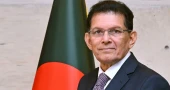
Dr Khalilur Rahman
Bangladesh buries submissive foreign policy, will never bow to anyone: FM
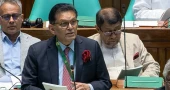
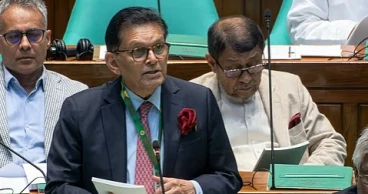
Foreign Minister Dr Khalilur Rahman on Thursday said Bangladesh has buried the submissive foreign policy of the past and will never bow to any country again.
Responding to a supplementary question from Naogaon-3 lawmaker Md Fazley Houda during the question-answer session in Parliament, the minister outlined the government’s foreign policy.
“Thanks to the strong and successful foreign policy pursued by our honourable Prime Minister, we are now standing tall with our heads held high,” he said.
“Under the Prime Minister’s leadership, we will continue to pursue this foreign policy, and Bangladesh will never again bow its head before anyone. We have buried the submissive foreign policy,” Khalilur said.
Referring to the previous Awami League regime, he said Bangladesh’s foreign policy had, to a large extent, not remained under its own control during the 15 years of what he described as misrule.
The minister said the government is now preparing Key Performance Indicators for every Bangladeshi mission abroad and will evaluate their performance accordingly.
“We will place all the relevant information before Parliament when we present the next budget. You have the right to know this information,” he said.
Ganges Treaty
Replying to another supplementary question from Bagerhat-4 lawmaker Abdul Aleem, Khalilur said Bangladesh remains active in pursuing its fair share of water from common rivers.
He said a team has been formed to prepare a new agreement following the expiry of the Ganges Water-sharing Treaty, and the Indian authorities have been informed accordingly. “We are now waiting for their response,” he said.
Teesta project
The minister said Bangladesh has started a technical evaluation with China regarding the Teesta project, adding that further steps will be taken based on the outcome of the assessment.
The third session of the current Parliament began at 3:00pm with Speaker Hafiz Uddin Ahmad in the chair.
The first hour of the day’s proceedings was devoted to the question-answer session.
1 month ago
FM says Saudi-led coalition reflects Dhaka’s maritime commitment, regional stability
Foreign Minister Dr Khalilur Rahman on Tuesday reiterated Bangladesh's commitment to freedom of navigation, noting that the country's participation in the Saudi-led Multinational Maritime Defence Coalition (MMDC) reflects its commitment to safeguarding international maritime trade routes and regional stability.
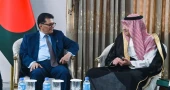
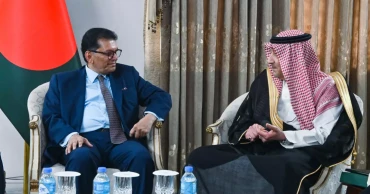
The Foreign Minister held bilateral talks with the Vice Minister for Foreign Affairs of the Kingdom of Saudi Arabia, Eng. Waleed El-Khereiji, at the State Guest House Padma, where the two sides exchanged views on the evolving situation in the Middle East.
The meeting also reviewed cooperation in security, investment and multilateral affairs, including Saudi Arabia's support for Bangladesh's election as President of the 81st Session of the United Nations General Assembly.
Dr. Khalilur expressed Bangladesh's solidarity with the Kingdom, appreciated Saudi Arabia's prudent leadership in promoting regional stability, and reaffirmed Bangladesh's support for the peaceful settlement of disputes through dialogue and international law.
Home Minister Salahuddin Ahmed, State Minister for Foreign Affairs Shama Obaed Islam, Prime Minister’s Foreign Affairs Adviser Humaiun Kobir, among others, were present at the meeting with the Saudi delegation led by the Vice Minister for Foreign Affairs.
The Saudi Vice Minister paid a two-day official visit to Dhaka, leading a high-level Saudi delegation that included two deputy ministers and other senior government officials.
Welcoming the Saudi Vice Minister, the Foreign Minister reaffirmed that Bangladesh attaches the highest importance to its longstanding brotherly and strategic partnership with Saudi Arabia and proposed elevating bilateral relations to a 'Comprehensive Partnership' encompassing political, economic, security and people-to-people cooperation.
The Saudi Vice Minister highlighted the strong people-to-people ties between the two countries and stressed the need to expand cooperation, particularly in investment.
He expressed Saudi Arabia's interest in investing in Bangladesh's ports, infrastructure and renewable energy sectors, and emphasised the early convening of the third Foreign Office Consultations and the 15th Bangladesh-Saudi Arabia Joint Commission Meeting in Dhaka.
The Foreign Minister expressed appreciation for Saudi Arabia's continued humanitarian and political support for the Rohingyas sheltered in Bangladesh and requested continued support for their safe, voluntary and sustainable repatriation to Myanmar.
The meeting reaffirmed the shared commitment of Bangladesh and Saudi Arabia to further strengthening their longstanding friendship and expanding their strategic partnership for the mutual benefit of both countries.
2 months ago
Foreign Ministry budget prioritises sovereignty, national interest: FM
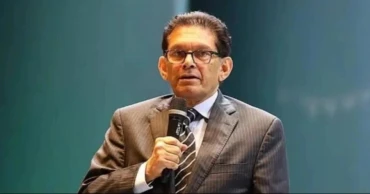
Foreign Minister Dr Khalilur Rahman on Tuesday told Parliament that the Foreign Ministry budget has been formulated with the highest priority given to protecting Bangladesh's sovereignty, economic growth, and the national interests of its people.
He came up with the remark responding to several opposition MPs proposals to reduce the budget of the Ministry of Foreign Affairs for the 2026–27 fiscal year to Tk 1.
Bangladesh Jamaat-e-Islami MPs from Satkhira-4, Rangpur-1, Chattogram-16, and Chuadanga-1 constituencies spoke and proposed the retrenchment.
Highlighting the rationale behind the proposed budget of the Ministry of Foreign Affairs, the Foreign Minister said if the ministry's budget is reduced to Tk 1 in line with the proposal, Bangladesh missions in different countries around the world will have to be closed, the red-green flag - the symbol of the country's independence and sovereignty - will have to be taken down, and all services provided to expatriates will have to be stopped.
"We will not be able to pay our annual dues as a member of the United Nations, which may result in the suspension of our membership in the United Nations," he said.
The Foreign Minister said in the current changing and geopolitically complex world order, the development and security of a state largely depend on its far-sighted and active diplomatic activities.
In today's competitive world, he said, the main driving force and goal of Bangladesh's diplomacy is "Bangladesh First," the most recent example of which is the historic visit of Prime Minister Tarique Rahman to Malaysia and China.
3 months ago
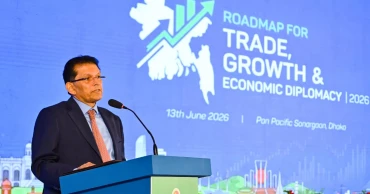
FM shares strategic vision to make Bangladesh most competitive investment destination in South Asia
Foreign Minister Dr Khalilur Rahman on Saturday said the government is fully committed to implementing deep, structural reforms to improve the ease of doing business stressing that the government holds the political will and strategic vision to make Bangladesh the most competitive investment destination in South Asia.
"Our government possesses the political will, the strategic vision, and the unwavering commitment to make Bangladesh the most competitive investment destination in South Asia," he said while describing the local business community as primary strategic partners.
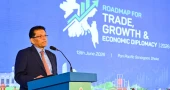
Speaking at the high-level conference titled “Roadmap for Trade, Growth & Economic Diplomacy 2026: Navigating Risks, Leveraging Resilience” in a city hotel, the Foreign Minister and President-elect of the 81st UN General Assembly said they view every foreign ambassador, not just as a diplomat, but as a crucial partner of their development.
"We view every business leader here, not just as an investor, or a taxpayer, but a stakeholder in our national success," he added.
Organised by the Ministry of Foreign Affairs in collaboration with the Bangladesh Investment Development Authority (BIDA), the conference brought together senior government leaders, heads of diplomatic missions, development partners, and representatives from the private sector to chart a forward-looking agenda for Bangladesh’s economic engagement.
Local Government, Rural Development and Cooperatives Minister Mirza Fakhrul Islam Alamgir, Finance Minister Amir Khosru Mahmud Chowdhury, State Minister for Foreign Affairs Shama Obaed Islam, Prime Minister’s Foreign Affairs Adviser Humaiun Kobir, Prime Minister’s Adviser on Education Mahdi Amin, BIDA Executive Chairman Chowdhury Ashik Mahmud and Foreign Secretary Asad Alam Siam, among others, spoke at the event.
The Foreign Minister said they must remain connected. "We must remain in dialogue. We must get feedbacks from you.... work with us as we rebuild trust and unlock the true vibrant potential of Bangladesh."
Today, faced with the energy crisis and developments in the international trade, finance and technology, Foreign Minister Dr Khalilur said Prime Minister Tarique Rahman also has a clear vision to transform the challenges to new opportunities with three key goals: stabilise, reform and elevate.
"We need to convert his vision into concrete action as it comes to our work on economic and trade diplomacy," he said.
As the new government begins its work, Dr Khalilur said they have before them the challenge of redesigning their international economic engagements against the backdrop slowing global economic and trade growth, geopolitical tensions, trade policy uncertainties, calamites rising trade barriers and structural shifts in supply chains.
Moreover, the ongoing energy crisis has added a new layer of complications, he said.
"We are not immune to these developments, which have crucial implications for our approaches to overall policy making, in general, and economic diplomacy, in particular," said the Foreign Minister.
This is the very reason why the Ministry of Foreign Affairs and the Bangladesh Investment Development Authority (BIDA) decided to organise today's event that brings together our partners and stakeholders for open and purposeful deliberations with a view to helping informed policymaking, he said.
"The challenges we face are critical. The growth prospects in our major markets remain in the positive territory but at a moderate level. This is likely to translate into sluggish consumer demand, which will affect our exports to these markets," Dr Khalilur said.
He said they will need to compete ever more fiercely in order to maintain and expand our export position.
Secondly, he said, financial markets and institutions are increasing affecting production of goods and services.
"Trade flows have become increasingly susceptible to movements in interest rates or changes in investor sentiments," Dr Khalilur said.
Countries like Bangladesh find it harder to raise capital, pay significantly higher borrowing costs and remain acutely vulnerable to swings in market sentiment, said the Foreign Minister.
While advanced economies are able to borrow at roughly 1-4%, the rate for emerging developing countries range typically from 6-12% or even higher.
"Thus, our access to affordable and secure financing remains significantly restricted," the Foreign Minister said.
Like many other developing countries, Bangladesh remains acutely susceptible to factors such as currency volatility, shifts in risk-taking appetite and financial volatility, said the Foreign Minister.
Thirdly, he said, climate vulnerability has introduced another difficulty in access to finance.
According to UNCTAD, which recently carried out an Investment Policy Review of Bangladesh, some climate-vulnerable countries are paying an extra 20 billion dollar annually in interest due to their climate risk.
"External debt and climate crisis are become intertwined," said the Foreign Minister.
Fourthly, he said, the ongoing energy crisis has already caused them to spend more on imported fuel. "Increased fuel prices directly affect our cost of production and competitiveness."
"By taking away critical funding that would have gone for development activities, we are likely to witness second round effects of the crisis in the form of reduced funding for development in the years to come," the Foreign Minister said.
The International Energy Association opined that the scope of the current energy crisis could be larger than that of the twin oil shocks of the 1970s, which was a major cause for the 1980s to become a lost decade of development for many developing countries.
The Foreign Minister said trade tech, which is the intersection of trade, investment and technology, is fast redefining the global economy and trade by making cross border transactions quicker and more efficient through the increasing use of innovations like AI, Internet of Things, Blockchain and 5G.
"This poses both a challenge and an opportunity depending on how quickly and effectively countries can take advantage of the fast moving Trade Tech landscape," he said.
The conference featured three thematic sessions: 1. The Policy Compass – Advancing Trade & Investment, focusing on policy predictability, market access, and investor confidence, 2 Capital for Growth – Finance, Commerce and Trade, addressing financing reforms and investment mobilisation, 3 The New Stage - Government Policy, AI, Creative Industries and Sport, exploring emerging growth sectors and diversification opportunities.
The “Roadmap for Trade, Growth & Economic Diplomacy 2026” was held at a critical juncture of global transitions, risks and uncertainties.
The event aims to foster greater coordination between policy and implementation, enhance Bangladesh’s economic diplomacy, and build stronger partnerships with the international community.
3 months ago
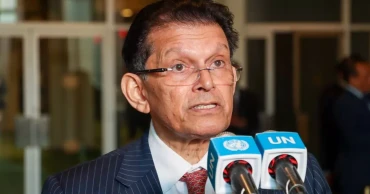
UNGA: US greets Dr Khalilur, calls for refocusing on core issues of peace, security
Congratulating Foreign Minister Dr Khalilur Rahman on his election as UNGA81 President, the US Bureau of International Organization Affairs on Saturday said the UN needs dramatic reform and the US will settle for nothing less as they continue to call for the Assembly to improve efficiency, reduce costs, and refocus on core issues of peace and security.
"We will measure success by the quality of results achieved for the American people, not the volume of paperwork produced," said the Bureau of the US Department of State in a message.
Earlier on June 2, Deputy Representative of the United States to the United Nations Ambassador Tammy Bruce, on behalf of the United States, as host country of the United Nations, extended their sincere congratulations to Khalilur Rahman on his election as President of the General Assembly for its 81st session.
"President-elect, you assume the responsibility at a critical moment for the United Nations, when it must continue to swiftly implement overdue reform and demonstrate it can contribute to international peace and security," she said.
The US official said the General Assembly will rely on Dr Khalilur's impartial leadership to follow through on both counts.
"We hope that you seize this opportunity to improve the Assembly’s efficiency, reduce its costs, and refocus on core issues, measuring success by the quality of the results achieved - not by the volume of declarations produced," Tammy Bruce said.
She said the United States looks forward to working with Dr Khalilur- both as the host country and as a Member State - to ensure the United Nations can live up to its potential and advance international peace and security.
4 months ago
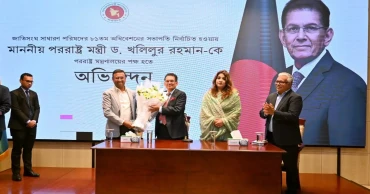
Election as UNGA president reflects "confidence and support of intl community for Bangladesh": Khalilur Rahman
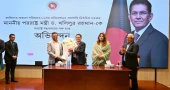
Foreign Minister Dr Khalilur Rahman on Thursday said his election as President of the 81st Session of the United Nations General Assembly (UNGA) reflects the confidence and support of the international community in Bangladesh and its people.
Speaking at a reception hosted by the Ministry of Foreign Affairs in his honour, Dr Khalilur noted that the achievement underscores Bangladesh’s strengthened diplomatic standing.
He paid tribute to Prime Minister Tarique Rahman for his guidance and leadership throughout the campaign, emphasising that the successful outcome was made possible by the Prime Minister’s commitment to advancing Bangladesh’s global engagement.
The reception was attended by State Minister for Foreign Affairs Shama Obaed Islam, Adviser to the Prime Minister Humaiun Kobir, Foreign Secretary Asad Alam Siam, and other senior officials.
Earlier, upon his arrival in Dhaka following the election, the Foreign Minister was received at Hazrat Shahjalal International Airport by the State Minister for Foreign Affairs, the Principal Secretary and Foreign Ministry officials.
4 months ago
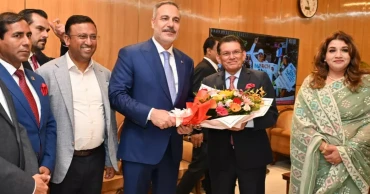
Bangladesh, Türkiye to hold FM-level talks Friday to strengthen strategic engagement
Minister of Foreign Affairs of Türkiye Hakan Fidan will meet his Bangladesh counterpart Dr Khalilur Rahman on Friday in Dhaka as the two countries eye expanding strategic engagement, in addition to strengthening the trade and investment relations.
The Turkish Foreign Minister is paying a two-day visit to Bangladesh at the invitation of Foreign Minister Dr Khalilur, a senior official told UNB, noting that bilateral issues, including trade, security, regional developments, will be discussed.
The Turkish Foreign Minister, who arrived in Dhaka on Thursday night, will also meet Prime Minister Tarique Rahman and visit the Rohingya camps in Cox’s Bazar.
The visit will mark Fidan's first trip to Bangladesh.
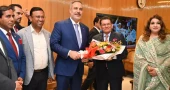
He was received at the Hazrat Shahjalal International Airport by Foreign Minister Dr Kahlilur.
State Minister for Foreign Affairs Shama Obaed Islam, PM's Foreign Affairs Adviser Humaiun Kobir, and Ambassador of Bangladesh to Türkiye M Amanul Haq were also present at the airport to welcome the Turkish Foreign Minister.
He is scheduled to inspect humanitarian assistance projects carried out by the Turkish Cooperation and Coordination Agency (TIKA), the Disaster and Emergency Management Authority (AFAD), the Turkish Red Crescent, the Turkish Diyanet Foundation and Türkiye's Health Ministry, and visit the Turkish Field Hospital operating in the camps.
The two sides are expected to discuss ways to further strengthen cooperation in trade, defense industry, energy, education, culture, science and health.
The two countries are keen to increase bilateral trade volume from $1.35 billion in 2025 to $2 billion.
Foreign Minister Dr Khalilur, along with PM's Foreign Affairs Adviser Humaiun Kobir, returned from New York on Thursday.
Fidan and Khalilur Rahman held a bilateral meeting at the former’s office in Ankara on March 14.
Both sides expressed optimism that the outcomes of the meeting would contribute to further strengthening cooperation and deepening the strategic partnership between Türkiye and Bangladesh in the years ahead.
Bangladesh highlighted the importance of enhancing Turkish investment in Bangladesh and emphasised the prospects for expanding skilled human resource exports from Bangladesh to Türkiye.
Türkiye reiterated its commitment to maintaining friendly and brotherly relations with Bangladesh in both bilateral and multilateral fora.
Humaiun Kobir was also present during the meeting in Ankara.
This marked the first bilateral meeting between the foreign ministers of the two countries following the formation of the BNP government in Bangladesh.
During the meeting, both sides discussed the entire spectrum of bilateral relations.
They reaffirmed their commitment to further strengthening the long-standing friendly and brotherly relations.
The two sides also exchanged views on regional and international issues of mutual interest and expressed their shared commitment to working together in support of peace efforts concerning Gaza.
Notably, to enhance institutional cooperation in diplomatic training and capacity building, a Memorandum of Understanding (MoU) was signed between the Diplomacy Academy of Türkiye and the Bangladesh Foreign Service Academy during the bilateral meeting.
4 months ago
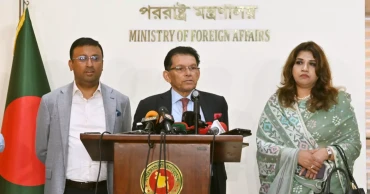
Khalilur Rahman floats continuing both his roles concurrently
President-elect of the UN General Assembly’s 81st session and Bangladesh Foreign Minister Dr Khalilur Rahman on Thursday indicated he may continue to discharge his responsibilities in both capacities concurrently, citing the example Humayun Rasheed Chowdhury, the last Bangladeshi before him to be elected UNGA president.
The foreign minister dedicated the victory to Bangladesh’s future, as the country reclaimed the post four decades later.
“Will I leave this (foreign minister’s) job? Is that the question? Don’t be so hurried. There is precedence,” he told reporters at the Ministry of Foreign Affairs while responding to a question.
Dr Rahman noted that Bangladesh last held the prestigious position forty years ago (1986-87), when then Foreign Minister Humayun Rasheed Chowdhury was elected President of the 41st General Assembly.
“I was his private secretary and we worked with him. He worked in both posts full-time,” Dr Khalilur said.
Those who follow foreign affairs have been informally discussing whether Dr Khalilur would step down from his current responsibilities as Bangladesh's Foreign Minister to serve full-time at the UN, or attempt to carry out both roles simultaneously.
4 months ago
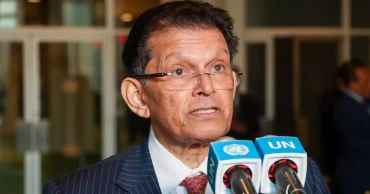
President-elect of UNGA to visit Russia on June 7-9: Russian Foreign Ministry
Foreign Minister of Bangladesh and President-elect of the 81st session of the UN General Assembly Dr Khalilur Rahman will visit Russia on June 7-9, said the Russian Ministry of Foreign Affairs.
"Moscow welcomes the intention of the president-elect to give priority to defending the interests of the Global South and East, to promote the rapid achievement of the Sustainable Development Goals, to enhance the effectiveness of the General Assembly, and, more broadly, to help restore the UN’s central coordinating role in world affairs,” said the Russian government.
The Russian side is committed to constructive and fruitful cooperation with Dr Khalilur, including during his official visit to Russia on June 7-9.
The Ministry of Foreign Affairs in Dhaka, however, has not made any official announcement regarding the visit.
Dr Khalilur said he is assuming the role “with humility and respect” at a time when confidence in the international system is under considerable strain.
His presidency will coincide with one of the most significant processes on the UN calendar, the selection of a successor to UN Secretary-General António Guterres, whose term concludes on December 31, 2026.
The 81st session of the General Assembly will open on September 8, with world leaders scheduled to gather at UN Headquarters in New York two weeks later for the annual high-level debate.
In a secret-ballot election, Dr Khalilur secured 99 votes while Andreas Kakouris of Cyprus received 91. A total of 190 ballots were cast, with no invalid votes or abstentions.
4 months ago
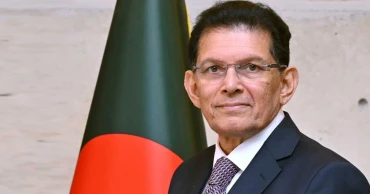
UNGA Presidency: Japan congratulates Dr Khalilur Rahman
Japan has extended its warmest congratulations to Foreign Minister Dr Khalilur Rahman on his election as president of the 81st session of the United Nations General Assembly (UNGA).
The Embassy of Japan in Dhaka in a message on Wednesday wished him every success as he undertakes this important responsibility.
“We look forward to further deepening the Japan-Bangladesh Strategic Partnership through even closer collaboration at the United Nations and in other multilateral fora,” it said.
Khalilur Rahman, president-elect of the 81st UNGA session, said he is assuming the role “with humility and respect” at a time when confidence in the international system is under considerable strain.
His presidency will coincide with one of the most significant processes on the UN calendar, the selection of a successor to UN Secretary-General António Guterres, whose term concludes on December 31, 2026.
The 81st session of the General Assembly will open on September 8, with world leaders scheduled to gather at UN Headquarters in New York two weeks later for the annual high-level debate.
In a secret-ballot election, Khalilur Rahman secured 99 votes while Andreas Kakouris of Cyprus received 91. A total of 190 ballots were cast, with no invalid votes or abstentions.
4 months ago