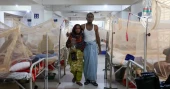
dengue in Bangladesh
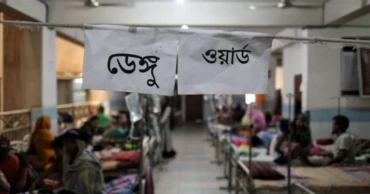
79 deaths in first 17 days of Sept as dengue situation takes turn for worse
Bangladesh’s dengue situation has taken a turn for the worse, with 79 deaths reported in the first 17 days of September, the highest monthly death toll so far this year.
According to the Directorate General of Health Services (DGHS), a total of 176 dengue patients have died from the mosquito-borne disease since January 1 this year.
Of them, two died in January, two in February, one in May, 13 in June, 36 in July and 43 in August.
September alone accounted for 79 fatalities, representing around 44.89 percent of the total deaths recorded so far this year.
Besides, a total of 22,554 dengue patients were admitted to hospitals across the country in the first 17 days of September, which is also the highest monthly figure so far this year.
In August, a total of 22,536 patients were admitted to hospitals.
Meanwhile, September 8 was the deadliest day of the year so far, with the highest nine dengue-related deaths recorded in a single day.
However, no dengue deaths were recorded in March and April.
Five more people died of dengue, and 1,484 new patients were hospitalised across the country in the 24 hours until 8:00am on Thursday.
Of the deaths, four were reported in Dhaka North City Corporation, while the other death was recorded in Rangpur division.
Since January 1 this year, a total of 58,400 dengue patients have been admitted to hospitals across the country. Of them, 54,092 have recovered.
24 days ago
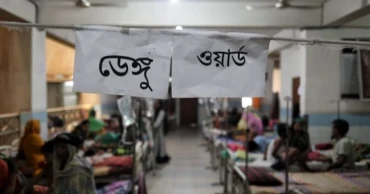
Daily dengue deaths hit year’s high of nine
Bangladesh recorded its highest number of dengue deaths in a single day this year on Tuesday, with nine people succumbing to the mosquito-borne disease in the past 24 hours.
The latest fatalities pushed the nationwide death toll to 130 since January 1, according to the Directorate General of Health Services (DGHS).
Of the latest deaths, three were reported in Dhaka South City Corporation, two each in Dhaka and Khulna divisions, and one each was recorded in Barishal and Mymensingh divisions.
During the period, 1,571 new dengue patients were hospitalised across the country, also the highest daily tally recorded this year, taking the cumulative number of cases to 45,475.
Of the total patients, 42,127 have been discharged after recovery, according to the DGHS.
1 month ago
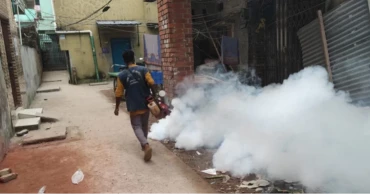
Dengue rings alarm amid measles crisis: Is Bangladesh prepared for another health emergency?
As Bangladesh struggles to contain its worst measles outbreak in years, a fresh surge in dengue infections is raising concerns among citizens and health experts over the country’s capacity to handle two major public health threats simultaneously.
The death of another dengue patient on June 1 and detection of 110 new cases across the country have sparked fears that the mosquito-borne disease is once again gathering momentum ahead of the monsoon.
The latest fatality, reported from Khulna City Corporation, brought this year’s dengue death toll to six, while the total number of infections climbed to 3,307, according to the Directorate General of Health Services (DGHS).
The death was reported at a time when the country’s healthcare system is already under immense strain from a widespread measles outbreak that has infected tens of thousands of children and claimed hundreds of lives since March.
A healthcare system under pressure
Directorate General of Health Services (DGHS) has reported 529 suspected and 91 confirmed deaths (total 620 deaths) from measles and related symptoms since March 15. It also reported 64,263 suspected measles cases and 9,686 laboratory-confirmed infections .
Hospitals across the country, particularly paediatric units, have been struggling to cope with the influx of patients requiring intensive care, isolation facilities, ventilatory support and infection-control management.
Media reports have showed the growing financial strain on families caring for measles patients, particularly children requiring hospitalisation. While treatment costs are relatively lower at government hospitals, many families face significantly higher expenses when patients must be transferred between multiple healthcare facilities. The burden is even greater for those seeking care in private hospitals.
Relatives of patients said that government hospitals often experience shortages of essential medicines, forcing families to purchase them from private pharmacies.
In addition, patients frequently require a range of diagnostic tests, adding to overall treatment costs. Transportation expenses can also rise when patients are referred from one hospital to another while food and other daily necessities further increase the financial burden.
Bangladesh continues to have one of the highest levels of out-of-pocket healthcare spending, meaning many people without adequate financial resources struggle to access necessary medical care.
Speaking at the launch of an annual report in July 2025, UNFPA Representative in Bangladesh Catherine Breen Kamkong said that government spending on health remains low, accounting for only 0.7 percent of GDP and 2 percent of the national budget. She expressed hope that these allocations would increase to 5 percent of GDP and 15 percent of the national budget, emphasiing that improving the nation's health is essential for unlocking Bangladesh's future potential.
A study conducted by Dr. Abdur Razzaque Sarker of BIDS found that out-of-pocket spending remains the dominant source of healthcare financing in Bangladesh, accounting for 79 percent of total health expenditure in 2024.
Public health specialists warn that the emergence of dengue at this critical moment could create a dual burden that may test the resilience of the healthcare system.
Lessons from the past
Bangladesh has witnessed several devastating dengue outbreaks over the past decade.
In 2025 alone, the country recorded 102,861 dengue infections and 413 deaths, making it one of the deadliest years on record.
The disease, once largely concentrated in Dhaka, has increasingly spread across districts, reflecting changing mosquito breeding patterns, rapid urbanisation, inadequate waste management and climate-related factors.
Health experts have repeatedly warned that warmer temperatures, erratic rainfall and prolonged humid conditions are creating ideal environments for the breeding of Aedes mosquitoes, the primary carrier of dengue.
Unlike measles, for which vaccines offer strong protection, dengue prevention depends heavily on vector control, public awareness and early detection.
Government steps up preparations
Recognising the potential threat, the government has begun preparations months before the expected seasonal surge.
Health and Family Welfare Minister Sardar Md Sakhawat Husain on Monday said dengue corners are being established at upazila health complexes nationwide to strengthen treatment capacity.
“We do not want to waste any time. We are making all-out preparation to combat dengue,” the minister said while chairing a meeting on dengue preparedness.
Authorities have also kept a field hospital ready on the premises of Dhaka Medical College Hospital and indicated that additional field hospitals could be established if necessary.
Training programmes for doctors and nurses are set to begin across all seven divisions and district-level facilities with support from the Bangladesh Society of Medicine, UNICEF and other development partners.
The government said it has already stocked essential supplies, including diagnostic reagents, testing kits and saline solutions, while additional procurement is being planned.
Officials also claim that efforts to eliminate mosquito breeding grounds have been underway in cooperation with city corporations for the past two months.
Besides, the government has directed private hospitals across the country to provide free treatment to dengue patients in at least 10 percent of their beds.
“Under the new directive, private hospitals will reserve 10 percent of their beds for dengue patients and waive doctors' consultation fees for those receiving treatment. Patients will only have to bear the costs of medicines and meals, , said Health and Family Welfare Minister Sardar Md. Sakhawat Husain at an event recently.
Besides, private hospitals have been asked to offer discounts of up to 80 percent on diagnostic tests for dengue patients.
A pre-monsoon survey conducted by the Dhaka South City Corporation (DSCC) has identified 63 of its 75 wards as having Aedes mosquito densities above the acceptable threshold, while 27 wards have been classified as highly vulnerable to dengue outbreaks.
The survey was conducted from May 12 to May 23 by a 36-member team from DSCC and the Communicable Disease Control (CDC) unit of the Directorate General of Health Services (DGHS).
The global dengue challenge
Bangladesh’s concerns mirror a broader global trend.
The World Health Organization has repeatedly warned that dengue is spreading faster than ever before, fuelled by climate change, rapid urban growth, population movement and inadequate vector control measures.
More than half of the world’s population now lives in areas at risk of dengue transmission. Countries across Asia and Latin America have reported record outbreaks in recent years, overwhelming health systems and increasing mortality rates.
South Asia remains particularly vulnerable due to dense populations, seasonal monsoon patterns and challenges in urban planning and sanitation.
Public health experts note that Bangladesh’s geographical and climatic conditions place it among the countries most exposed to recurring dengue outbreaks.
Are preparations enough?
While Bangladesh health authorities insist that lessons from previous outbreaks have informed this year’s preparations, questions remain over whether preventive measures can be effectively implemented at the local level.
Experts argue that dengue control cannot rely solely on hospitals and treatment facilities.
Entomologist Prof. Kabirul Bashar said, “With a widespread measles outbreak already straining the health system and dengue cases on the rise, the current measures are not enough.”
Emphasising the need to address the root causes behind the outbreaks, Bashar said it is encouraging that the authorities are working to raise public awareness alongside seasonal efforts to curb disease transmission.
“However, the government needs regular monitoring and sustained supervision to slow down the trend,” he said.
He stressed that stricter actions and stronger implementation efforts are necessary to improve the situation.“The government takes decisions, but field-level officials must remain active to ensure timely measles vaccination and early mosquito control measures, including fogging operations for dengue prevention,” he said.
Prof Bashar said many initiatives fail to achieve their intended outcomes because of irregular supervision and inadequate preparation.
Terming the government's recent dengue-control initiatives as a positive step, he said such measures may provide some immediate relief.
“These initiatives can produce short-term results. However, if such efforts become routine, year-round activities rather than seasonal responses, they will have a much greater impact in preventing the surge of dengue and other infectious diseases,” Prof Bashar added.
4 months ago
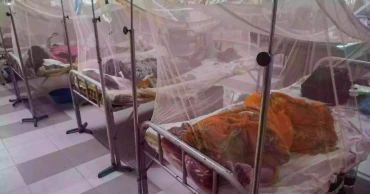
Dengue in Bangladesh shifts from seasonal outbreak to year-round threat: Experts
Bangladesh is unlikely to see a drop in dengue cases during the upcoming winter months (November to January), as the disease, once seasonal, is turning into a year-round health concern due to lack of preparation and proper monitoring, experts warned.
Though the dengue cases usually decline during cooler months experts warn that the surge may continue due to climate anomalies, urban conditions and lapses in mosquito control efforts this year.
According to the Directorate General of Health Services (DGHS), a total of 212 dengue deaths and 49,907 cases have been recorded in the country as of October 5, 2025 from January.
Dengue claims nine more lives, second highest daily toll this year
Authorities at Dhaka Medical College Hospital, Shaheed Suhrawardy Medical College Hospital and other tertiary centres reported a sharp rise in patient admissions as well.
Over the past five years, the deadliest months for dengue in Bangladesh have shifted but consistently peaked between August and November. November 2024 saw year’s highest 173 deaths, September 2023 recorded 87, October 2022 had 86 while August 2021 reported 34 deaths.
Kabirul Bashar, a professor of the Department of Zoology at Jahangirnagar University, said, “In recent years, the disease has crossed its seasonal boundary and is now present throughout the year. During the monsoon and post-monsoon periods its spread becomes alarmingly intense.”
The trend clearly indicates that if effective measures are not taken immediately, the situation in October could become catastrophic, Bashar said.
Bangladesh reports 263 more dengue cases in 24hrs
A higher density Dengue vector means the rate of disease transmission will rise rapidly and the number of patients could double or even more within a few weeks, he said.
“The spread is not limited to the capital. Major cities like Chattogram, Barishal, Khulna, Rajshahi, Sylhet and Mymensingh are witnessing a rapid increase in dengue cases. Alarmingly, rural areas are no longer safe either. Once primarily an urban disease, dengue has now infiltrated districts and upazilas,’’ he added.
About two-thirds of the infected population still resides in urban areas but infections are steadily increasing in rural regions. This expanding pattern will make future dengue control efforts more difficult, said Kabirul Bashar.
The most concerning aspect is that the highest infection and mortality rates are being observed among the youth and working-age population, particularly those between 16 to 30 years of age and this means that students and the nation’s workforce are at the greatest risk, he said.
Despite entering the final quarter of the year, hospitals across the country particularly in the capital—continue to report high occupancy of dengue patients. Many facilities are struggling with limited beds, shortages of platelets, and lack of trained medical personnel.
“We are observing a shift in dengue’s seasonal pattern,” said Prof Dr Md Golam Sarwar, the country's only government-appointed medical entomologist currently based at NIPSOM.
“If mosquito control operations are halted prematurely after October, we risk seeing an early resurgence in February or March. Sustained surveillance and control must continue year-round,” he warned.
Dr Sohel, a physician of Dhaka Medical College Hospital, “As soon as patients develop warning signs like abdominal pain, bleeding, or persistent vomiting, they rush to Dhaka. By the time they reach us, their condition is often quite serious.”
He warned that the number of positive cases is rising daily. “If the hot weather persists, the outbreak may take a fatal turn.”
Shortage of Medical Entomologists
Scientific mosquito control heavily relies on the work of medical entomologists who are trained to conduct proper mosquito larval surveys, determine mosquito density and breeding locations, identify serotypes of the virus, and recommend appropriate chemicals and methods for vector control
Bangladesh has only one government-employed medical entomologist who is currently posted at the National Institute of Preventive and Social Medicine (NIPSOM) at the Head of the Entomology Department.
On the other hand, 11 out of 12 city corporations have no medical entomologist while only 26 district civil surgeon offices have approved posts for entomologists, of which at least 12 remain vacant as of September 27.
Incomplete Mosquito Surveys
Pre-monsoon, monsoon, and post-monsoon surveys are vital to assess mosquito density and plan effective control strategies.
The 2025 pre-monsoon survey was released mid-June, by which time the monsoon had already started—limiting reaction time.
In 2024, the monsoon survey wasn’t conducted at all due to financial and manpower constraints.
Even when surveys are completed their recommendations are rarely implemented due to mismanagement, corruption, and lack of resources.
Bangladesh Society of Medicine is raising awareness about the dengue across the hospitals to control it from the very beginning. The organisation is advising the patients not to take any antibiotics and aspirin type medicine without the consultation of the registered doctor.
They also advise the patients to take more saline and liquid food and paracetamol for the relief from the pain and visit the doctor immediately just after doubting the presence of the diseases.
1 year ago
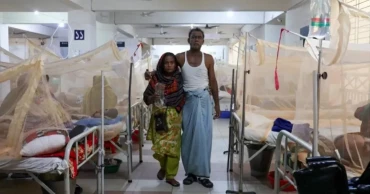
Dengue deaths hit record high in Bangladesh; 12 die in a single day
Bangladesh logged its deadliest day of the year from dengue on Sunday, with 12 people succumbing to the mosquito-borne virus in just 24 hours.
The latest fatalities pushed the nationwide death toll to 179 since January, according to the Directorate General of Health Services (DGHS).
Health officials said 740 new patients were admitted to hospitals in the same period, taking the total number of confirmed cases this year to 48,831.
248 new dengue cases reported in 24 hours
Now 2,021 patients are undergoing treatment in facilities across the country.
The deaths were reported from multiple regions: five in Barishal division, three in Dhaka North City Corporation, two in Dhaka South City Corporation, and one each in Chattogram and Mymensingh divisions.
Climate change behind world’s worst dengue death rates in Bangladesh
Fresh infections were also widespread.
Barishal (outside city areas) recorded 165 cases, Dhaka (outside city) 147, Dhaka North 122, Dhaka South 115, Chattogram 77, Khulna 52, Rajshahi 28, Mymensingh 22, Sylhet nine and Rangpur three.
Public health experts warn the crisis is worsening faster than last year, when dengue killed 575 people nationwide.
They called for quick action on mosquito control and better preparedness in hospitals as infections continue to rise.
1 year ago

11 new dengue cases reported in 24hrs
Eleven new dengue cases were reported in the 24 hours leading up to Thursday morning, bringing the total number of cases to 1,862 this year.
According to the Directorate General of Health Services (DGHS), new cases were reported as follows: two in Barishal Division (Out of CC), two in Dhaka Division (Out of CC), two in Dhaka South City Corporation, two in Dhaka North City Corporation, two in Khulna Division (Out of CC) and one in Mymensingh Division (Out of CC).
Every family could face a cancer case by 2030 without greater awareness, experts warn
The number of deaths remained at 13, with no new fatalities reported during this period, the DGHS added.
Currently, 74 dengue patients are receiving treatment in hospitals across the country.
Doctors demand amendment to Tobacco Control Law
Last year, dengue claimed the lives of 575 people.
According to the DGHS, there were 101,214 dengue cases and 100,040 recoveries in the same year.
1 year ago
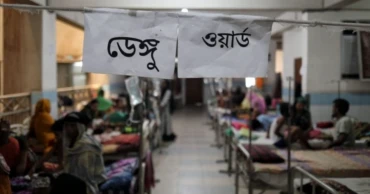
8 more dengue cases reported in 24hrs
Eight new dengue cases were reported in the 24 hours leading up to Sunday morning, bringing the total number of cases to 1,554 this year.
According to the Directorate General of Health Services (DGHS), new cases were reported as follows: three in Khulna Division (Out of CC), two in Chattogram Division (Out of CC), two in Dhaka North City Corporation and one in Dhaka Division (Out of CC).
Every family could face a cancer case by 2030 without greater awareness, experts warn
The number of deaths remained at 13, with no new fatalities reported during this period, the DGHS added.
Currently, 65 dengue patients are receiving treatment in hospitals across the country.
Last year, dengue claimed the lives of 575 people.
Edible oil in drums poses a threat to public health: PROGGA
According to the DGHS, there were 101,214 dengue cases and 100,040 recoveries in the same year.
1 year ago

Six more dengue cases reported in 24hrs
Six more new dengue cases were reported in the 24 hours leading up to Saturday morning, bringing the total number of cases to 1,385 this year.
According to the Directorate General of Health Services (DGHS), one new case was reported in Dhaka South City Corporation, while the remaining cases were in the Chattogram Division (outside the city corporation).
The number of deaths remained at 12, with no new fatalities reported during this period, the DGHS added.
Currently, 90 dengue patients are receiving treatment in hospitals across the country.
Last year, dengue claimed the lives of 575 people.
According to the DGHS, there were 101,214 dengue cases and 100,040 recoveries in the same year.
1 year ago

37 more dengue cases reported in 24hrs
Thirty-seven more new dengue cases were reported in the 24 hours leading up to Sunday morning, bringing the total number of cases to 1,295 this year.
According to the Directorate General of Health Services (DGHS), three of the new cases were reported in Dhaka South City Corporation, while five were hospitalised in Dhaka North City Corporation.
The number of deaths remained at 11, with no new fatalities reported during this period, the DGHS added.
Antimicrobial Resistance in Bangladesh: Growing Threat and Urgent Solutions
Currently, 91 dengue patients are receiving treatment in hospitals across the country.
Last year, dengue claimed the lives of 575 people.
According to the DGHS, there were 101,214 dengue cases and 100,040 recoveries in the same year.
Every family could face a cancer case by 2030 without greater awareness, experts warn
1 year ago

17 more dengue cases reported in 24hrs
Seventeen new dengue cases were reported in the 24 hours leading up to Sunday morning, bringing the total number of cases to 1,187 this year.
According to the Directorate General of Health Services (DGHS), two of the new cases were reported in the Dhaka South City Corporation, while two were hospitalised in the Dhaka Division (outside the city corporation).
Edible oil in drums poses a threat to public health: PROGGA
The number of deaths remained at 10, with no new fatalities reported during this period, the DGHS added.
Currently, 120 dengue patients are receiving treatment in hospitals across the country.
HMPV may become fatal with continuous mutation: Dr Sayedur
Last year, dengue claimed the lives of 575 people.
According to the DGHS, there were 101,214 dengue cases and 100,040 recoveries in 2024.
1 year ago