Japan earthquake
Death toll from Japan earthquake rises to 34 as survivors struggle with heat, water shortages
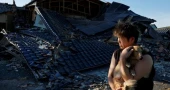
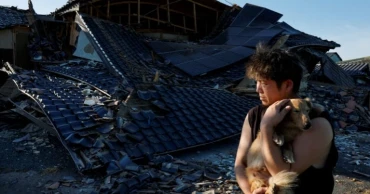
The death toll from the powerful earthquake that struck southwestern Japan has risen to 34, as thousands of survivors continue to endure extreme heat, water shortages and fuel scarcity while staying in emergency shelters or sleeping in their vehicles.
Rescue teams remained engaged in search operations on Friday, the fourth day after the magnitude 7.1 earthquake hit Kyushu, Japan's southern main island, on Tuesday. Authorities have not yet confirmed how many people remain missing.
The Kumamoto prefectural government said at least 96 people were injured, including six seriously. Officials are also investigating another death that may be linked to the earthquake.
Japanese Prime Minister Sanae Takaichi instructed authorities to do "whatever it takes" to restore water supplies and called for close coordination with the military and other agencies.
Although thousands of homes lost electricity after the quake, power was fully restored by Friday evening, according to the local utility company.
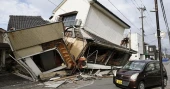
Historic inn badly damagedThe earthquake damaged more than 1,500 buildings, including 179 that were completely destroyed, according to preliminary government estimates.
Among the damaged buildings is Kinparo, a 116-year-old traditional Japanese inn in Yatsushiro City. Its entrance collapsed, walls cracked and roof tiles fell during the quake.
Workers began clearing debris on Friday as experts prepared to assess the damage to the registered historic property.
Owner Keisuke Matsumoto said the repairs would be costly but expressed hope that the family-run inn, built by his great-great-grandfather, could be preserved.
His mother, Misao Matsumoto, said she escaped without injury but was deeply saddened to see the historic building badly damaged.
Water and fuel shortages continueNearly 80,000 households remained without running water on Friday, while more than 9,000 people were staying in evacuation centres.
Authorities were adding power supplies to shelters to improve access to air conditioning as temperatures reached 36 degrees Celsius.
Fuel shortages have also become a growing problem after damaged roads and power outages disrupted fuel deliveries and forced many petrol stations to close.
Many displaced residents have been sleeping in their cars for privacy, but limited fuel supplies have made it difficult to keep air conditioners running during the intense heat.
Hirokazu Sato, whose home was destroyed, said he, his wife and their three children were living in their car until temporary housing became available.
"We have to keep the air conditioner running day and night, but that uses a lot of fuel," he said.
Businesses affectedThe earthquake has also disrupted businesses across Kumamoto, an important manufacturing hub for Japan's semiconductor and automotive industries.
Taiwan Semiconductor Manufacturing Company (TSMC), which operates a facility in Kumamoto, said all employees were safe and operations were gradually resuming after inspections confirmed the buildings were structurally sound.
Rescue efforts continueSearch teams, assisted by rescue dogs, continued looking for survivors at damaged buildings, including the collapsed Aeon Mall in Kashima town.
The shopping centre was crowded when the earthquake struck. Company officials said about 3,000 shoppers were safely evacuated before an explosion occurred in another section of the building.
The mall's second floor later collapsed, trapping several people. Eleven people were rescued, but seven of them were confirmed dead.
Rescue operations have ended at a Nippon Paper Industries factory in Yatsushiro, where a chimney collapsed during the quake. Eleven workers were pulled from the site, but nine died.
Searches are continuing at collapsed homes across southern Kumamoto, although authorities have not released an official figure for the number of people still missing.
2 months ago
Japan quake death toll rises to 18
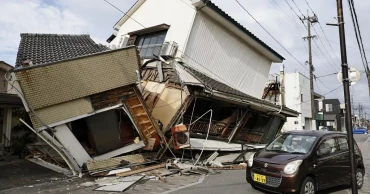
The death toll from a powerful earthquake in southwestern Japan has risen to 18 as soldiers and emergency workers continued searching through collapsed buildings and debris for survivors, authorities said Wednesday.
The magnitude 7.1 earthquake struck the Kumamoto region on Kyushu, Japan's southern main island, on Tuesday, leaving at least 62 people injured, including six critically, according to the prefectural government. Officials warned the number of casualties could increase as search operations continue.
Rescuers worked in sweltering heat to search damaged homes and commercial buildings, though authorities said it remained unclear how many people were still missing.
One of the hardest-hit locations was an Aeon Mall shopping centre in Kashima city, where thousands of shoppers were present when the quake struck. The company said about 3,000 customers were evacuated before a gas explosion occurred in another section of the mall.
The mall's second floor collapsed, trapping several people. Aeon President Akio Yoshida said four people were confirmed dead at the site, while three others remained missing.
"We take it seriously that an explosion happened and precious lives were lost," Yoshida told a news conference.
Elsewhere, a collapsed chimney at a Nippon Paper Industries factory in nearby Yatsushino killed five workers and injured others. Authorities said seven people were rescued from the debris, while four remained trapped.
In the first reported foreign fatality, a Vietnamese technical intern was killed after a crane collapsed at the factory where he worked. Seven other Vietnamese interns escaped safely, while the wife of one worker was injured when a wall fell and was receiving hospital treatment.
The earthquake also disrupted essential services, leaving nearly 34,900 households without electricity and about 15,000 without running water. More than 8,800 residents took shelter at over 400 evacuation centres, where authorities were installing additional power sources to provide air conditioning.
Japan's Self-Defense Forces joined rescue teams in the search operation, assisted by firefighters from Taiwan.
Prime Minister Sanae Takaichi said the government was making every effort to locate survivors and deliver food and other emergency supplies to the worst-hit areas.
Bullet train services remained suspended, while some flights were canceled despite the reopening of Aso Kumamoto Airport.
Kumamoto was also devastated by a major earthquake in 2016 that killed at least 50 people. Japan is among the world's most earthquake-prone countries.
2 months ago
.jpg)
Japan braces for aftershocks as M7.3 quake injures over 150
Japan's northeastern region braced for aftershocks Sunday following an earthquake of magnitude 7.3 overnight that injured more than 150 people, cut power and water, and disrupted bullet train services, with some residents looking weary as they tidied up the mess in their homes and shops.
5 years ago
.jpg)
Over 100 injured, trains halted as M7.3 quake hits northeastern Japan
More than 100 people were reported injured on Sunday after an earthquake with a magnitude of 7.3 struck northeastern Japan late the previous night, causing blackouts, water cuts and bullet train suspensions.
5 years ago