Eid-ul-Azha

402 killed, 1,294 injured in road accidents during Eid journey: BJKS
A total of 394 road accidents across Bangladesh claimed the lives of 402 people and left 1,294 others injured during the Eid-ul-Azha travel period this year, according to the Bangladesh Jatri Kalyan Samity (BJKS).
Including rail and waterway accidents, the total tally rose to 442 across all transport modes, killing 438 people and injuring 1,340 others during the 15-day period from May 21 to June 4, it said in a report on Sunday.
Besides, thirty-one rail accidents resulted in 23 deaths and 30 injuries, while 17 waterway accidents killed 13 and injured 16.
Compared to last year's Eid-ul-Azha, road accidents rose 3.95 percent, fatalities increased 3.07 percent, and injuries jumped 9.47 percent.
In 2025, 379 road accidents had killed 390 people and injured 1,182 during the same festive period.
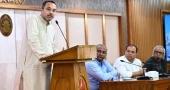
BJKS Secretary General Md Mozammel Haque Chowdhury presented the findings at a press conference at the Dhaka Reporters’ Unity in the morning, calling for urgent structural reforms to the country's public transport system.
“What is needed is not 10 to 12 days of government activity around Eid, but short, medium and long-term planning to save lives and reduce travel misery,” he said, stressing the need for a modern bus network modelled on developed countries, technology-based road management, and the gradual removal of small vehicles from highways.
Motorcycles were once again the deadliest vehicle category, involved in 153 accidents that killed 159 people and injured 180, accounting for 38.83 percent of all road accidents during the period.
In terms of vehicle types involved across all accidents, motorcycles made up 28.90 percent, followed by trucks and covered vans at 21.40 percent, buses at 16.56 percent, battery-powered rickshaws at 12.34 percent, cars and microbuses at 7.81 percent, locally-made light vehicles (nosimon-korimon) at 6.56 percent, and CNG-run auto-rickshaws at 6.40 percent.
Among the victims, 80 were drivers, 89 transport workers, 59 pedestrians, 64 women, 45 children, and 66 students. Three journalists, one doctor, one engineer, and five law enforcement members were also among the victims.
Analysis of accident types shows that 46.44 percent were head-on collisions, 29.18 percent involved vehicles running over pedestrians or ramming others, and 17.25 percent involved vehicles losing control and falling into ditches or off roads.
Train-vehicle collisions accounted for 1.52 percent, with the remaining 5.58 percent attributed to other or unidentified causes.
Half of all accidents – 50.50 percent – occurred on national highways, 30.71 percent on regional highways, and 14.46 percent on feeder roads.
The organisation identified several systemic causes behind this year's toll: unregulated movement of motorcycles and battery-powered vehicles on national highways; absence of road signs, lane markings, and streetlights; roads riddled with potholes following rain; a severe driver shortage forcing 80 percent of vehicles to operate continuously with a single driver; defective and life-expired buses being pushed into service by profit-seeking owners; and low-income passengers being forced onto bus rooftops or cargo trucks due to exorbitant fares.
It urged the government to develop and implement short, medium, and long-term road safety plans, modernise the vehicle fitness certification system; remove expired public transport; expand BRTA's enforcement capacity; establish a traffic training academy; and end the monopoly control of bus owner associations and worker federations over the transport sector.
4 months ago
Govt’s 10 initiatives ensured smooth, hassle-free Eid celebrations: PMO
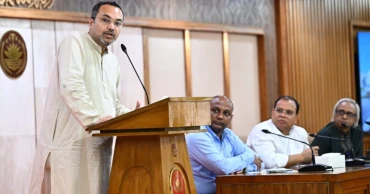
Prime Minister’s Office (PMO) Spokesperson Mahdi Amin on Monday said the government's 10 people-oriented initiatives around Eid-ul-Azha brought visible positive changes to Eid management and ensured the smooth celebration of the country’s second-largest religious festival.
“Special emphasis was placed on 10 public-oriented issues in the government's activities centred around this year's Eid-ul-Azha,” he said while speaking at a press conference at the Karobi Hall of the PMO.
Mahdi Amin said the 10 initiatives were taken as per Prime Minister Tarique Rahman’s instructions to ensure smooth and hassle-free Eid celebrations.
The initiatives included ensuring hassle-free Eid travel, payment of workers’ wages and allowances, protection of the domestic cattle market, swift waste removal, discipline in public transport, curbing extortion and syndicates, uninterrupted power supply, public safety, proper management of the rawhide sector and maintaining stability in the prices of essential commodities.
“The coordinated implementation of these initiatives has brought visible positive changes to different aspects of Eid management and reflected the government’s efforts to make public services more people-oriented,” Mahdi Amin, also prime minister’s adviser, said.
He said the government remains committed to addressing future challenges, strengthening the rule of law and democratic values, and institutionalising good governance under the leadership of Prime Minister Tarique Rahman.
The PMO spokesperson acknowledged that it is not possible to completely overcome the institutional decline and damage caused over the past 16 years within only three months of the new government.
“Despite that reality, people experienced during this Eid that the state is responsive to their needs and that the administration is not merely a centre of power but a responsible and effective service provider,” he said.
Mahdi Amin said all ministers, advisers, members of parliament and officials concerned worked with the highest level of sincerity and accountability to ensure smooth observance of the first Eid-ul-Azha under the elected government.
He said the government will continue efforts to quickly address any shortcomings or coordination gaps identified in the course of implementation.
The PMO spokesperson said extended public holidays, strengthened traffic monitoring, and coordinated transport management helped reduce long-standing congestion on highways, making Eid journeys comparatively smoother than in previous years, although several road accidents still claimed lives in different parts of the country.
He also said most garment workers received wages and bonuses on time, contributing to a peaceful and festive atmosphere in industrial areas, with no major disruption reported ahead of the holiday.
Mahdi Amin said strict measures were taken to prevent illegal cattle inflow through the border in order to protect the interests of local farmers. “Continuous monitoring was maintained at cattle markets across the country, ensuring adequate supply of sacrificial animals, including cows, goats, buffaloes and sheep.”
He said the crackdown on illegal cattle smuggling and control over long-standing syndicates helped small and medium traders conduct business in a more stable environment. “The relocation of cattle markets from roadsides to open spaces also reduced traffic congestion and public inconvenience.”
On waste management, the PMO spokesperson said most sacrificial waste in Dhaka was removed within 8-12 hours after Eid, describing it as a significant improvement compared to previous years.
He also highlighted transport sector management and said efforts to curb overcharging, improve safety measures and introduce special facilities for passengers helped ensure more orderly movement during the holiday period.
Mahdi Amin said coordinated action against extortion and syndicates in cattle transport helped keep market prices relatively stable, while uninterrupted electricity supply was largely maintained despite high demand.
He said enhanced market monitoring helped keep essential commodity prices under control during the festive period, though challenges remained due to long-standing structural issues in the economy.
The PMO spokesperson said the government is committed to further improving coordination among agencies and strengthening public service delivery in future national festivals.
He said the coordinated implementation of these measures has demonstrated that the government's efforts are intended to make public services more responsive and citizen-centric.
Mahdi Amin said Prime Minister Tarique Rahman had issued clear directives to ministers, lawmakers and other public representatives to celebrate Eid in their respective constituencies and remain close to the people.
He said the initiatives reflected a new culture of accountability, administrative coordination and public-oriented governance.
The PMO spokesperson said though the effects of what he termed 16 years of “fascist misrule and lack of accountability” could not be removed overnight, people witnessed the government's sincerity and welfare-oriented administrative efforts during the Eid period.
4 months ago
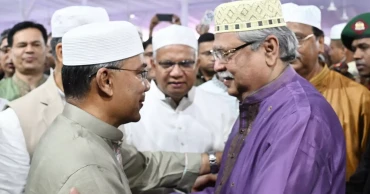
President calls for upholding values of sacrifice, equality on Eid
President Mohammed Shahabuddin on Thursday called upon all to uphold the values of sacrifice, equality, compassion and social harmony on the occasion of holy Eid-ul-Azha.
In his Eid message, the President said Eid-ul-Azha is not only one of the major religious festivals for Muslims but also a universal call to sacrifice hatred, arrogance and the “animalistic instincts” within human beings.
“We are celebrating the holy Eid-ul-Azha today with the unparalleled glory of complete submission to Almighty Allah and the ideals of equality, harmony and sacrifice in Islam,” he said.
Highlighting the significance of the festival, Shahabuddin said the teachings of Eid inspire people to strengthen fraternity, selflessness, mutual respect and social solidarity.
The President also said Eid-ul-Azha plays an important role in meeting the nutritional needs of underprivileged people in society while contributing significantly to the development of the livestock sector and the country’s overall economy.
Calling upon affluent members of society, he urged them to share the joy of Eid with the poor, orphans, deprived relatives and neighbours.
“I call upon the well-off and affluent people of society to sincerely share the joy of Qurbani with deprived and poor people, orphans, needy relatives and neighbours,” he said, adding that everyone should come forward to ensure the rights of the underprivileged and dedicate themselves to the welfare of humanity.
The President also made a special appeal to citizens to cooperate with the authorities in the quick and proper disposal of sacrificial waste to maintain environmental cleanliness and protect public health.
He urged people to embrace the spirit of unity over division, compassion over violence, justice over selfishness and equality over discrimination to build a humane, democratic, non-communal and prosperous Bangladesh.
“Let the glorious message of holy Eid-ul-Azha further strengthen the bonds of humanity and bring peace, harmony and prosperity to all,” the President said.
Earlier, President Shahabuddin offered Eid-ul-Azha prayers at the country’s main congregation at the National Eidgah on Thursday morning.
People from different classes, professions and age groups gathered at the National Eidgah on the Supreme Court premises and took part in the prayers with raised hands.
4 months ago
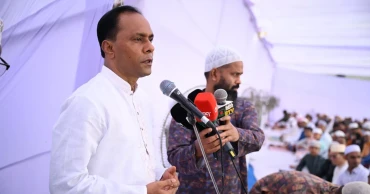
Eid-ul-Azha prayers held at Jatiya Sangsad’s South Plaza
Eid-ul-Azha prayers were held at the South Plaza of the Jatiya Sangsad Bhaban on Thursday morning with the participation of lawmakers, officials and devotees from different walks of life.
The congregation was held at 7:30 am.
Deputy Speaker Barrister Kaysar Kamal, Secretary of Parliament Secretariat Barrister Md Golam Sarwar Bhuiyan, officials and employees of the parliament secretariat among others joined the prayers.
Before the prayers, the Deputy Speaker and the Secretary of the Parliament Secretariat exchanged Eid greetings with people.
After the Eid congregation and khutba, a special munajat was offered seeking peace, happiness and prosperity for the country, the nation and the Muslim Ummah.
The munajat was conducted by Qari Abu Raihan, Pesh Imam of the Parliament Secretariat.
4 months ago
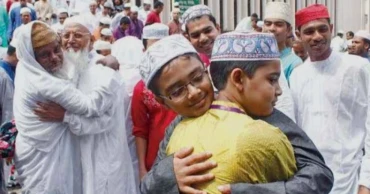
Bangladesh set to celebrate Eid-ul-Azha Thursday
Bangladesh will celebrate Eid-ul-Azha on Thursday with religious fervour and festivity across the country.
Muslims from all walks of life are set to observe the festival in the spirit of devotion, sacrifice, and submission to the will of Almighty Allah.
Eid congregations will be held at Eidgahs and mosques nationwide in the morning, where devotees will offer prayers and seek divine blessings.
Religious scholars and khateebs are expected to deliver sermons focusing on the significance of Qurbani and the values of sacrifice, compassion, and obedience in Islam.
Following the prayers, people will exchange Eid greetings, reinforcing the bonds of unity and brotherhood.
President Mohammed Shahabuddin and Prime Minister Tarique Rahman, have greeted the nation on the occasion.
In a video message in the evening, the Prime Minister said holy Eid-ul-Azha has once again arrived at the doorsteps of the Muslim Ummah with the message of sacrifice, piety and self-purification.
“I extend my greetings on the occasion of holy Eid-ul-Azha to Muslims in Bangladesh and across the world. I also wish all people of the country, regardless of political belief, religion or ethnicity, a happy Eid. Eid Mubarak,” he said.
The Prime Minister prayed to Almighty Allah for peace, security and stability for Bangladesh, the Muslim world and humanity as a whole.
He also prayed for global peace, harmony and safety.
The main Eid congregation in the capital will take place at the National Eidgah adjacent to the High Court premises.
Preparations at the venue have already been completed, with the President, Prime Minister, judges, diplomats, political leaders, and people from different professions expected to attend.
Dhaka Metropolitan Police (DMP) has intensified security measures surrounding the National Eidgah to protect the lives and property of city residents and ensure a peaceful celebration of Eid.
Speaking to the media after inspecting preparations at the National Eidgah, DMP Commissioner Mosleh Uddin Ahmed said that only 10 to 15 percent of police personnel in Dhaka Metropolitan City have been granted leave due to heightened security arrangements for Eid.
Government, semi-government, and autonomous institution buildings have been illuminated marking the festival.
State-run Bangladesh Television and Bangladesh Betar, along with private television channels, are broadcasting special programmes to celebrate the occasion.
Special meals will also be served at hospitals, orphanages, prisons, and child care centres.
After Eid prayers, Muslims will perform Qurbani, sacrificing animals in remembrance of the devotion of Hazrat Ibrahim (AS), who was willing to sacrifice his beloved son Hazrat Ismail (AS) in obedience to Allah’s command.
According to Islamic belief, Almighty Allah later replaced Ismail (AS) with a sacrificial animal, symbolising unwavering faith and sacrifice.
4 months ago
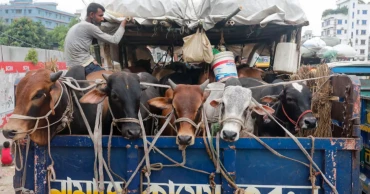
Medium-sized cattle leading buyers’ choice in Dhaka haats
With Eid-ul-Azha approaching, Dhaka’s cattle markets are witnessing a growing rush of buyers and sellers as the capital prepares for one of Bangladesh’s largest seasonal economic activities driven by the Qurbani livestock trade.
Traders said adequate sacrificial animals have already arrived in the city from different districts, while authorities and market management committees claim sufficient preparations have been taken to ensure smooth trading in the designated cattle markets across the capital.
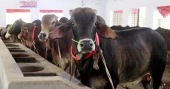
Visiting three of the city’s cattle markets (haats), UNB learned medium-sized cattle priced between Tk 1 lakh and Tk 2 lakh are currently dominating buyer demand, as many city residents are planning to sacrifice jointly with family members, neighbours or friends.
Cattle from districts including Kushtia, Chuadanga, Rajshahi, Pabna, Sirajganj, Faridpur, Jashore and Dinajpur are being displayed at the city’s temporary and permanent cattle markets.
4 months ago

Remittance inflow jumps 41.31pc in 23 days of May
Bangladesh recorded a sharp rise in inward remittances ahead of Eid-ul-Azha, with inflows increasing by 41.31 percent in the first 23 days of May 2026 compared to the same period last year, according to the latest data from Bangladesh Bank.
Expatriate Bangladeshis sent home US$2.97 billion between May 1 and 23, significantly higher than the US$2.10 billion received during the corresponding period in May 2025.
On May 23 alone, remittance inflows through banking channels stood at US$173.64 million, according to latest data of Bangladesh Bank.
The latest surge has pushed the country’s total remittance earnings in the current fiscal year (FY2025–26) to a record high.
From July 2025 to May 23, 2026, Bangladesh received US$32.3 billion in remittances, registering a 21.26 percent growth over the same period of the previous fiscal year. During July 2024 to May 23, 2025, the country received US$26.64 billion.
Central bank officials and financial analysts attributed the strong growth to improved digital banking services, increased remittance flows ahead of Eid-ul-Azha, and competitive exchange rates offered by commercial banks.
They said the continued rise in remittance inflows is providing crucial support to the country’s foreign exchange reserves and helping maintain macroeconomic stability amid ongoing global economic uncertainties.
4 months ago
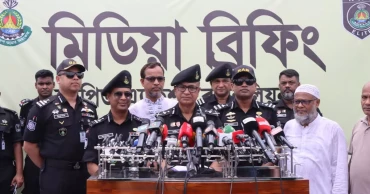
RAB working to prevent forced diversion of cattle-carrying vehicles: DG
The Rapid Action Battalion (RAB) has been closely monitoring the movement of vehicles carrying sacrificial animals to ensure that they are not forcibly diverted to any specific market ahead of Eid-ul-Azha, says its chief.
RAB Director General Md Ahsan Habib Palash came up with the remark while briefing reporters after visiting the Gabtoli Cattle Market in the capital on Sunday.
During the briefing, he said security measures have already been tightened across the country, including in the capital, to keep law and order normal centring on Eid-ul-Azha.
Besides, the elite force has set up checkposts in Dhaka city and other parts of the country as part of ensuring security, the RAB chief said.
He said control rooms have been opened at cattle markets, while RAB battalions are conducting robust patrols in their respective areas to ensure the safe transportation of sacrificial animals to markets.
Checkpoints are also being operated in vulnerable and important locations alongside other law enforcement agencies to enhance security, Habib Palash said.
He said the risk of robbery and snatching of cattle traders’ money increases during Eid as public gatherings in Dhaka and other cities tend to decrease. “To address the situation, RAB has increased the number of security posts and patrols.”
The RAB director general said special monitoring is being carried out through control rooms and watchtowers at cattle markets to reduce inconvenience for buyers. “At the same time, traders and buyers are being encouraged to avoid cash transactions and instead use cashless payment methods or cards.”
He said necessary equipment has been kept ready to detect counterfeit currency, while drives against counterfeit money producers are continuing.
Issuing a strong warning, the top RAB officer said action will be taken instantly against those spreading rumours or making misleading posts on social media centring on Eid and animal sacrifice.
He said RAB’s regular patrols, intelligence surveillance and operational activities will continue to prevent terrorist activities and other crimes, and maintain normal law and order across the country during the Eid period.
4 months ago
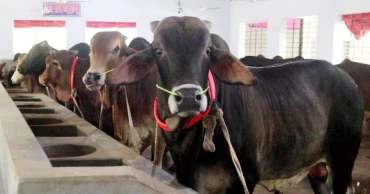
Looted on way to Ctg from Sylhet, 3 sacrificial cattle recovered in Dhaka
Police recovered three sacrificial cattle worth Tk 8.6 lakh after they were looted in Brahmanbaria while being transported from Sylhet to Chattogram ahead of Eid-ul-Azha.
Deputy Commissioner (Media and Public Relations) of Dhaka Metropolitan Police NM Nasiruddin confirmed the matter on Sunday morning.
According to Bangshal Police Station in the capital, the cattle were being transported in a pickup van from Bishwanath upazila in Sylhet to Chattogram on May 20.
Around 3:00am the following day, when the vehicle reached Dhanashi in Nabinagar upazila of Brahmanbaria, a group of 3-4 miscreants intercepted the vehicle and snatched the cattle.
Following the incident, a complaint was lodged with Nabinagar Police Station.
Acting on a tip-off, a team from Bangshal Police Station conducted a raid on a meat shop on Aga Sadek Road in the capital on Saturday and recovered the three stolen cattle.
The recovered cattle were later handed over to their rightful owner.
4 months ago
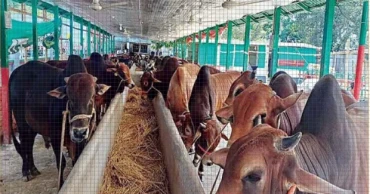
Chandpur farmers pin hopes on fair prices as 66,000 sacrificial animals ready
Cattle markets in Chandpur are bustling with activity ahead of Eid-ul-Azha as farmers prepare more than 66,000 sacrificial animals for sale, hoping to secure fair prices during the peak trading season.
Despite strong preparations, many farmers remain concerned about market volatility and the possible influx of cattle from a neighboring country, which they fear could affect prices.
According to the Department of Livestock Services, Chandpur district currently has 66,098 sacrificial animals ready for sale against an estimated demand of around 75,000, leaving a shortfall of about 9,000animals.
Officials, however, said the gap would likely be filled by small-scale seasonal traders and farmers from remote char areas and neighboring districts.
District Livestock Officer Dr Jyotirmoy Bhowmik said there would be no shortage of sacrificial animals this year.
“We have sufficient local production and the remaining demand will be met by marginal farmers and seasonal traders. We expect a smooth supply during Eid,” he told UNB.
The ready animals include 27,346 bulls, 8,366 oxen, 10,571 cows, 23 buffaloes, 19,346 goats and 446 sheep.
Visits to major cattle markets including Sofarmali, Bagadi Chourasta, Puranbazar and Bakila in Haziganj revealed that cattle trade have already gained momentum.
Buyers said cattle prices this year are slightly higher than last year.
“Prices have increased compared to previous years, especially for healthy local bulls,” said Abu Sayeed, a cattle buyer in Chandpur town.
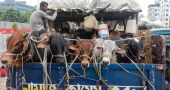
Traders were seen bringing truckloads of cattle from Faridpur and northern districts to local markets, although buyers appeared to prefer locally raised cattle.
According to livestock officials, around 4,155 entrepreneurs — mostly young farmers — are involved in raising sacrificial animals across Chandpur’s eight upazilas. Nearly 300 temporary and permanent cattle markets have been set up in the district ahead of Eid.
Many farmers said they purchased young bulls several months ago and raised them using locally produced feed such as grass, straw, oil cake and bran.
While small and medium-sized cattle are mainly sold in local markets, larger bulls are increasingly marketed online.
During a visit at several farms, workers were seen caring for cattle that are expected to be sold within the next week.
Despite their preparations, many farmers expressed anxiety over market prices.
“If Indian cattle do not enter the market in large numbers, we hope to get good prices this year,” said farmer Khaled Khan from Nanupur village in Sadar upazila.
Khaled, who has been involved in cattle farming for two decades, said he has prepared several bulls for Eid, with prices ranging between Tk 90,000 and Tk 1.2 lakh.
Another farmer, Ahmed Ali from Ghashipur village, said he has 32 cattle in his farm including seven bulls raised entirely on local feed.
Some farmers are targeting high-end buyers with premium bulls.
Nargis Begum of Hamankardi village in Maishadi union has prepared three large bulls aged between three and five years.
Among them is a bull named “Raja Babu,” for which she is seeking Tk 12 lakh. Another bull, “Hamankardi King,” is priced at Tk 10 lakh, while the smallest one is expected to sell for around Tk 5 lakh.
Farm worker Md Moslem said the animals were raised naturally without artificial fattening methods.
“We fed them local grass, straw and bran. We are taking special care of them every day,” he said.
Many buyers expressed more interest in locally farmed cattle, citing concerns about chemical fattening practices sometimes used by outside traders.
“People in the city now prefer cattle raised by local farmers because they trust the quality more,” said Abdul Barek, a resident of Chandpur town.
To ensure smooth trading during Eid, the livestock department officials said mobile teams, including veterinary surgeons, will monitor cattle markets, resolve disputes and check counterfeit currency duringtransactions.
4 months ago