Titanic
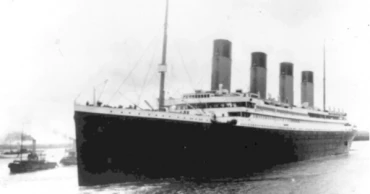
US government opposes plan to auction Titanic artifacts
A plan to auction more than 100 artifacts recovered from the wreck of the Titanic has drawn opposition from the U.S. government, according to newly unsealed court documents.
The items include personal belongings, currency, kitchenware and decorative objects salvaged from the famous shipwreck in the North Atlantic.
RMS Titanic Inc., the company that holds exclusive salvage rights to the Titanic site, is seeking to sell the artifacts for the first time. The company had previously agreed that recovered items would only be displayed in museums and traveling exhibitions.
Court filings show the Georgia-based firm also proposed a global touring exhibition in four cities, though the locations have not been disclosed. Among the items listed for possible sale are a bronze cherub, a gold nugget necklace and a heart-shaped pendant.
The U.S. National Oceanic and Atmospheric Administration (NOAA), which represents American oversight of the wreck site, argued in court documents that the proposed auction would violate legal obligations tied to the salvage agreement. A judge unsealed the filings earlier this month.
The government said the company “does not seek the Court’s approval, does not believe that approval is required, and asserts that it is not restricted in its ability to sell” the artifacts.
RMS Titanic Inc. did not respond to media requests for comment on Monday. In earlier court submissions, its lawyers argued that the proposed sale would not breach existing agreements or court orders.
The dispute marks another chapter in long-running efforts to sell Titanic artifacts. Since 1987, salvage teams have recovered thousands of objects, including sections of the ship’s hull. The company earns revenue mainly by exhibiting them.
Over the years, attempts to sell parts of the collection have repeatedly faced opposition from U.S. courts, preservation groups and relatives of victims, especially when items are linked to passengers.
However, some artifacts not directly tied to the wreck or recovered by survivors have been sold at high prices in recent years. A life jacket worn by a passenger sold for more than $900,000 in April, while a gold pocket watch linked to the ship’s rescue operations fetched nearly $2 million in 2024.
Auction houses say demand remains strong due to the global fascination with the Titanic, which sank in 1912 after striking an iceberg on its maiden voyage from Europe to New York, killing more than 1,500 people.
The case also reflects a trans-Atlantic legal dispute over ownership and control of the artifacts. Some of the earliest recovered items were taken to France, where authorities granted ownership rights to the salvaging company. French research institute IFREMER worked with Woods Hole Oceanographic Institution during the wreck’s discovery.
Later recoveries were handled under a U.S. District Court in Norfolk, Virginia, which oversees the broader salvage agreement.
NOAA argues that all roughly 5,000 recovered items—regardless of where they were initially claimed—should remain part of a single preserved collection under U.S. court conditions. It also says French court terms required the artifacts to remain together and not be sold individually.
The company, meanwhile, has argued that the U.S. court does not have jurisdiction over items claimed in France.
Experts and ocean explorers have also expressed concern over the proposed auction, saying Titanic artifacts should remain publicly accessible.
Ocean scientist Greg Stone said recovery is acceptable if done carefully and with proper archaeological methods, but added he would prefer a nonprofit approach.
Law professor Richard Daynard of Northeastern University said the rules are meant to protect the artifacts for public benefit, warning against turning them into private luxury items.
“If it’s something where someone can walk through their house and say ‘Yes, I bought this for $5 million and it’s original from the Titanic,’ that’s not a good thing,” he said.
3 months ago

James Cameron shuts down Titanic raft debate, says Jack could not have survived
Legendary filmmaker James Cameron has once again addressed the long-running debate over the ending of Titanic, saying Leonardo DiCaprio’s character Jack Dawson could not have survived by sharing the floating raft with Rose.
Speaking on The Hollywood Reporter’s Awards Chatter podcast, Cameron said he was tired of being asked whether Jack could have lived if he had climbed onto the raft with Rose.
“Don’t ask me about the raft, people,” Cameron, 71, was quoted as saying by People.
The director, who won three Academy Awards in 1997 for writing, directing and producing Titanic, said the question has already been examined scientifically. He revealed that experiments were carried out to determine whether Jack could have survived the freezing Atlantic waters.
Cameron said survival would have required highly specialised knowledge that did not exist at the time of the Titanic disaster in 1912.
“If Jack somehow was an expert in hypothermia and somehow knew what science now knows back in 1912, it is theoretically possible, with a lot of luck, that he might have survived,” he said. “But the conditions were not met. There’s no way.”
Cameron recently became the first director to deliver four films that crossed the 1 billion dollar mark at the global box office. Alongside Titanic, his Avatar franchise has also enjoyed massive commercial success.
With inputs from NDTV
8 months ago

Rare video of 1986 dive in Titanic wreckage to be released
Rare and in some cases never before publicly seen video of the 1986 dive through the wreckage of the Titanic is being released Wednesday by the Woods Hole Oceanographic Institution.
The more than 80 minutes of footage on the WHOI's YouTube channel chronicles some of the remarkable achievements of the dive led by Robert Ballard that marked the first time human eyes had seen the giant ocean liner since it struck an iceberg and sank in the frigid North Atlantic in April 1912. About 1,500 people died during the ship's maiden voyage from Southampton, England, to New York City.
A team from Massachusetts-based Woods Hole Oceanographic Institution, in partnership with the French oceanographic exploration organization Institut français de recherche pour l’exploitation de la mer, discovered the final resting place of the ship in 12,400 feet (3,780 meters) of water on Sept. 1, 1985 using a towed underwater camera.
Nine months later, a WHOI team returned to the site in the famous three-person research submersible Alvin and the remotely-operated underwater exploration vehicle Jason Jr., which took iconic images of the ship’s interior.
The release of the footage is in conjunction with the 25th anniversary release on Feb. 10 of the remastered version of the Academy Award-winning movie, “Titanic.”
“More than a century after the loss of Titanic, the human stories embodied in the great ship continue to resonate,” ocean explorer and filmmaker James Cameron said in a statement. “Like many, I was transfixed when Alvin and Jason Jr. ventured down to and inside the wreck. By releasing this footage, WHOI is helping tell an important part of a story that spans generations and circles the globe.”
3 years ago

Plan to retrieve Titanic radio spurs debate on human remains
People have been diving to the Titanic’s wreck for 35 years. No one has found human remains, according to the company that owns the salvage rights, reports AP.
5 years ago
.jpg)
Plan to retrieve Titanic radio spurs debate on human remains
But the company’s plan to retrieve the ship’s iconic radio equipment has sparked a debate: Could the world’s most famous shipwreck still hold remains of passengers and crew who died a century ago?
Lawyers for the U.S. government have raised that question in an ongoing court battle to block the planned expedition. They cite archaeologists who say remains could still be there. An
5 years ago

Firm wants to recover the Titanic's iconic telegraph machine
The salvage firm that has plucked silverware, china and gold coins from the wreckage of the Titanic now wants to recover the Marconi Wireless Telegraph Machine that transmitted the doomed ship's increasingly frantic distress calls.
6 years ago
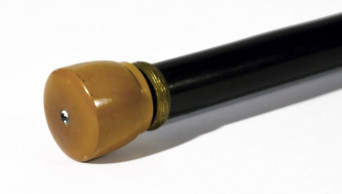
Titanic survivor's light-up cane goes for $62,500 at auction
Providence, Jul 23 (AP/UNB) — A Titanic survivor's walking stick, with an electric light she used to signal for help from a lifeboat, sold for $62,500 at an auction of maritime items, the auction house said Monday.
7 years ago