Renewable Energy Bangladesh

Govt aims high in generating power from renewables
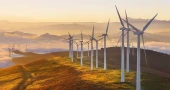
The Bangladesh government has set targets for generating 20% and 30% of electricity from renewable energy sources by 2030 and 2040, respectively, under the country’s new Renewable Energy Policy.
Bangladesh will require between US$933 million and US$980 million annually until 2030 to meet the new target.
Post-2030, the country will need between US$1.37 billion and US$1.46 billion annually until 2040, a new report by the Institute of Energy Economics and Financial Analysis (IEEFA) finds.
“Public finance alone is unlikely to meet these funding requirements, necessitating large-scale private investment,” says the report’s co-author, Shafiqul Alam, IEEFA’s lead energy analyst for Bangladesh.
However, abrupt policy changes, off-taker risk, technology and performance risk, weak project pipelines, a cumbersome loan disbursal process, land acquisition challenges, currency volatility, and lower sovereign rating limit private sector investment in the sector, Alam notes.
By engaging with Multilateral Development Banks, international climate finance institutions and bilateral development financial institutions, the government can consider establishing a currency hedging fund to mitigate currency risk.
The current government has suspended 31 utility-scale renewable energy projects that received Letters of Intent through the non-competitive bidding process under the previous government.
This sudden shift to competitive bidding and the resulting contractual uncertainties have left investors feeling disconcerted.
The report highlights that Bangladesh should ensure regulatory stability, restore investor guarantees, map and allocate land for projects, and build capacity in both the banking and service provider ecosystems to attract investment.
Experts tell Dr Yunus: Bangladesh can attract big investments in renewable energy, carbon market
The report underscores the importance of reinstating the “project implementation clause” to dispel uncertainties over payment or establish a funding mechanism to provide revenue assurance to renewable energy producers, mitigating counterparty risks.
“Land acquisition challenges can be mitigated through the Public-Private Partnership model, which can help mobilise investment in renewable energy projects through special economic zones,” Alam suggests.
“In the case of small-scale renewable energy projects, their accelerated deployment will depend on addressing the high import duty on critical components, performance issues and perceived risks. Easing lending norms for green funds can also help scale up such projects,” says Labanya Prakash Jena, Sustainable Finance Consultant, IEEFA.
The report acknowledges the government’s positive move in reducing the customs duty on imported solar inverters and calls on the government to reduce the import duty on components of small-scale solar projects, such as solar panels, FRP walkway, mounting structure and DC cable.
The report emphasises the importance of adopting a pre-finance modality of the Central Bank’s green funds to minimise delays and simplify disbursement.
Bangladesh's low sovereign credit ratings also deter foreign investors. “Moody’s downgraded Bangladesh’s credit rating to B2 in November 2024 from B1 earlier, based on the country’s lower-than-expected economic growth in the near term, political challenges and banking sector risks. This has further deteriorated the country’s credit profile in the international financial market, making borrowing expensive,” notes Jena.
“The government, international organisations, financial institutions, private investors, and renewable energy companies should collaborate to create a conducive environment that fosters innovation, investment, and sustainable growth,” Alam emphasises.
1 year ago
BSREA, Solar Power Europe sign MoU to boost EU solar business in Bangladesh
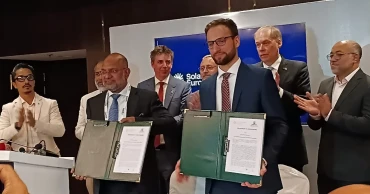
Bangladesh Sustainable and Renewable Energy Association (BSREA) has signed a Memorandum of Understanding (MoU) with Solar Power Europe.
Mustafa Al Mahmud, president of BSREA and Mate Heisz, CEO of Solar Power Europe signed the MoU documents on behalf of their respective sides on the 3rd day of Bangladesh Investment Summit 2025, held at Hotel Intercontinental, Dhaka.
Speaking on the occasion Mate said that around 300 European solar energy companies are working with Solar Power Europe and the companies have a vision to invest in renewable energy.
The signing of the MoU creates opportunities for the member companies of Solar Power Europe to do business with the Bangladesh private sector.
Before signing the MoU, Mate moderated a panel discussion on ‘ Unlocking the Potential of Bangladesh for investors in Renewable Energy’.
Holcim Group reaffirms commitment to Bangladeshi market
In the panel discussion, representative of Bank Europe, International Finance Corporation, Sustainable and Renewable Energy Development Authority (SREDA), CEO of Pran RFL and other private sector investors of Europe and Bangladesh joined.
Foreign and Bangladeshi private sector Entrepreneurs participated in a renewable energy session held at the summit.
1 year ago
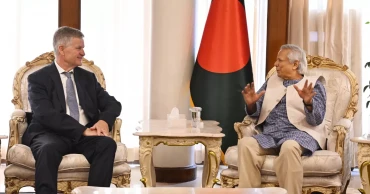
Experts tell Dr Yunus: Bangladesh can attract big investments in renewable energy, carbon market
A delegation of development and renewable energy experts, led by former Norwegian minister for development and environment Erik Solheim, on Sunday said Bangladesh can attract big investments in renewable energy and carbon markets.
The team expressed their keen interest to invest in small-scale solar plants and carbon markets, agroforestry in the country and jointly explore hydroelectricity investment opportunities in Nepal as Bangladesh focuses more on easing off fossil fuels in the coming years.
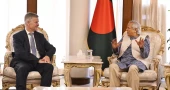
The delegation called on Bangladesh Chief Adviser Professor Muhammad Yunus at the State Guest House in Dhaka on Sunday and discussed investment issues.
Professor Yunus welcomed the move, saying the interim government was now ready to attract Foreign Direct Investment in these rapidly evolving sectors.
"All these are very serious issues for us. Bangladesh wants big investments in renewable energy and the carbon market," the Chief Adviser said.
ADB has been actively supporting ICC Bangladesh: ICCB President
Professor Yunus said Dhaka had already initiated talks to import hydroelectricity from Nepal and Bhutan, and his government was more than eager to explore opportunities to set up a South Asia grid to bring the power to Bangladesh via a narrow corridor in India.
"This (hydroelectricity in Nepal) is a treasure waiting to be explored. But delivery is a problem," the Chief Adviser said.
Erik Solheim, also a former UN under-secretary general, said Bangladesh lacks enough unused space to build a large-scale solar plant as China and some other Asian countries did.
But, he said, the country could be a perfect place to set up small-scale solar plants, according to the Chief Adviser’s press wing.
Professor Yunus said his government has put a special emphasis on solar plants, and he has already invited Chinese investors to relocate solar panel manufacturing plants to Bangladesh.
Officials Several Chinese solar manufacturing firms have since visited Bangladesh to explore opportunities to set up factories here with a view to using them to export much of their products to rich Western nations.
Kavin Kumar Kandasamy, Chief Executive Officer of ProClime, a carbon trade and climate investment firm, said Bangladesh can easily earn tens of millions of dollars by carbon trading as the South Asian nations like Sri Lanka have done.
Bangladesh and Indonesia explore new frontiers in sustainable finance
Professor Yunus said Bangladesh was keenly interested in exploring the carbon market, as it would help the country earn millions while at the same time support the efforts to protect the Sundarbans, the world's largest mangrove forests.
During the hour-long talks, the Chief Adviser and the Solheim-led delegation also discussed the Rohingya crisis and recent developments in the western Myanmar state of Rakhine, where a rebel group now controls most of the territories.
1 year ago
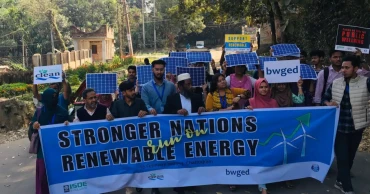
Youth rally at CU: Crisis won't be resolved if investment in renewable energy not increased quickly
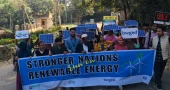
A strong youth gathering and procession demanding immediate energy policy reforms took place at the Chittagong University campus as activists and community members rallied for Bangladesh’s transition to renewable energy.
Led by ISDE Bangladesh, CAB Youth CU unit, CLEAN, and BWGED, the demonstration underscored the pressing need to eliminate bureaucratic hurdles and ensure a smooth shift to sustainable energy sources, said a CAB press release.
Participants of the youth gathering and road procession at different departments of the university raised festoons, play cards, banners, and chanted slogans to highlight barriers such as outdated infrastructure, inconsistent policies, and insufficient investment in renewable energy.
The campaign demands the establishment of a streamlined approval process, fair tariff structures, and increased financial support for clean energy initiatives.
Protesters argued that without these reforms, Bangladesh risks falling behind in its renewable energy commitments.
Nearly everyone in the world breathes polluted air
CAB Central Vice President & Executive Director of ISDE Bangladesh said that the power crisis has reached its peak even before the upcoming summer season begins.
Therefore, it will be difficult to solve the energy crisis if investment in renewable energy is not increased quickly.
"We must create a more conducive environment for investment in renewable energy," he said. "Only through effective policy change can we ensure the transition to affordable and accessible green energy."
Dr. Khaled Mizbahuzzaman of the Institute of Forestry and Environment, Chandan Kumar of the Department of Statistics, Joint Secretary of Chattogram Jila Samajik Uddokta Forum Md Janae Alam, President of CAB Youth Group Chittagong University Unit Rabbi Touhid, Secretary Khairul Islam, and ISDE Bangladesh Programme Officer Abu Hasan Azmi spoke on the occasion.
Local leaders, students, and environmental activists who championed the cause of a greener Bangladesh also attended the rally.
1 year ago

Rahimafrooz Renewable Energy wins Bangabandhu Sheikh Mujib Industrial Award
Rahimafrooz Renewable Energy Limited, a leading company in the sector, has been selected for the Bangabandhu Sheikh Mujib Industrial Award 2020, said a press release of the company.
It is among a total of 23 industries which have been selected for the prestigious award being given for the first time in the country.
Read: The SWAP story of Bangladesh's first reCommerce startup
The press release said Rahimafrooz Renewable Energy Limited has been leading the country’s renewable energy sector by illuminating millions of homes in the country through Solar home system (SHS). This has brought unprecedented improvement in the livelihoods of the people.
Read: TEDxGulshan in city on Jan 18
Rahimafrooz has been playing a key role in installing solar irrigation pumps to facilitate crops production while it has a vital role in setting up of mini-grids in the country’s remote and off-grid areas and installation of solar systems on rooftops, industrial plants across the country.
5 years ago