economic transformation
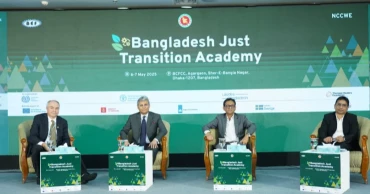
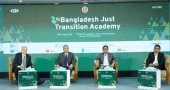
Sustainable, equitable economic transformation urged at a seminar
Bangladesh Just Transition Academy on Wednesday called for promoting shared commitment among parties to support sustainable, equitable and inclusive economic transformation.
The two-day Bangladesh Just Transition Academy ended with a call for promoting shared commitment among government, employers and workers to support sustainable, equitable economic transformation aligned with the Paris Agreement, national climate and employment policies, the Agenda 2030 and ILO Guidelines, according to a media release.
The Academy is a collaborative effort of International Labour Organization (ILO), Food and Agriculture Organization (FAO) of the United Nations, Laudes Foundation, and Thomson Reuters Foundation (TRF), with the support of the European Union, Denmark, the Netherlands, Sweden and Global Affairs Canada.
Mentioning that transition is a gradual process, secretary of Ministry of Labour and Employment A.H.M. Shafiquzzaman remarked," We have to walk this talk together with the employers and the workers, achieving the Chief Adviser’s vision to “Make Bangladesh sustainable”.
Michal Krejza, head of cooperation of the European Union Delegation to Bangladesh stated that EU and its member states are supporting Bangladesh economy for access to market through compliance with international labour and environmental standards – driving efforts for adaptation to climate change, environmental protection and support to the circular economy.
Country Director of ILO Bangladesh Tuomo Poutiainen stated that they should continue discussion to drive just transition moving forward. "In Bangladesh, there is no official platform where government, workers and employers can come together and advance just transition. The call to action in which tripartite parties commit to drive this important process will be a critical step," he said.
Industries to get additional 250 mmcfd gas: Energy Adviser
President of Bangladesh Employers’ Federation Ardashir Kabir stated, just transition is not an abstract aspiration anymore. As the economy transitions in the face of climate change, we must ensure that people, environment and social justice are at the centre. The transition plan must be driven by social dialogue that includes the most vulnerable, including women, informal workers and people with disabilities.
Chairperson of the Just Transition Bangladesh Centre A.R. Chowdhury Repon stated that justice, equity and sustainability must be our compass in those economic transition, ensuring workers are at the centre of the process.
The co-organisers confirmed they will continue to work together to take forward the momentum of the Academy.
Starting from 6 May 2025, the Academy included panel discussions among stakeholders, presentations from youth climate entrepreneurs, interactive breakout sessions, with participation from government and non-government agencies, youth-led organizations, private sectors, and media.
1 year ago

Taskforce on economy puts forward its recommendations
The Task Force on Re-strategising the Economy has put forward a series of recommendations aimed at fostering economic transformation in Bangladesh.
The proposals include launching pilot projects to develop scalable models for broader reforms, signaling the government’s commitment to urgent economic changes.
The task force’s report, titled “Re-strategising the Economy and Mobilizing Resources for Equitable and Sustainable Development,” provides a strategic framework to guide Bangladesh’s interim government in addressing economic challenges while promoting growth, social progress, and environmental sustainability.
Highlighting inefficiencies in public services and environmental concerns, the task force underscored the need for targeted interventions to drive lasting change.
At a press briefing at the NEC Conference Room in Sher-e-Bangla Nagar, Task Force Chief Dr. KAS Murshid outlined the key recommendations.
The event was attended by Planning Adviser Dr. Wahiduddin Mahmud and other members of the 12-member task force.
The report presents well-researched initiatives selected for their feasibility and public impact. By collaborating with citizens and youth groups, these measures aim to enhance transparency, accountability, and inclusivity.
Dr. Murshid highlighted key proposals, including:
• Public sector reforms: Improving efficiency in public hospitals, rural schools, clinics, and the Bangladesh Road Transport Authority (BRTA).
• Urban development: Revitalizing the Buriganga River and reforming a key ministry.
• Institutional changes: Establishing a Centre of Global Excellence, reassessing Bangladesh Biman, creating the Centre for Social and Behavioural Change Communication and Research (CSBCC&R), setting up a Regulatory Reform Commission (RRC), and forming an NBR Oversight Committee.
• Transport reforms: Implementing automatic traffic signaling and transitioning to a single-operator bus franchise system.
• Investment and trade facilitation: Enhancing the One Stop Service (OSS), attracting FDI in healthcare and vocational education, strengthening economic diplomacy, expanding skilled labor exports, and revitalizing Special Economic Zones (SEZs).
Task force conducts operation against illegal sand extraction in Feni river
Dr. Wahiduddin Mahmud emphasized the importance of restructuring Bangladesh Biman to transform it into a competitive airline. He commended the task force for compiling the report within a short period, ensuring a pragmatic and actionable approach.
Dr. Monzur Hossain, Research Director at BIDS and a task force member, noted the report’s focus on strengthening macroeconomic stability and adopting an accommodative monetary policy.
Former MCCI President Syed Nasim Manzur, participating online, stressed the need for a new Arbitration Act and Bankruptcy Act, along with merging Dhaka’s two municipal authorities.
Dhaka University Professor Dr. Selim Raihan suggested prioritizing the operationalization of a few SEZs rather than rolling out 100 at once. He also recommended improving OSS at BIDA and empowering the Bangladesh Energy Regulatory Commission (BERC).
Economist Dr. Fahmida Khatun called for stricter internal auditing and compliance mechanisms in the banking sector.
BUET Professor Dr. Shamsul Haque stressed the need for greater accountability in feasibility studies for infrastructure projects.
Industrial Security Task Force ensuring stability, safety in key industrial hubs: ISPR
Cross-Cutting Reforms for Economic Transformation
The task force proposed several overarching reforms, including:
• Leveraging digital and AI technology across sectors
• Reducing the digital divide
• Reforming the planning process
• Professionalizing leadership positions
• Combating extortion
• Enhancing government efficiency
• Implementing NID-based open data platforms
• Establishing emergency reserves
• Depoliticizing the banking sector
Additional recommendations include utilizing degraded lands for solar energy, maximizing gas field extraction, regulating sand mining, streamlining public service call centers, launching Dhaka Haat for SMEs, and re-categorizing SMEs.
A Roadmap for Economic Reform
The report, organized into 17 chapters, provides a roadmap for economic transformation, balancing sectoral reforms with cross-cutting strategic initiatives. Part I (Chapters 1-7) focuses on sectoral and sub-sectoral policy challenges, while Part II (Chapters 8-17) addresses economy-wide efficiency and performance.
The report emphasizes that with strong leadership and strategic planning, Bangladesh can transform its challenges into opportunities, ensuring a resilient and equitable future for all.
1 year ago
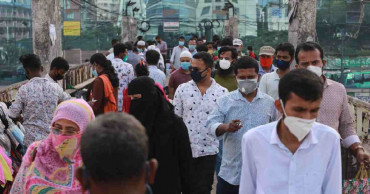
Model villages with modern facilities to lead economic transformation
The country will need to accelerate structural transformation of the economy by building strong industrial and manufacturing sectors if it wishes to become a higher middle income country by 2031.
"To maintain its position among the developing countries and become a higher middle income country by 2031, we will need strong industrial and manufacturing sector, which will help maintain high economic growth. For this, we will need to accelerate the structural transformation of the economy," according to an official Financial Ministry document.
It said that the country has been gradually moving from an agro-based economy to a manufacturing-based economy as a result of the pursuit of effective government policies and action plans during the last 12 years.
Therefore, it said, the contribution of agriculture to the GDP has been gradually declining and the desired structural transformation is taking place in the economy.
Bangladesh has already qualified for graduation from the list of Least Developed Countries to a developing, or lower middle-income country.
According to the United Nations Capital Development Fund (UNCDF) recommendation, Bangladesh's transition will be effective in 2026. It means until 2026, Bangladesh will be able to enjoy all the benefits applicable to LDCs.
However, under the current rules, Bangladesh will be able to enjoy duty-free and quota-free market access for another three years, i.e. until 2029, to overseas markets that offer favourable trade terms to LDCs.
Also read: Progress meeting held to eliminate homelessness in Mujib Centennial
The document said that in future the government will give priority to accelerating the structural transformation of the economy.
To this end, the government will provide necessary financial assistance for the implementation of some activities that aid this transformation.
5 years ago