Gas crisis

Daily gas supply stands at 2,619 MMCF as RLNG runs at peak capacity, but supply deficit persists
Countrywide gas supply reached 2,619 million cubic feet per day (MMCFD) as of 2:00 PM on Sunday, supported heavily by imported Liquefied Natural Gas (LNG), according to daily operational data from Petrobangla.
Of the total volume supplied to the national grid, domestic gas fields contributed 1,603 MMCFD, while Re-gasified Liquefied Natural Gas (RLNG) accounted for 1,016 MMCFD to help bridge the energy deficit.
The 1,016 MMCFD RLNG contribution reflects near-peak operational capacity of the country's two Floating Storage and Regasification Units (FSRUs) moored off Moheshkhali in Cox’s Bazar—operated by Excelerate Energy and Summit Group—which hold a combined maximum re-gasification capability of around 1,100 MMCFD.
Despite maintaining RLNG supply above the 1,000 MMCFD mark, the current total output of 2,619 MMCFD still falls significantly short of the nation's total estimated demand, which ranges between 3,800 MMCFD and 4,000 MMCFD.
This leaves an ongoing daily deficit of approximately 1,200 to 1,400 MMCFD across key sectors.
1 month ago

Bangladesh proposes importing gas from Myanmar via pipeline to boost energy security
Bangladesh has proposed importing natural gas from Myanmar via a cross-border pipeline to meet its growing domestic energy demand and deepen regional energy cooperation.
Minister for Power, Energy and Mineral Resources Iqbal Hasan Mahmud placed the proposal during a meeting with Myanmar Ambassador to Bangladesh U Kyaw Soe Moe at his Secretariat office on Sunday.
Highlighting the significant demand for natural gas within Bangladesh, Minister Mahmud stated that the country prioritizes enhancing energy collaboration with Myanmar as an immediate neighbor.
He expressed keen interest in retrieving and reviving the long-standing proposal to construct a gas pipeline connecting Myanmar to Chattogram.
In response, the Myanmar Ambassador welcomed Bangladesh’s proposal positively and noted that in addition to a pipeline, the feasibility of supplying gas in the form of Liquefied Natural Gas (LNG) could also be discussed in detail. The minister responded favorably to the LNG exploration suggestion.
To accelerate bilateral talks in the energy sector, Minister Mahmud proposed holding ministerial-level meetings between the two countries. He announced plans to extend a formal invitation to Myanmar’s Energy Minister to visit Bangladesh, adding that he is also prepared to travel to Myanmar if necessary.
Recalling Prime Minister Tariq Rahman’s recent official visit to China, the power and energy minister noted that a proposal was made to establish a China-Myanmar-Bangladesh Economic Corridor.
He emphasized that establishing a gas pipeline between Bangladesh and Myanmar would play a supportive role in facilitating that regional corridor.
Reiterating the government's commitment to long-term trade and energy cooperation, Minister Mahmud conveyed Prime Minister Tariq Rahman's sincere goodwill to strengthen bilateral ties under a "Neighbor First" policy, noting that numerous potential areas of cooperation remain to be explored between the two nations.
Myanmar Ambassador U Kyaw Soe Moe suggested that the proposals be thoroughly reviewed in upcoming meetings of the Bangladesh-Myanmar Joint Technical Committee.
State Minister for Power, Energy and Mineral Resources Anindya Islam Amit, Energy Secretary Mohammad Saiful Islam, and Power Secretary Mirana Mahrukh were also present during the meeting.
2 months ago
Gas supply to improve from next week, return to normalcy a week later: Amit
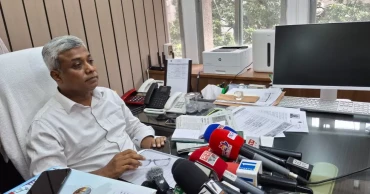
State Minister for Power, Energy and Mineral Resources Aninda Islam Amit on Monday once again apologised to the public for the ongoing gas crisis, expressing hope that supply will begin to improve from next week, with full restoration expected about a week later.
Speaking to reporters at his office at the Secretariat, he said the government is making every possible effort to resolve the crisis, which has severely affected households, industries and transport services.
"We know homemakers are struggling to cook, industries have had to scale back production, and pressure on CNG stations has disrupted public transport. We sincerely apologise to the people for the hardship," the state minister said.
He said the disruption was not caused by any government agency but stemmed from a problem involving a private operator responsible for ensuring part of the country's gas supply.
"We are working jointly with them around the clock. We cannot provide an immediate solution due to certain limitations. However, our teams are working 24/7 with the company, and we hope the situation will start improving from next week, InshaAllah," Amit said.
Referring to the floating storage and regasification unit (FSRU) in Moheshkhali of Cox’s Bazar where the technical fault occurred, he said the facility normally supplies around 500 to 550 million cubic feet of gas per day.
According to information provided by the operator, the state minister said, the FSRU is expected to resume supplying around 280 to 300 million cubic feet of gas per day to the national grid from next week.
"If they can restore about 50 percent of the supply next week, the plan is to return to 100 percent capacity in the following week," he added.
3 months ago
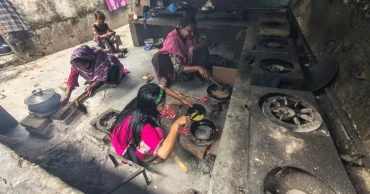
Gas crisis deepens as LNG terminal outage disrupts supply, cripples household cooking
The ongoing gas crisis, triggered by a fire at a floating storage and regasification unit (FSRU) in Cox’s Bazar, is unlikely to ease anytime soon, leaving millions of households in Dhaka and surrounding areas struggling to cook.
The accident has reduced the country's total gas supply to below 2,150 million cubic feet per day (mmcfd), down from an average of around 2,700 mmcfd that had been maintained over the past year, despite the national daily demand standing at nearly 3,800 mmcfd.
The fire at the FSRU operated by Excelerate Energy at Moheshkhali on July 21 damaged one of its two boilers, forcing it to suspend operations, further plummeting the gas supply.
International expert teams from the UK and the United Arab Emirates have been working at the terminal since Thursday to repair the technical damage.
Tariqul Islam Khan, public relations officer of Bangladesh Oil, Gas and Mineral Corporation (Petrobangla), indicated that while efforts are underway, it will take more time before the facility can resume operation.
The severe supply shortfall has hit domestic kitchens the hardest, with gas pressure dropping to near zero or flickering feebly in many parts of the capital.
Residents in areas such as Mohammadpur, Kalabagan, Kafrul, Kazipara, West Tejturi Bazar, Mirpur, Rampura and Badda reported that stoves have remained unlit or unusable for days.
Stripped of regular gas supply, many low-income families have been forced to build temporary clay stoves and cook with firewood. Others who can afford it are turning to costly electric cookers or LPG cylinders, significantly increasing their daily household expenses.
Frustrated residents in several neighbourhoods, including Mohammadpur, have staged demonstrations and vented their anger on social media platforms over the persistent cooking crisis.
Beyond domestic kitchens, the shortage has severely impacted other sectors.
According to Petrobangla, gas-fired electricity generation has fallen by approximately 1,500 megawatts, raising concerns over widespread power cuts.
Long queues of vehicles have formed at CNG filling stations across the city, while industrial production has slowed down due to low gas pressure.
Petrobangla issued a statement apologising to consumers for the unexpected disruption and assured that technical teams are working continuously to restore the terminal.
Meanwhile, Titas Gas Transmission and Distribution PLC warned that low gas pressure will persist across Dhaka and adjacent districts until the situation improves.
3 months ago
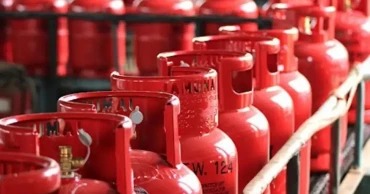
When will the LPG crisis end? Businesses, homemakers in Dhaka struggle
A serious shortage of liquefied petroleum gas (LPG) is disrupting kitchens and commercial eateries across the capital, forcing businesses and households to struggle with erratic supplies and higher costs.
For nearly two decades, Abdullah Molla has run a mid-range hotel in the capital, serving affordable meals to office-goers, students and low-income workers.
Over the past two weeks, however, he says keeping the business running has become a daily struggle.
“Even after paying more, gas cylinders are not available. Some days we cannot serve our full menu. We are losing money and customers are leaving without eating,” Abdullah told UNB.
Closing the kitchen is not an option but with no gas, many food items have already been dropped from the menu,he said .
Small restaurants and roadside food vendors are facing the same crisis across the country.
Kader, who runs a fast-food cart in a busy commercial area, said the rising price of LPG has pushed up his daily operating costs.
Gas cylinder explosion after wedding kills eight in Islamabad
“The price I used to buy gas at has increased sharply. If I raise food prices, customers get annoyed. Many walk away without buying anything,” he said.
Homemakers Under Pressure
The crisis is not limited to businesses. In many urban neighbourhoods, LPG is now the only cooking fuel as new residential gas connections remain suspended. For thousands of families, daily cooking has become uncertain.
Some households are being forced to switch to alternative fuels, which are often more expensive, time-consuming and inconvenient.
“There has been no pipeline gas in our area for a long time. We depend entirely on LPG cylinders, but now even that has become chaotic,” said housewife Arha Moni.
She alleged a huge gap between government-fixed prices and what retailers are charging.
“What is the official price of a 12-kg cylinder, and what are shopkeepers charging? Now it costs Tk 2,500 to Tk 2,600. Is this business, or is it robbery?” she asked.
Titas low pressure chokes gas supply across Dhaka; residents struggle
She accused traders of ignoring official prices and creating artificial shortages.
“Who gave them the right to empty ordinary people’s pockets through syndicates? Families are suffering badly. There is no gas in the stove, and buying a cylinder has become suffocating. Is there no one to see this?” she said.
Consumers have blamed weak market monitoring for allowing such practices to continue and have urged authorities to act immediately to curb price manipulation and ensure sales at government-fixed rates.
Import Dependence and Supply Disruptions
Businesses involved in LPG marketing claim that the current crisis stems from uncertainty in the supply system and complications over price adjustments.
They allege that despite the worsening situation, no clear directive or visible initiative has yet come from the government.
The Ministry of Power, Energy and Mineral Resources on January 04 said there is no shortage of Liquefied Petroleum Gas (LPG) in the country and local administrations have been ordered to take action against those responsible for creating the artificial crisis.
According to the ministry, LPG imports were 1.05 lakh metric tons in November 2025 and 1.27 lakh metric tons in December 2025.
Despite the increase in imports, there is no logic for a supply shortage in the market, it added.
Energy sector sources say Bangladesh’s annual LPG demand is now around 1.4 million metric tonnes, with monthly consumption exceeding 120,000 metric tonnes on average.
Demand rises further during winter and festival seasons.
Nearly 98 percent of the country’s LPG is imported, making the domestic market highly vulnerable to global price volatility, dollar shortages, LC opening complications and shipping delays.
Marketing companies claim recent import disruptions have prevented the buildup of adequate reserves.
Read more: How to Save Gas While Cooking at Home
As a result, dealers in many areas are receiving far fewer cylinders than required, creating shortages at the retail level.
Although the government-fixed price of a 12-kg cylinder remains unchanged, consumers say shortages have pushed market prices to Tk 1,800 to Tk 2,000 and even higher in many areas.
Analysts say LPG demand could reach 2.5 million metric tonnes annually by 2030. Without expanding supply capacity, simplifying import procedures and strengthening market monitoring, the crisis could worsen further.
A Ray of Relief?
Amid growing pressure from traders and consumers, Bangladesh Bank has eased import rules for liquefied petroleum gas to reduce financing pressure on local importers.
In a circular issued on Sunday, the central bank said LPG imports will now be eligible for usance terms of up to 270 days under suppliers’ or buyers’ credit.
The move is expected to give importers greater flexibility in managing payments during the ongoing dollar crunch.
However, industry insiders say the impact of the policy change may take time to be felt on the ground.
Until supply stabilises and prices come down, hotel owners, food vendors and homemakers fear the crisis will continue to disrupt daily life and livelihoods.
Energy and Mineral Resources Division's Joint Secretary AKM Fazlul Hoque said around six million households in Bangladesh currently use LPG, making it an essential commodity.
“The government is in the process of updating the LPG policy, which will include guidelines aimed at addressing existing challenges in the sector,” Fazlul added.
Chairman of the Bangladesh Energy Regulatory Commission (BERC) Jalal Ahmed on Thursday expressed optimism that the country would not face a shortage of liquefied petroleum gas (LPG) during the upcoming Ramadan, citing an expected increase in imports.
LP gas traders threaten nationwide supply suspension
“Those who brought in additional imports were not obstructed. Around 150,000 tonnes of LPG are expected to arrive in January. We hope there will be no problem during Ramadan,” Jalal said at a roundtable discussion titled ‘Challenges of Regulating the LPG Market’, organised by the LPG
9 months ago

Ghorashal Thermal Power Plant shut for 2.5 months
Power generation at the 1,105-megawatt (MW) Ghorashal Thermal Power Plant in Narsingdi has remained suspended for around two and a half months due to multiple factors, including an ongoing gas crisis, according to its Chief Engineer Enamul Haque.
Citing the prolonged shortage, he said production stopped at three major units this June -- Unit-5 (210 MW) on June 9, Unit-4 (360 MW) on June 13, and Unit-7 (360 MW) on June 14.
The government has diverted gas supply to fertiliser factories, prompting the Ministry of Power, Energy and Mineral Resources to request alternative supply arrangements for power generation.
Enamul Haque said that Units 4, 5 and 7 are mechanically sound and could resume operation immediately once gas becomes available.
Earlier in June, Unit-3 (360 MW) went offline after its turbine rotor blades were damaged. Repair work is now in the final stage and the unit will also resume generation once gas supply is ensured.
Read: Barapukuria Power Plant shuts down due to mechanical issues
Meanwhile, Unit-6 (210 MW) has remained out of operation since June 2010, when a fire destroyed its turbine. Units 1 and 2, commissioned in 1967 and 1976 with 55 MW each, are also non-functional due to recurring mechanical issues.
Authorities plan to dismantle these ageing units and replace them with a new facility.
Once the country’s first large-scale thermal power plant, Ghorashal is now struggling to contribute to the national grid, leaving an impact on daily production.
1 year ago
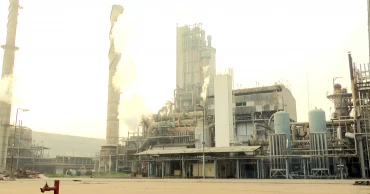
Production at Ashuganj Fertiliser Factory suspended amid gas crisis
The Production of urea at the Ashuganj Fertiliser Factory in Brahmanbaria was suspended again on Sunday due to gas shortage, just 38 days after resuming.
The crisis forced the factory authorities to suspend production on Saturday night.
Earlier, fertiliser production remained suspended from February 21 to November 14 last year for the same reason.
Following movement by workers, Bakhrabad Gas Distribution Company Limited (BGDCL) resumed gas supply to the factory on November 15 and the factory returned to production on January 23 this year.
According to sources, the 1, 150 metric tonnes-production capacity factory requires at least 48 million cubic feet of gas per day to maintain normal production.
Though the factory had received gas, low pressure prevented full-scale production and the BGDCL stopped gas supply to the plant on Saturday evening, causing suspension of production from that night.
Gas supply suspension in various Dhaka areas Tuesday
AB Mahmud, general manager (operations) of the factory, said fertiliser production is impossible without gas.
“As a result, they were forced to halt operations. It is uncertain when production will resume.”
Meanwhile, Zahidur Reza, deputy general manager (engineering) of BGDCL, said that the gas supply to the factory was suspended following a government decision."The resumption of supply also depends on government directives. It is unlikely that the factory will receive gas during this season," he added.
1 year ago

Monthly gas crisis hits CNG filling stations in Sylhet
CNG filling stations in Sylhet are coping with their usual end-of-month gas crisis, leading to the temporary closure of many pumps. At those that remain operational, long queues of vehicles waiting to refuel are common, causing significant headaches for CNG filling station owners, drivers, and passengers alike.
The gas shortage typically intensifies at the end of the month, a problem that has persisted for over a decade. Owners of CNG filling stations have reported that due to the lag in gas supply, they are unable to meet demand during the last ten days of each month.
Gas supply to remain off for 12 hours in Narsingdi Wednesday
Despite repeated written and verbal requests to the Jalalabad Gas authorities for a resolution, the situation has only worsened. In light of these ongoing issues, CNG filling station owners are contemplating organized protests to address their grievances.
Since 2007, gas has been supplied to vehicles from CNG filling stations in Sylhet, which currently number 56 in the division. However, no new stations have been approved in the past decade. Meanwhile, the number of vehicles on the road has quadrupled since 2007, yet gas supply remains based on outdated quotas.
Filling station owners have stated that Jalalabad Gas authorities have set specific quotas for each station, with fines imposed on those who exceed their allotted supply. Since these quotas often get used up before the end of the month, this is another factor leading to the crisis at the end of each month.
On-the-ground reports confirm that many CNG filling stations in Sylhet were closed on Sunday, including the Ambarkhana Jalalabad CNG Filling Station, Independent Filling Station, Shahjalal Filling Station, and Tamekhi Shafaatullah Filling Station.
United Group power plants getting gas at concessional rate, but selling electricity at commercial rate to EPZs
CNG auto-rickshaw drivers expressed their frustration, noting that the gas crisis at the end of each month causes severe hardship for both drivers and passengers. They have urged the government to resolve the gas supply issue in Sylhet.
Zubair Ahmed Chowdhury, the divisional president of the Bangladesh Petroleum Dealers, Distributors, Agents, and Petrol Pump Owners Association, stated that they have repeatedly requested an increase in gas allocations from Jalalabad Gas. However, the authorities have not taken the matter seriously, citing national shortages as an excuse for inaction.
1 year ago

Petrobangla seeks to complete drilling of 48 wells by 2025 to add 618 MMCFD gas to national grid
State-owned oil, gas and minerals corporation Petrobangla seeks to complete the drilling of a total of 48 wells at different gas fields hoping to add 618 MMCFD to national grid by 2025.
This will be done through Petrobangla's own companies and outsourcing of contractors by next year.
"We're very serious about implementing the plan on time and if necessary, we will seek a waiver from the provision of a mandatory feasibility study to avoid a time consuming process", said a top official of the Petrobangla.
The official preferred anonymity as he is not authorised to talk to media.
The plan is to add a total of 618 million cubic feet per day (MMCFD) gas to the national grid when power, industries as well as many other sectors are reeling from gas shortage.
Read more: Action against officials of Petrobangla companies if fail to achieve target: Nasrul
According to an official document, obtained by UNB, of the planned 48 wells, 23 will be drilled using the rigs of the Bapex (Bangladesh Petroleum Exploration and Production Company Limited) while the remaining 25 will be done by the outsourcing of the contractors at the existing onshore gas fields under a crash programme.
"These wells will be drilled as part of the government's ongoing plan to increase the gas production from the local gas fields ", another top official of the Petrobangla told UNB, also wishing anonymity.
He, however, declined to comment officially as some of the wells' approval process still remains pending with the government's highest authority.
Sources said Petrobangla took up the programme against the backdrop of the declining gas production with depleting reserve positions.
The country's 20 gas fields, out of total 29, produce between 1,600 and 1,900 MMCFD gas while another 1000 MMCFD gas is being imported to meet the demand for about 4000 MMCFD.
Read more: Petrobangla invites offshore bidding for oil, gas exploration
Officials said the local fields are depleting fast and gas reserves are declining.
Currently there is 9 trillion cubic feet (TCF) of gas in the country's reserve, out of a total of 30 TCF while 21 TCF has already been produced.
The gas demand is growing fast as many of the gas-fired power plants and new industries are being set up across the country.
As per a scenario -2 of a projection of the Petrobangla, the country's gas demand will go up to 5,092 MMCFD in 2029-30, 6072 MMCFD in 2034-35 and 6,986 in 2040-41.
Actually, the plan for drilling 48 wells is a part of the ongoing plan under which drilling of a number of wells has already been completed, said another official of Petrobangla.
Read more: Petrobangla now plans to invite int’l bidding for onshore blocks for hydrocarbon exploration: Chairman
These wells include Bhola North-2, Togbi-1, Elisha-1, Srikail North-1, Shariatpur-1, Titas-24, Beanibazar-1, Koilash Tila-2, Sylhet-10, Rashidpur-2, and Sundalpur-3.
These newly drilled wells have now been contributing 126 MMCFD gas to the national grid, noted the official.
2 years ago

Gas supply to remain off at these areas in Narayanganj, Dhaka and Munshiganj districts tomorrow
Gas supply will remain suspended in many areas of Narayanganj, and parts of Dhaka and Munshiganj districts for 16 hours — from 8 am on Monday (March 04, 2024) to 12 am — for emergency gas pipeline repair work.
Gas outage for 8 hours in parts of capital city Saturday
A public notice from Titas Gas Transmission and Distribution Company Limited said the areas where gas supply will remain off include Godnail, Enayetnagar, Bau Bazar, Lucky Bazar, Hajiganj, Wabdapul, Qayyumpur, Fatulla, Sistabpur, Jail Khana Road, Post Office Road from Hajiganj junction to Shibu Market, Panchbati, Maizdair, Izdair, Chashara, Khanpur, Killarpool, Talla, Kutubail, Dharmaganj, Takkarmath, Pagla, Chitashal, Delpara, Jalkuri, Nayamati, Dapa Idrakpur, Bhuigarh, Qutubpur Union, Dhaka Match, Senpur, Moktarpur, Narayanganj BSCIC Area, Kashipur Union to Moktarpur via Panchabati area, Shimgaon, Siddhirganj, Adamji, Sahebpara, Mizmiji to Chittagong Road, and Siddhirganj.
The adjoining areas under Fatulla Police Station, Munshiganj and Narayanganj city may experience disruption or low pressure in gas supply, said Titas, regretting temporary inconveniences during the period.
Gas crisis: Indefinite transport strike underway in Sylhet
2 years ago