Rangamati
Rangamati ready to welcome tourists during Eid holiday
The scenic hill district of Rangamati is fully prepared to welcome a large influx of tourists during the ongoing Eid-ul-Azha holidays, with tour operators expecting a significant rise in visitors amid the government’s extended vacation.
The government had announced a seven-day Eid holiday this year, prompting many travellers to plan leisure trips to popular tourist destinations across the country. Tourism businesses in Rangamati hope the long holiday will revive the local tourism economy and boost business activities.
Surrounded by green hills, tranquil lakes and breathtaking natural beauty, Rangamati has long been one of the country’s most attractive travel destinations.
Every year, thousands of tourists visit the district, while the pressure increases manifold during long holidays.
Among the district’s most popular attractions, Sajek Valley is expected to witness the highest tourist turnout during the Eid vacation.
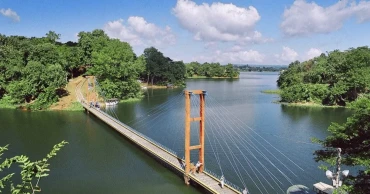
Holidaymakers seeking relief from the stress of urban life are expected to flock to Rangamati’s lakes, hills and waterfalls. Tourist hotspots, including Sajek Valley, the iconic Hanging Bridge, Kaptai Lake, Polwel Park and Cottage, Aranyak Resort, Shuvolong Waterfall, Rangadip Resort, Lake View Island and Nisarga Pod House are likely to become vibrant with visitors during the festive break.
Manager of Rangamati Tourism and Holiday Complex Alok Bikash Chakma said all preparations have already been completed to receive tourists during Eid-ul-Azha vacation.
“We are fully prepared to welcome tourists. Around 70-80 percent of rooms at our holiday complex have already been booked through online and offline reservations,” he said.
Bikash Chakma expressed hope that tourist arrivals will be much higher this year because of the long holiday and said efforts had been made to improve infrastructure and services to ensure maximum comfort for visitors.
Sajek Valley, known for its picturesque hills and clouds, remains one of the country’s most sought-after travel destinations during holidays.
Organising Secretary of the Resort and Cottage Owners’ Association of Sajek Rahul Chakma said most resort and cottage rooms in Sajek had already been booked ahead of Eid.
“All rooms are booked on Eid day. From the day after Eid, around 60-70 percent of rooms have been reserved for nearly the following week,” he said.
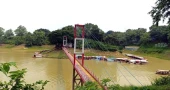
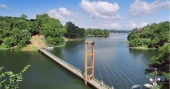
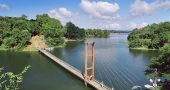
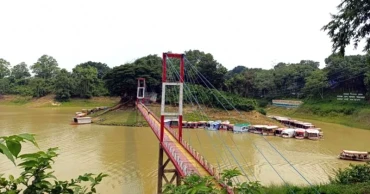
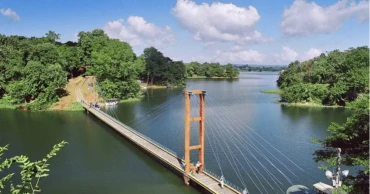
The Hanging Bridge, one of Rangamati’s most recognisable landmarks, continues to remain the centre of attraction for tourists visiting the district. Authorities have already completed renovation and repainting work to make the site more attractive ahead of the holiday season.
Tourist boat operators on the Kaptai Lake have also completed preparations for visitors planning lake cruises during the Eid break.
Manager of Rangamati Tourist Boat Terminal Md Fakhrul Islam said all repair, maintenance and painting work on tourist boats had already been completed. “We are now waiting to welcome tourists,” he said.
Rangamati Superintendent of Police Muhammad Rakib Uddin said security arrangements had been strengthened to ensure the safety of visitors during the Eid holidays.
He said help desks had been installed at important points to prevent harassment of tourists and ensure smooth travel across different tourist spots in the district.
“We are fully prepared to ensure tourists can travel safely and comfortably throughout Rangamati during the Eid vacation,” the SP added.
4 months ago
20 remote polling centres in Rangamati to receive election materials by helicopters
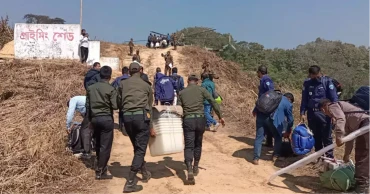
Authorities have begun transporting election materials by helicopters to 20 remote polling centres in Rangamati district ahead of the national election.
A total of 213 polling centres will be used in Rangamati, of which 20 are located in extremely remote hilly areas.
Rangamati Additional District Magistrate Nishat Sharmeen said the transportation of election materials and officials will continue in several phases until February 10.
Due to geographical challenges, some of these centres cannot be reached on foot while reaching others can take two to three days.
The helicopter operation started on Saturday morning, with election materials, presiding officers and polling staff being flown to the remote centres in phases.
Of the 20 centres, six are in Baghaichhari, two in Barkal, seven in Juraichhari and five in Bilaichhari upazilas. More than 30,000 voters are registered at these centres.
8 months ago
Dawn upon Rangamati: Govt steps in to protect rivers and people
The interim government has taken up a water management initiative in the hill district of Rangamati to ensure sustainable water supply, protect riverbanks and improve livelihoods in one of the country’s most environmentally fragile regions, according to officials.
They said the project, titled ‘Sustainable Water Management of the Karnaphuli and Associated Rivers in Rangamati Hill District’, will be implemented by the Bangladesh Water Development Board (BWDB) under the Ministry of Water Resources at an estimated cost of Tk 687.39 crore, fully funded by the government.
Implementation is scheduled from January 2026 to June 2030 and will cover 10 upazilas of Rangamati district, according to the project document.
Officials said the project is crucial for securing surface water availability in the hill district, where communities largely depend on rivers and streams for drinking water, irrigation, fisheries and transportation.
Read more: Govt cuts Tk 12,000cr from top development projects over slow progress
The Karnaphuli River and its associated rivers—Kachalong, Raikhyang and Shalak—serve as lifelines for the region, particularly during the dry season when water scarcity becomes acute.
According to the project outline, one of the key objectives is to restore and maintain navigability and year-round water flow in the feeder rivers of Kaptai Lake through extensive dredging.
The Kachalong, Raikhyang and Shalak rivers will be dredged to remove accumulated silt, helping to reduce sudden flooding during the monsoon while ensuring adequate water supply during the dry months.
Water resources officials said sustained water flow in these rivers is essential for maintaining water levels in Kaptai Lake, which feeds the country’s only hydroelectric power station.
Improved water availability is also expected to support fisheries, a major source of livelihood for hill communities, and enhance surface irrigation for agriculture in downstream areas.
Read more: Rangamati: IG goes where no govt has gone before, with water management initiative for Rangamati
The project also aims to excavate and re-excavate river-linked canals to improve surface irrigation and address chronic waterlogging in low-lying areas.
Many canals in Rangamati have lost their capacity due to long-term siltation, disrupting water distribution and limiting agricultural production, particularly in the dry season.
In addition to water supply, the project places strong emphasis on riverbank protection. About 13.72 kilometres of riverbank protection works will be carried out to safeguard critical infrastructure, educational institutions and settlements from erosion along the Karnaphuli and its tributaries.
Riverbank erosion has emerged as a persistent threat in Rangamati, especially during the monsoon when heavy rainfall and upstream flows cause rivers to swell and change course.
Officials said that the Karnaphuli is the only riverine communication route between Barkal upazila and Rangamati district headquarters, making bank protection vital for maintaining connectivity and access to essential services.
They said special attention will be given to the border-adjacent Thegamukh area along the India-Bangladesh frontier, where aggressive river erosion has endangered public installations, including Border Guard Bangladesh (BGB) facilities, local markets and schools.
Read more: DWASA moves to set up Tk 721cr training, research academy
Riverbank protection in this area is expected to help prevent further land loss and protect national territory.
Project documents note that changes in the river system date back to the construction of the Kaptai Dam in the 1960s, which altered the natural flow of the Karnaphuli and its tributaries.
Since then, sediment carried during the monsoon has been depositing in riverbeds and Kaptai Lake, gradually reducing water depth and flow capacity.
As a result, navigation becomes extremely difficult during February to April, often isolating remote communities and increasing transport costs for essential goods.
Farmers also suffer due to the absence of water in canals during the dry season, leading to reduced agricultural output.
The proposed interventions are based on recommendations from a feasibility study conducted by the Institute of Water Modelling (IWM) titled Feasibility Study for the Development & Management of Karnafully River Basin (With Halda River).
The study identified erosion-prone zones and highlighted the need for integrated river training, dredging and canal excavation to ensure sustainable water management in Rangamati.
Officials believe that once implemented, the project will significantly improve water security in the hill district, ensuring reliable surface water supply for domestic use, agriculture, fisheries and power generation.
Read more: A costly bridge in Manikganj waiting for roads
Improved river flow and connectivity are also expected to boost tourism, while construction activities and expanded economic opportunities will contribute to employment generation and overall socio-economic development in the region.
With climate variability increasing pressure on hill ecosystems, authorities view the project as a strategic investment to balance development needs with long-term water sustainability in Rangamati.
9 months ago
Rangamati: IG goes where no govt has gone before, with water management initiative for Rangamati
The interim government has taken up a water management initiative in the hill district of Rangamati to ensure sustainable water supply, protect riverbanks and improve livelihoods in one of the country’s most environmentally fragile regions.
The project, titled Sustainable Water Management of the Karnaphuli and Associated Rivers in Rangamati Hill District, will be implemented by the Bangladesh Water Development Board (BWDB) under the Ministry of Water Resources at an estimated cost of Tk 687.39 crore, fully funded by the government.
Implementation is scheduled from January 2026 to June 2030 and will cover 10 upazilas of Rangamati district, according to the project document.
Officials said the project is crucial for securing surface water availability in the hill district, where communities largely depend on rivers and streams for drinking water, irrigation, fisheries and transportation.
Read more: Irregularities deepen doubts over Khulna’s mega embankment project
The Karnaphuli River and its associated rivers—Kachalong, Raikhyang and Shalak—serve as lifelines for the region, particularly during the dry season when water scarcity becomes acute.
According to the project outline, one of the key objectives is to restore and maintain navigability and year-round water flow in the feeder rivers of Kaptai Lake through extensive dredging.
The Kachalong, Raikhyang and Shalak rivers will be dredged to remove accumulated silt, helping to reduce sudden flooding during the monsoon while ensuring adequate water supply during the dry months.
Water resources officials said sustained water flow in these rivers is essential for maintaining water levels in Kaptai Lake, which feeds the country’s only hydroelectric power station.
Improved water availability is also expected to support fisheries, a major source of livelihood for hill communities, and enhance surface irrigation for agriculture in downstream areas.
The project also aims to excavate and re-excavate river-linked canals to improve surface irrigation and address chronic waterlogging in low-lying areas.
Many canals in Rangamati have lost their capacity due to long-term siltation, disrupting water distribution and limiting agricultural production, particularly in the dry season.
In addition to water supply, the project places strong emphasis on riverbank protection. About 13.72 kilometres of riverbank protection works will be carried out to safeguard critical infrastructure, educational institutions and settlements from erosion along the Karnaphuli and its tributaries.
River erosion has emerged as a persistent threat in Rangamati, especially during the monsoon when heavy rainfall and upstream flows cause rivers to swell and change course.
Officials noted that the Karnaphuli is the only riverine communication route between Barkal upazila and Rangamati district headquarters, making bank protection vital for maintaining connectivity and access to essential services.
Read more: DWASA moves to set up Tk 721cr training, research academy
Special attention will be given to the border-adjacent Thegamukh area along the India-Bangladesh frontier, where aggressive river erosion has endangered public installations, including Border Guard Bangladesh (BGB) facilities, local markets and schools.
Riverbank protection in this area is expected to help prevent further land loss and protect national territory.
Project documents note that changes in the river system date back to the construction of the Kaptai Dam in the 1960s, which altered the natural flow of the Karnaphuli and its tributaries.
Since then, sediment carried during the monsoon has been depositing in riverbeds and Kaptai Lake, gradually reducing water depth and flow capacity.
As a result, navigation becomes extremely difficult during February to April, often isolating remote communities and increasing transport costs for essential goods.
Farmers also suffer due to the absence of water in canals during the dry season, leading to reduced agricultural output.
The proposed interventions are based on recommendations from a feasibility study conducted by the Institute of Water Modelling (IWM) titled Feasibility Study for the Development & Management of Karnafully River Basin (With Halda River).
The study identified erosion-prone zones and highlighted the need for integrated river training, dredging and canal excavation to ensure sustainable water management in Rangamati.
Officials believe that once implemented, the project will significantly improve water security in the hill district, ensuring reliable surface water supply for domestic use, agriculture, fisheries and power generation.
Improved river flow and connectivity are also expected to boost tourism, while construction activities and expanded economic opportunities will contribute to employment generation and overall socio-economic development in the region.
With climate variability increasing pressure on hill ecosystems, authorities view the project as a strategic investment to balance development needs with long-term water sustainability in Rangamati.
Read more: Riverbank embankment sinks into Akhira before completion!
9 months ago
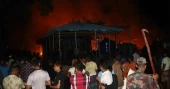
30 shops gutted in Rangamati fire
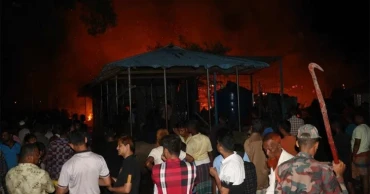
A fire at Muslim Block market in Baghaichhari pouroshova in Rangamati town burnt down over 30 shops.
The fire that might have originated from an electric short circuit started around 1:00 am on Wednesday at a clothing store and soon spread to other shops, said witnesses.
As there is no fire station in Baghaichhari, local residents, police, and the Border Guard Bangladesh (BGB) members brought the fire under control within half and an hour.
Groceries, pharmacies, clothing stores and tea stalls were destroyed in the fire.
The estimated loss ranges from Tk 1.5 crore to Tk 2 crore, said shop owners.
Officer-in-Charge of Baghaichhari Police Station Humayun Kabir and senior BGB officials visited the spot.
Locals and affected shop owners said despite land was acquired in 2018 to build a fire station in Baghaichhari, construction is yet to begin.
1 year ago
Ferry services on Chandraghona-Raikhali route resume after 5 days
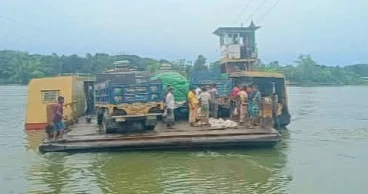
Ferry operations on the Chandraghona-Raikhali route in Karnaphuli River of Kaptai resumed on Sunday after five days of suspension due to the dredging work aimed at resolving navigability issues.
Sabuj Chakma, executive engineer of Rangamati Roads and Highways Department, said the ferry services on the route resumed around 6 am on Sunday.
Ferry operations on the Chandraghona-Raikhali route remained suspended from 6 am on Tuesday (May 13) for six days from Tuesday.
36 garments-laden trucks stranded at Benapole port
The dredging work was undertaken to restore smooth navigation and ensure uninterrupted ferry services during the dry season, said Ronel Chakma, deputy divisional engineer of Roads and Highways Department.
Several hundred passenger and cargo vehicles—ranging from heavy to light and medium types—use this waterway daily via the Karnaphuli River, connecting Raikhali Ferry Ghat in Raikhali Union of Kaptai upazila under Rangamati district and Chandraghona Ferry Ghat in Kadamtali Union of Rangunia upazila under Chattogram district.
1 year ago

Death toll from Rangamati road crash climbs to 6
The death toll from the road crash on the Chattogram-Rangamati road in the Rubber Bagan area under Kawkhali upazila of Rangamati, climbed to six with the death of another person on Saturday.
The identity of the deceased could not be known immediately.
Earlier in the day, five people were killed and one was injured in a collision between a pickup and a CNG-run auto-rickshaw at Chairman Para Rubber Garden area around 10:30 am.
The identities of the deceased could not be confirmed immediately, said Officer-in-Charge of Kawkhali Police Station Saiful Islam Sohag.
Zahidul Alam, additional superintendent (Kaptai circle) of Rangamati Police, said three people died on the spot while three others died on way to hospital.
1 year ago

UPDF member shot dead in alleged PCJSS attack in Rangamati
A member of the United People's Democratic Front (UPDF) was shot dead in an alleged attack by the Parbatya Chattogram Jana Sanghati Samiti (PCJSS) in Manikchhari upazila of Rangamati early Sunday.
The deceased was identified as Nirmol Chakma.
Murder case accused shot dead in Khulna
Angya Marma, a spokesperson for the UPDF, claimed that armed members of the Jana Sanghati Samiti launched the attack, resulting in Nirmol Chakma’s death in the Kharmapara Teimidung area of Manikchhari.
Md Sahed Uddin, officer-in-charge of Kotwali Police Station, said he received reports of the UPDF member’s death in the gunfight but could not provide further details.
1 year ago
Bumper pineapple harvest in Rangamati's hills, but farmers face market woes
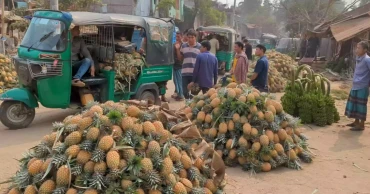
The lush, picturesque hills of Rangamati’s Naniarchar upazila, famed for producing the delectable 'Honey Queen' pineapples, are overflowing with an abundant harvest this year.
Instead of rejoicing, farmers find themselves fighting with an unsettling dilemma—an oversupply of fruit but a dwindling market, leaving their golden bounty to wither away in despair.
This season’s early harvest, driven by the application of growth hormones, has flooded the markets with ripened pineapples well ahead of their usual cycle.
While these fruits typically grace the markets in the balmy months of May or June, farmers began plucking them as early as January, an unnatural acceleration that now threatens their profitability.
A Harvest Turned Sour
The picturesque hills of Rangamati are home to two primary varieties of pineapples: the robust Giant Q and the much-coveted Honey Queen.
The latter, grown in abundance in Naniarchar, Longadu, Baghaichhari and Barkal, is known for its ambrosial sweetness and tender texture. But this season’s early ripening has thrown farmers into distress.
Khamaari Dhala Chan Chhakma, a farmer from Baghaichhari, lamented how the hormone-induced acceleration backfired. "We hoped for prosperity, but instead, we are witnessing our efforts go to waste. The fruits ripened too soon, and now they are rotting in the orchards, with no buyers in sight," he shared with a heavy heart.
Abdul Karim, another farmer from Naniarchar, echoed similar sentiments.
Following recommendations from the Department of Agriculture, many farmers embraced hormone-based techniques to ensure year-round production. Despite the pineapples’ size and renowned sweetness, the cold weather has dampened their flavour and market demand has plummeted, he said.
Pineapple Capital abuzz in peak season
A Market in Decline
The pineapples, carried in engine boats along the scenic waterways of Rangamati, reach key trading hubs such as Sumataghath, Tablachhari, the Municipal Truck Terminal and Rirjabh, where wholesalers typically snap them up. But this year, the enthusiasm of traders has been replaced with reluctance.
Kalam, a trader struggling to cope with the market downturn, voiced his concerns. "We have no choice but to buy directly from the farms at a lower price. The market is not supporting us, and we're feeling the strain too," he admitted.
Traders blame the unusually chilly weather for diminishing the pineapples’ natural sweetness, making them less appealing to consumers.
Nasim Haider, Deputy Director of the Rangamati District Department of Agricultural Extension (DAE), acknowledged the predicament.
50MT mangoes of Satkhira exported to Europe
"The hormone treatment was aimed at meeting market demand, but the colder temperatures led to subpar quality, affecting sales," he said.
But he remains optimistic, suggesting that as temperatures rise, both the quality and prices of pineapples are likely to improve.
A Cry for Cold Storage
This year, 1,240 hectares in Naniarchar were dedicated to cultivating Honey Queen pineapples, with an estimated yield of 7,000 tonnes.
The agriculture department remains hopeful that the final yield will surpass expectations.
Yet, the recurring issue of oversupply and price crashes has reignited calls for a cold storage facility in Rangamati. Farmers have long pleaded for a preservation system to shield their perishable produce from market volatility.
“With cold storage, we wouldn’t have to watch our hard-earned harvest rot before our eyes. It would give us control over supply and prices,” said a farmer, his voice tinged with frustration.
Naogaon district sets ambitious Tk 2500 crore target for mango sales
As the hills of Rangamati continue to bear their golden treasures, farmers await a solution that will allow them to savour the true fruits of their labour.
Until then, the bounty of Honey Queen pineapples remains bittersweet.
1 year ago

BGB pays tribute to Bir Sreshtho Munshi Abdur Rouf in Rangamati
The Border Guard Bangladesh (BGB) paid deep tributes and placed wreaths at the grave of Bir Sreshtho Munshi Abdur Rouf at Burighat in Naniarchar upazila of Rangamati on the occasion of the Victory Day.
A floral wreath was placed on behalf of the BGB Director General at the grave of this heroic son of the nation on Monday morning.
President Shahabuddin pays tribute to Liberation War martyrs on Victory Day
BGB Kaptai Zone Commander Lt Col Mohammad Tanzilur Rahman Bhuiyan, Dayal Krishna Chakma, Bir Sreshtho Munshi Abdur Rouf Foundation Director Yasin Rana Sohel and others were present on the occasion.
During the ceremony, an armed salute was given by playing the bugle tune and a prayer was offered seeking peace for the soul of Bir Sreshtho Munshi Abdur Rouf. Later, wreaths were placed on behalf of educational institutions and social organizations.
Tributes paid to martyred police members on Victory Day at Rajarbagh Police Lines
Later, the BGB’s Rangamati Sector Commander provided financial assistance to Doyal Krishna Chakma in recognition of his role in identifying and burying the remains of Bir Sreshtho Munshi Abdur Rouf at Burighat, Naniarchar.
1 year ago