Bangladesh

Restaurant owners demand urgent govt intervention to dig sector out of 'deep crisis'
The Bangladesh Restaurant Owners' Association (BROA) has warned that the country’s restaurant industry is facing an existential threat due to skyrocketing energy costs, persistent inflation, and regulatory harassment.
During a press conference held at the Dhaka Reporters Unity on Tuesday (January 13), BROA leaders called for immediate, coordinated government intervention to protect an industry that supports approximately 30 lakh workers and millions more livelihoods.
The most critical challenge cited by the association is the acute shortage of gas. Since December, restaurants nationwide have struggled with a severe lack of LPG (Liquefied Petroleum Gas), while many previous pipeline connections remain disconnected.
"Owners are being forced to rely on expensive LPG cylinders controlled by private syndicates," said Imran Hasan, Secretary General of BROA.
"This has drastically increased operating costs at a time when we are already struggling,” he said.
The association also highlighted a growing trend of extortion. Leaders alleged that politically backed groups are misusing "trade union" identities to threaten and intimidate small and medium-sized restaurant owners for money.
Read More: Top business leaders meet Tarique Rahman, discuss economy, jobs
Furthermore, the industry is currently monitored by multiple ministries and agencies. BROA argued that this fragmented oversight leads to overlapping and frequent inspections, bureaucratic delays in licensing, and constant harassment by various regulatory bodies.
To solve this, BROA has proposed the establishment of a "One-Stop Service" under a single authority to handle licensing, VAT registration, and food safety compliance.
While the cost of essential commodities has surged, restaurant owners say they cannot raise food prices proportionately because consumers simply cannot afford it. This "price squeeze" has already led to the closure of many small establishments.
The association also pointed to the rise of unlicensed street food vendors as a source of unfair competition. These vendors often bypass hygiene standards, VAT, and taxes, creating an uneven playing field for registered businesses that must comply with strict regulations.
Key Demands
Resolve the Energy Crisis: Effective management of LPG distribution and action against price-fixing syndicates.
One-Stop Service: Centralizing all restaurant-related regulatory tasks under one office.
Inflation Control: Realistic government plans to stabilize the prices of essential commodities.
End Extortion: Immediate protection from groups using trade union labels for extortion.
"The restaurant sector is a recognized industry, yet it receives very little policy support compared to large corporations," the BROA keynote stated.
9 months ago

Regional dialogue on sustainable blue economy, connectivity begins in Dhaka
A two-day regional dialogue titled "Northeast Indian Ocean Regional Dialogue on Sustainable Blue Economy, connectivity, and resilience" officially commenced today (January 13), at a hotel in Dhaka.
The high-level event brings together senior policymakers, maritime experts, and development partners from Bangladesh, India (Andaman & Nicobar Islands), Sri Lanka, and the Maldives. Jointly organized by the Sasakawa Peace Foundation (Japan), the Moheshkhali Integrated Development Authority (MIDA), and Peace and Policy Solutions (Bangladesh), the dialogue aims to establish a unified roadmap for ocean-based economic growth.
The primary objective of the summit is to draft the “Dhaka Statement,” a shared regional position that will serve as a strategic guide for upcoming inter-regional and global dialogues.
Professor Mitsutaku Makino, President of the Ocean Policy Research Institute (OPRI) at the Sasakawa Peace Foundation, emphasized the strategic importance of the Indian Ocean as a "Great Middle Bay" connecting three billion people.
He noted that for Japan, the region is a critical maritime corridor that facilitates nearly 78 percent of its energy imports.
Speaking as the Chief Guest, Ashik Chowdhury (Chowdhury Ashik Mahmud Bin Harun), Executive Chairman of MIDA, BIDA, and BEZA, highlighted the untapped potential of the Bay of Bengal.
Experts call for national coordinating authority to develop blue economy
"The Bay of Bengal is the world’s largest bay, where resources, commerce, and connectivity converge," Chowdhury said. "For Bangladesh to harness its full maritime potential, we must elevate our actions and forge robust partnerships."
He announced that MIDA will collaborate with the Sasakawa Peace Foundation to implement modern maritime strategies across 20 government ministries and departments.
9 months ago

Bangladesh’s GDP growth rises to 4.5% in Q1 of FY2025–26
Bangladesh’s economy posted a stronger performance in the first quarter (Q1) of the 2025-26 fiscal year, with gross domestic product (GDP) growth accelerating to 4.50 percent on a point-to-point basis in constant prices, according to provisional estimates.
The latest quarterly figures show a notable improvement compared to the same period of the previous fiscal year, when GDP growth stood at 2.58 percent, reflecting a broad-based recovery driven mainly by the industrial sector alongside improvements in agriculture and services.
In current prices, the size of GDP in Q1 of FY26 has been estimated at Tk 13,853,433 million (Tk 13,853 billion), up from Tk 12,401,032 million (Tk 12,401 billion) recorded in the first quarter of FY25, indicating a substantial expansion in nominal economic activity year-on-year.
According to quarterly-based estimates, the growth rate of gross domestic product at constant prices for the entire FY25 has been placed at 3.72 percent.
Read more: Bangladesh sees $1.12bn in remittances in first 10 days of January
The Bangladesh Bureau of Statistics (BBS) noted that this quarterly-based estimate differs from the provisional annual GDP estimate for FY25 prepared on a yearly basis.
The discrepancy will be addressed through internationally accepted benchmarking methods once the final annual GDP figures for FY25 are compiled, ensuring consistency between quarterly and annual national accounts.
The agriculture sector returned to positive territory in Q1 of FY26, registering a growth of 2.30 percent at constant prices on a point-to-point basis.
This marks a significant turnaround from the contraction of 0.60 percent recorded in the same quarter of FY25.
The improvement in agricultural output suggests a degree of stabilisation following earlier disruptions, supported by better crop performance and a gradual recovery in allied activities such as livestock and fisheries.
The rebound in agriculture is expected to provide some relief to rural incomes and food supply dynamics.
The industrial sector emerged as the strongest performer, posting a robust growth of 6.97 percent in Q1 of FY26, nearly double the 3.59 percent growth recorded in the corresponding quarter of the previous fiscal year.
Analysts view the sharp acceleration in industrial growth as a key driver of the overall economic upturn, reflecting improved manufacturing activity, gradual easing of energy-related constraints and a modest pickup in domestic demand.
Export-oriented industries, particularly manufacturing, are believed to have contributed significantly to the sector’s stronger performance.
Bangladesh’s GDP growth slows to 3.97% in FY2024–25
The services sector also recorded improved growth, expanding by 3.67 percent in Q1 of FY26 compared to 2.96 percent in the same quarter of FY25.
The expansion in services indicates a gradual revival in trade, transport, communications and other service-related activities, which had remained under pressure amid economic uncertainty and subdued consumption in the previous year.
The stronger GDP growth in the first quarter of FY26 points to early signs of economic recovery, supported by improved sectoral performance across agriculture, industry and services.
However, economists caution that sustaining this momentum will depend on continued policy support, stability in the macroeconomic environment and progress in addressing structural challenges.
The provisional nature of the quarterly estimates also underscores the need for careful interpretation, with revisions expected as more comprehensive data become available.
Nonetheless, the Q1 figures provide an encouraging signal at the start of the fiscal year, suggesting that growth is gradually gaining pace after a period of slowdown.
Read more: Forex reserves hit 3-year high as December remittances cross $3bn
9 months ago
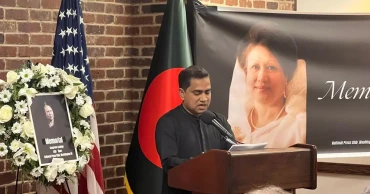
Khaleda Zia’s legacy honoured in Washington National Press Club
Diplomats, journalists and policymakers gathered at the National Press Club in Washington, D.C., to pay tribute to Bangladesh’s first female Prime Minister Khaleda Zia, honouring her political legacy, personal sacrifices and lifelong struggle for parliamentary democracy.
The memorial meeting, held on Monday evening at the century-old institution, reflected deep respect for Khaleda Zia’s role in shaping Bangladesh’s democratic journey.
Speakers highlighted her unwavering leadership, moral courage and enduring influence on the nation’s political and democratic institutions.
The event was organised by National Press Club member and Bangladesh’s Ambassador to Mexico, Mushfiqul Fazal Ansarey.
Among the speakers were National Press Club’s newly elected 119th President Mark Schoeff , former Associated Press editor Myron Belkind, former US Ambassadors to Bangladesh Dan Mozena and Marcia Bernicat, Stimson Center Senior Fellow Steve Rose , former head of VOA Bangla Iqbal Bahar Chowdhury, Press Minister at the Bangladesh Embassy Golam Mortoza, and American University law professor Ehteshamul Haq.
In his opening remarks, Ambassador Mushfiqul Fazal Ansarey said the gathering was not merely to remember a former prime minister, but to honor “a towering figure inseparable from the history of Bangladesh’s democratic struggle.”
“Begum Khaleda Zia was a protector of Bangladesh’s independence and sovereignty and a builder of economic progress. When democratic institutions were dismantled and dissenting voices silenced, she stood alone and fearless against authoritarianism. She was a rare and exemplary leader in world history,” he said.
Ambassador Ansarey traced the roots of Khaleda Zia’s courage to history, recalling the night of March 25, 1971, when Pakistani forces launched a brutal crackdown in East Pakistan.
He said Khaleda Zia blocked attempts to remove weapons from the East Bengal Regiment’s armory, insisting that no arms could be moved without the consent of her husband, Major Ziaur Rahman.
“By risking her life, she set an early example of resistance to oppression,” he noted, adding that Major Ziaur Rahman’s subsequent declaration of independence changed the course of history.
Referring to her later years, Ambassador Ansarey said Khaleda Zia was unjustly imprisoned due to political vendetta.
9 months ago
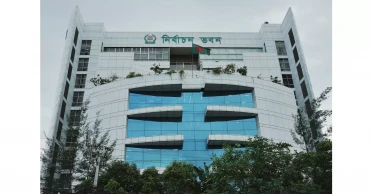
EC clears way for 53 more candidates to contest Feb-12 election
The Election Commission on Tuesday allowed 53 previously rejected aspirants to contest the February-12 national election after hearings, while two Jamaat candidates for Dhaka-2 and Cumilla-3 were declared invalid.
But the EC as the Electoral Appeal Tribunal turned down the appeal petitions of 15 other aspirants, including BNP aspirant TS Ayub in Jashore-4. With the EC’s decisions, they remain kept out of the electoral race.
Besides, the Commission, chaired by Chief Election Commissioner AMM Nasir Uddin, rejected two other petitions filed against valid candidates resulting in the validity of their candidature remain upheld.
The 53 aspirants include two Jamaat candidates Abdul Haque in Dhaka-2 and Yusuf Sohel in Cumilla-3, four Jatiya Party candidates Akbar Hossain in Bhola-1, Lutfur Rahman Ripon in Panchagarh-2, Golam Mostafa Kalam in Cumilla-9 and Ayub Hossain in Kishoreganj-6.
With the EC’s decision, Abdul Haque, also the Chairman of the Retired Armed Forces Officers Welfare Association (RAOWA), will contest with BNP candidate Amanullah Aman and Islami Andolan Bangladesh contestant Jahirul Islam from the constituency in the 13th parliamentary election scheduled for February 12 next.
Another Jamaat candidate Yusuf Sohel will contest with seven others, including BNP nominated Kazi Shah Mofazzel Hossain (Kaikobad) in Cumilla-3.
The Commission rejected the petition of BNP aspirant TS Ayub in Jashore-4 on ground of loan default.
But BNP has another candidate -- Matiar Rahman Faraji—in the constituency to run with the ‘Sheaf of Paddy’ symbol in the February-12 election.
With the 53 aspirants who got green lights on Tuesday, a total of 203 aspirants returned to the electoral race since the EC on Saturday started hearing the appeal petitions filed by aggrieved aspirants against the decisions of the returning officers over the acceptance and cancellation of nomination papers during the scrutiny.
During the appeal hearing, one independent candidate lost his candidacy following an appeal filed by his rival in Brahmanbaria-1 constituency.
Besides, 61 other invalid aspirants failed to return to the race as the EC rejected their appeal petitions in the three days.
The Commission will hear and dispose of 645 petitions by January 18.
A total of 2,568 aspirants submitted nomination papers to run the upcoming national election from the country’s 300 constituencies within the December-29 deadline.
The returning officers declared 1,842 nomination papers valid, while 723 others invalid during the scrutiny.
Jamaat nominee Abdul Haque reenters Dhaka-2 election race
The Election Commission on December 11 announced the polls schedule to arrange the 13th parliamentary election and the referendum on the July National Charter (Constitutional Reform) Implementation Order simultaneously on February 12, 2026.
According to the schedule, the late date for withdrawal of candidature is January 20. The election campaign will start on January 22 and continue till (7:30am on February 10) 48 hours before the balloting period.
9 months ago

Cooking inside operation theatre at Feni General Hospital; probe body formed
A departmental investigation has been launched into allegations of cooking inside an operation theatre (OT) and other irregularities at the 250-bed Feni General Hospital, following the suspension of two nurses over the incident.
A three-member probe committee, formed by the office of the Chattogram Divisional Director (Health), visited the hospital on Monday and questioned doctors and nurses concerned.
The committee is headed by Dr Farid Uddin Chowdhury, superintendent of Noakhali General Hospital, with Dr Rajib Ahmed Chowdhury, RMO of the same hospital, as a member and Feni Civil Surgeon Dr Mohammad Rubaiyat Bin Karim as member secretary.
Hospital sources said the committee was formed to verify allegations of long-running mismanagement, including the establishment of a kitchen inside the labour ward OT, and to recommend punitive action against those responsible. The committee has been asked to submit its report within this week.
Meanwhile, two senior staff nurses, Nursing Supervisor Kalpana Rani Mondal and Senior Staff Nurse Rani Bala Halder, were temporarily suspended on Sunday through separate orders signed by Nursing and Midwifery Directorate Director General (additional charge) and Health Services Division Joint Secretary Md Anwar Hossain Akand.
The suspension orders cited the circulation of a video on social media showing cooking on a gas stove inside the OT, terming it “extreme irresponsibility, indiscipline and unacceptable conduct” that seriously endangered patient safety, public health and the image of the nursing profession.
Couple jailed for 3.5 years for filing false rape case in Feni
Feni General Hospital Superintendent Dr Mohammad Saiful Islam said, we have received the suspension orders. Further action will be taken after the investigation committee submits its report.
The incident triggered widespread criticism across the district after media reports highlighted the heightened infection risk to mothers and newborns due to unhygienic practices inside the OT.
9 months ago

RU teacher sued in attempted rape case
An attempted rape case has been filed against Rajshahi University (RU) Assistant Prof. Dulal Ali Mollah.
A woman filed the case on January 4 with Chandrima Police Station, said Officer-in-Charge of the police station Emran Hossain.
According to the case statement, Prof. Dulal, a teacher of Department of Agronomy and Agriculture Extension had developed a relationship with the women in 2021.
On December 27, last year, the accused took the woman to a residential hotel named Padma Residential area under Chandrima Police Station on the pretext of his mother's illness.
Read More: Rajshahi University female student ‘kills self’
The victim alleged that when no one was around, he tried to rape her repeatedly. The next day (December 28), the accused teacher fled from there but later returned with three accomplices and a woman, identifying her as his wife.
The victim was physically and mentally tortured. At one stage, when the woman fell sick they left the house.
Dr Md Mostafizur Rahman, President of the Department of Agronomy and Agriculture Extension, said Prof. Dulal has taken a one-month leave due to illness.
Currently, he is not coming to the department.
RU Proctor Mahbubur Rahman, said as the woman informed the matter verbally and she did not lodge any written complaint.
9 months ago

All troops withdrawn after Chuadanga BNP leader’s death in custody
All army personnel involved in the operation have been withdrawn following the death of a BNP leader in army custody in Jibannagar upazila of Chuadanga district, the Inter-Services Public Relations (ISPR) said on Tuesday.
A high-level investigation committee has been formed to determine the actual cause of the incident and to take appropriate action, according to an ISPR press release.
Based on intelligence information, a special joint-force operation was conducted in Jibannagar upazila around 11pm on Monday, the ISPR said.
During the operation, Shamsuzzaman Dablu, 50, was arrested from a pharmacy adjacent to the Jibannagar Upazila Health Complex on suspicion of possessing illegal weapons.
The joint force searched the pharmacy and recovered one 9mm pistol, one magazine and four rounds of ammunition, the release said.
Read more: BNP seeks Army Chief’s intervention over Chuadanga BNP leader’s killing
At one stage, Dablu suddenly fell ill and became unconscious. He was immediately taken to the Jibannagar Upazila Health Complex, where the on-duty doctor declared him dead at around 12:25am.
Describing the incident as “regrettable and unacceptable”, the ISPR said all military personnel involved in the operation, including the camp commander, have been withdrawn. Legal action will be taken against those found guilty in accordance with military law, it added.
UNB Chuadanga Correspondent reports: The death of a local BNP leader in army custody has triggered widespread tension in Jibannagar, raising questions over the circumstances of his death and sparking protests across the town.
Shamsuzzaman Dablu, general secretary of Chuadanga municipality unit BNP and a resident of Hospitalpara, died around midnight after being taken into custody during the army operation near the upazila health complex.
According to local sources, Dablu was at a medicine shop when army personnel approached him at around 10:30pm. He died within two hours of being detained.
Family members and BNP leaders alleged that Dablu died due to torture while in custody, fuelling anger in the area.
“My brother has been murdered,” said Shariful Islam Kajol, Dablu’s brother.
Mahmud Hasan Khan, president of Chuadanga district BNP and candidate for Chuadanga-2, alleged that BNP leaders and activists were being tortured under the guise of operations. “The torture was so severe that Shamsuzzaman could not survive,” he said.
BNP leader’s death in custody sparks shock in Chuadanga
Chuadanga Superintendent of Police Mohammad Monirul Islam said Dablu was taken to the hospital after falling ill, where doctors declared him dead. “Lieutenant Colonel Imran of the army informed us of the incident,” he said.
A postmortem examination was conducted on Tuesday morning at the site by Jibannagar Upazila Executive Officer Md Al Amin in the presence of police.
Meanwhile, BNP leaders and activists continued protests in front of the Jibannagar Upazila Health Complex. Additional police have been deployed in the area to prevent any untoward situation.
9 months ago

5 Chinese nationals among 8 held over Telegram-based scam
Detective Branch (DB) members have arrested eight members of a Telegram-based fraud syndicate including five Chinese nationals in separate raids in the capital’s Bashundhara and Uttara West areas.
The arrestees are Chen Ling Feng, Zeng Kong, Zeng Changqiang, Wen Jian Qiu, Huang Zheng Jiang, Mohammad Zakaria (26), Niaz Masum (20) and Kamrul Hasan alias Hasan Joy (38).
During the drives, DB police recovered 51,251 SIM cards of different mobile operators, 51 mobile phones and equipment of 21 VoIP gateways.
Deputy Commissioner Hasan Mohammad Naser Rikabdar of the DB’s Cyber and Special Crime (North) Division disclosed the information at a press briefing held at the DMP Media Centre on Tuesday morning by.
He said the Web-Based Crime Investigation Team of the DB Cyber and Special Crime (North) Division traced the syndicate while probing allegations of online job scams, financial fraud through Telegram groups and other cybercrimes.
Following the investigation, the DB members conducted a drive in Bashundhara Residential Area on Thursday and arrested Niaz Masum and Kamrul Hasan Joy.
From their possession, police recovered 14 VoIP gateway devices used for online fraud, 51,067 SIM cards of various operators, four mobile phones, two CPUs and a laptop.
Read More: Over 700 arrested in Sylhet’s 'Operation Devil Hunt' to tackle crime
Police later received information about similar fraud networks operating in other parts of the capital.
Acting on the intelligence, the DB carried out another drive on Monday in Sector 9 of Uttara West Police Station area and arrested six people including five foreign nationals.
During that operation, seven illegal VoIP gateway devices, 47 mobile phones, 184 SIM cards and five laptops were seized.
According to DB cyber officials, the arrestees used various tactics to defraud people including offering fake jobs, promising high returns on investments and advertising essential commodities at unusually low prices.
Among the arrestees, Niaz Masum and Kamrul Hasan Joy have already been sent to court, while legal proceedings against the others are underway, police said.
9 months ago

Prof Yunus calls for shift from job-focused education in South Asia
Chief Adviser Prof Muhammad Yunus on Tuesday described South Asia as ‘one family’ and urged countries in the region to work together and learn from each other, calling upon all to come out from the education system which is mostly job oriented.
"So, you're in the right place and see what it means to our region. Our region is a one totality. It's not a piece that doesn't fit into the picture. It is a one whole picture. We work together. We learn from each other. We are a family," he said.
"So, we have to rediscover ourselves. I hope it will mean something to you," he said while speaking as the chief guest at the inaugural session of the three-day 'South Asian Regional Conference on State of Higher Education and Future Pathway' in Dhaka.
Prof Yunus said the education system in this region is job-oriented. "If he or she (student) fails to take a job, we think failure on the part of the student, not us."
"Why would you design a job-oriented education? That you have to have a degree to go to the job market?"
Prof Yunus said his position has always been that human beings are not born as slaves and each human being is a free person.
"Job comes from the tradition of slavery. You slave for somebody. You don't like the job but you do it because they pay you. That's slavery. My lonely voice says that human beings are born as creative beings. That's why we survived on this planet as a creative being. From the very day we are born, we are creative. Even as a baby, we are creative. Creativity is the essence of human beings," said the Chief Adviser.
Read More: Australian Education Expo 2026 held in Dhaka
Prof Yunus said a job takes away creativity. "You take orders. That's slavery."
These young people who marched on the street,they refused to be slaves and refused to take orders, he said, noting that "And that's where the conflict began."
"So, what kind of education will you be giving?" Prof Yunus asked.
"You may dismiss it. You may pause for a while. But this is my point. Should we continue this education to create slaves? Turning creative beings into slaves? That's a criminal job," Prof Yunus said.
So, Prof Yunus said, he translated that creativity into entrepreneurship.
"Entrepreneurship is a creative thing. Why can’t we teach entrepreneurs rather than job seekers? Tell young people you are not job seekers, you are job creators. You are agents of change. You create things the way you imagine," he said, adding that imagination is the essence of human beings.
Prof Yunus said human beings are not born to be practical but they are born with an enormous power of imagination.
"That's what drives them, makes them fall crazy. That's why they gave lives to imagination. They had nothing on the street. They had an imagination. We want to build a new Bangladesh. That's our slogan. And they were committed to it, and didn't give up."
The Chief Adviser urged the academics to align the education system with the youths’ expectations and aspirations.
He stressed on revival of the SAARC to enhance regional academic cooperation.
Organizing such gatherings was part of the responsibility under the South Asian Association for Regional Cooperation (SAARC), the Chief Adviser said.
"SAARC as a word has been forgotten and that's a shame on us," Prof Yunus said.
“I am repeatedly reminding that we must get back to SAARC. That's where our family belongs. And I will not give up repeating that appeal to the governments of the region,” Prof Yunus said.
Speaking about the upcoming national elections and the referendum on February 12, he said the uprising tore everything apart and the young people created their own July Charter to undo what the country was stuck with.
Read More: Infrastructure, education projects worth over Tk 190cr get govt nod
The Chief Adviser said there would be a referendum to decide what the future constitution of Bangladesh should be, because they believed the root of the problems lay in the constitution.
He noted that these issues were not taught in classrooms and questioned where universities stood in this reality.
“Today, I feel very excited that academics at the highest level could get together in Dhaka. It's important that this is Dhaka. I hope you will have a chance to kind of review the things that have happened in Dhaka in the past few months,” he said, referring to post 2024 July Uprising events in Bangladesh.
Prof Yunus said review of those events will clarify what university education and education as a whole are really about adding, this should be the core subject of discussion at the gathering.
Highlighting the role of students in the 2024uprising, he said, “Who are these young people that we are dealing with? They have their own mind. They stood up and raised their voices and brought down the ugliest fascist regime you could ever think of given their lives”.
“It would be a missed opportunity if you don’t spend some time on understanding what they did a few months back in this very city. What was their expectation? What was their aspiration? Why did they standup in front of guns and give their lives knowingly it will happen,” the Chief Adviser said.
To reflect the students’ motivation behind joining the uprising, he referred to school student Shaheed Shahriar Khan Anas’s letter, which he wrote to his mother before embracing the martyrdom, it was his duty to take the street with his friends who were subjected to state-sponsored crackdown.
Noting that the event was not a sudden outburst, Prof Yunus said it happened in Sri Lanka and in Nepal, but it happened in a big way in Dhaka.
Speaking about the conference, he thanked the World Bank for organising the gathering, saying, “This was our responsibility to organise, but we failed. The World Bank has to step in to make it happen”.
He called on educators to reflect on what education and university education should be in this very different world, warning that old ways of doing things are self-destructing and that change must happen quickly, just as the youth acted quickly during the July and August uprising.
“So this is one issue, I hope this will be taken up seriously in this gathering in this discussion where we are, what is being missed, how we can run and be in the front, rather than falling behind,” the Chief Adviser said.
A total of 30 international representatives, including delegates from the United Kingdom, the Maldives, Malaysia, Nepal, Pakistan and Sri Lanka as well as representatives from the World Bank are participating in the event.
The conference is being organised under the Bangladesh government and World Bank funded Higher Education Acceleration and Transformation (HEAT) Project of the University Grants Commission (UGC) of Bangladesh.
Education Adviser Dr CR Abrar addressed the inaugural ceremony as special guest with UGC Chairman Prof Dr SMAFaiz in the chair.
Secondary and Higher Education Division Secretary Rehana Perven and World Bank Division Director Jean Pesme spoke at the function as guests of honor while UGC Member Professor Dr Mohammad Tanzimuddin Khan delivered the welcome address.
9 months ago