Bangladesh
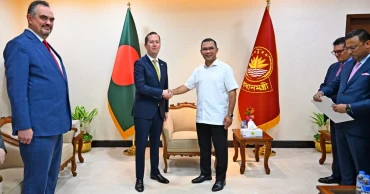
PM seeks expanded US investment, stronger economic ties during talks with Sergio Gor
Prime Minister Tarique Rahman on Saturday sought greater US investment and stronger economic engagement with Bangladesh during talks with visiting US Special Envoy for South and Central Asia Sergio Gor, as the two sides discussed bilateral relations, trade, the Rohingya crisis and other issues of mutual interest.
The meeting was held in a warm and cordial atmosphere at the Prime Minister's Office in Tejgaon, beginning at 9:30am, said PM’s Deputy Press Secretary Shahadat Shadhin.
During the meeting, Sergio Gor praised Prime Minister Tarique Rahman's leadership, saying stability is returning to Bangladesh under his leadership.
As an indication of that progress, he said, the United States has positively revised its travel advisory for Bangladesh, which would send an important message to American investors that the country is ready for investment.
The two sides also discussed a planned visit by a delegation of the US-Bangladesh Business Council to Bangladesh next month.
They also discussed expanding cooperation between Bangladesh and the US Food and Drug Administration (FDA).
2 days ago
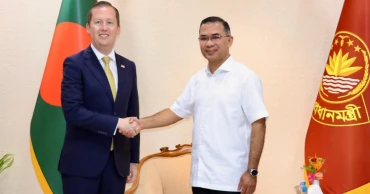
US sees 'incredible potential', plans to deepen investment ties with Bangladesh
US Special Envoy for South and Central Asia Sergio Gor on Saturday said “great opportunities” exist between Bangladesh and the United States and the two countries can achieve real results by working together, stressing that the United States holds Prime Minister Tarique Rahman in the highest regard.
“The United States holds the Prime Minister in the highest regard….. The message that we want to make sure gets out there between our two sides is that there's incredible potential,” he told reporters after the meeting with the Prime Minister.
Gor who paid a “familiarisation and exploratory” visit to Bangladesh from July 30 to August 1, laid emphasis on strengthening economic cooperation and enhancing partnership between the two countries.
He discussed the “great opportunities” between the US and Bangladesh to strengthen economic cooperation and enhance our partnership.
2 days ago

Shu Xiong made President, Managing Director of Chevron Bangladesh
Shu Xiong has been appointed as the President and Managing Director of Chevron Bangladesh, effective from August 1 (Saturday).
Shu succeeds Eric M. Walker, who served Chevron Bangladesh for the last six years, said a press release issued on Saturday.
Shu most recently served as Managing Director of Chevron’s China Business Unit, where she led the company’s upstream business and energy value-chain activities and built strong partnerships across multiple joint venture operations.
Since joining Chevron in 2007, Shu has held senior leadership roles across strategy, forecasting, trading, operations and planning, advising executives, supporting investment decisions, developing commercial opportunities and managing key partner and market relationships.
Shu holds an MBA from Stanford University and a BBA in Finance from the University of Houston.
When speaking Shu said, “I am excited to join the Bangladesh team, and I look forward to building on our 30-year partnership with the Government of Bangladesh and Petrobangla. I am committed to deepening that relationship to support the nation’s energy needs today and into the future, while benefiting our local communities through our investment in education, health and economic development programs. My family and I are excited to make Bangladesh our home.”
2 days ago

1,384 killed in Dhaka road crashes in 6.5 years; pedestrians, bikers account for over 80% of deaths
At least 1,384 people were killed and 2,488 others injured in 1,849 road accidents across the capital between 2020 and July 2026, with pedestrians and motorcyclists accounting for more than 80 percent of the fatalities, according to Road Safety Foundation(RSF).
The RSF data show that of those killed, 1,034 were men (74.71%), 219 women (15.82%) and 131 children (9.46%).
Pedestrians remained the worst affected group, accounting for 592 deaths or 42.77 percent of the total fatalities.
Another 536 motorcyclists (38.72%) lost their lives, while 256 drivers and passengers of buses, rickshaws, CNG-run auto-rickshaws and other vehicles were killed.
The analysis also found that road crashes were most frequent at night, when 519 people, or 37.5 percent of the victims, were killed.
Morning hours claimed 258 lives (18.64%), followed by the afternoon with 195 deaths (14.08%), evening 174 (12.57%), dawn 142 (10.26%) and nightfall 96 (6.93%).
Heavy vehicles, including trucks, covered vans, pickups, tankers and garbage trucks, were involved in 33.25 percent of the accidents, followed by motorcycles at 26 percent, buses at 21.75 percent, auto-rickshaws, CNG-run vehicles and legunas at 12.73 percent, and private cars, microbuses and jeeps at 6.25 percent.
According to the analysis, the absence of bypass roads forces heavy goods vehicles to travel through the capital between 10pm and dawn, often at high speed, increasing the risk for pedestrians crossing roads.
It also noted that prolonged traffic congestion contributes to impatience and aggressive driving behaviour, further raising the likelihood of crashes.
The report attributed the high number of accidents to inadequate road capacity compared to the growing number of vehicles, the mixed movement of slow- and high-speed traffic on the same roads, encroached footpaths, poorly located or unusable footbridges and a lack of awareness among road users.
Jatrabari, Demra, Mohammadpur, Kuril, Biswaroas and the Airport Road have been identified as major accident hotspots in the capital.
The report recommended introducing company-based bus services through route rationalisation to improve discipline in the transport sector.
It also called for stronger coordination among the Bangladesh Road Transport Authority (BRTA), Bangladesh Road Transport Corporation (BRTC), Dhaka Transport Coordination Authority (DTCA), the two city corporations and traffic police to implement comprehensive road safety measures.
2 days ago

Classes, exams at KU to resume Sunday after weeklong stalemate
All classes and examination of Khulna University (KU) will resume on Sunday as the students have withdrawn their protest programmes following the positive progress over their three-point demand.
The announcement came in a statement issued by the protesting students on Friday night, bringing an end to more than a week of demonstrations, class and examination boycotts, and disruption of administrative activities on the campus.
According to the statement, the students placed their three-point demand before the university administration during a meeting on July 23 and subsequently boycotted all academic and administrative activities until visible progress was made in implementing the demands.
After reviewing the administration's successive initiatives and decisions taken by the university syndicate, the students decided to withdraw the movement and called for the resumption of all academic activities from Sunday.
They said they would continue monitoring the situation until the demands are fully implemented.
They also warned of tougher programmes if the administration shows any delay or lack of cooperation in implementing the remaining decisions.
First-year student Md Sadman Rahman said their term examinations were suspended midway due to the movement and that they wanted classes and examinations to resume as soon as possible.
"We also want full implementation of our core demands. Since the administration has already taken several important steps, we are returning to classes. We hope the remaining decisions will also be implemented soon," he said.
Professor Md Salauddin, Director of Student Affairs, said the university administration has attached importance to the students' reasonable demands from the beginning.
"In line with the decisions of the syndicate, necessary administrative and legal measures have been taken, while the issues under investigation are progressing through due process. We are relieved that the students have decided to return to classes and examinations," he said.
The university administration remains committed to ensuring a safe, accountable and education-friendly campus environment and would continue taking the necessary measures to achieve that goal, he added.
2 days ago
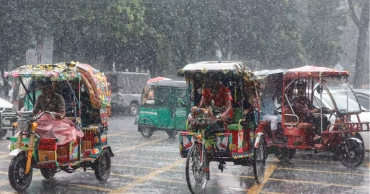
Rain likely across country: BMD
Bangladesh Meteorological Department (BMD) has forecast rains in all the divisions in 24 hours commencing 9 am on Saturday.
“Light to moderate rain or thunder showers accompanied by temporary gusty wind is likely to occur at many places over Rangpur, Mymensingh and Sylhet divisions and at a few places over Rajshahi, Dhaka, Khulna, Barishal and Chattogram divisions with moderately heavy falls at places over the country,” Met office said.
Day and night temperature may remain nearly unchanged over the country.
Monsoon is fairly active over Bangladesh and moderate over the North Bay.
2 days ago
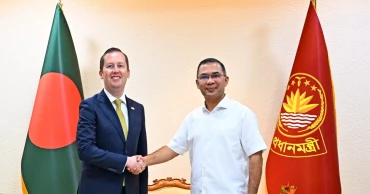
US Special Envoy Sergio Gor calls on PM
Visiting US Special Envoy for South and Central Asia Sergio Gor on Saturday paid a courtesy call on Prime Minister Tarique Rahman.
The meeting began at 9:30am at the Prime Minister's Office in Tejgaon, said PM's Deputy Press Secretary Jahidul Islam Rony.
During the meeting, the two sides exchanged views on Bangladesh-US bilateral relations, expanding trade and investment, regional cooperation, and other issues of mutual interest.
2 days ago

3 members of a family killed in Khulna road crash
Three members of a family were killed and another was injured when a truck rammed into a motorbike at Domra in Digholia upazila of Khulna district on Friday night.
The deceased were identified as Farzana Khatun, 26, wife of Shihab Sheikh, Maimuna, 2, daughter of Shihab, and Rubia Khatun, 16, sister-in-law of Shihab of Kalia upazila in Narail district.
Shuvro Prakash, Officer-in-Charge of Digholia Police Station, said the accident occurred around 11:30 pm when the Rupsha-bound truck from Gazirhat hit the motorbike carrying four people, leaving three dead on the spot and another injured.
The injured, Shihab Sheikh, was taken to a local hospital.
2 days ago

Dhaka's air quality remains ‘moderate’, ranks 18th globally
Dhaka's air quality remained moderate on Saturday morning, with an Air Quality Index (AQI) of 86.
The capital ranked 18th among the world's most polluted cities at 9:35 am, according to the AQI scale.
The Democratic Republic of Congo’s Kinshasa, Uganda’s Kampala, Indonesia’s Jakarta occupied the first three spots on the list with AQI scores of 188, 173 and 149, respectively.
An AQI between 50 and 100 is considered "moderate" with an acceptable air quality while AQI between 101 and 150 is considered ‘unhealthy for sensitive groups’, while a score between 151 and 200 is classified as ‘unhealthy’. AQI readings between 201 and 300 are termed ‘very unhealthy’, and anything above 301 is considered ‘hazardous’, posing serious health risks.
The AQI is a daily indicator of air quality, showing how clean or polluted the air is and the possible health effects people may experience.
In Bangladesh, the AQI is calculated based on five major pollutants: particulate matter (PM10 and PM2.5), nitrogen dioxide, carbon monoxide, sulphur dioxide and ozone.
Dhaka has long struggled with severe air pollution. Air quality usually worsens during winter and improves in the monsoon season.
According to the World Health Organization, air pollution causes around seven million deaths globally each year, mainly from stroke, heart disease, chronic respiratory diseases, lung cancer and acute respiratory infections.
2 days ago

Bangladesh among 14 countries on board for Saudi-led maritime defense alliance
Fourteen countries, including Bangladesh, have reportedly expressed their support for a multinational maritime defense alliance headed by Saudi Arabia and welcomed the consensus reached on its foundational arrangements.
The current signatories are Saudi Arabia, Kuwait, Bahrain, Qatar, Pakistan, Türkiye, Egypt, Jordan, Yemen, Bangladesh, Nigeria, Sudan, Djibouti, and Somalia, the Saudi Press Agency reported on Friday.
Saudi Arabia and 13 other countries have announced the creation of a maritime military coalition to safeguard freedom of navigation through the Bab al-Mandeb Strait, the Red Sea and the Gulf of Aden, according to Al Jazeera.
In a statement published on Thursday, Saudi Arabia’s Ministry of Defence said the Multinational Maritime Defense Alliance was established as a framework to strengthen collective maritime defence cooperation.
The Saudi Ministry of Defense on Thursday hosted a meeting of chiefs of staff and representatives of friendly countries, as well as the Delegation of the European Union to Saudi Arabia, to discuss the Kingdom’s initiative to establish a multinational maritime defense alliance.
As an outcome of the meeting, 14 participating countries issued a joint declaration while other countries participating in the meeting also expressed support for the initiative and are in the process of completing their internal national procedures and approvals to join the joint declaration, reports SPA.
The declaration will remain open to those countries, as well as other interested states, once they complete their national procedures.
The meeting concluded with participants reaffirming their shared determination to complete the foundational procedures for establishing the multinational maritime defense alliance.
They underscored that the alliance would strengthen the collective ability to counter and deter threats to maritime security, protect international sea lanes, safeguard freedom of navigation and global trade, and promote regional and international security and stability.
The initiative forms part of efforts to strengthen maritime security, protect international sea lanes, and counter threats targeting maritime navigation and global trade.
The meeting saw broad participation from chiefs of staff and their representatives from 43 countries, alongside the EU delegation, out of 51 countries and organizations invited. Participants attended either in person or via videoconference. The extensive participation reflects growing international interest in strengthening maritime defense cooperation and underscoring the importance of unifying efforts to address shared threats to the security of international sea lanes within the alliance’s designated area of responsibility. Participants discussed the growing threats to maritime security, including attacks targeting commercial vessels, energy tankers, and maritime infrastructure. Discussions highlighted the risks threats pose to maritime navigation safety, global supply chain stability, and the international economy.
They stressed the importance of enhancing multilateral defense cooperation to counter and deter these threats and to safeguard the security of international sea lanes.
The meeting also reviewed the draft charter of the multinational maritime defense alliance, along with its reference documents, organizational structure, command-and-control arrangements, operating mechanisms, and future work plan.
These arrangements are intended to establish an effective institutional framework that strengthens maritime defense cooperation among participating countries and addresses shared maritime threats in the Bab al-Mandab Strait, the Red Sea, and the Gulf of Aden.
The meeting also discussed the foundational arrangements for the multinational maritime defense alliance initiative, foremost among them that Saudi Arabia would serve as the founding and leading state of the alliance and host its headquarters.
This reflects international confidence in the Kingdom’s leadership role in promoting collective maritime security.
The participants agreed that military planners from countries wishing to join the alliance would continue their work during the next phase to complete the alliance’s foundational procedures.
The work includes finalizing the alliance’s charter and reference documents, completing its organizational structure, command-and-control arrangements, and operating mechanisms, and establishing the necessary technical groups and frameworks.
In parallel, countries wishing to join the alliance will complete their national procedures in preparation for signing the charter, launching the alliance, and commencing its operations.
Saudi Arabia affirmed that the multinational maritime defense alliance is an open international initiative that welcomes all countries that share its objectives and principles.
The Kingdom welcomed their accession to and participation in the alliance’s efforts, in accordance with their national procedures.
The Kingdom noted that the initiative aims to strengthen collective maritime security, safeguard freedom of navigation and global trade, and embody the principle of shared international responsibility in addressing common threats.
It stressed that the initiative is based on the firm conviction that the security of international sea lanes is a collective responsibility requiring an effective and sustainable international partnership.
3 days ago