
A voluntary social organisation has stepped up efforts to reduce lightning-related fatalities among farmers by promoting life-saving safety measures at the field level.
Farmers remain the most vulnerable group to lightning strikes across the country. On April 26 alone, 14 people were killed in lightning incidents, while a total of 72 deaths have been recorded so far this year, most of them farmers working in open fields.
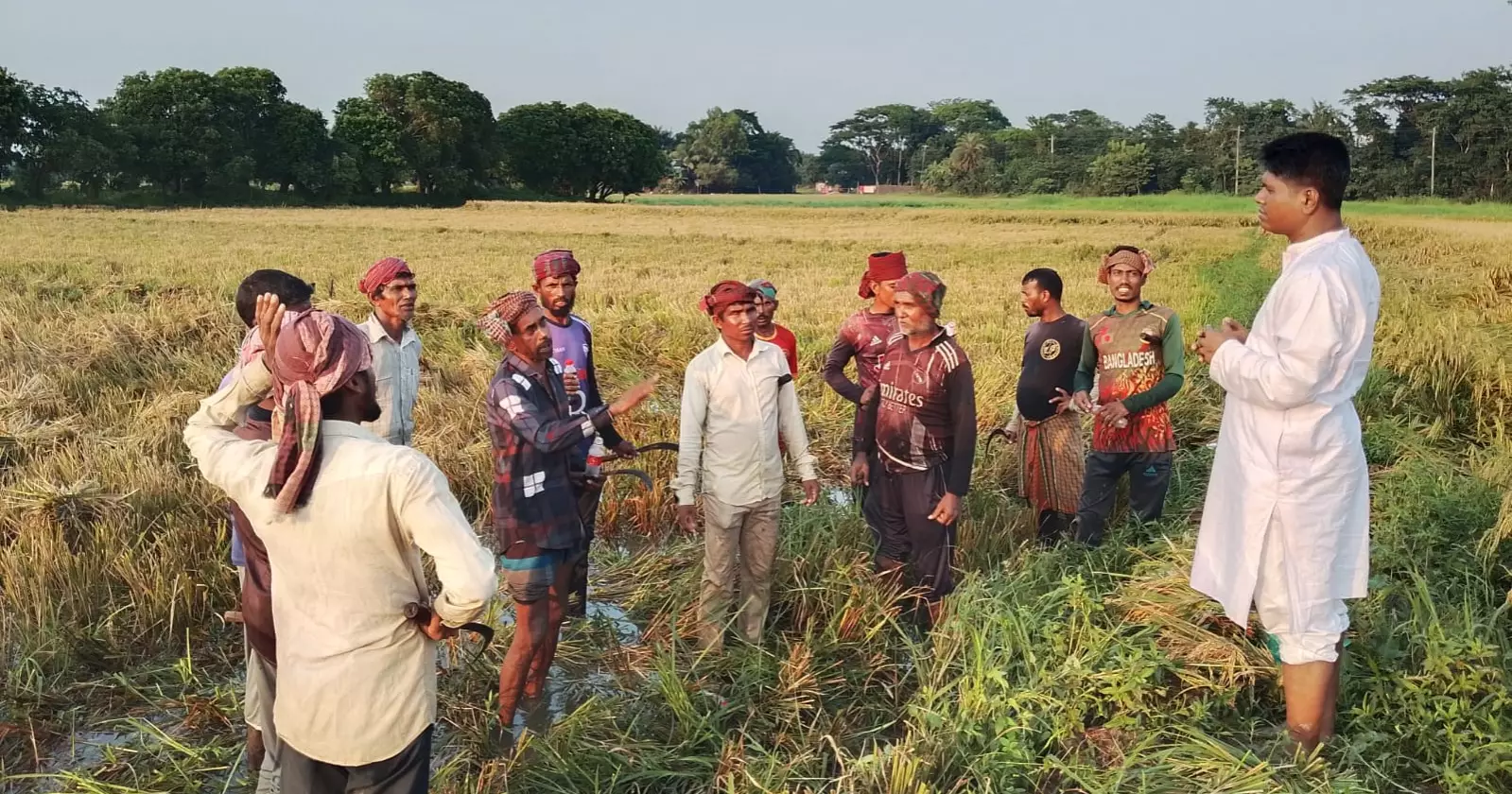
In response, Save Society and Thunderstorm Awareness Forum (SSTAF) conducted an awareness campaign in the Arial Beel area of Munshiganj on Friday, marking May Day.
Lightning strikes leave 4 dead in Patuakhali
The initiative reached over a hundred farmers through practical demonstrations and direct engagement.
As part of the campaign, SSTAF issued a three-point safety guideline: farmers should immediately seek safe shelter when dark clouds appear, avoid taking shelter under trees during rain or thunderstorms, and wear footwear while working in fields.
Multiple teams from the organisation visited agricultural fields in Sirajdikhan (Munshiganj) and Nawabganj (Dhaka), where they spoke with farmers—many busy harvesting paddy—in small groups. Refreshments and oral saline were also distributed among participants.
The programme was attended by SSTAF General Secretary Rashim Molla, Research Cell Head Abdul Alim, Joint Secretary Mostak Ahmed and other volunteers.
Speakers at the event stressed that open field areas are highly dangerous during thunderstorms and urged farmers to stop work and move to safer locations as soon as weather conditions deteriorate.
They also warned against the common misconception that sheltering under trees is safe.
Rashim Molla highlighted the need for constructing dedicated shelters in farming areas, while Mostak Ahmed attributed the rising number of lightning incidents to global warming and the indiscriminate cutting of talk trees in rural regions, which has increased exposure in open fields.
He emphasised that taking shelter inside permanent structures is significantly safer during thunderstorms and called for continued awareness efforts, particularly during the peak lightning season from March to June.