bangladesh

Measles-like symptoms claim two more lives
Two children died with measles-like symptoms in the 24 hours until 8:00am on Friday, bringing the combined tally of confirmed and suspected measles-related deaths to 837 in the country.
According to the Directorate General of Health Services (DGHS), all the latest fatalities were suspected measles deaths.
With the latest update, the number of suspected measles deaths has risen to 741, while the number of laboratory-confirmed measles deaths remained 96.
A total of 900 new suspected measles cases were reported during the 24-hour period, bringing the cumulative number of suspected cases nationwide to 128,310.
Meanwhile, 185 new confirmed measles cases were recorded, bringing the total number of laboratory-confirmed infections to 16,059.
Since March 15 this year, a total of 110,987 patients with suspected measles have been hospitalised across the country, of whom 106, 859 have recovered, according to DGHS data.
3 days ago
DNCC administrator vows action against unfit vehicles, unskilled drivers
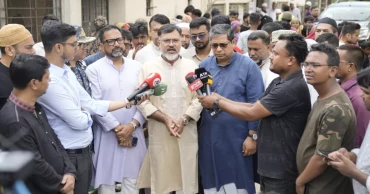
Dhaka North City Corporation (DNCC) Administrator Md Safiqul Islam Khan on Friday said strict legal action will be taken against unfit vehicles and unlicensed or unskilled drivers in coordination with the Bangladesh Road Transport Authority (BRTA).
He made the remarks while visiting the house of DNCC conservancy worker Shefali Begum, who was killed in a road accident while on duty in the Madhya Badda area earlier in the day.
After learning of the tragic road accident, Prime Minister Tarique Rahman instructed the authorities to immediately visit the residence of the deceased sanitation worker.
Following the directive, State Minister for Local Government, Rural Development and Co-operatives Mir Shahe Alam, State Minister for Housing and Public Works Ahammad Sohel Monzoor and the DNCC administrator rushed to the victim's home.
Safiqul said action will also be taken against anyone found driving DNCC vehicles without proper skills or if any helper is found driving a vehicle after an investigation.
He said conservancy workers work day and night to keep the city clean and urged everyone to ensure their safety while performing their duties.
The DNCC announced Tk 4 lakh in financial assistance and one year’s salary for Shefali’s family.
The administrator expressed condolences to the bereaved family and called on reckless drivers to exercise caution to prevent road accidents.
DNCC Chief Waste Management Officer Commodore Mohammad Humayun Kabir and other officials were present during the visit.
3 days ago

Sergio Gor visits Rohingya camp in Cox's Bazar
US Special Envoy for South and Central Asia Sergio Gor on Friday visited a Rohingya camp in Ukhiya of Cox's Bazar, leading a 14-member high-level delegation.
According to the Office of the Refugee Relief and Repatriation Commissioner (RRRC), the delegation arrived at Cox's Bazar Airport around 12:00pm and proceeded directly to the Rohingya camp in Ukhiya.
The delegation visited Camp-4, where they observed activities of the World Food Programme (WFP), including its humanitarian assistance operations for the displaced Rohingyas.
US Ambassador to Bangladesh Brent T Christensen accompanied the delegation during the visit.
Sergio Gor arrived in Dhaka on Thursday. On that day, he held a meeting with Foreign Minister Dr Khalilur Rahman.
He is scheduled to meet Prime Minister Tarique Rahman on Saturday.
3 days ago
Gunfight over fish enclosure leaves one dead, two injured in Ctg
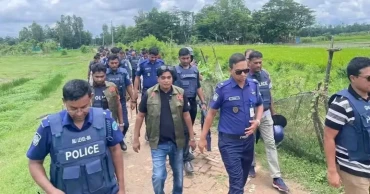
A person was killed and two others were injured in a gunfight between rival groups over the control of a fish enclosure in Banshkhali upazila of Chattogram early Friday.
The deceased was identified as Mohammad Zillur Rahman, 47.
The incident took place around 4:00am in the West Saral area of Saral union.
According to locals, the rival groups had long been at loggerheads over the ownership and control of the fish enclosure.
The dispute turned violent in the early hours of Friday when members of the two groups exchanged gunfire, leaving Zillur and two others with bullet injuries.
Locals rescued the injured and rushed them to Chattogram Medical College Hospital, where doctors declared Zillur dead. The identities of the two injured could not be confirmed immediately.
Officer-in-Charge of Banshkhali Police Station Md Rabiul Haque said police were conducting drives to arrest those involved in the incident.
3 days ago

Farm worker dies of electrocution in Fatikchhari
A farm worker died after being electrocuted while planting paddy seedlings in a field in Fatikchhari upazila of Chattogram on Friday morning.
The deceased was identified as Mustakim, son of Riaz Uddin of Netrokona. He had come to Fatikchhari to work as an agricultural labourer.
According to locals, Mustakim and two other workers went to a field in Shahnagar village under Lelang Union to plant paddy seedlings.
A power cable had fallen into the water in the field, but the workers did not notice it. At one time, Mustakim came into contact with the electrified water and died on the spot. The other two workers narrowly escaped.
Mohammad Azam, a member of the local union parishad, said the accident occurred as the workers were unaware of the broken power cable lying in the field.
3 days ago
CIID seizes contraband worth Tk 2.04cr at Dhaka airport
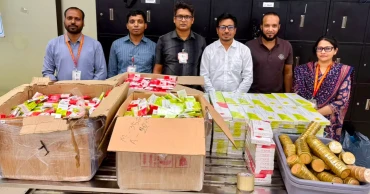
Customs Intelligence and Investigation Directorate (CIID) officials have seized contraband goods worth an estimated Tk 2.04 crore, including foreign cigarettes, gold jewellery, banned Gouri cream and foreign liquor, during a special drive at Hazrat Shahjalal International Airport in Dhaka.
The operation was carried out on Thursday by the Airport A Shift team of CIID following a tip-off, according to a press release issued on Friday.
During monitoring of baggage collection from Biman Bangladesh Airlines flight BG-148 arriving from Dubai, customs officials found three unattended suspicious bags on Baggage Belt No. 1.
A search of the bags led to the recovery of 370 cartons of Mond brand foreign cigarettes.
At the same time, officials seized another 111 cartons of foreign cigarettes from passengers arriving on other international flights, taking the total seizure to 481 cartons.
The market value of the cigarettes has been estimated at Tk 21.64 lakh. Including applicable customs duties and taxes – a total tax incidence (TTI) of 621 percent, the total value stands at about Tk 1.56 crore.
During the operation, customs officials also searched the hand baggage of passenger Md Tajul Islam, who arrived on the same Dubai flight, and recovered 99 grams of concealed gold jewellery.
Verification of his passport showed that he had already imported 100 grams of gold jewellery without paying duties and taxes after entering the country on June 10 this year.
Under the Baggage Rules, 2025, passengers are not entitled to another duty-free allowance for gold jewellery beyond the prescribed annual limit. As a result, the newly imported 99 grams of gold jewellery was seized.
The recovered gold jewellery has an estimated market value of Tk 18.75 lakh, while its value, including duties and taxes, is around Tk 30 lakh.
Officials also seized 12 kg of banned Gouri cream with an estimated value of Tk 2.40 lakh.
In a separate operation, customs officials confiscated 11 litres of foreign liquor, including whisky of various brands, from passengers arriving from Kolkata.
The liquor has an estimated market value of Tk 2.20 lakh. Including applicable duties and taxes, calculated at a total tax incidence of 610.30 percent, its total value is approximately Tk 15.62 lakh.
According to customs officials, the combined value of all seized goods, including duties and taxes, is estimated at Tk 2,04,07,000.
Legal proceedings are underway under the Customs Act, the Baggage Rules and other relevant laws.
The CIID said such operations will continue to prevent smuggling, customs duty evasion and the import of prohibited goods.
3 days ago

No conspiracy based on religion, race to succeed in Bangladesh: Swapon
Information and Broadcasting Minister Zahir Uddin Swapon on Friday said no conspiracy based on religion or race will be allowed to succeed in Bangladesh, warning against attempts to exploit people's religious beliefs for political or other gains.
“If any quarter tries to exploit religious belief and religious practices to bring people under its influence, ordinary people will identify them. No conspiracy based on religion or race will be allowed to succeed in Bangladesh,” he said.
The minister was speaking as the chief guest at the biennial conference of the Barishal district unit of the Bangladesh Puja Udjapan Parishad at the Barishal District Shilpakala Academy.
He referred to Prime Minister and BNP Chairman Tarique Rahman’s stance that religion belongs to individuals, while the state belongs to everyone.
Swapon said any attempt to capture the state in the name of religion or to use followers of any faith for political purposes amounts to communalism and runs contrary to the principles of religion.
"Whenever any group tries to turn religious belief and practice into a tool of communal politics, devout people themselves will identify those who exploit religion for personal or political gain," he added.
The minister also said political leaders should always work for the welfare of the people.
"As long as people believe that a political party's activities serve their interests, they will continue to support that party and its election symbol," he said.
Barishal City Corporation Administrator Advocate Bilkis Akter Jahan Shirin, Barishal Zila Parishad Administrator Akon Quddusur Rahman and former President of the district chapter of Puja Udjapan Parishad Rakhal Chandra Dey, among others, were present with Manik Lal Mukharjee, president of the district unit of the Bangladesh Puja Udjapan Parishad, in the chair.
3 days ago

Pharma representative killed in BGB pickup-bike collision in Sylhet
A pharmaceutical company representative was killed after his motorcycle collided with a Border Guard Bangladesh (BGB) pickup on the Sylhet-Tamabil highway in Jaintapur upazila of Sylhet on Friday morning.
The deceased was identified as Saddam Hossain, 30, son of Saheb Ali of Jamalpur village in Bagmara upazila of Rajshahi. He worked as a medical representative for Beacon Pharmaceuticals.
According to locals, the accident occurred around 10:00am at Sharighat under Darbast union when the BGB pickup was travelling towards Tamabil from Akhalia in Sylhet city.
The impact of the collision threw Saddam beneath the pickup, leaving him critically injured.
He was rescued by locals and taken to Jaintapur Upazila Health Complex, where doctors declared him dead.
Officer-in-Charge of Tamabil Highway Police Station Sanjay Chakraborty said legal procedures were underway.
3 days ago
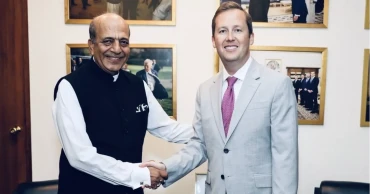
Sergio Gor, Dinesh Trivedi hold "good" meeting in Dhaka
Indian High Commissioner to Bangladesh Dinesh Trivedi on Friday met visiting US Special Envoy for South and Central Asia Sergio Gor and discussed issues of mutual interest.
"The meeting was held at a city hotel in the morning. I can only tell you it was a good meeting," a diplomatic source on the US side told UNB.
It could not be learned what they exactly discussed during the meeting.
On June 25, Gor wished High Commissioner Dinesh Trivedi all the very best as he assumed his "important role" as India's new High Commissioner to Bangladesh.
"As the U.S. Special Envoy for South and Central Asia, I look forward to working closely with him," Gor said on June 25.
The US Special Envoy met Foreign Minister Dr Khalilur Rahman on Thursday evening and visited the Rohingya camp in Cox's Bazar on Friday.
He is scheduled to meet Prime Minister Tarique Rahman on Saturday.
Foreign Minister Dr Khalilur said bilateral relations between Bangladesh and the United States are moving in a very positive direction, noting that they will build on the achievements they have made so far.
"Our engagement with the US is not limited to one meeting. We remain engaged on all aspects and at all levels, and the relationship is moving forward," he told reporters at the Ministry of Foreign Affairs on Thursday night after his meeting with Gor at the State Guest House Padma.
3 days ago
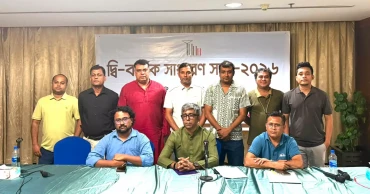
Robin elected TRNB president, Faruk general secretary
Masuduzzaman Robin of Jamuna Television and Faruk Hossain of the Daily Inqilab have been elected president and general secretary, respectively, of the Telecom and Technology Reporters’ Network, Bangladesh (TRNB).
Among the other office-bearers, Al-Amin Dewan of TechShohor was elected treasurer, while Hasnain Imtiaz of Samakal was elected organising secretary.
The three elected executive committee members are Samir Kumar Dey of The Daily Ittefaq, Shuvo Khan of Somoy Television and Mahmudul Hasan of The Daily Star.
The election was held at Sayeman Beach Resort in Cox’s Bazar on Thursday under the supervision of Chief Election Commissioner Abbas Faruq, with Mohiuddin Mohammad Hasan Bhuiyan and Ismail Hossain serving as election commissioners, according to a press release.
3 days ago